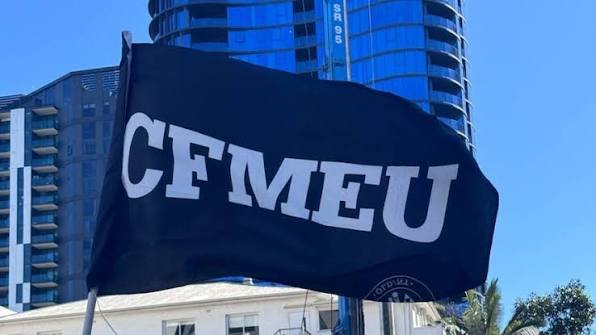
A royal commission examining allegations of corruption and improper influence in major infrastructure projects in the Australian state of Victoria has heard that a leading construction company believed the powerful Construction, Forestry and Maritime Employees Union (CFMEU) enjoyed considerable influence within the state government under former premier Daniel Andrews. The inquiry is investigating claims surrounding the union’s involvement in public construction projects, including a major level crossing removal scheme in Melbourne’s north.
The first block of public hearings began on Monday, focusing on the Gap Road level crossing removal project in Sunbury, north of Melbourne, in 2022. The project involved eliminating a railway level crossing and constructing a new rail bridge and underpass as part of Victoria’s wider Big Build infrastructure programme. The commission is seeking to establish whether union officials used industrial disruption to exert pressure on contractors and government representatives, and whether public officials took steps to accommodate the union’s demands.
The hearings could have significant political implications for Victoria, where the relationship between the CFMEU and the previous Labor government has become a subject of intense scrutiny. The inquiry is also examining whether the alleged influence of the union affected the awarding and management of major public contracts, workplace arrangements and the cost of infrastructure projects.

Chris Young KC, counsel assisting the royal commission, told the opening hearings that 20 witnesses had been compelled to appear during the November sessions. He also expressed concern that some parties had failed to comply with orders requiring them to provide documents. Young warned that invoking government policy as a reason for delaying the production of material did not remove the obligation to comply with the commission’s notices.
Failure to meet such orders can constitute a criminal offence. Young described the lack of compliance as extremely concerning, indicating that the commission expected full cooperation from organisations and individuals whose records could help establish what happened during the disputed construction project.
Evidence presented to the inquiry suggested that concerns about the CFMEU’s influence had been developing within the construction industry for several years before the disruption at Gap Road. Internal correspondence from John Holland, one of the companies involved in the project, indicated that senior officials were increasingly worried about the union’s industrial power and its relationship with the Victorian government.
An email from 2017 reportedly described the CFMEU as being proud that none of its site visits complied with established codes. More significantly, the correspondence highlighted the importance of the union’s relationship with the Andrews government and warned that it could affect the company’s dealings with the state administration.
The company’s concerns extended to the possibility that the union had access to information about proposed government tenders and could influence aspects of the tendering process. The email indicated that John Holland was particularly conscious of how its interactions with union representatives might be perceived, suggesting that the relationship between the union and government officials was an important consideration for businesses seeking to work on public infrastructure projects.
The concerns reportedly became stronger in subsequent years. In 2021, John Holland described the CFMEU as having become more confident because of its success on major infrastructure projects. Another internal assessment stated that the union enjoyed a significant level of influence within the state government, a level of influence the company believed had not existed in previous years and was unlikely to decline.
The commission is examining whether those concerns were reflected in the events at Gap Road. According to Young, four CFMEU officials who later became involved in the work stoppage had also been associated with industrial disputes on the Metro Tunnel project. He told the inquiry that the officials entered the eastern portal of the Gap Road site 29 times in January 2020.
Their activities were considered unlawful, according to the account presented by counsel assisting, although the concerns they raised attracted attention from government representatives. Officials sought to establish whether the safety issues identified by the union had any validity. The commission is expected to examine how those earlier interactions influenced the way government agencies and contractors responded to later disputes.
The risk of industrial action at Gap Road was already considered very high, but the situation reportedly escalated in May 2022, when union representatives began appearing more frequently at the site. By early June, construction work had been severely disrupted, and project health and safety manager Neil Thompson was seeking assistance from police and workplace safety authorities.
Thompson was responsible for health and safety within the Rail Network Alliance, the group involved in delivering the project. He reportedly contacted Victoria Police after union officials allegedly stopped work by sitting on barriers and refusing to move. The disruption created serious difficulties for the project team, particularly because railway services had been stopped to allow construction of the bridge.
Internal notes presented to the commission contained accounts of alleged threats directed at workers who continued with their duties. One reported warning suggested that workers who returned to the site would face physical retaliation. Another indicated that their personal lives could be made extremely difficult if they continued working on the project.
The allegations raise questions about whether employees were able to work freely and safely during the dispute. They also place the conduct of union representatives under scrutiny, although the claims will need to be assessed through the commission’s evidence and the responses of those involved.
A recording of a telephone conversation between Thompson and WorkSafe, followed by an email, showed that on 6 June 2022 he was uncertain about how to restore normal operations. He told the workplace safety authority that the project team had already contacted Victoria Police to remove union officials from the site, but officers had said they could not take action.
Thompson also described frustration over what he considered conflicting guidance from the relevant authorities. He said the project had been left unable to proceed, with work effectively suspended while the team sought a solution.
The following day, a 13-minute meeting took place, followed by another meeting at the CFMEU’s premises. Young told the commission that the discussions appeared to resolve the immediate dispute. Two union officials, Joe Myles and Paul Tzimas, attended alongside four representatives from the infrastructure project.
However, the precise details of those meetings remain central to the investigation. Young said the commission had obtained substantial documentation about the events leading up to the discussions, but relatively little information was available about what actually happened during them. Investigators will therefore depend partly on witness recollections of conversations that took place approximately four years earlier.
The commission is particularly interested in determining what caused the work stoppage, whether the disruption was used as leverage by the union and what arrangements were made to bring the dispute to an end. It is also examining the financial consequences of the industrial action and whether the eventual changes to workplace arrangements imposed additional costs on the public infrastructure programme.
The work stoppage reportedly lasted 36 hours. Documents presented to the inquiry showed that traffic controllers employed after the disruption received substantially higher hourly rates than those working under the previous arrangements. The standard hourly rate increased from approximately A$45 to A$88, while penalty rates rose from around A$59 to A$147.
Young illustrated the financial impact by comparing the cost of a 10-and-a-half-hour shift. Under the previous contractor, the shift cost approximately A$609. Under the replacement arrangements, the same shift cost about A$1,225. The difference raised questions about the financial consequences of the dispute and whether the changes were justified by legitimate workplace requirements or resulted from pressure exerted during the industrial action.
The potential financial implications extended beyond the Gap Road project. The director general of the Major Transport Infrastructure Authority began examining the cost of a broader CFMEU campaign to increase traffic controller rates around the same period. A briefing prepared in September for the then transport infrastructure minister, Jacinta Allan, estimated that the proposed changes could cost the authority between A$60 million and A$78 million across existing projects.
For projects still in the planning stage, the estimated additional expense was considerably higher, potentially exceeding A$400 million. The figures underline why the commission is examining not only the immediate disruption at Gap Road but also the possibility that similar arrangements could have affected the wider infrastructure programme.
Victoria’s current premier, Ben Carroll, has defended the establishment of the royal commission, describing it as an inquiry the state needed and its residents deserved. He said the investigation would provide Victorians with answers and emphasised that it had been given broad terms of reference and was operating independently. He also pointed to the appointment of a special prosecutor as part of the process.
Carroll confirmed that the state would support legal representation for former premiers Jacinta Allan and Daniel Andrews, following arrangements made for former leaders at previous royal commissions. The decision attracted criticism from opposition leader Jess Wilson, who argued that taxpayers should not have to cover the legal costs of former premiers facing scrutiny over the infrastructure projects.

Wilson accused the previous administration of damaging the state’s future and questioned the decision to use public money for their legal defence. Her comments reflect the political sensitivity surrounding the inquiry, particularly as it examines the conduct of government officials and the relationship between the former Labor administration and the CFMEU.
The royal commission’s findings could have consequences for public confidence in Victoria’s infrastructure programme, the accountability of government institutions and the role of powerful unions in major construction projects. However, the allegations presented during the opening hearings have not yet been established as findings of wrongdoing.
As the hearings continue, witnesses will be expected to explain the June 2022 meetings, the circumstances surrounding the work stoppage and the decisions that followed. The inquiry will also seek to establish whether the union’s influence extended beyond legitimate workplace representation into government decision-making and public procurement. Its conclusions could shape future safeguards for infrastructure spending and relations between contractors, unions and the Victorian government.
Related News:
 Fugitive Developer Rants at NSW Corruption Inquiry
 Trump Ads Trigger Fight Over Taxpayer Money
 Badenoch Raises Prospect of 2027 UK Election
 NSW Leader Downplays Impact of Landmark Coal Ruling
 NSW Police Bid Delays Inquiry Into Sydney Protest
 Brazil Court Scandal Threatens Lula as Bolsonaros Rise
 UK Urges Interpol to Reject Argentina’s Falklands Arrest Requests
 Camera Discovery Triggers Navy Ship Investigation
 Serbia Leader Linked to Controversial Trump Tower Plan
 Inquiry Calls for Australia to Scrap AUKUS Submarine Deal
 Paraguay President Impeached and Arrested After Banking Crisis
 City & Guilds Sale Sparks Fees and Pay Uproar
 Cartel crackdown raises fears of fresh violence
 Immigration Judges Fear Pressure in Trump Era
 Trump Refuses to Sign Housing Bill, But Law Takes Effect
 Unions Warn Labour Over Zero-Hours Contract Reforms
 Trump Calls Iran War ‘Small Potatoes’ Despite US Deaths
 Reform Faces Fresh Financial Controversy
 UK plans tougher Israel stance with settlement trade ban
 Councils spend £125m on illegal children’s care
 New Mexico Takes Facebook to Trial Over Data Scandal
 Israel Accused of Undermining Palestinian Life
 Trump’s Washington Projects Face Architectural Criticism
 US Sanctions Open New Battle for Cuba Assets
 Omar Proposes Bill to Redirect ICE Funding
 Reform UK Faces Internal Debate Over £72m Spending
 US Networks Suspend Trump White House Pool Coverage
 Trump and Mamdani Hold Cordial Gracie Mansion Meeting
 Democrat Says ICE Restricted Detention Camp Oversight
 OpenAI Agent Breaches Medicare Portal in Australia
 Lula accuses Trump of seeking control over Brazil
 Republican Senator Questions Trump Ad Spending
 Free Speech Emerges as Key UK Election Issue
 Economic growth and political strain reshape Benin
 UK University Strikes Spread as Financial Pressure Grows
 Burnham Opens Door to Possible UK Return to EU
 Drumcree Talks Falter as Legal Challenge Deepens
 UK-France Returns Deal Faces Expiry as Talks Stall
 Musk’s DOGE Sparks Turmoil Inside US Government
 Latin America women fear rollback of rights
 Detective Breaks Down Recalling Double Murder Scene
 Royal Navy Sailor Charged With Alleged Spying
 Ministers Push ATO to Reconsider Credit Card Ban
 Trump Says He Deserves Nobel Peace Prize
 Sri Lanka Ex-First Lady Arrested Over Donation Probe
 Delhi Tightens Security Ahead of Election Protest
 Controversial Vaccine Trial Approved in Guinea-Bissau
 Australia Rejects Russian Fuel as Trump Strikes Deal
 Leaked Files Raise Questions Over Abramovich’s Finances
 Former Students Raise Concerns Over School Culture
 Seekers Condemn CPAC Use of I Am Australian
 ABC Reporter Faces Possible Disciplinary Action Over Opinion Piece
 Elizabeth Struhs Inquest Examines Child Safety Failures
 Millions Face Tougher Medicaid Rules From January
 Ohio Airports Become Key Hubs for ICE Deportation Flights
 England and Wales Begin Second Wave of Early Prison Releases
 India’s Voter Roll Crisis Sparks Nationwide Protests
 Ukrainian Soldier Faces Trial Over Nord Stream Blast
 Judge Blocks Trump White House Media Ban
 Farage Calls for Prosecution of Asylum Seeker Charities
 Gadi Eisenkot: Israel’s Anti-Netanyahu Challenger
 Trump Rallies GOP as Senate Democrats Boost Key Races
 UK Could Rejoin EU Through a Switzerland Plus Deal
 Greens Face Leadership Test as Jordon Steele-John Misconduct Claims Leave Party in Limbo
 Former RAAF Pilot Accused of Murdering Wife
 Taylor Faces Backlash Over Response to Haines Attack
 Serbia’s Student Victory Sparks a ‘Smell of Freedom’
 UK Land Registry Plan Faces Opposition From Landowners
 Albanese Faces Labor Pressure as Inflation Hits 4.3%
 Brisbane Pub Shooting Claims Life of 19-Year-Old Woman
 Trump Again Demands Peltola Prosecution as Alaska Race Escalates
 Trump’s Global Policies Put Republicans at Risk
 Erin Patterson Faces Life in Prison After Appeal Loss
 Global Crises Test Diplomacy as Trump’s Policies Face Scrutiny
 Bedouin Women Drive Historic Arab Election Gains
 Alan Jones Trial Paused for Melbourne Cup Viewing
 Australia Raises Interest Rates to 18-Year High
 Queensland Hospital to Close Labs After Safety Probe
 Democrats Expand House Majority in Major Midterm Victory
 UK Employers to Be Forced to Publish Job Salaries