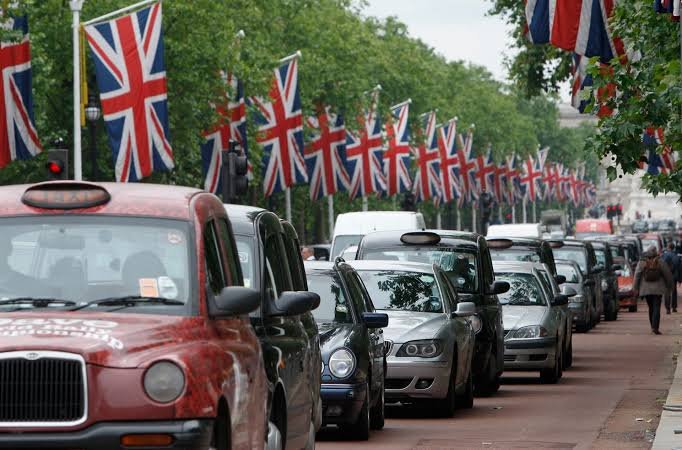
Car use across London could increase by 10% over the next decade, raising fresh concerns about traffic congestion, air pollution and the future of sustainable transport in the British capital. Projections contained in a draft version of the city’s latest 10-year development plan suggest that private motor vehicle journeys may grow faster than walking and cycling, potentially undermining Mayor Sadiq Khan’s long-standing ambitions to reduce dependence on cars and create a cleaner, healthier urban environment.
The modelling, prepared by the mayor’s office and Transport for London (TfL), outlines possible changes in transport demand as London’s population and employment opportunities expand between 2026 and 2036. Under the central growth scenario, which is considered the most likely of three possible projections, the capital’s population could reach approximately 9.9 million, compared with the current estimate of 9.1 million.

An expanding population is expected to place additional pressure on roads, underground services, buses and other public transport networks. The draft plan suggests that the number of journeys made by cars and other motor vehicles could rise by 10% between the 2023 baseline and 2036. Public transport journeys are projected to increase by 17%, while walking and cycling trips could grow by just 6%.
Although the projected increase in walking and cycling represents additional journeys, their share of all trips would decline slightly if the other forecasts materialise. The figures have therefore raised questions about whether London can maintain its progress towards reducing car dependency while accommodating a growing population.
However, the mayor’s office has strongly challenged the interpretation of the projections. Officials emphasise that the figures are not a prediction of what London will actually look like in 2036. Instead, they are based on a modelling scenario that assumes no additional transport policies or active travel initiatives will be introduced during the next decade.
According to City Hall, the calculations do not account for recent changes in transport policy, including the pedestrianisation of Oxford Street, new cycling infrastructure and other measures designed to encourage people to walk or cycle rather than drive. The mayor’s office maintains that active travel will increase significantly and car use will decline as further schemes are introduced.
The distinction between a modelling scenario and an official forecast has become central to the debate. While the draft plan identifies the potential consequences of continued growth in motor traffic, campaigners argue that it also reveals the risks of failing to introduce sufficiently ambitious policies to change travel behaviour.
One of the most significant concerns is the potential effect on London’s already congested roads. The modelling warns that increased car journeys could contribute to a 7% reduction in average road speeds by 2036. Slower traffic would affect not only private motorists but also buses, which depend on the same road network in many parts of the city.
A decline in average speeds could make bus journeys longer and less reliable, discouraging passengers from using public transport. This would create a difficult situation for transport authorities seeking to accommodate population growth while maintaining affordable and efficient services.
The underground network could also face greater pressure. The draft plan warns that overcrowding may become more frequent as passenger numbers increase. At particularly busy stations, severe congestion could make regular intervention necessary during peak periods.
Possible measures could include temporarily preventing passengers from entering certain stations or arranging for trains to pass through without stopping. Such measures would be intended to manage passenger numbers and maintain safety, but they could cause disruption for commuters and visitors who depend on the Underground every day.
The potential increase in car use also raises questions about Khan’s environmental commitments. In 2022, the mayor pledged to reduce car use across London by 27% by 2030. The latest modelling appears to point in the opposite direction under a scenario without additional transport interventions.
Khan has introduced several policies intended to improve air quality and reduce harmful emissions. One of the most significant was the expansion of London’s Ultra Low Emission Zone (ULEZ) to cover central and inner London in 2023. The scheme encouraged motorists to use vehicles meeting stricter emissions standards or pay a daily charge when driving non-compliant vehicles.
The expansion has contributed to efforts to reduce pollution, and London has recorded improvements in air quality. However, environmental campaigners argue that the capital still has considerable work to do to match progress made in several other European cities.
The comparison with Paris has become particularly relevant. The French capital has experienced a substantial increase in cycling, with the proportion of journeys made by bicycle almost tripling over a five-year period. This has been supported by investment in cycling infrastructure and policies that have gradually reduced the space available to private vehicles in parts of the city.
Campaigners believe London could follow a similar path if it gives greater priority to walking, cycling and public transport. They argue that the city should not simply accommodate increasing demand for road travel but should actively shape how residents move around.
Ralph Smyth, a strategy adviser for the Transport Action Network, highlighted the projections and questioned the direction of the mayor’s transport strategy. He argued that progress towards reducing car dependency appeared to have stalled and said the new London Plan offered an opportunity to establish a lasting legacy of cleaner air, improved public health and less congestion.
Smyth expressed concern that the proposed direction could encourage a return to greater reliance on private vehicles rather than accelerating the transition towards sustainable transport.
Environmental organisations have also warned that replacing petrol and diesel cars with electric vehicles will not resolve every problem associated with increasing traffic. Jenny Bates, a campaigner with Friends of the Earth, acknowledged that the transition to electric vehicles would help reduce harmful emissions from road transport. However, she stressed that the process would take many years and would not solve congestion.
Electric vehicles can reduce pollution from exhaust emissions, but they still occupy road space and contribute to traffic pressure. A growing number of electric cars could therefore leave London facing many of the same problems associated with overcrowded roads, even if the vehicles become cleaner.
Bates argued that London needs to reduce the overall number of car journeys and reclaim urban space for safer walking and cycling routes. She also highlighted the importance of creating more green spaces, particularly as increasingly hot summers make urban cooling a growing concern.
Simon Munk, head of campaigns at the London Cycling Campaign, similarly criticised the approach taken in the draft plan. He warned that the modelling risked describing a future that was already outdated because it did not fully reflect the direction of current transport policies.
Munk argued that Transport for London should focus on explaining how land-use planning and transport decisions could reduce car dependency rather than modelling a future in which heavy motor traffic remains a dominant feature of the capital.
Supporters of the mayor’s approach, however, point to the expansion of cycle lanes, school streets and pedestrian-friendly spaces as evidence that London is continuing to change. School streets restrict motor traffic around participating schools during drop-off and collection periods, helping create safer environments for children and encouraging families to consider alternatives to driving.
The pedestrianisation of Oxford Street is another significant development. The busy shopping destination has long been associated with heavy traffic and crowded pavements. Restricting vehicles is intended to create a more attractive environment for pedestrians, improve the shopping experience and support wider efforts to make central London more accessible.
The mayor’s spokesperson reiterated that City Hall expects walking and cycling to increase substantially by 2036, while car use is expected to fall. The spokesperson explained that the modelling assumes no additional active travel programmes will be introduced, an assumption that officials do not consider realistic given the planned development of transport policies.
The spokesperson also said the modelling would help identify which future transport schemes might be necessary as London grows.
The debate highlights a major challenge facing the capital: balancing population growth and economic activity with environmental protection, public health and reliable transport. As more people live and work in London, the demand for movement across the city will inevitably increase. The question is whether that demand will be met through more private vehicles or through investment in public transport, walking and cycling.

For Khan, the coming decade could prove important in determining the long-term legacy of his transport and environmental policies. The draft projections have not established that car use will definitely rise, but they have exposed the consequences that could emerge if London fails to introduce further measures to change travel patterns.
The final direction of the 2026-36 London Plan, together with future decisions on transport investment and urban development, will help determine whether the capital can meet its environmental ambitions while supporting a growing population. The challenge will be to ensure that London’s transport network becomes more efficient and accessible without allowing congestion and pollution to undermine the quality of life of those who live and work there.
Related News:
 Reform UK funding: mystery billionaire revealed
 Three-Quarters of England’s Riverbanks Still Off Limits
 London’s 2026 ‘Great Stink’ Raises Sewer Concerns
 Burnham unveils £65m drought aid for farmers
 Election Candidate Abuse Raises Alarm in England
 Edinburgh Glasshouses Reopen After Major Restoration
 Polanski Says Leadership Not Tied to By-election Result
 Bendy Elm Named UK Tree of the Year
 Britons Demand Greater Honesty on Climate Crisis
 UK Water Firms Earn Millions From Industrial Wastewater
 Recruitment Boss Accused of Leading Doxxing Campaign
 UK Shoppers Urged to Avoid Hake and Coley
 Bradford Rail Hub Promises Faster Northern Connections
 UK Land Registry Plan Faces Opposition From Landowners
 Democrats Court Maha Voters as Trump Alliance Frays
 UK Weighs Tougher Firework Rules Over Animal Welfare
 Denmark Seeks EU-Wide Ban on Fast-Growing Turbo Chickens
 UK Warned Over Dangerous Dependence on China for Minerals
 Kezia Dugdale Warns of Possible Reversal of Equal Rights Gains
 Crackdown Backfires on UK Climate Protesters
 Older Than Dinosaurs: Secrets of Mayfly Dance Revealed
 John Terry Faces Backlash Over Political Posts
 Tractor Breakdown Tests Lincolnshire Farmers
 Farage and Reform UK Reshape British Politics
 Starmer Leadership Under Pressure After Setbacks
 UK Ministers Lobby Trump Over Under-16s Social Media Ban
 UK Nations Brace for Potential Breakup Amid Reform Surge
 UK Schools Struggle as Classrooms Top 40C
 London Tube Heat Reaches Dangerous Levels
 Gen Z turns to BirdTok for a gentler digital escape
 Ghent Professors Questioned Cofnas Appointment
 RAF Barnham Protests Fuel Tensions in Norfolk Town
 UK Subsidence Claims Surge After Record-Breaking Summer
 UK Heatwaves Set to Worsen Pothole Damage, RAC Warns
 Mayors Could Gain Greater Powers Over Water Firms
 Tom Watson Takes Senior Role at Palantir
 Mahmood Warns Far Right Over Asylum Protests
 Disabled Travellers Seek Fairer UK Care Rules
 Lib Dems Prepare for Election Amid Reform Challenge
 Tropics May Wait Longest for Net-Zero Climate Benefits
 UK Unveils Centre to Counter Foreign Disinformation
 UK Plans New Centre to Counter Information Warfare
 Free Speech Emerges as Key UK Election Issue
 London Facial Recognition Trial Ends With False Alert
 Burnham Opens Door to Possible UK Return to EU
 Drumcree Talks Falter as Legal Challenge Deepens
 Green Party faces dispute over Zionism motion
 Badenoch Raises Prospect of 2027 UK Election
 BT Broadband Pauses Raise Digital Switchover Concerns
 Experts Warn UK Food Security Is at Risk
 Gosport Protesters Clash With Police Over Migrant Rescue
 Labour Wins Key London By-election as Greens Fall Short
 Hurricane Isaias Puts FEMA Under New Pressure
 UK Must Build Its Own AI to Protect National Security
 UK Greens Face Crisis Over Zionism and Extremism Row
 Jenrick Defends Farage Amid Fresh Reform Racism Claims
 NHS Trusts Reject Palantir’s £330m Patient Data Platform
 Up to 20 English Maternity Units Face Possible Closure
 UK Pledges Stronger Protections for Disabled Air Passengers
 Zelenskyy Says US Failed to Warn Kyiv of Russian Strikes
 UN Warns World Must Cut Emissions by 18% by 2030
 Middleton Revitalisation Blueprint for UK Towns
 Melting Dolomites Glaciers Reveal 250 WWI Explosives
 UK Chancellor Moves to Scrap Gas Standing Charges
 Yvette Cooper Reverses NHS Patient Watchdog Abolition Plan
 MPs Urge UK to Write Off Most British Council Debt
 King Charles Faces Reparations Protests at Antigua Summit
 NHS Rolls Out Child Illness Warning System Across England
 Australia Reviews UK Visa Rules Amid Worker Influx
 Exiled Journalists Defy Putin’s Growing Media Crackdown
 Zelenskyy Seeks Urgent Help as Russia Hits Ukraine’s Power Grid
 UK Employers to Be Forced to Publish Job Salaries
 Early-Release Prisoners Face Rising Risk of Homelessness
 EU Citizens Sue Home Office Over UK Residency Rights
 Burnham’s Christmas Homelessness Pledge Faces Uncertainty
 TUC Chief Urges Major Investment to Tackle UK Youth Jobs Crisis
 Ilse Aigner Set to Make German History as First Female President
 Hackney Mayor Accuses Home Office of Free Speech Assault
 Burnham Unveils Major Plan to Tackle Youth Unemployment
 Burnham Weighs Tax Cuts to Boost Youth Employment