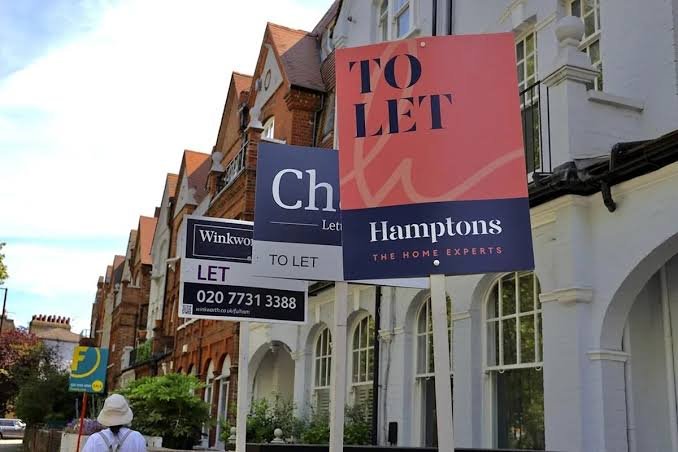
The cost of renting a home across Britain is expected to increase significantly faster than house prices over the next three years, creating further financial pressure for tenants already struggling with rising living expenses. New research suggests that rental prices could climb by 14.2% between 2026 and 2029, almost twice the projected 7.2% increase in house prices, as a persistent shortage of available properties intensifies competition among prospective tenants.
The forecast, published by property estate agency Hamptons, highlights the growing imbalance between housing supply and demand in Britain’s residential property market. While the cost of purchasing a home is expected to increase at a relatively moderate pace, people relying on rented accommodation could face considerably higher housing expenses over the coming years. The situation is particularly concerning for households whose incomes are already stretched by higher living costs, mortgage pressures and other essential expenses.

According to Hamptons, rental growth across Great Britain is expected to reach its highest point in 2027, when newly agreed rents could increase by approximately 4.5%. The pace of growth is then forecast to moderate to around 3.5% in 2028 and 2.5% in 2029. Despite this gradual slowdown, the overall increase over the three-year period is expected to remain substantially higher than the projected rise in property values.
The difference between rental inflation and house price growth reflects a housing market in which demand for accommodation continues to exceed the number of properties available. For many households, purchasing a home has become increasingly difficult because of affordability constraints, higher borrowing costs and the substantial deposits required by mortgage lenders. As a result, people who might otherwise consider buying are remaining in the rental market for longer, increasing competition for available homes.
One of the most significant findings in the Hamptons research concerns the decline in rental property availability. The number of homes available to rent in October was 26% lower than it had been a decade earlier. The situation was even more pronounced in London, where the supply of available rental properties had fallen by 39% over the same period.
This reduction has created additional pressure on tenants, particularly in areas where employment opportunities, educational institutions and transport connections attract large numbers of people seeking accommodation. When fewer properties are available, prospective tenants often have to compete more aggressively, making it easier for landlords to increase asking prices.
At the same time, demand for rental accommodation has continued to strengthen. Hamptons reported that the number of people looking to rent a property in October was 10% higher than in the same month a year earlier. This increase suggests that the rental market is experiencing pressure from both sides, with more people searching for homes while the number of available properties remains considerably below previous levels.
Aneisha Beveridge, head of research at Hamptons, identified the shortage of rental properties as the central challenge facing Britain’s housing market. She explained that the relationship between supply and demand was becoming increasingly important in determining rental prices.
Historically, landlords have not always been able to transfer every increase in operating expenses directly to tenants. However, rising costs across the property sector, combined with declining rental supply, have changed the market environment. According to Beveridge, landlords now have greater opportunities to pass on a larger proportion of their additional expenses through higher rents.
Several factors have contributed to the reduction in available rental homes. Changes in regulation, taxation and mortgage financing have increased the financial responsibilities associated with owning and operating rental properties. Some landlords have responded by reconsidering their investments, selling properties or becoming more cautious about expanding their portfolios.
The Renters’ Rights Act has also become part of the wider discussion about the future of the private rental sector. Although the legislation is intended to strengthen tenant protections and improve standards within the housing market, changes in regulatory responsibilities have contributed to uncertainty among some property owners.
Tax increases and higher mortgage interest rates over the past decade have further affected landlords’ financial calculations. Hamptons estimates that these additional costs represent approximately £900 per tenancy annually in England. This amount is equivalent to around 18% of rental growth over the same period, illustrating how the changing economics of property ownership have influenced the sector.
However, the rising cost of renting has also raised an important question for households: whether purchasing a home could now be more financially attractive than continuing to rent. Separate research conducted by Lloyds, one of Britain’s largest mortgage lenders, suggests that buying a property is already cheaper than renting in several major British cities when monthly housing payments are compared.
According to the bank’s analysis, purchasing a home through a mortgage was less expensive than renting in seven of the UK’s 12 major cities outside London. Glasgow recorded the largest difference, with estimated monthly mortgage repayments approximately £288 lower than average rental payments.
The comparison was based on Office for National Statistics housing data and the monthly cost of a 95% loan-to-value mortgage. The calculation used an interest rate of 5.82% over a repayment period of 30 years. Under these assumptions, buyers in Glasgow could potentially save a considerable amount each month compared with tenants paying average rents.
Other cities where estimated mortgage payments were lower than average rents included Newcastle, Bristol, Belfast, Nottingham and Manchester. Edinburgh offered a much smaller financial advantage to buyers, with only a limited difference between the estimated mortgage costs and rental payments.
Nevertheless, the research also demonstrated that purchasing a property is not necessarily the cheaper option everywhere. In cities such as Leeds, Liverpool, Birmingham and Cardiff, average rental payments remained below the estimated monthly mortgage repayments.
These differences highlight the importance of local housing conditions when comparing the financial consequences of renting and buying. Property prices, rental demand, mortgage rates and the availability of affordable homes vary considerably between cities. Consequently, a decision that makes financial sense in one location may not be equally beneficial elsewhere.
Andrew Asaam, mortgages director at Lloyds, emphasised that monthly housing expenses remain an important consideration for people deciding whether to continue renting or purchase their first home. He noted that higher mortgage rates had increased borrowing costs, making affordability calculations particularly important for prospective buyers.
However, he also highlighted a long-term advantage of homeownership. While mortgage repayments may sometimes be higher than rental payments, each repayment reduces the outstanding loan balance and gradually increases the homeowner’s financial stake in the property. For people planning to remain in the same home for several years, this accumulation of equity can become an important financial benefit.
The comparison nevertheless requires careful consideration beyond monthly payments. Buying a home generally involves additional expenses, including deposits, legal fees, surveys, maintenance, insurance and potential property-related charges. Buyers also face the risk of changing interest rates when mortgage deals expire. Renters, meanwhile, may have greater flexibility to relocate for employment or personal reasons, although they remain exposed to rent increases and uncertainty over the availability of suitable accommodation.
The latest forecasts therefore reveal a growing challenge for Britain’s housing market. Although the projected increase in house prices remains relatively modest compared with rental inflation, the shortage of available properties is likely to place additional pressure on millions of tenants. Younger people, lower-income households and individuals attempting to save for their first home could be particularly affected as a larger proportion of their earnings goes towards accommodation.

Addressing the problem will require more than short-term adjustments to rental prices. Increasing the supply of affordable housing, encouraging sustainable investment in the rental sector and improving access to homeownership could all play important roles in reducing pressure on the market.
For now, Hamptons’ projections suggest that Britain’s rental market is unlikely to become significantly more affordable in the immediate future. Unless the supply of available homes improves and demand becomes more balanced, tenants could continue facing rising housing expenses through 2029, while prospective buyers may increasingly examine whether entering the property market offers a more sustainable financial alternative.
Related News:
 UK Households Could Save £173 on Fixed Energy Deals
 UK House Prices Fall as Mortgage Rates Rise
 Thames Water Revises Oxfordshire Mega-Reservoir Plan
 UK Rent Gap Puts Low-Income Families Under Pressure
 Thinktank Calls for Abolition of UK State Pension
 New UK Homes in Flood Zones Face Insurance Risk
 Poundland Rescue Bid Could Protect 11,000 Jobs
 Healey urged to act as UK energy bills rise 4%
 Labour Fears Budget Will Fail to Lift Living Standards
 UK Side-Hustle Tax-Free Limit to Rise to £3,000
 Burnham Admits First Budget Fell Short of His Ambitions
 UK House Price Growth Slows to Two-Year Low
 Avanti West Coast Faces £70m Refund Bill
 UK Youth Face Jobs Crisis as Economy Loses Momentum
 UK Unemployment Falls to 4.6% Amid Youth Jobs Crisis
 BBC News Faces Deep Cuts in 2,000 Job Plan
 Reeves Fights to Keep Treasury Role Amid Labour Turmoil
 UK rejects EV charging VAT cut amid Treasury clash
 Burnham Faces Mounting Budget Challenges
 UK Subsidence Claims Surge After Record-Breaking Summer
 Oil nears $100 as Saudi attacks shake markets
 John Lewis Losses Widen to £124m as Confidence Falls
 UK Retailers Accused of Breaking Refund Laws
 UK State Pension Set to Rise 3.9% as Triple Lock Holds
 UK Pay Growth Slows to 3.9% as Rate Decision Nears
 Bank Urged to Slow Bond Sales as UK Costs Rise
 UK Inflation Hits 3.1% as Household Pressure Grows
 Entain Plans 400 Job Cuts After Profit Update
 Barclays Staff Push Back Against Office Return Plan
 UK Retail Sales Rebound as Consumers Spend More
 Calls Grow to Expand UK National Wealth Fund
 Labour Apprenticeship Scheme Faces Slow Start
 MPs Defend UK Economic Watchdog Against Critics
 Tony Blair Calls for Britain to Rejoin EU Within a Decade
 AO Acquires Jessops in Camera Retail Expansion
 Should Savers Lock Into 5.25% Fixed Rates?
 Beaverbrooks Boss Calls for Relief on Business Costs
 Burnham Opens Door to Possible UK Return to EU
 UK house price growth slows as mortgage rates rise
 UK borrowing costs surge as global bond sell-off deepens
 UK Assures Public Over Diesel Supply
 Badenoch Raises Prospect of 2027 UK Election
 UK Diesel Reaches £2 as Inflation Surges Across Europe
 Minister Rejects Fears of UK Diesel Shortage
 BT Agrees £400m TalkTalk Rescue Deal
 Informa Agrees £2.24bn Deal to Buy Clarion
 Google Maps Brings Live Fuel Prices to UK Drivers
 France Faces Debt Crisis as Protests and Markets Clash
 UK Savers Face Uncertainty as Rates Rise Above 5%
 IFS Warns UK Budget Faces £35bn Spending Gap
 UK Van Drivers Face £2.5bn Diesel Cost Surge
 IMF Warns Global Economy Is Nearing Its Limits
IMF Raises UK Growth Forecast Ahead of Healey’s Budget
 Healey Plans £1bn Online Marketplace Tax Crackdown
 UK Water Firms Face £107m Bill Reduction Penalties
 UK Family Linked to Offshore Gambling Licence Controversy
 UK Unemployment Falls to 4.7% as Vacancies Decline
UK Borrowing Hits £24.5bn Ahead of Healey’s Budget
Tax Online Sales to Save High Street, Burnham Urged
 UK Consumer Confidence Plunges at Fastest Rate Since Brexit Vote
 Labour MPs Urge Burnham to Lead UK Reindustrialisation
 UK Chancellor Moves to Scrap Gas Standing Charges
 Healey Set to Scrap Planned Cut to Cash ISA Allowance
 UK Budget Leaves Households Facing Higher Energy Bills
 Lloyds Warns Against Extending Higher Bank Tax
 London Luxury Homes Face Deeper Price Declines
 UK Mortgage Holders Face Fresh Payment Shock
 Poundland Remains Vulnerable as Rescue Talks Continue
 UK Urges Energy Firms to Help Households Clear Debt
 Starbucks to Create 7,500 UK Jobs in Major Expansion
 Australian Mortgage Confidence Hits 32-Year Low
 Badenoch Unveils £36bn Tory Welfare Cuts Plan
 Tories Face Pension Age Rise Beyond 70, Labour Warns
 Minor No-Fault Accident Sends Car Insurance Quote Soaring
 Burnham Weighs Tax Cuts to Boost Youth Employment
 UK Inflation Climbs to 3.6% as Fuel Prices Surge
 Bank of England Faces £160m Renovation Challenge
 EDF Expands UK Market With 1.3m Utilita Accounts
 UK Borrowing Beats Forecast in Boost for Healey
 UK Retail Sales Surge as Families Stockpile Emergency Supplies