Published: 25 September 2026. The English Chronicle Desk. The English Chronicle Online
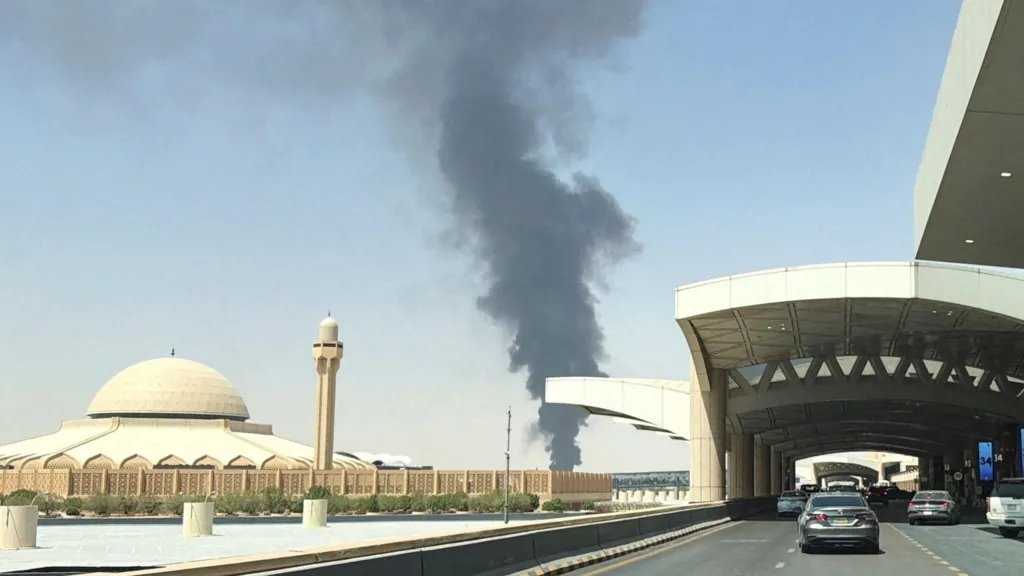
Saudi Arabia has intercepted six ballistic missiles launched by Yemen’s Houthi movement, according to Saudi authorities, in the latest escalation of a widening conflict that is raising concerns over the security of the kingdom’s energy infrastructure and important Red Sea shipping routes.
The attacks, which Saudi officials said were directed towards the western city of Taif and the Yanbu area on the Red Sea, came as oil markets reacted sharply to renewed fears of disruption to supplies from one of the world’s major oil-producing countries. Crude prices rose by about 3% on Thursday, reaching a one-week high, although prices later eased as markets also weighed reports of possible discussions between the United States and Iran over reopening the Strait of Hormuz.
The latest missile launches represent another significant development in the rapidly deteriorating security situation surrounding Yemen, Saudi Arabia and the Red Sea. The Houthis have increasingly targeted Saudi territory and energy-related infrastructure while expanding their presence along Yemen’s western coastline.
Saudi authorities said their air-defence systems intercepted the six ballistic missiles before they could cause significant damage. There were no immediate confirmed reports of major casualties or destruction in Taif or Yanbu following the latest attacks.

The Houthis, however, offered a different account of the operation. The group claimed that its forces had targeted what it described as a sensitive location in Riyadh as well as facilities belonging to Saudi Aramco in Yanbu. Those claims could not independently establish the extent of any damage.
Yanbu has particular importance to Saudi Arabia’s energy network because it provides an alternative route for exporting oil when maritime access through the Gulf becomes more difficult. The city lies on the Red Sea and is connected to Saudi Arabia’s extensive energy infrastructure, making any threat to the area potentially significant for international oil markets.
The attacks therefore occurred at a particularly sensitive time for global energy supplies. The Strait of Hormuz has been disrupted by the wider regional conflict, while Saudi Arabia’s east-west oil pipeline has only recently begun returning to normal operations after earlier attacks.
The combination of disruptions has increased market sensitivity to any new threat against Saudi energy infrastructure. Traders have been closely watching developments in Yemen because further attacks could complicate the movement of Saudi crude and increase uncertainty over how much oil can reach international markets through alternative routes.
Oil prices initially responded strongly to the latest missile attacks. Brent crude and US West Texas Intermediate both climbed sharply during Thursday trading, with the increase reflecting concerns about potential supply disruptions. Brent eventually settled more than 3% higher, although prices remained volatile as investors considered the possibility of diplomatic developments involving the United States and Iran.
By Friday, however, oil prices had eased as markets balanced the risk of further Houthi attacks against expectations surrounding possible US-Iran discussions. The decline did not remove concerns about Middle Eastern supply security, with the continuing attacks keeping a premium in crude markets.
The latest escalation is also connected to developments inside Yemen. The Houthis have expanded their presence along the country’s western coast, bringing their forces closer to the strategic Bab el-Mandeb waterway. The waterway is one of the world’s major maritime passages and is important for international trade and energy shipments.
The internationally recognised Yemeni government has warned that Houthi control of territory near the Bab el-Mandeb could create wider economic risks. Its representatives have urged the international community to prevent the group from using control of maritime access as leverage against regional countries.
At the United Nations General Assembly, Yemeni Vice-President Abdullah Abdulkader al Alimi-Bawzer warned that attacks affecting freedom of navigation could have consequences extending well beyond Yemen and Saudi Arabia. He argued that countries dependent on secure supply chains and energy transportation have a direct interest in protecting maritime routes.
The Houthis have maintained that their current blockade applies to Saudi shipping and have denied that they intend to threaten commercial shipping more broadly. At the same time, the group has warned other countries against becoming directly involved in the conflict.
That position has done little to ease international concerns. The Bab el-Mandeb connects the Red Sea with the Gulf of Aden and serves as a critical route for ships travelling between Europe, Asia and the Middle East. Any prolonged disruption could force vessels to take longer alternative routes, increasing transportation costs, delivery times and pressure on global supply chains.
The fighting is also intensifying on land. Saudi-backed Yemeni government forces have been engaged in battles with Houthi fighters around strategic routes, including the mountainous road linking Aden with Taiz. The route is particularly important because it provides access to Taiz, one of Yemen’s major cities.
Government forces have reported repelling Houthi attacks in the area, while the Houthis have continued to exert pressure around the mountainous Hejat al-Abd route. Control of the route would have significant implications for the movement of goods and people into Taiz.
The renewed fighting is contributing to another humanitarian crisis inside Yemen. Large numbers of civilians have been displaced as clashes spread across several fronts, adding to the millions of people already displaced within the country.
Regional governments are now considering how to respond to the growing threat. Saudi Arabia, Turkey and Pakistan are preparing an urgent meeting of their military chiefs under the recently established Mecca Joint Defence Agreement. The agreement provides for collective defence cooperation and treats an armed attack on one member as an attack on the others.
The planned meeting is significant because it could determine how the three countries coordinate their response to the Houthi attacks. Saudi officials have been seeking greater regional assistance as the number and range of attacks have increased.
However, the precise form of any assistance remains unclear. The announcement of an urgent meeting does not itself indicate that Turkey or Pakistan will immediately deploy forces to Yemen or Saudi Arabia. Instead, the talks are expected to examine potential forms of support under the defence agreement.
Turkey has previously indicated that it could assist Saudi Arabia with military and technical requirements, while Pakistan has emphasised its commitment under the defence arrangement. Both countries nevertheless face their own regional security considerations and have sought to avoid becoming unnecessarily drawn into the expanding conflict.
The developments also demonstrate how the conflict has moved beyond Yemen’s borders. Houthi attacks against Saudi Arabia, combined with the group’s growing presence near the Red Sea, have created a chain of security concerns stretching from Yemen to Saudi energy facilities and international shipping routes.
For global energy markets, the central concern is whether the attacks remain limited or develop into a sustained campaign against oil infrastructure. Saudi Arabia remains one of the world’s largest oil producers, meaning any substantial interruption to its export capacity could have consequences for prices and supply expectations.
So far, the latest missile attacks have not been shown to have caused major damage to Saudi oil infrastructure. Nevertheless, the repeated targeting of areas associated with energy production and transportation has increased market anxiety.
The situation is further complicated by the wider conflict involving the United States and Iran. The Strait of Hormuz remains a crucial factor in oil-market calculations, and any diplomatic progress that improves shipping conditions there could offset some of the pressure generated by the Houthi attacks. Conversely, a further deterioration in regional relations could amplify concerns over both Gulf and Red Sea supply routes.
Saudi Arabia is therefore facing security challenges on several fronts. Protecting its cities and energy facilities has become increasingly connected to the security of maritime trade and the wider geopolitical struggle unfolding across the Middle East.
The latest missile interceptions also underline the growing importance of air-defence capabilities. Saudi Arabia has relied on layered defensive systems to protect population centres and critical infrastructure from missiles and drones, but repeated attacks can place significant pressure on those systems and on the country’s ability to maintain continuous protection.

For Yemen, the escalation risks further worsening an already severe humanitarian situation. Continued fighting threatens transport routes, displaces civilians and makes the delivery of food, medicine and other essential supplies more difficult.
The international community now faces a complicated challenge: limiting the risk of a wider regional confrontation while protecting civilian populations, energy infrastructure and major international shipping routes.
For oil markets, the immediate response has been volatility rather than a sustained supply shock. But the latest attacks demonstrate how quickly developments in Yemen can influence global energy prices. Any successful strike against major Saudi infrastructure, or prolonged disruption around the Red Sea, could generate significantly greater pressure on international supplies.
As Saudi Arabia works with regional partners to strengthen its response, the possibility of further Houthi attacks remains a major concern. The coming days will be closely watched for signs of whether the latest missile launches represent another isolated escalation or the beginning of a broader campaign against Saudi territory and energy infrastructure.
Related News:
 Saudi Arabia Shuts Oil Pipeline After Drone Attack
 Iran Rejects Claims of Shift in US Talks
 US Awaits Iran Reply on New Ceasefire Proposal
 Reeves Fights to Keep Treasury Role Amid Labour Turmoil
 Dutch Bank Moves 86 Tonnes of Gold to London
 Trump Hardens Canada Trade Stance as Talks Stall
 Oil nears $100 as Saudi attacks shake markets
 Japan Raises Rates to 31-Year High
 South Korea Rules Out Military Role in Iran War
 Trump Eyes Major Belarus Fertiliser Deal Amid Canada Trade Dispute
 Thinktank Calls for Abolition of UK State Pension
 MPs Defend UK Economic Watchdog Against Critics
 Chinese Hybrid Car Surge Raises EU Auto Industry Concerns
 Tony Blair Calls for Britain to Rejoin EU Within a Decade
 UK Wage Growth Slows as Jobs Market Holds Firm
 Southeast Asia Turns to Russia Amid Energy Crisis
 BBC News Faces Deep Cuts in 2,000 Job Plan
 Trump likens US Navy actions to ‘pirates’
 Middle East Crisis Escalates as Oil Routes Shake Markets
 Hormuz Talks Near Critical Stage
 UK Pushes for New EU Goods Trade Deal
 Discontent grows around Putin amid war strain
 Trump Claims Iran Peace Deal Near Completion
 Europe Weighs Hormuz Navigation Fee Plan
 Labour MPs Urge Burnham to Revive UK Aid Target
 Houthis Strike Saudi Arabia as Middle East Tensions Rise
 Canada to Match Trump’s 50% Tariffs Dollar for Dollar
 Shein targets $27bn valuation in Hong Kong debut
 Firms on both sides fear damage from US-Canada trade war
 Europe Faces Winter Gas Supply Anxiety
 Burnham Faces Mounting Budget Challenges
 Trump Calls Iran War ‘Small Potatoes’ Despite US Deaths
 Swedish Mining Push Puts Sami Land Rights Under Pressure
 UK House Prices Fall as Mortgage Rates Rise
 Trump Pledges $5,000 if Republicans Win Midterms
 Nearly 50,000 Flee as Houthis Advance in Yemen
 Oil Prices Surge as Saudi Pipeline Closure Deepens Crisis
 Thames Water Revises Oxfordshire Mega-Reservoir Plan
 UK Pay Growth Slows to 3.9% as Rate Decision Nears
 Bank Urged to Slow Bond Sales as UK Costs Rise
 UK Inflation Hits 3.1% as Household Pressure Grows
 Trump Threatens EU With Tariffs Over Canada Proposal
 Trump Threatens EU Over Canada Partnership Proposal
 US House Passes Russia Sanctions Bill Amid Debate
 UK Retail Sales Rebound as Consumers Spend More
 Saudi Pact Raises Risk of Pakistan Entering War
 UK Borrowing Hits £18.3bn Ahead of Budget
 Burnham Leaves Door Open to Future Brexit Reversal
 Trump gives Xi red-carpet welcome as trade truce extends
 UK Trade Losses Grow Without EU Product Deal
 Xi urges Trump to avoid US-China military conflict
 Canada Passes Carney’s First Budget in Tight Parliamentary Vote
 Iran Defiance Grows Amid US-Israel War Pressure
 Injured Mojtaba Khamenei Elevated as Iran Leader
 Trump to Deploy “God Squad” Over Gulf Wildlife Protections
 Iran Drone Strike Hits Kuwaiti Oil Tanker in Dubai Port
 Albanese Rejects Gas Export Tax Push
 Capitalism ‘Suicidal’, Warns Petro at Climate Summit
 Oil Prices Surge Above $120 Amid Iran Blockade Fears
 $13bn World Cup Set to Break All Revenue Records
 Trump approval plunges amid Iran war fears
 Ohio’s Battle for Trust: Democrats Vying to Flip the Buckeye State
 Kevin Warsh sworn in as Fed chair amid economic backlash
 Albanese Defends Tax Reforms Amid Emotional Speech
 Ukraine Creates Long-Range Strike Command
 Former Diplomats Urge UK and France to Act on Palestine
 US CEOs Earn 614 Times More Than Workers
 UK Cost Squeeze Deepens as Mortgages and Gas Rise
 Billionaire Chris Rokos poised to leave UK
 UK plans tougher Israel stance with settlement trade ban
 JPMorgan Boss Warns Against UK Bank Tax Rise
 Israel Accused of Undermining Palestinian Life
 North Sea Firms Urge Early End to Windfall Tax
 UK Productivity Improves as Bank Weighs Interest Rates
 US Sanctions Open New Battle for Cuba Assets
 UK Rent Gap Puts Low-Income Families Under Pressure
 Calls Grow to Expand UK National Wealth Fund
 Japan PM Backs International Criminal Court
 AO Acquires Jessops in Camera Retail Expansion
 Lula accuses Trump of seeking control over Brazil