Published: 01 October 2026. The English Chronicle Desk. The English Chronicle Online
The Green Party in England and Wales is facing an increasingly contentious internal debate over a proposed policy describing Zionism as racism, with the issue set to receive attention at the party’s annual conference in Brighton. The dispute has brought questions about party membership, antisemitism, Palestinian self-determination and the boundaries of political debate to the centre of attention as Green members prepare to consider the motion.
The proposal was submitted by activists associated with Greens for Palestine, a group that is not formally affiliated with the Green Party. The motion calls for the party to oppose Zionism and supports the establishment of a single democratic Palestinian state across historic Palestine. It also discusses Palestinian self-determination and resistance to occupation. The motion was among those prioritised by Green members for consideration at the party’s conference.
Greens for Palestine has publicly campaigned for the motion and has encouraged supporters to become Green Party members in order to participate in the party’s democratic policy process. The campaign has prompted concerns among some Green members who believe external campaigning could have a significant influence on internal party policy.

The Green Party has said that its membership has grown and that members are entitled to participate in the party’s policy-making process. A party spokesperson has also said that the organisation does not support the views of the Anti-Zionist Movement, a separate activist organisation whose connections to some campaigners involved in the debate have attracted scrutiny.
The controversy is taking place against a broader and long-running disagreement over the meaning of Zionism and the relationship between criticism of Israel, opposition to Zionism and antisemitism. Zionism has historically referred to the movement supporting Jewish national self-determination and the establishment and preservation of a Jewish homeland. Different political and ideological movements interpret the term in different ways, while critics of Zionism argue that aspects of the movement and its political consequences have contributed to Palestinian dispossession.
The distinction has become especially sensitive within political parties in Britain because Jewish identity and Zionism overlap for some members but not for all. Some Jewish Greens have raised concerns that defining Zionism as racism could make Jewish members who identify as Zionists feel unwelcome within the party. The Jewish Greens group has said its members hold differing views on the proposal and has not adopted a collective position ahead of the autumn conference.
Some Jewish Green members have nevertheless expressed specific concerns about the potential consequences of the policy. Their arguments include the possibility that members could be judged or disciplined because of their identification with Zionism or because of connections to institutions described as Zionist. The debate has therefore extended beyond the wording of the motion itself to questions about membership rights, religious identity and how the party would implement any new policy.
Supporters of the motion argue that opposition to Zionism should not automatically be treated as hostility towards Jewish people. Greens for Palestine has rejected the conflation of anti-Zionism with antisemitism and has framed its campaign around Palestinian rights, self-determination and opposition to Israeli occupation.
The group has also attracted attention because of its connections with activists from the wider anti-Zionist movement. Among those associated with that movement is David Miller, a former academic whose employment dispute with the University of Bristol resulted in an employment tribunal ruling in his favour. Miller has subsequently continued to campaign against Zionism and has made controversial claims about the presence and influence of Zionist organisations in British public life.
Reports about those links have generated concern among some Green Party members, who argue that the party should be careful about associations with campaigners whose statements they regard as going beyond criticism of Israeli government policy. The Green Party has made clear that it does not endorse the views of the Anti-Zionist Movement.
At the same time, supporters of the motion argue that criticism of Zionism and advocacy for Palestinian rights should not be dismissed simply because some activists involved in the wider debate have made controversial statements. Their position is that the party should be able to discuss Israel, Palestine, occupation and Palestinian self-determination without treating criticism of Zionism as inherently antisemitic.
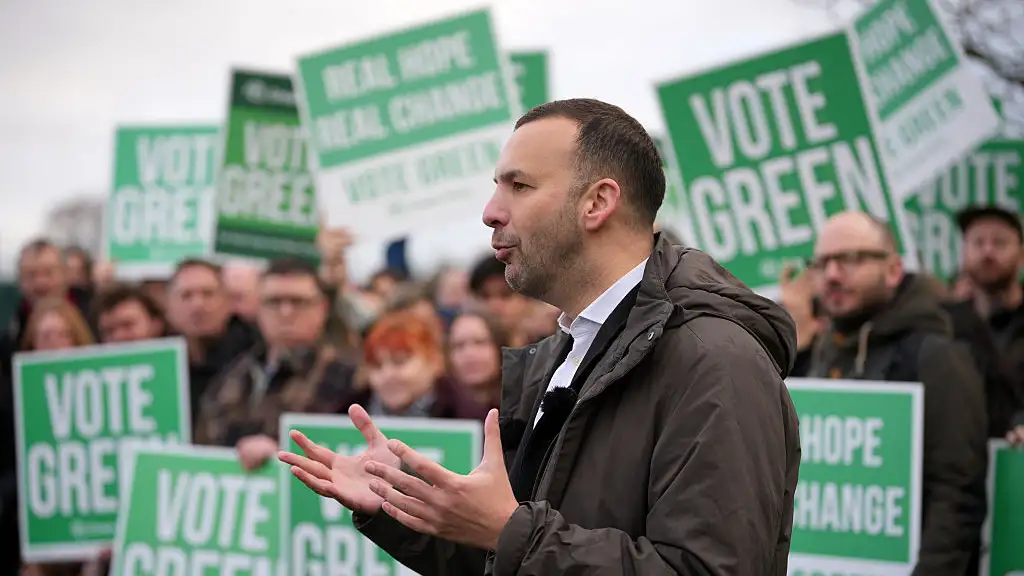
The Green Party’s leadership has also been drawn directly into the dispute. Zack Polanski, the party’s leader in England and Wales, has publicly described himself as anti-Zionist and has said that he regards Zionism as a form of racism in the context of what he describes as the displacement and suffering of Palestinians. However, reports indicate that he has also supported efforts to amend the conference motion and make its wording less divisive.
This has placed Polanski in a complicated position. The party leadership must balance the views of members who strongly support Palestinian rights with concerns from Jewish members and others who believe the proposed policy could create an exclusionary environment. The disagreement has also raised wider questions about how a political party can maintain a clear position on an international conflict while ensuring that internal debate does not become a source of discrimination or hostility.
The timing has added further political sensitivity. The Green Party conference is taking place only days before the Holborn and St Pancras byelection, in which Polanski is standing as the Green candidate. The constituency is receiving considerable political attention, and the controversy over the conference motion has therefore become part of a wider discussion about the party’s political direction.
However, the impact of the conference debate on the byelection remains uncertain. Voters may consider a wide range of local and national issues, while the significance of the motion may differ substantially among different sections of the electorate. The conference itself remains primarily a party policy-making event rather than a referendum on the candidate or the wider election campaign.
The proposed policy also comes after earlier Green Party debates about Israel and Palestine. The party has adopted positions strongly critical of Israel’s treatment of Palestinians and has supported Palestinian rights. At the same time, the party has stated that antisemitism is unacceptable and has said that actions taken in the name of Palestinian resistance must comply with international humanitarian law.
The central dispute is therefore not simply about a single phrase. It concerns how the party defines Zionism, how it distinguishes political ideology from Jewish identity, how it approaches Palestinian self-determination and what consequences should follow if members support positions that the party defines as racist.
The motion’s proposed treatment of Zionism is particularly significant because, if adopted in its current form, it would establish a formal party position rather than merely represent the views of individual members. The wording and any amendments could therefore influence how future internal disputes involving Israel, Palestine, Zionism and antisemitism are handled.
Jewish Greens have stressed that their community is divided on the question and that different Jewish members hold different political views. That internal diversity is an important feature of the debate because it demonstrates that there is no single position among Jewish members of the Green Party. Some are concerned about the proposed policy, while others may share aspects of the broader criticism of Israeli policy and support Palestinian rights.
For Greens for Palestine, the conference represents an opportunity to secure formal recognition of its approach to Zionism and Palestinian self-determination. For opponents and concerned members, the debate represents a test of whether the party can pursue strong criticism of Israel while maintaining a clear distinction between political disagreement and hostility towards Jews.

The outcome will depend on Green Party members and the conference’s democratic procedures. Any amendments adopted before or during the debate could significantly alter the final wording, while the implementation of any approved policy would raise further questions about how it would operate in practice.
The controversy illustrates the wider difficulty facing political organisations when international conflicts become deeply connected to domestic questions of identity and belonging. The debate over Zionism, Israel and Palestine carries strong emotions on all sides, and political parties must navigate competing demands for solidarity, criticism, free expression and protection from discrimination.
As Green members gather in Brighton, the discussion is likely to remain closely watched both inside and outside the party. Whatever decision emerges, the debate is expected to continue beyond the conference because the underlying disagreements over Zionism, Palestinian statehood, antisemitism and the political relationship between Britain and the Middle East extend well beyond a single party policy vote.
Related News:
 Lib Dems Prepare for Election Amid Reform Challenge
 Elif Eralp Emerges as Berlin’s Next Political Force
 Drumcree Talks Falter as Legal Challenge Deepens
 UK-France Returns Deal Faces Expiry as Talks Stall
 Farage and Reform UK Reshape British Politics
 Starmer Leadership Under Pressure After Setbacks
 Is America Ready for an AOC Presidential Run?
 Five Years of Taliban Rule Leave Afghanistan in Crisis
 Ghent Professors Questioned Cofnas Appointment
 RAF Barnham Protests Fuel Tensions in Norfolk Town
 Green Leader Targets Starmer’s Former Seat
 Masked Protesters Bring Dover Port Traffic to Standstill
 Europe’s democracies face a growing far-right threat
 Pavlohrad Strike Kills Five, Injures 67
 Patriot Platform Raises Concern Across Britain
 Reform UK Receives Record £36m Donation From Crypto Billionaire
 Election Candidate Abuse Raises Alarm in England
 Slave-Trade Wealth Embedded in Britain’s Financial System
 New Evidence Deepens Church of England Slavery Reckoning
 King Refers Jamaica Slavery Petition to Privy Council
 UK Plans New Centre to Counter Information Warfare
 UK Pauses Chagos Deal Amid US Opposition
 Free Speech Emerges as Key UK Election Issue
 Three Die in Channel Crossing Attempt Near France
 Dale Vince Plans New London-Wide News Operation
 Burnham Opens Door to Possible UK Return to EU
 British Woman in Iran ‘Losing Hope’ Amid Ongoing Detention
 BBC Journalist Held and Interrogated in Vietnam
 Rama Rebukes Mahmood for Targeting Albanian Families
 UK and EU Signal Fresh Push for Defence Cooperation Talks
 Starmer Condemns ‘Depraved’ Russian Strikes on Ukraine
 Trump Tariffs Threat Spark UK and EU Alarm
 Gordon Brown urges court for crimes against children
 UK Minister Denies Iran Missile Threat to Britain
 Army Probes Apache Flyover at Kid Rock’s Nashville Estate
 Relationship with Trump may be beyond repair, Starmer warned
 Kezia Dugdale Warns of Possible Reversal of Equal Rights Gains
 UK Stands Firm on Falklands Amid US Rift
 John Terry Faces Backlash Over Political Posts
 US ‘Narco Boat’ Strikes Draw Global Outcry
 Barrister Criticises Trial After Suicide Case Verdict
 Immigration Judges Fear Pressure in Trump Era
 UK Nations Brace for Potential Breakup Amid Reform Surge
 New South Wales Premier Chris Minns Signals Tough Road Ahead for Labor
 Le Pen’s Popularity Holds Despite Conviction
 Three-Quarters of England’s Riverbanks Still Off Limits
 Westminster Council Threatens Charing Cross Soup Kitchen
 BBC Warned About Missing Clothes of Murder Victim
 Burnham unveils £65m drought aid for farmers
 Former Diplomats Urge UK and France to Act on Palestine
 British Museum Faces Questions Over Peter Thiel’s Private Bayeux Viewing
 Ukraine Villagers Demand Answers After Deadly Arms Depot Strike
 Internal Exclusions Surge in England’s Schools
 Bayeux Tapestry Revives Franco-British Ties
 Trump Calls Iran War ‘Small Potatoes’ Despite US Deaths
 Reform Faces Fresh Financial Controversy
 Nepal Tunnel Rescue Offers Hope Amid Flood Devastation
 UK plans tougher Israel stance with settlement trade ban
 Councils spend £125m on illegal children’s care
 Royal Crown Branded Enslaved Africans in Britain’s Slave Trade
 Israel Accused of Undermining Palestinian Life
 Amnesty Finds Coordinated Abuses in Iran Protest Crackdown
 Turkey LGBTQ Crackdown Expands With New Arrests
 Yemen War Displaces 125,000 as Fighting Intensifies
 Mahmood Warns Far Right Over Asylum Protests
 Disabled Travellers Seek Fairer UK Care Rules
 NHS Breast Care Review Finds Serious Patient Harm
 US Networks Suspend Trump White House Pool Coverage
 Democrat Says ICE Restricted Detention Camp Oversight
 UK Unveils Centre to Counter Foreign Disinformation
 GP List Policy Risks Cutting Off Vulnerable Patients
 Greece Pushes for Parthenon Marbles Reunification
 Lula accuses Trump of seeking control over Brazil
 Nepal PM calls deadly flood a global climate warning
 Republican Senator Questions Trump Ad Spending
 Madrid Tent Camp Grows as Spain Housing Crisis Deepens
 London Facial Recognition Trial Ends With False Alert
 Economic growth and political strain reshape Benin
 French Student Protests Escalate Into Violent Clashes
 UK University Strikes Spread as Financial Pressure Grows