Published: 09 October 2026. The English Chronicle Desk. The English Chronicle Online
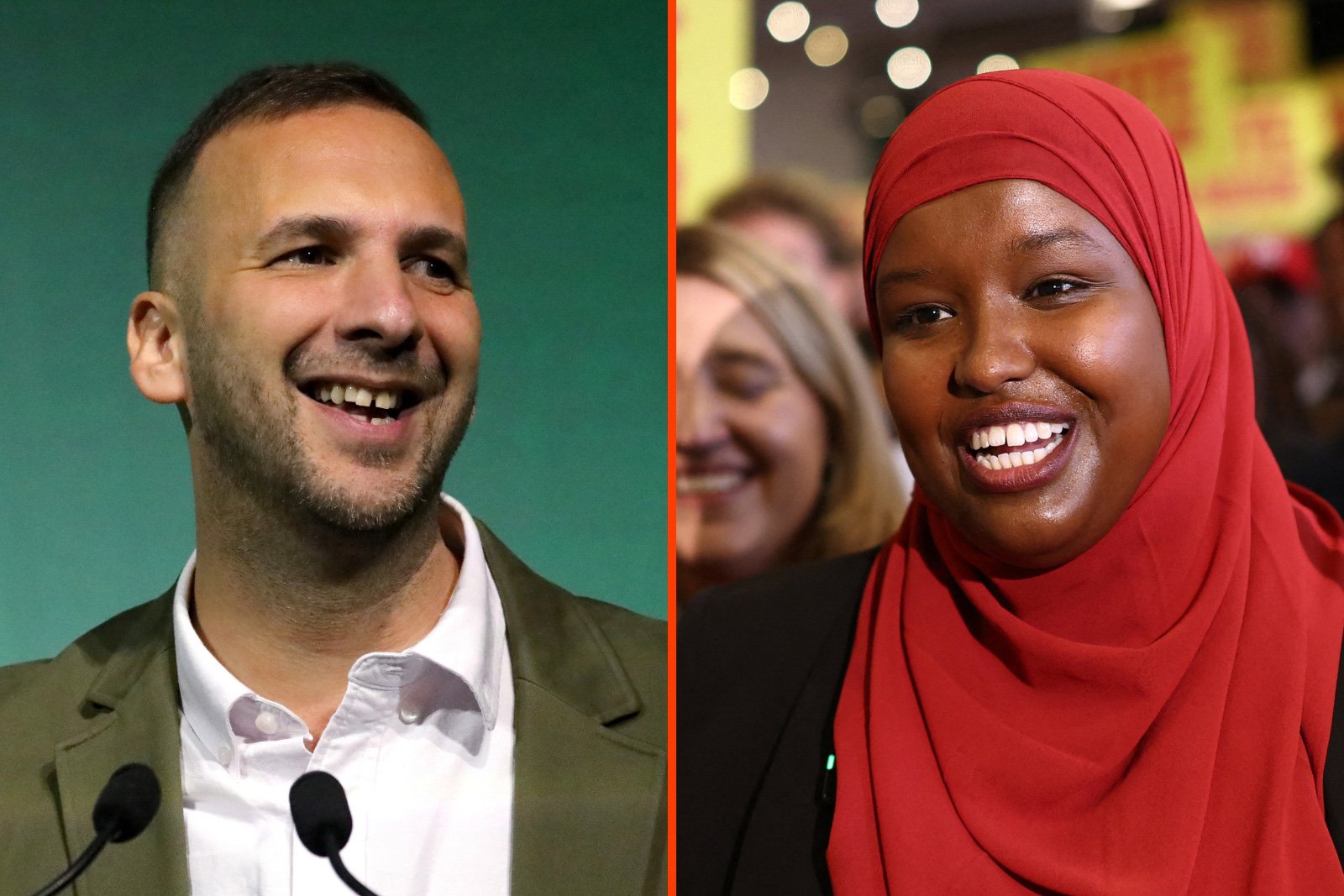
Britain’s Labour Party has defeated the Green Party in the Holborn and St Pancras by-election, delivering an important victory for Prime Minister Andy Burnham and dealing a setback to Green leader Zack Polanski’s ambitions to become a dominant force on the political left. Labour candidate Sagal Abdi-Wali secured 12,292 votes, representing 45% of the total, while Polanski finished second with 8,928 votes, or 33%, in a contest that had attracted considerable national attention.
The result offers Labour an encouraging sign after a challenging period for the party and gives Burnham a significant early electoral success. However, the low turnout and the Greens’ continued ability to attract a substantial share of the vote suggest that the contest has not resolved the wider struggle for progressive voters in Britain. Both parties now face the task of translating the result into a broader political advantage ahead of future elections.

The by-election was triggered in September after former prime minister Keir Starmer resigned as the constituency’s member of parliament. The north London seat quickly became a closely watched contest between Labour and the Greens, with both parties viewing it as an opportunity to demonstrate their strength among voters seeking progressive political change.
Labour’s victory was particularly important because the Greens had invested heavily in the constituency. Thousands of party members were deployed to canvass residents, with campaigning efforts beginning even before Polanski was selected as the candidate. The party hoped that its growing profile, environmental policies and criticism of the government’s approach to social and international issues would help it make a breakthrough.
Instead, Abdi-Wali’s victory prevented the Greens from turning their recent momentum into a parliamentary gain in one of London’s closely contested political battlegrounds. For Burnham, it provided reassurance that Labour could still compete effectively against a party seeking to attract voters dissatisfied with the established political order.
Turnout, however, remained a concern. Only 38.7% of eligible voters participated, the lowest turnout recorded in an English by-election during the current parliament. The figure was 15.4 percentage points below the turnout at the 2024 general election. Although Labour secured a clear lead among those who voted, the limited participation raised questions about the extent to which the result reflected broader public enthusiasm for the party.
The outcome also comes against a challenging political backdrop in London. The Greens made significant gains in local elections in May, taking control of three councils and demonstrating their ability to mobilise voters in urban areas. Labour’s success in Holborn and St Pancras therefore provides encouragement, but it does not guarantee that the party has regained the confidence of all voters who have drifted towards alternative progressive movements.
Abdi-Wali used her victory speech to deliver a message about belonging and political inclusion. A former child refugee who arrived in Britain from Somalia during the 1990s, she spoke emotionally about the significance of winning a parliamentary seat and challenged political rhetoric that seeks to divide communities.
“I hope this moment says something about who gets to belong,” she said, explaining that she wanted people who shared her background to see themselves represented in public life. She also referred to the constituency’s identity as part of Camden and Britain, presenting her victory as a statement about the place of people from migrant backgrounds in the country’s democratic institutions.
Her remarks appeared to respond to comments made by Reform UK figure Zia Yusuf shortly after the by-election was announced. Yusuf had questioned whether Abdi-Wali was British, prompting criticism over the treatment of her identity during the campaign. Without allowing the issue to dominate her victory address, Abdi-Wali emphasised that national belonging should not be defined through divisive political arguments.
The Labour leadership welcomed the result as evidence that its message was gaining traction. Bridget Phillipson, the party chair, said the victory demonstrated that Labour’s promise of hope and progressive change was reaching voters. She argued that people wanted political parties not only to discuss change but also to demonstrate that they could deliver it in practice.
For Burnham, the result was his first major electoral test as prime minister. The victory reinforces polling suggesting that Labour has recovered some support lost under Starmer, although a single by-election cannot establish whether the party’s national position has undergone a lasting transformation. The government will need to show that its political message is supported by improvements in areas such as public services, household living standards and economic opportunity.
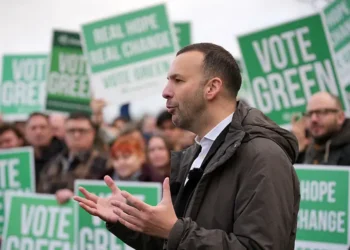
The result was considerably more difficult for Polanski, whose party has faced internal turmoil in recent days. The controversy centred on a motion adopted at the Green Party’s conference declaring Zionism, the movement supporting a Jewish state, a form of racism. The motion also called for Israel to be replaced by a single Palestinian state, making the issue a source of intense disagreement within the party.
Four of the Greens’ five MPs opposed the motion, but members voted to adopt it. The decision prompted questions about the party’s position on Israel and Palestine, the distinction between criticism of Israeli government policy and hostility towards Jewish identity, and the leadership’s handling of a deeply divisive debate.
Polanski did not participate in the conference debate and vote, choosing instead to campaign in Holborn and St Pancras. His absence drew criticism because the motion was one of the most consequential internal decisions the party had faced in years. Critics argued that a party leader should have been present to provide direction during a controversial debate, even while campaigning in an important by-election.
Caroline Lucas, the former Green MP and party leader, declined to say whether Polanski should resign after the defeat. However, she said she wanted him to demonstrate the leadership that she believed had been missing during the conference controversy. Her comments highlighted concerns within the party about whether Polanski had adequately managed the dispute.
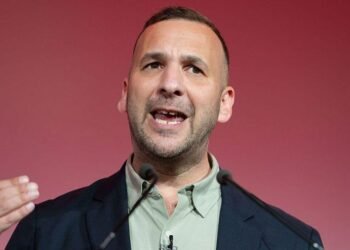
Polanski rejected suggestions that he should step down. Speaking after the result, he said he could continue leading a party with approximately 220,000 members and argued that the Green movement was larger than a single election or internal policy motion. He maintained that the party would continue to grow despite the setback.
In a subsequent interview, Polanski described the Greens’ performance as positive and argued that the party was becoming a more serious electoral threat to Labour. He pointed to the result as the party’s second-best performance in a by-election, presenting the substantial vote share as evidence that its support remained significant.
He also defended his decision to prioritise campaigning over attending the conference debate. According to Polanski, local campaigners wanted him to spend time in the constituency addressing local concerns, and he believed that being present on the ground was the right decision. He said he would have supported the controversial motion if it had been amended to remove the call for a single Palestinian state, but he did not support the version that was ultimately adopted.
The Green leader’s explanation may reassure some supporters, but the controversy has created a difficult political challenge. His party has sought to present itself as an alternative for voters who believe established parties have failed to address issues ranging from inequality and the environment to Britain’s position on international conflicts. Internal divisions over Israel and Palestine risk distracting from that broader programme and making it harder to maintain a consistent public message.
Abdi-Wali also addressed the debate surrounding the Greens’ conference motion. Speaking after her victory, she said local residents had regarded the issue as divisive and expressed a preference for political discussion that did not deepen existing tensions. She also highlighted the work of Labour Foreign Secretary Ed Miliband on Gaza, Palestine and Israel, saying his approach had resonated with people in the constituency because they believed it involved action rather than words alone.
The comments indicated that Labour had found a way to engage with voters concerned about the Middle East without allowing the issue to define its entire campaign. The Greens’ internal disagreement, by contrast, became a prominent feature of the contest and contributed to the difficult circumstances surrounding Polanski’s candidacy.
The election figures also raise questions about the extent of the Greens’ expansion. In February, the party won the Gorton and Denton by-election, dealing Labour a major political blow and strengthening expectations that the Greens could challenge Labour in other constituencies. Their popularity subsequently rose, with polling at one stage placing them above 20%.
More recent surveys have shown a decline in Green support, while Polanski’s personal approval ratings have also weakened. In Holborn and St Pancras, the 8,928 votes secured by Polanski fell short of the nearly 11,350 votes combined by the Greens and independent pro-Palestinian candidate Andrew Feinstein at the 2024 general election. Although comparisons between different elections must be treated cautiously, the figures suggest the Greens did not substantially expand their electoral base in the constituency.
For Labour, the challenge now is to turn the by-election victory into lasting public confidence. The result gives Burnham breathing space and demonstrates that the party can resist pressure from the Greens in a seat where progressive voters were heavily contested. Yet low turnout suggests many residents remained disengaged, while the Greens’ 33% share confirms that a substantial section of the electorate continues to support an alternative.

For Polanski, the immediate priority will be to restore confidence in his leadership, manage internal divisions and demonstrate that the party can convert its membership and campaigning energy into election victories. The result has weakened his position in the short term, but it has not removed the Greens from the wider political contest.
Ultimately, the Holborn and St Pancras by-election has provided Labour with a valuable victory while exposing the difficulties confronting its progressive rival. Abdi-Wali’s win has placed questions of representation and belonging at the centre of the result, while the dispute over the Green Party’s position on Zionism has intensified scrutiny of Polanski. The broader battle for Britain’s political left remains unresolved, but Labour enters the next stage of that contest with renewed confidence and the Greens with important decisions to make about their direction.
Related News:
 Holborn and St Pancras Vote Tests Labour and Greens
 Labour Wins Key London By-election as Greens Fall Short
 Burnham Rises as Farage and Polanski Face Setbacks
 Farage and Reform UK Reshape British Politics
 Starmer Leadership Under Pressure After Setbacks
 Green Leader Targets Starmer’s Former Seat
 Marina Hyde Finds Hope Amid Political Chaos
 Masked Protesters Bring Dover Port Traffic to Standstill
 Lib Dems Prepare for Election Amid Reform Challenge
 King Refers Jamaica Slavery Petition to Privy Council
 Elif Eralp Emerges as Berlin’s Next Political Force
 Three Die in Channel Crossing Attempt Near France
 Burnham Opens Door to Possible UK Return to EU
 Drumcree Talks Falter as Legal Challenge Deepens
 UK-France Returns Deal Faces Expiry as Talks Stall
 Green Party faces dispute over Zionism motion
 British Woman in Iran ‘Losing Hope’ Amid Ongoing Detention
 BBC Journalist Held and Interrogated in Vietnam
 Rama Rebukes Mahmood for Targeting Albanian Families
 Russian Vessel Used Lasers on RAF Pilots, UK Claims
 UK and EU Signal Fresh Push for Defence Cooperation Talks
 Starmer Condemns ‘Depraved’ Russian Strikes on Ukraine
 Trump and Chagos Deal Rift Over Iran Strikes
 Farage Chagos Islands Row Sparks Fury
 Trump Tariffs Threat Spark UK and EU Alarm
 Gordon Brown urges court for crimes against children
 Yvette Cooper: UK Must Follow Principles, Not US Pressure
 UK Minister Denies Iran Missile Threat to Britain
 Army Probes Apache Flyover at Kid Rock’s Nashville Estate
 Relationship with Trump may be beyond repair, Starmer warned
 Kezia Dugdale Warns of Possible Reversal of Equal Rights Gains
 NHS Safety Fears as Nurses Cover Doctor Gaps
 Charles Faces Trump Test in High-Stakes US Visit
 UK Stands Firm on Falklands Amid US Rift
 Reform UK funding: mystery billionaire revealed
 John Terry Faces Backlash Over Political Posts
 France Faces Record Presidential Crowded Race Amid Far-Right Surge
 Labour Members Turn Against Starmer Leadership
 UK Pushes for New EU Goods Trade Deal
 Deadly Russian Air Raids Strike Across Ukraine
 UK Nations Brace for Potential Breakup Amid Reform Surge
 New South Wales Premier Chris Minns Signals Tough Road Ahead for Labor
 Le Pen’s Popularity Holds Despite Conviction
 Labour MPs Urge Burnham to Revive UK Aid Target
 Three-Quarters of England’s Riverbanks Still Off Limits
 Is America Ready for an AOC Presidential Run?
 Burnham unveils £65m drought aid for farmers
 Former Diplomats Urge UK and France to Act on Palestine
 Ghent Professors Questioned Cofnas Appointment
 RAF Barnham Protests Fuel Tensions in Norfolk Town
 Bayeux Tapestry Revives Franco-British Ties
 UK plans tougher Israel stance with settlement trade ban
 Europe’s democracies face a growing far-right threat
 Pavlohrad Strike Kills Five, Injures 67
 Mahmood Warns Far Right Over Asylum Protests
 Disabled Travellers Seek Fairer UK Care Rules
 Middle powers seek new alliances amid Trump era
 UK Plans New Centre to Counter Information Warfare
 UK Pauses Chagos Deal Amid US Opposition
 Greece Pushes for Parthenon Marbles Reunification
 Free Speech Emerges as Key UK Election Issue
 Madrid Tent Camp Grows as Spain Housing Crisis Deepens
 Burnham Opens Debate on Pension Triple Lock for Care
 French Student Protests Escalate Into Violent Clashes
 Badenoch Raises Prospect of 2027 UK Election
 French School Protests Escalate as 400 Schools Close
 Polanski Says Leadership Not Tied to By-election Result
 Families Await USS Abraham Lincoln Homecoming
 Bosnia’s Young People Look Beyond Election Hope
 Latin America women fear rollback of rights
 Gosport Protesters Clash With Police Over Migrant Rescue
 UK Mission in East Jerusalem to Remain Open
 Luton Residents Reject Claims of ‘No-Go Zones’
 France Urges UK to Consider Returning to EU
 USS Lincoln Ends Record 265-Day Deployment
 French Student Protests Grow Despite Government Pledge
 India’s Youth Movement Alleges Mass Detentions Before Protest
 Gaza War Deepens India’s Strategic Ties With Israel
 Turkey Rules Out Troops in Saudi Arabia’s Houthi Conflict
 Bolsonaro Gains Key Endorsement Ahead of Brazil Runoff