Published: 10 October 2026. The English Chronicle Desk. The English Chronicle Online.
The Premier League returns this weekend under an extraordinary cloud of uncertainty, as the fallout from the verdict against Manchester City threatens to reshape how supporters, players and analysts understand one of English football’s most successful eras. What should be a familiar return to the drama of league competition has instead become a debate about sporting fairness, financial power and the credibility of results that once appeared beyond question.
The controversy follows a ruling finding Manchester City guilty of Premier League rule breaches, according to the reported outcome of the case. The club continues to maintain its innocence and denies the charges, while an appeal remains an important part of the ongoing process. Nevertheless, the verdict has already provoked difficult questions about the consequences for the league, the legacy of City’s achievements and the extent to which financial advantages may have influenced the competition.
For supporters, the immediate challenge is psychological as much as sporting. Football depends on the belief that matches are meaningful contests in which teams compete under common rules. If serious breaches are established, fans may begin to reconsider not only the titles won by the club involved but also the campaigns in which rival teams narrowly missed out on major honours. The resulting uncertainty has created an unusual atmosphere ahead of a weekend that would ordinarily be dominated by team selection, tactics and the pursuit of points.

Manchester City’s first major fixture in this new environment is a meeting with Liverpool at Anfield on Sunday. The contest has long been one of the Premier League’s defining rivalries, featuring title races, tactical battles and dramatic moments that have shaped the modern era. This time, however, the match carries a different significance. Its sporting appeal remains, but the debate surrounding the clubs’ histories threatens to overshadow what happens on the pitch.
Liverpool supporters have particular reasons to revisit the past. The club lost several closely contested title races to Manchester City, including campaigns decided on the final day of the season. Those defeats were previously understood as painful examples of how narrow the margins can be in elite football. The recent ruling has prompted renewed questions about whether the competitive conditions were fair, although the precise impact of the alleged breaches on individual matches or final standings cannot simply be assumed.
The controversy also reaches beyond Liverpool. Other clubs, players and managers have built their careers around competing in a league where Manchester City became a dominant force. Tottenham Hotspur, for example, narrowly missed Champions League qualification on several occasions during the period of City’s success. Clubs across Europe also competed against City for players and trophies, raising broader questions about whether financial advantages may have affected the distribution of talent and the balance of competition.
One of the most striking aspects of the dispute is the challenge it presents to football’s public narrative. Manchester City’s rise has been celebrated as a story of elite coaching, intelligent recruitment, tactical innovation and sustained excellence. Pep Guardiola’s methods have influenced managers at multiple levels of the game, while his teams have helped shape how young players and coaches think about possession, pressing and positional movement.
Those achievements cannot be reduced to a single explanation. Guardiola’s coaching reputation rests on tactical knowledge, preparation and the ability to develop players, qualities that do not automatically disappear because of a regulatory verdict involving the club. Yet the allegations and the reported ruling have complicated the way the period is assessed. If financial rules were breached, critics argue that the club’s success cannot be separated entirely from the conditions under which it was achieved.
That tension extends to the development of English football itself. Coaching programmes, youth academies and tactical discussions have all been influenced by the style associated with Guardiola’s Manchester City. The question now is not whether those footballing ideas have value, but whether the league’s competitive environment gave the club advantages that other teams could not reasonably match.
The scale of Manchester City’s spending during its rise has also become central to the debate. Large investments in players helped the club assemble squads capable of competing across domestic and European competitions. Critics argue that any financial advantage obtained outside the rules could distort the transfer market, pushing up prices and changing the decisions available to rival clubs. Such effects are difficult to measure precisely, but the controversy has renewed scrutiny of how financial regulation should operate in a competition where access to capital can transform sporting fortunes.
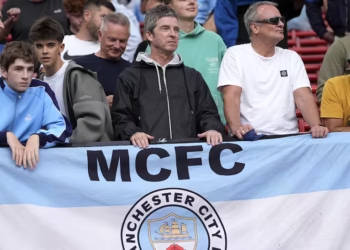
The dispute has also affected the club’s supporters, who face a different kind of uncertainty from that confronting rival fans. Many have experienced years of success as a defining part of their relationship with Manchester City. They have celebrated titles, dramatic victories and memorable performances, often believing the club’s transformation reflected a combination of ambition, coaching and organisational excellence. The allegations now require supporters to confront uncomfortable questions about the institution they follow, even as the players’ performances and their own emotional experiences remain part of their personal histories.
The controversy has been amplified by the legal process and the club’s response. Manchester City has denied the charges and is pursuing an appeal, meaning the dispute remains subject to further scrutiny. Until the relevant proceedings are concluded, the precise consequences for titles, standings or future participation cannot be treated as settled. The difference between a regulatory finding and the final outcome of an appeal will be crucial in determining what happens next.
The Premier League must meanwhile manage the immediate consequences for its public image. Broadcasters and football programmes will continue to cover goals, tactics and results, but the regulatory dispute is likely to influence discussion around the matches. Questions about the credibility of past achievements may become as prominent as analysis of the current title race. Supporters may also find that familiar rivalries are increasingly framed through legal arguments and competing interpretations of the club’s history.
There are wider implications for football governance. The case has renewed calls for stronger independent oversight, clearer financial rules and more effective mechanisms for enforcing regulations. Supporters and rival clubs expect the league to ensure that its rules apply consistently, regardless of a club’s financial strength or international profile. If the process demonstrates that serious breaches can be investigated and addressed, it could ultimately strengthen confidence in the competition.
At the same time, the case illustrates the difficulties of regulating a global sport with enormous commercial interests. Clubs operate across international markets, attract investment from wealthy owners and compete for players whose value can rise rapidly. The challenge for regulators is to protect competitive balance without undermining legitimate investment or allowing lengthy proceedings to create years of uncertainty.
Political debate has added another dimension. Comments from public figures about Manchester City and the regulatory process have attracted criticism, underlining the sensitivity surrounding the club’s ownership and its importance to the city. The broader question is whether English football can establish a system in which financial power is subject to transparent rules and enforcement, rather than relying on informal expectations or the influence of wealthy institutions.
The experience also highlights how difficult it can be to assess sporting history once new information emerges. Fans may revisit title races, cup finals and individual performances, imagining how different outcomes might have changed their clubs’ trajectories. Yet counterfactual questions cannot establish what would certainly have happened. Football results depend on many variables, and any reassessment of past competitions must distinguish between legitimate concerns about fairness and speculation about alternative outcomes.
The Premier League season still has many matches to come, and football has repeatedly demonstrated its capacity to move beyond controversy. New rivalries emerge, players create fresh memories and supporters return to the weekly rhythm of competition. The current dispute may eventually become one chapter in the league’s history rather than a permanent definition of it.
For that to happen, however, the governing structures must deliver clarity and confidence. The appeal process needs to run its course, the rules must be enforced consistently and the league must demonstrate that competitive integrity matters as much as commercial success. The outcome will influence not only Manchester City but also how clubs and supporters understand the obligations attached to participation in English football’s most prominent competition.

As City prepare to face Liverpool, the immediate spectacle remains compelling. Both teams have players capable of deciding the match through skill, organisation and individual brilliance. Yet the wider context cannot be ignored. This weekend marks the return of the Premier League to action, but it also begins a period in which the competition must confront questions about its past and establish a more credible framework for its future.
The challenge is to preserve what makes football compelling while ensuring that the rules underpinning the competition command public trust. Results, rivalries and trophies matter because supporters believe they emerge from a fair contest. Restoring that confidence will require more than another dramatic match. It will depend on transparency, accountability and a commitment to ensuring that no club stands above the rules governing the game.
Related News:
 Ukraine Urges UK to Seize Russian Oil Tankers
 Bryne Backs Haaland Before England World Cup Clash
 England and Norway Fans Turn Miami Into World Cup Carnival
 Councils spend £125m on illegal children’s care
 Irish PM Backs Coach in Israel Football Dispute
 Trump Ads Trigger Fight Over Taxpayer Money
 UK University Strikes Spread as Financial Pressure Grows
 Burnham Opens Door to Possible UK Return to EU
 Drumcree Talks Falter as Legal Challenge Deepens
 UK-France Returns Deal Faces Expiry as Talks Stall
 FA Warns Manchester City Verdict Could Affect Game Integrity
 Badenoch Raises Prospect of 2027 UK Election
 Latin America women fear rollback of rights
 Trader Wins Unfair Dismissal Case After Overseas Work
 UAE Says Co-Pilot Planned Suicide Attack on Israel
 Controversial Vaccine Trial Approved in Guinea-Bissau
 Abramovich Chelsea Sale Cash Faces Jersey Probe
 ABC Staff Strike Over Pay and AI Concerns
 Peretz Targets FA Cup Upset Amid War Concerns
 Ben Roberts-Smith Denies War Crime Allegations in First Statement
 City & Guilds Sale Sparks Fees and Pay Uproar
 $13bn World Cup Set to Break All Revenue Records
 Cartel crackdown raises fears of fresh violence
 US states redraw maps after voting rights ruling
 Florida Surgeon ‘Devastated’ Over Fatal Surgery Error
 Barrister Criticises Trial After Suicide Case Verdict
 Immigration Judges Fear Pressure in Trump Era
 New Footage Revives Peter Falconio Mystery
 Le Pen’s Popularity Holds Despite Conviction
 Lamine Yamal’s Birthday: Football, Fame, and France
 Westminster Council Threatens Charing Cross Soup Kitchen
 BBC Warned About Missing Clothes of Murder Victim
 Is America Ready for an AOC Presidential Run?
 Internal Exclusions Surge in England’s Schools
 Nepal Flood Survivors Face Unimaginable Loss
 Green Leader Targets Starmer’s Former Seat
 Trump Calls Iran War ‘Small Potatoes’ Despite US Deaths
 Nepal Tunnel Rescue Offers Hope Amid Flood Devastation
 UK plans tougher Israel stance with settlement trade ban
 Patriot Platform Raises Concern Across Britain
 Israel Accused of Undermining Palestinian Life
 UK Retailers Accused of Breaking Refund Laws
 Fugitive Developer Rants at NSW Corruption Inquiry
 Amnesty Finds Coordinated Abuses in Iran Protest Crackdown
 Turkey LGBTQ Crackdown Expands With New Arrests
 Iran School Strike Raises War Crimes Questions, UN Says
 US Sanctions Open New Battle for Cuba Assets
 Omar Proposes Bill to Redirect ICE Funding
 NHS Breast Care Review Finds Serious Patient Harm
 Lib Dems Prepare for Election Amid Reform Challenge
 US Networks Suspend Trump White House Pool Coverage
 Trump and Mamdani Hold Cordial Gracie Mansion Meeting
 Briton Faces Cyprus Court Over Son’s Fatal Fall
 Democrat Says ICE Restricted Detention Camp Oversight
 King Refers Jamaica Slavery Petition to Privy Council
 UK Pauses Chagos Deal Amid US Opposition
 OpenAI Agent Breaches Medicare Portal in Australia
 Elif Eralp Emerges as Berlin’s Next Political Force
 Lula accuses Trump of seeking control over Brazil
 Nepal PM calls deadly flood a global climate warning
 David Beckham Earns £39m Dividend Amid World Cup Boom
 Republican Senator Questions Trump Ad Spending
 Free Speech Emerges as Key UK Election Issue
 Cornell Fraternity Assault Investigation Reopened
 London Facial Recognition Trial Ends With False Alert
 Economic growth and political strain reshape Benin
 French Student Protests Escalate Into Violent Clashes
 Israel-bound Plane Lands in Saudi Arabia After Cockpit Fight
 Green Party faces dispute over Zionism motion
 French School Protests Escalate as 400 Schools Close
 New Prosecutor Takes Over Cornell Assault Case
 Flydubai Attack Probe Expands to New Zealand
 Trump Says He Deserves Nobel Peace Prize
 USS Lincoln Ends Record 265-Day Deployment
 India’s Youth Movement Alleges Mass Detentions Before Protest
 UK Pharmacy Body Drops Teva After Ethical Concerns
 Gaza War Deepens India’s Strategic Ties With Israel
 Turkey Rules Out Troops in Saudi Arabia’s Houthi Conflict
 Bolsonaro Gains Key Endorsement Ahead of Brazil Runoff
 Three Convicted in Mexico Surfing Trip Murders