Published: 20 October 2026. The English Chronicle Desk. The English Chronicle Online
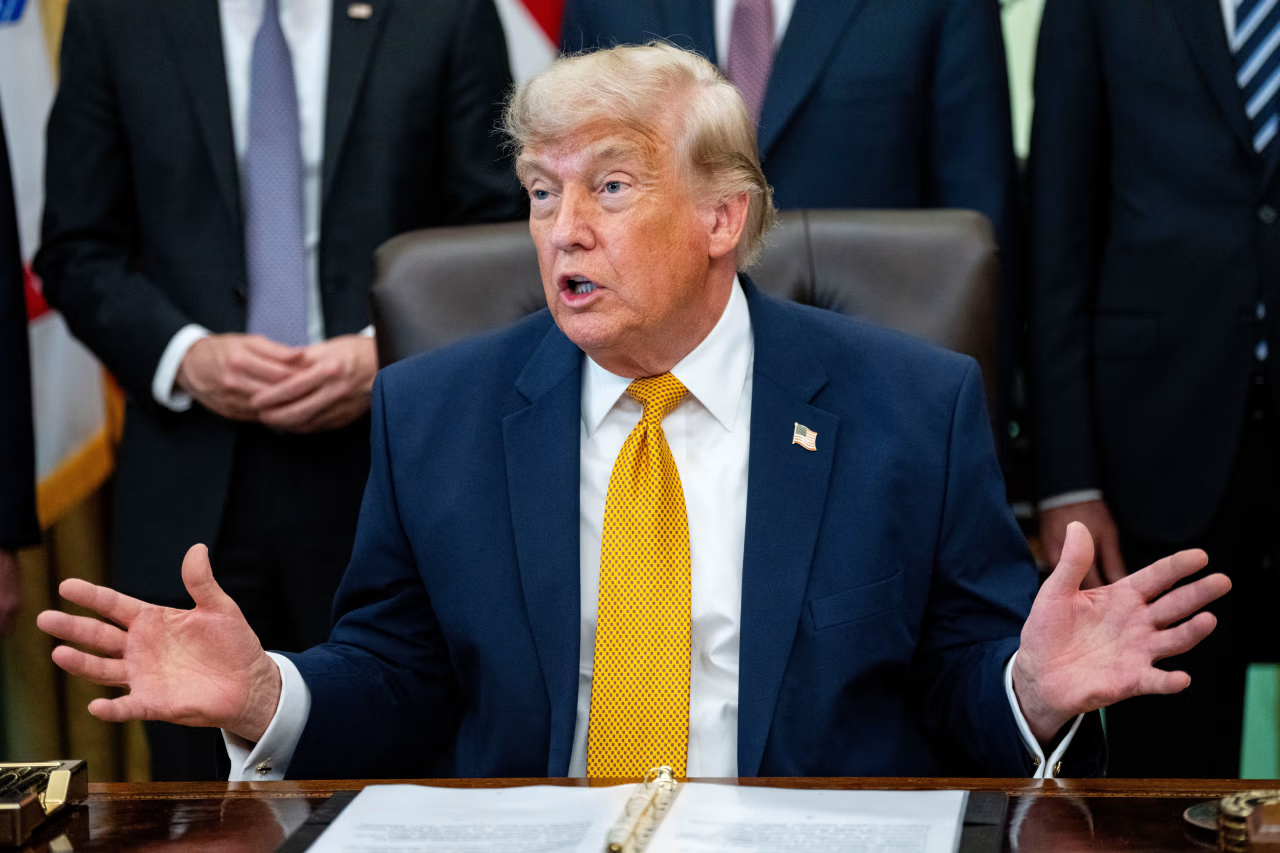
Donald Trump has taken his campaign to Kansas in an increasingly urgent effort to protect Republican control of the US Senate, acknowledging that the traditionally conservative state could be becoming more competitive ahead of the 3 November midterm elections. The president’s appearance at a rally near Wichita on Monday highlighted growing Republican concerns about an unexpectedly strong challenge from Democratic candidate Adam Hamilton to incumbent Senator Roger Marshall.
Kansas has long been considered one of the safest Republican states in the country. No Democrat has won a US Senate election there since 1932, and Republican candidates have maintained a formidable record across decades of national elections. However, mounting dissatisfaction over living costs, the consequences of foreign conflicts and concerns about the Trump administration’s policies have placed the state under an unusual political spotlight.
Trump’s decision to campaign personally for Marshall, a Republican ally seeking another term, illustrated how seriously the party is treating the contest. Speaking before approximately 5,000 supporters at a multipurpose arena in Park City, outside Wichita, the president acknowledged that Kansas was showing signs of political change.

“You’re really sort of — I hate to say it — you’re sort of tending toward the purple,” Trump told the crowd, referring to the political colour commonly used to describe a state where neither Republicans nor Democrats enjoy an overwhelming advantage. He pointed to the state’s Democratic governor, Laura Kelly, before stressing the importance of securing Marshall’s re-election.
The rally was Trump’s first campaign event in Kansas in eight years. His appearance came as Republicans face the possibility of losing seats across the country and potentially surrendering control of both chambers of Congress. The midterm elections will determine the balance of power in the Senate and House of Representatives during the remaining years of Trump’s presidency.
Opinion polls have suggested a close contest between Marshall and Hamilton, an outcome that would have seemed highly unlikely in Kansas only a short time ago. Hamilton reportedly raised $11 million during the third quarter, compared with approximately $800,000 raised by Marshall over the same period. The fundraising figures indicate that the Democratic campaign has attracted substantial financial support, although money alone does not determine electoral success.
Hamilton, 62, is a Methodist pastor who founded the Church of the Resurrection, a congregation with approximately 24,000 members and the largest United Methodist congregation in the United States. His religious background and previous Republican affiliations distinguish him from the image of a conventional Democratic challenger in a deeply conservative state.
He has criticised Trump’s leadership as erratic and opposed the president’s tariff policies. His campaign is attempting to appeal to voters concerned about economic pressures and political division while presenting him as a more moderate alternative to Marshall.
Marshall, 66, is an obstetrician-gynaecologist and former member of the House of Representatives who has remained a staunch Trump supporter. He has backed the president on several major political issues, including repeating the debunked claim that the 2020 presidential election was stolen.
At Monday’s rally, Marshall sought to portray Hamilton as out of step with Kansas voters, describing him as too progressive for the state. He accused his opponent of supporting protests against police, drag shows and policies that he argued conflicted with conservative Christian values. Marshall also criticised Hamilton’s positions on race and beef consumption, attempting to reinforce the cultural differences between the candidates.
Trump adopted an even more confrontational tone. He attacked Hamilton as a radical left-wing figure who was pretending to be a moderate and made a series of allegations about the Democrat’s political views, religious positions and immigration policies. The president claimed Hamilton supported the arrival of refugees who would commit violent crimes and alleged that he had used church money to fund transgender-related activities. These claims were presented as campaign rhetoric and were not independently established by the material surrounding the rally.
Trump also sought to connect domestic political opponents with unrest in Europe, referring to recent violence in France. He repeated an unsubstantiated claim that immigrants were responsible for leading the disturbances and suggested that Democrats wanted similar disorder in the United States.
His speech included attacks on Muslim politicians Abdul El-Sayed, Ilhan Omar and Rashida Tlaib. When Tlaib’s name was mentioned, members of the audience shouted for her deportation. Trump also falsely claimed that El-Sayed and his sister belonged to the Muslim Brotherhood, an Islamist opposition movement based in Egypt, and suggested that El-Sayed would leak sensitive information if elected to the Senate and appointed to its intelligence committee.
The episode demonstrated how immigration, religion and cultural identity continue to shape political campaigning in the United States. Trump’s supporters responded enthusiastically to his remarks, while the rally’s confrontational atmosphere reflected the deep divisions surrounding the approaching elections.
However, the economic pressures affecting Kansas may prove more difficult for Republicans to overcome through cultural and ideological appeals alone. The state has a large agricultural sector, and farmers have faced rising operating expenses associated with the Iran war and higher fuel prices. A gallon of diesel has reportedly approached $6, increasing the cost of transporting crops, operating machinery and completing seasonal harvesting work.
The administration has also angered some cattle ranchers through proposals to reduce import tariffs in an effort to lower beef prices. Meanwhile, aggressive immigration enforcement operations have caused concern among some agricultural employers, who say workers have stayed away from farms amid fears of raids.
These developments create a complicated political environment for Marshall. Although many Kansas voters remain strongly conservative, agricultural communities may be particularly sensitive to policies affecting fuel expenses, labour availability, trade and the prices farmers receive for their products.
Trump announced a new programme at the rally to provide farmers with $8 billion in support intended to offset diesel costs during the harvest season. The proposal was designed to demonstrate that his administration recognises the financial pressures facing rural communities. Its political effectiveness, however, will depend partly on whether farmers consider the assistance sufficient to address their broader economic concerns.
The contest also tests whether Trump’s campaigning style can continue to mobilise Republican voters while persuading undecided voters to remain loyal to the party. His rallies have traditionally relied on forceful speeches, attacks on political opponents and appeals to national identity. Yet critics argue that his growing involvement in local races risks turning elections into judgments on his presidency rather than allowing candidates to concentrate on their individual records.
Trump has been travelling around the country to support Republican candidates in vulnerable contests. Some critics have described the effort as a sign of desperation, suggesting that his presence could create additional difficulties for candidates who might otherwise prefer to keep their campaigns focused on local economic and policy issues.
For Hamilton, the opportunity is significant. A Democratic victory in Kansas would challenge decades of Republican dominance and could become one of the most consequential results of the midterm elections. It would also suggest that the political effects of dissatisfaction with Trump extend into areas where Democrats have historically struggled to compete.
Nevertheless, Republican supporters at the rally remained confident that Marshall would prevail. Brittany Jones, a 33-year-old lawyer attending the event, described Hamilton as a serious challenge because of his ability to appeal to different groups of voters. She nevertheless argued that his moderate image concealed positions that many conservative Christians would oppose.
Jones said a Democratic victory would be a seismic political event and warned that some voters might not fully consider the consequences of supporting Hamilton. Her concerns illustrated how social issues remain central to many Republican voters, particularly those who prioritise religious beliefs and conservative positions on gender-related policies.
Other supporters expressed confidence that the polls were overstating Hamilton’s strength. Construction worker Thad Snider, 42, said he did not believe the Democrat was as formidable as media coverage suggested. He cited Hamilton’s previous political donations to Democrats, including Hillary Clinton, as evidence that the pastor’s moderate image should be questioned.
Snider acknowledged disagreements with Trump over foreign wars and election integrity but continued to view Republicans as the preferable political choice. He argued that major political changes take time, comparing the administration’s efforts to turning around a battleship.
Darrell Claphan, a 72-year-old retired sales worker, also dismissed polling suggesting that the Kansas Senate race was close. He praised Trump’s presidency and argued that opinion polls had frequently proved inaccurate during his lifetime. Asked whether he would be surprised by a Democratic victory, Claphan said he would be shocked but did not believe it would happen.
The rally attracted familiar displays of Republican enthusiasm, including large Trump flags, campaign merchandise and supporters wearing clothing promoting the president’s political movement. A protester was removed during the event, underscoring the tensions surrounding the campaign.
Despite the confidence expressed by many attendees, the stakes are substantial. Republicans entered the current political period with control of Congress after their victories in 2024. Losing the Senate would weaken the administration’s ability to advance legislation, confirm nominees and shape the federal government’s direction. Losing both chambers would create an even more difficult political environment for Trump during the remainder of his term.

The Kansas race is therefore about more than one Senate seat. It will test the strength of Trump’s influence in a state that has consistently supported Republicans, the ability of Democrats to attract moderate and independent voters, and the extent to which economic dissatisfaction can overcome established party loyalties.
With voting day approaching, the outcome remains uncertain. Marshall retains the advantage of a Republican political environment and the support of a president who continues to command an enthusiastic following. Hamilton, meanwhile, has demonstrated fundraising strength and attracted enough attention to make the contest unexpectedly competitive.
A Democratic victory would represent a major political shock and potentially reshape the battle for control of Congress. Even if Marshall ultimately wins, the need for Trump to campaign personally in Kansas suggests that Republicans are taking the possibility of electoral setbacks more seriously than the state’s political history might indicate.
Related News:
 Trump Pledges $5,000 if Republicans Win Midterms
 Brazil Court Scandal Threatens Lula as Bolsonaros Rise
 Trump Rallies GOP as Senate Democrats Boost Key Races
 Trump Halts New Russia Sanctions Amid Ukraine Rift
 Trump approval plunges amid Iran war fears
 Trump Threatens UN Budget Cuts as US Pushes ‘Trade Over Aid’ Agenda
 US Awaits Iran Reply on New Ceasefire Proposal
 Hormuz Talks Near Critical Stage
 Reeves Fights to Keep Treasury Role Amid Labour Turmoil
 Trump Refuses to Sign Housing Bill, But Law Takes Effect
 Trump announces major US oil deal with Venezuela
 Trump Hardens Canada Trade Stance as Talks Stall
 Trump Calls Iran War ‘Small Potatoes’ Despite US Deaths
 US House Passes Russia Sanctions Bill Amid Debate
 Macron and Carney deepen France-Canada ties
 Trump Eyes Major Belarus Fertiliser Deal Amid Canada Trade Dispute
 Tony Blair Calls for Britain to Rejoin EU Within a Decade
 Xi urges Trump to avoid US-China military conflict
 Lula accuses Trump of seeking control over Brazil
 Saudi intercepts Houthi missiles as oil fears grow
 Trump Ads Trigger Fight Over Taxpayer Money
 EU-China Talks Target Surge in Hybrid Car Imports
 Tanker Attacked Near Qatar as Hormuz Tensions Escalate
 US Senate Debates Turn Bitter as Midterms Near
 Trump’s Russian Diesel Deal Sparks Ukraine Fury
 France Faces Debt Crisis as Protests and Markets Clash
 Millions Face Tougher Medicaid Rules From January
 Trump Targets Arizona and Montana Amid GOP Election Worries
 Brazil Cuts Working Week to 40 Hours in Lula Election Boost
 Serbia Leader Linked to Controversial Trump Tower Plan
Trump Falsely Questions Ossoff’s Election Legitimacy
 Cormann Warns Australia Against Populist Migration Caps
 Canada Passes Carney’s First Budget in Tight Parliamentary Vote
 Government Unveils Northern Powerhouse Rail Plans
 Trump Fed bid heads to Supreme Court
 Thousands Protest ICE Operations in Nationwide US Day of Action
 Epstein Files Reveal Trump Officials’ Emails with Financier
 Trump to Deploy “God Squad” Over Gulf Wildlife Protections
 UK Stands Firm on Falklands Amid US Rift
 Capitalism ‘Suicidal’, Warns Petro at Climate Summit
 Oil Prices Surge Above $120 Amid Iran Blockade Fears
 $13bn World Cup Set to Break All Revenue Records
 Trump orders US troop pullout from Germany
 Ohio’s Battle for Trust: Democrats Vying to Flip the Buckeye State
 US ‘Narco Boat’ Strikes Draw Global Outcry
 Afghan Families Left in Limbo Face Risk of Deportation
 Kevin Warsh sworn in as Fed chair amid economic backlash
 House Curbs Trump’s War Powers in Rare Rebellion
 Ukraine Creates Long-Range Strike Command
 Houthis Strike Saudi Arabia as Middle East Tensions Rise
 Swedish Mining Push Puts Sami Land Rights Under Pressure
 UK plans tougher Israel stance with settlement trade ban
 Trump gives $45,000 holiday gifts to White House aides
 Trump Threatens EU With Tariffs Over Canada Proposal
 US Networks Suspend Trump White House Pool Coverage
 MPs Defend UK Economic Watchdog Against Critics
 Trump gives Xi red-carpet welcome as trade truce extends
 Republican Senator Questions Trump Ad Spending
 Burnham Opens Door to Possible UK Return to EU
 Brazil Election Draws Religion Into Final Campaign
 French Debt Fears Put Euro Markets Under Pressure
 UK Diesel Reaches £2 as Inflation Surges Across Europe
 Lula Warns of Bolsonaro Family Return as Brazil Votes
 DOJ Declines to Reopen Powell Renovation Probe
 Families Await USS Abraham Lincoln Homecoming
 Quebec separatists return to power without majority
 Canadian Veterans Condemn Trump Allies’ Military Remarks
 Argentina Protesters Resist Milei’s Land Sale Drive
 IMF Warns Governments Over Rising Debt Burdens
 South Korea Probes Fuel Shipments to Russia
 Ministers Push ATO to Reconsider Credit Card Ban
 Trump Says He Deserves Nobel Peace Prize
 Houthi Missile Claim Sparks Riyadh Airport Disruption
 Trump Rules Out Iran Attack Before US Elections
 Australia Rejects Russian Fuel as Trump Strikes Deal
 Trump Names Katie Zachariah as Next White House Press Secretary
 Hall and Woodford Win Nobel Economics Prize
 IMF Warns Global Economy Is Nearing Its Limits
 UK Could Rejoin EU Through a Switzerland Plus Deal
 Brexit Debate Returns as UK Voters Reconsider EU Exit