
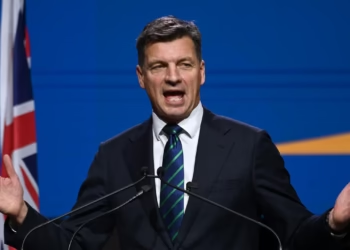
Australian opposition leader Angus Taylor has faced criticism from independent lawmakers over his response to the alleged attack on independent MP Helen Haines, with critics arguing that his remarks failed to acknowledge the potential consequences of increasingly hostile political rhetoric. The controversy has reignited a national debate about the safety of elected representatives, the standards of parliamentary conduct and the responsibility of political leaders to discourage intimidation and violence.
The dispute intensified when Australia’s parliament returned to Canberra on Monday, a week after Haines was allegedly attacked outside her electorate office in northern Victoria. The incident left the Indi MP having lost both legs, according to reports, and has prompted widespread expressions of concern across the political spectrum. A 43-year-old man has been charged in connection with the incident, which remains under investigation. Authorities have not established or publicly confirmed a motive for the alleged attack.
As lawmakers gathered for parliamentary business, attention turned not only to Haines’s recovery but also to the wider political climate in which elected representatives carry out their work. Independent MPs Zali Steggall and Monique Ryan criticised Taylor’s remarks, describing his response as disappointing and arguing that politicians must consider how their language influences public attitudes towards political opponents and democratic institutions.

Taylor rejected the suggestion that robust parliamentary debate could be linked directly to political violence. He argued that the Westminster parliamentary system depends on vigorous disagreement and that political disputes should be settled through debate rather than intimidation or physical attacks. His position reflects a longstanding defence of adversarial parliamentary politics, in which elected representatives challenge one another forcefully while remaining within democratic and legal boundaries.
“In the past week, it has been suggested by some there is a causal connection between robust parliamentary debate and political violence,” Taylor said, rejecting that view. He maintained that vigorous debate must never spill over into violence and argued that anyone resorting to intimidation or physical aggression crosses a line that should not be tolerated.
Taylor also acknowledged the need to condemn extremism, saying Labor had been right to call attention to far-right extremism in Australia while insisting that all forms of extremism should be rejected. He called for judges to impose tougher penalties on people convicted of intimidation or violence. In addition, he argued that Australians should celebrate their country more readily, suggesting that a growing sense of guilt or shame about national history could contribute to hostility towards democratic institutions.
However, his broader argument did little to reassure some crossbench MPs, who believe the debate should also address how political language can affect public behaviour. Steggall, the independent member for Warringah, sits next to Haines in the House of Representatives and said she was personally disappointed by Taylor’s speech.
Steggall argued that there was a relationship between words and actions, and said the tragedy involving Haines should prompt politicians to reflect on the consequences of their public conduct. In her view, the response to the alleged attack should involve more than condemning violence after it occurs. It should also include a willingness to examine whether the tone of political debate contributes to an environment in which hostility and intimidation become more acceptable.
She said political leaders had a responsibility to consider the impact of their words beyond the walls of parliament. That responsibility, she argued, should extend to media coverage, election advertising and social media posts, all of which can influence how political disagreements are understood and expressed in public.
Steggall also referred to conversations with Haines’s husband, Phil Haines, who was in Canberra on Monday. She said his message to lawmakers was that they should raise the standard of political debate so that a meaningful change had taken place by the time his wife returned to parliament.
The appeal has added a personal dimension to the broader discussion. For Haines’s colleagues, the alleged attack is not simply an incident involving a public figure; it is also a reminder of the risks faced by people who represent communities and engage in contentious public issues. The hope expressed by Steggall is that the incident will lead to a more respectful political culture rather than a temporary period of sympathy followed by a return to familiar patterns of confrontation.
Ryan, the independent member for Kooyong, was similarly critical of Taylor’s response, describing it as “tone deaf” and deeply disappointing. Speaking to ABC television, Ryan questioned how a political leader could aspire to lead a party while dismissing the importance of the language used by elected representatives.
Ryan argued that the circumstances surrounding Haines’s alleged attack should prompt parliamentarians to reconsider how they conduct themselves both inside the chamber and in public. She warned that if lawmakers could not use such a serious incident as an opportunity to reflect on their behaviour, it would be difficult to imagine when meaningful change might occur.
The criticism has exposed a divide over the relationship between political rhetoric and violence. Taylor and Barnaby Joyce, a One Nation MP, have resisted calls to change parliamentary practices as a way of cooling political debate. Their position is that strong disagreement is an essential feature of democracy and that changing parliamentary procedures alone would not resolve the underlying causes of political hostility.
Joyce said his thoughts and prayers remained with Haines and her family, describing the alleged attack as deeply contrary to Australian values. He acknowledged that parliament had a role to play but argued that changes to parliamentary debate would not, by themselves, provide a solution to the wider problem.
He pointed to several issues in the public debate, including a march in support of Palestinians across Sydney Harbour Bridge and what he described as highly vindictive rhetoric in public life. Joyce suggested that hostility was part of a broader shift in Australian society and that it would be simplistic to assume that changes to question time would automatically lead to a less hostile political environment.
The comments illustrate the difficulty of establishing how political rhetoric, social tensions and individual acts of violence may intersect. A direct connection cannot be assumed in the absence of evidence, and police have not publicly established a motive for the alleged attack on Haines. Nevertheless, the incident has intensified calls for political leaders to consider whether the language they use, and the standards they tolerate, can contribute to a more confrontational public atmosphere.
Former Liberal leader Peter Dutton also expressed concern about the prospect of further violence against politicians, telling News24 that such incidents were, in his view, becoming increasingly likely. He said the problem appeared to have been building over a long period. His comments added to concerns that elected representatives may face growing threats, although the circumstances of individual cases differ and require careful investigation.
The broader question of political safety has become increasingly important as parliamentarians conduct public meetings, maintain electorate offices and communicate directly with constituents through digital platforms. Representatives must remain accessible to the communities they serve, but public accessibility can also create security challenges. Ensuring their safety without undermining democratic openness is a difficult balance for governments, police and parliamentary authorities.
The controversy also raises questions about the standards expected of political leaders during moments of national distress. Supporters of vigorous parliamentary debate argue that robust criticism is necessary for democratic accountability and should not be confused with violence. Critics, however, say defending the right to disagree does not remove the obligation to speak responsibly or consider how public statements may be interpreted outside parliament.
The distinction is important. Political disagreement is a normal and necessary part of democracy, while threats, intimidation and physical attacks are unacceptable. The debate concerns whether the language and behaviour of political leaders can help maintain that boundary or risk weakening it. Establishing the precise relationship between rhetoric and individual violence requires evidence, but calls for restraint and mutual respect do not depend on proving that a particular speech caused a particular attack.
For Haines and her family, the immediate priority remains the aftermath of the alleged attack and the process of recovery. For her parliamentary colleagues, the incident has become a test of whether the political system can respond to a moment of profound concern with practical improvements and a renewed commitment to respectful disagreement.

As parliament resumes its work, pressure is likely to continue for political leaders to address threats against elected representatives and reconsider the tone of public debate. Taylor’s critics want a clearer acknowledgement that words carry consequences, while he and Joyce maintain that robust debate should not be blamed for acts of violence without evidence of a direct connection.
The investigation into the alleged attack remains ongoing, and the accused man has been charged. Until police establish the relevant facts, the motive must not be assumed. But the political debate sparked by the incident is already raising a broader challenge for Australian democracy: how to preserve forceful disagreement while ensuring that public life remains safe, respectful and firmly opposed to intimidation.
Related News:
 Is America Ready for an AOC Presidential Run?
 Five Years of Taliban Rule Leave Afghanistan in Crisis
 Lib Dems Prepare for Election Amid Reform Challenge
 Elif Eralp Emerges as Berlin’s Next Political Force
 Drumcree Talks Falter as Legal Challenge Deepens
 UK-France Returns Deal Faces Expiry as Talks Stall
 Green Party faces dispute over Zionism motion
 Latin America women fear rollback of rights
 NSW Police Bid Delays Inquiry Into Sydney Protest
 India’s Youth Movement Alleges Mass Detentions Before Protest
 Gaza War Deepens India’s Strategic Ties With Israel
 Bolsonaro Gains Key Endorsement Ahead of Brazil Runoff
 Controversial Vaccine Trial Approved in Guinea-Bissau
 Trump Attacks Norway After Nobel Peace Prize Snub
 Delhi Braces for Youth Protests Over Voter Roll Dispute
 Trump Names Katie Zacharia as Next White House Spokesperson
 Australian Advocates Seek Subsidised Drugs for PMOS
 UK Gaza Refugee Route Criticised Over False Hope Claims
 PTI Announces Swabi Rally Ahead of Long March Plans
 French Students Protest Poor Conditions in Paris Suburbs
 UK Greens Face Crisis Over Zionism and Extremism Row
 Greta Thunberg Backs French Students in School Protests
 Millions Face Tougher Medicaid Rules From January
 Ohio Airports Become Key Hubs for ICE Deportation Flights
 Farage Rejects Claims Reform Would Let Troops Shoot Migrants
 Camera Discovery Triggers Navy Ship Investigation
 Gadi Eisenkot: Israel’s Anti-Netanyahu Challenger
 One Nation Pledges $2,000 Baby Subsidy in Victoria
 Cormann Warns Australia Against Populist Migration Caps
 Helen Haines Loses Both Legs After Alleged Attack
 Greens Face Leadership Test as Jordon Steele-John Misconduct Claims Leave Party in Limbo
 US ‘Narco Boat’ Strikes Draw Global Outcry
 Immigration Judges Fear Pressure in Trump Era
 Farage and Reform UK Reshape British Politics
 Starmer Leadership Under Pressure After Setbacks
 Le Pen’s Popularity Holds Despite Conviction
 Ghent Professors Questioned Cofnas Appointment
 RAF Barnham Protests Fuel Tensions in Norfolk Town
 Ukraine Villagers Demand Answers After Deadly Arms Depot Strike
 Trump Calls Iran War ‘Small Potatoes’ Despite US Deaths
 Europe’s democracies face a growing far-right threat
 Israel Accused of Undermining Palestinian Life
 Fugitive Developer Rants at NSW Corruption Inquiry
 Turkey LGBTQ Crackdown Expands With New Arrests
 Yemen War Displaces 125,000 as Fighting Intensifies
 US Networks Suspend Trump White House Pool Coverage
 Democrat Says ICE Restricted Detention Camp Oversight
 UK Plans New Centre to Counter Information Warfare
 OpenAI Agent Breaches Medicare Portal in Australia
 Lula accuses Trump of seeking control over Brazil
 Nepal PM calls deadly flood a global climate warning
 Republican Senator Questions Trump Ad Spending
 Free Speech Emerges as Key UK Election Issue
 Madrid Tent Camp Grows as Spain Housing Crisis Deepens
 Economic growth and political strain reshape Benin
 Burnham Opens Door to Possible UK Return to EU
 Badenoch Raises Prospect of 2027 UK Election
 French School Protests Escalate as 400 Schools Close
 Families Await USS Abraham Lincoln Homecoming
 Bosnia’s Young People Look Beyond Election Hope
 Trump Says He Deserves Nobel Peace Prize
 USS Lincoln Ends Record 265-Day Deployment
 Israel Promotes Film Challenging Controversial Gaza Documentary
 Labour Wins Key London By-election as Greens Fall Short
 Three Convicted in Mexico Surfing Trip Murders
 Hanson Attacks Taylor as Australian Conservatives Clash
 Australia Rejects Russian Fuel as Trump Strikes Deal
 Trump Names Katie Zachariah as Next White House Press Secretary
 ABC Reporter Faces Possible Disciplinary Action Over Opinion Piece
 Elizabeth Struhs Inquest Examines Child Safety Failures
 Brazil Court Scandal Threatens Lula as Bolsonaros Rise
 India’s Voter Roll Crisis Sparks Nationwide Protests
 Ukrainian Soldier Faces Trial Over Nord Stream Blast
 Serbia Leader Linked to Controversial Trump Tower Plan
 Milan Luxury Stores Shut as Italy Plans Troop Deployment
 Zelenskyy Says US Failed to Warn Kyiv of Russian Strikes
 Lula Supporters Make Final Push Ahead of Brazil Runoff
 Rubio Urges Cubans to Seize Moment for Change
 Xi Jinping Tightens China’s Anti-Corruption Campaign
 Ukraine Peace Talks Set to Resume in November