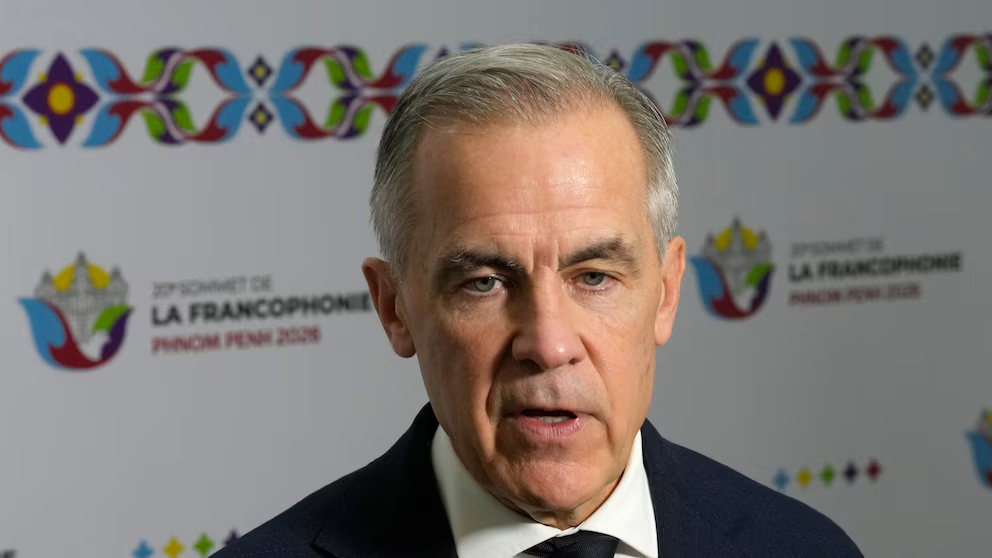
Canada could deepen its economic and automotive cooperation with Chinese manufacturers if ongoing trade negotiations with the United States fail to secure the future of its domestic automobile industry, Prime Minister Mark Carney has indicated, signalling Ottawa’s willingness to explore alternative international partnerships amid growing uncertainty over North American trade relations.
Speaking to reporters in Cambodia on Monday, ahead of the Asia-Pacific Economic Cooperation (APEC) summit, Carney said Canada remained committed to maintaining an integrated North American automotive industry. However, he warned that recent trade measures introduced by US President Donald Trump had weakened the economic relationship that traditionally connected automobile manufacturing across Canada, the United States and Mexico.
His remarks suggest that Canada is increasingly considering alternative investment opportunities as it attempts to protect domestic manufacturing, employment and its position in the global automotive market. Potential cooperation with Chinese, European and Japanese manufacturers could become part of that strategy if negotiations with Washington fail to deliver an acceptable outcome.

Carney emphasised that discussions with the United States remained his government’s priority. Nevertheless, he made clear that Canada would not allow the future of its automotive industry to depend entirely on the outcome of negotiations with the Trump administration.
“We have the best auto workers in the world, and we want them fully deployed, full opportunity, in an integrated North American market,” Carney told journalists in Cambodia. He added that the market had become less integrated because of American trade actions.
The Canadian prime minister’s comments came ahead of an expected meeting with Chinese President Xi Jinping later in the week in Shenzhen, China. Automotive manufacturing and investment opportunities are expected to feature prominently in discussions between the two leaders, potentially opening another chapter in Canada’s economic engagement with Beijing.
The meeting is particularly significant because Canada and China reached an agreement in January allowing a limited number of Chinese electric vehicles to enter the Canadian market at substantially reduced tariffs. The arrangement marked a notable shift in Canada’s approach to Chinese electric vehicle imports and created opportunities for broader economic cooperation between the two countries.
When questioned about whether the possibility of Chinese investment was being used as leverage in negotiations with Washington, Carney rejected the suggestion. Instead, he described the situation as a process of action and reaction, indicating that Canada’s decisions would depend partly on the direction of American trade policy.
“It’s not leverage. But action, reaction,” he said.
Carney further explained that if Canadian automotive workers could not receive sufficient employment opportunities within the North American manufacturing system, the country would have to consider other industrial partnerships. He stressed that Canada intended to continue developing its economy regardless of whether negotiations with the United States produced a successful outcome.
“Canada is going to move forward either way,” he said, delivering a clear message that Ottawa was prepared to pursue alternative economic arrangements if necessary.
The Canadian automotive industry has historically depended on close manufacturing cooperation between Canada, the United States and Mexico. Major American manufacturers, commonly known as the Detroit Three, including Ford, General Motors and Stellantis, operate production facilities across the three countries. Their manufacturing systems rely on cross-border supply chains through which automobile components frequently travel between factories in different countries before final assembly.
This integrated production structure has allowed companies to benefit from specialised manufacturing facilities, skilled workers and established transportation networks. Canadian factories, particularly those in Ontario, have played an important role in producing vehicles and automotive components for the wider North American market.
However, Trump’s trade policies have created fresh uncertainty for this longstanding industrial relationship. His administration has repeatedly encouraged automobile manufacturers to relocate production facilities and manufacturing activities to the United States. The introduction of tariffs and other trade restrictions has increased pressure on companies operating across the North American border.
For Canada, the potential consequences extend beyond the automotive companies themselves. Thousands of workers depend on vehicle manufacturing, while numerous smaller businesses supply components, engineering services, transportation and industrial equipment. Any substantial reduction in Canadian production could affect employment, household incomes and economic activity in communities that have developed around automobile manufacturing.
Carney’s government is therefore seeking to ensure that any future partnership with Chinese manufacturers delivers genuine industrial benefits for Canada rather than simply increasing the number of imported vehicles available to consumers.
The prime minister made it clear that Chinese investment would need to involve substantial manufacturing activity within Canada. According to him, establishing assembly operations that rely almost entirely on imported components would not satisfy the government’s expectations.
Instead, potential investors would be expected to develop manufacturing facilities, create employment opportunities, maintain appropriate labour standards and gradually establish domestic supply chains. Canada also wants its critical mineral resources to become an important part of the electric vehicle manufacturing process.
The country possesses significant resources that are increasingly important to battery production and electric vehicle technology. By encouraging investment in local processing and manufacturing, Ottawa hopes to capture a larger share of the economic benefits associated with the global transition towards cleaner transportation.
“It’s not just about kit cars. There has to be a manufacturing aspect involved,” Carney said, highlighting the government’s expectation that foreign investment should contribute to long-term industrial development.
The January agreement between Canada and China provides an important foundation for these discussions. Under the arrangement, Canada reduced its 100 per cent tariff on Chinese electric vehicles to 6.1 per cent. Initially, the agreement permits up to 49,000 Chinese electric vehicles to enter the Canadian market annually, with the permitted volume expected to increase over time.
In return, China agreed to reduce tariffs on several Canadian agricultural products, including canola, creating opportunities for Canadian exporters seeking greater access to the Chinese market.
Carney previously expressed confidence that the agreement could encourage Chinese manufacturers to invest in Canadian automotive production and generate new employment opportunities. His government has presented the arrangement as an opportunity to attract international investment while expanding trade with one of the world’s largest economies.
However, the agreement has not been welcomed by everyone in Canada. Ontario Premier Doug Ford, whose province represents the centre of the country’s automotive manufacturing industry, has raised concerns about the potential consequences of allowing more Chinese electric vehicles into the Canadian market.
Ford has warned that increased imports could threaten domestic employment and create difficulties for Canadian manufacturers competing with Chinese companies. He has also expressed concern that closer economic cooperation with Beijing could complicate Canada’s relationship with Washington and potentially jeopardise access to the American market.
These concerns reflect the delicate position Canada occupies between two major economic powers. China offers investment opportunities, access to manufacturing technology and a potentially significant market for Canadian exports. At the same time, the United States remains Canada’s most important trading partner, with deeply connected industrial supply chains supporting millions of jobs across North America.
Recent developments involving Stellantis have further highlighted the challenges facing Canadian manufacturers. Canada has threatened legal action against the company after it shifted planned production of the Jeep Compass from Brampton, Ontario, to Illinois and agreed to sell its currently inactive Canadian assembly plant.
The decision has raised questions about the future of automotive employment in Ontario and the extent to which American trade policies are influencing corporate manufacturing decisions. For Canadian authorities, protecting domestic production capacity has become an increasingly urgent economic and political priority.
Carney said on Saturday that he had held extensive discussions with Trump and senior American officials. He indicated that both countries were making progress towards a possible trade agreement, although important differences remained unresolved.
The Canadian government now faces the challenge of balancing its desire to preserve North American economic integration with the need to protect domestic industries from unpredictable trade policies. While Ottawa continues negotiations with Washington, its willingness to consider partnerships with China, Europe and Japan demonstrates that it is preparing for several possible economic outcomes.
The upcoming discussions between Carney and Xi could provide a clearer indication of how far Canada is prepared to go in attracting Chinese automotive investment. Any agreement would likely need to address manufacturing commitments, employment protections, supply-chain development and the broader implications for Canada’s international trade relationships.

Ultimately, the issue is about more than electric vehicle imports or tariff reductions. It concerns the future of Canada’s manufacturing workforce, the country’s ability to attract long-term industrial investment and its position within an increasingly competitive global automotive industry.
For Canadian workers and businesses, the outcome of these negotiations could influence where vehicles are manufactured, where investment flows and how many jobs remain available in domestic factories. As tensions over international trade continue, Carney’s message is that Canada intends to protect its economic interests and pursue new opportunities, even if its traditional partnership with the United States becomes increasingly difficult to maintain.
Related News:
 Southeast Asia Turns to Russia Amid Energy Crisis
 US Awaits Iran Reply on New Ceasefire Proposal
 Hormuz Talks Near Critical Stage
 Swedish Mining Push Puts Sami Land Rights Under Pressure
 Saudi Arabia Shuts Oil Pipeline After Drone Attack
 South Korea Rules Out Military Role in Iran War
 Macron and Carney deepen France-Canada ties
 Iran Rejects Claims of Shift in US Talks
 Xi urges Trump to avoid US-China military conflict
 Saudi intercepts Houthi missiles as oil fears grow
 EU-China Talks Target Surge in Hybrid Car Imports
 Tanker Attacked Near Qatar as Hormuz Tensions Escalate
 South Korea Probes Fuel Shipments to Russia
 Houthi Missile Claim Sparks Riyadh Airport Disruption
 Turkey Rules Out Troops in Saudi Arabia’s Houthi Conflict
 Trump’s Russian Diesel Deal Sparks Ukraine Fury
 UK Rejects EU Pressure to Impose Tariffs on China
 Alberta Referendum Exposes Deep Divisions Over Independence
 Alberta Voters Reject Push for Canadian Independence
 Japan’s Takaichi Faces a Crucial Second Year in Power
 China’s AI Ambitions Hit $2.4 Trillion Market Setback
 US Bans BYD Vehicles at Japan Military Base
 Hello Kitty Maker Ends Japanese Drama Partnership
 Global Crises Test Diplomacy as Trump’s Policies Face Scrutiny
 G20 Photo Cancelled as Russia Deepens Western Rift
 US Strikes Iran Island as Vance Signals Hope for Peace
 Australia Reviews UK Visa Rules Amid Worker Influx
 South Korea Plans Expanded Naval Operations Near Hormuz
 Qatar Pushes Iran Deal to Reopen Strait of Hormuz
 Nvidia Scandal Fuels US-China Security Crisis
 Trump, Xi and Putin Face Fears of a New Yalta
 Canada Passes Carney’s First Budget in Tight Parliamentary Vote
 Trump to Deploy “God Squad” Over Gulf Wildlife Protections
 Oil Prices Surge Above $120 Amid Iran Blockade Fears
 Trump approval plunges amid Iran war fears
 Discontent grows around Putin amid war strain
 Ukraine Creates Long-Range Strike Command
 Houthis Strike Saudi Arabia as Middle East Tensions Rise
 Trump Hardens Canada Trade Stance as Talks Stall
 Trump Calls Iran War ‘Small Potatoes’ Despite US Deaths
 UK plans tougher Israel stance with settlement trade ban
 Iceland to Open First UK High Street Store in Falklands
 US Sanctions Open New Battle for Cuba Assets
 Japan PM Backs International Criminal Court
 Trump gives Xi red-carpet welcome as trade truce extends
 Chinese Hybrid Car Surge Raises EU Auto Industry Concerns
 Lula accuses Trump of seeking control over Brazil
 Burnham Opens Door to Possible UK Return to EU
 New Maps Reveal Gaza’s Vast Destruction
 UK Diesel Reaches £2 as Inflation Surges Across Europe
 Israel Marks Three Years Since October 7 Attack
 Japan Beer Giants Face Cartel Probe
 Ministers Push ATO to Reconsider Credit Card Ban
 Israel Promotes Film Challenging Controversial Gaza Documentary
 UK Pharmacy Body Drops Teva After Ethical Concerns
 Gaza War Deepens India’s Strategic Ties With Israel
 Trump Rules Out Iran Attack Before US Elections
 Brazil Court Scandal Threatens Lula as Bolsonaros Rise
 India’s Voter Roll Crisis Sparks Nationwide Protests
 Gadi Eisenkot: Israel’s Anti-Netanyahu Challenger
 Serbia Leader Linked to Controversial Trump Tower Plan
 UK Could Rejoin EU Through a Switzerland Plus Deal
 Brexit Debate Returns as UK Voters Reconsider EU Exit
 Zelenskyy Says US Failed to Warn Kyiv of Russian Strikes
 Xi Jinping Tightens China’s Anti-Corruption Campaign
 Ukraine Peace Talks Set to Resume in November
 Labour MPs Urge Burnham to Lead UK Reindustrialisation
 Trump’s Global Policies Put Republicans at Risk
 Australia Raises Interest Rates to 18-Year High
 James Talarico Makes History with Texas Senate Victory
 Canada Joins Boycott of Russian Ice Hockey Teams
 Elon Musk’s $446m Midterm Gamble Ends in Defeat
 Paraguay President Quits After Major Bank Collapse
 Zelenskyy Seeks Urgent Help as Russia Hits Ukraine’s Power Grid
 Labor Minister Defends Chalmers Amid Budget Tensions
 Burnham’s Christmas Homelessness Pledge Faces Uncertainty
 Knesset Speaker Race Could Decide Netanyahu’s Future
 US Treasury Chief Moves to Military Base Over Iran Threat
 Iran Death Row Boxer Wins Prestigious Human Rights Award
 Eisenkot Accuses Netanyahu of Racist Anti-Arab Campaign