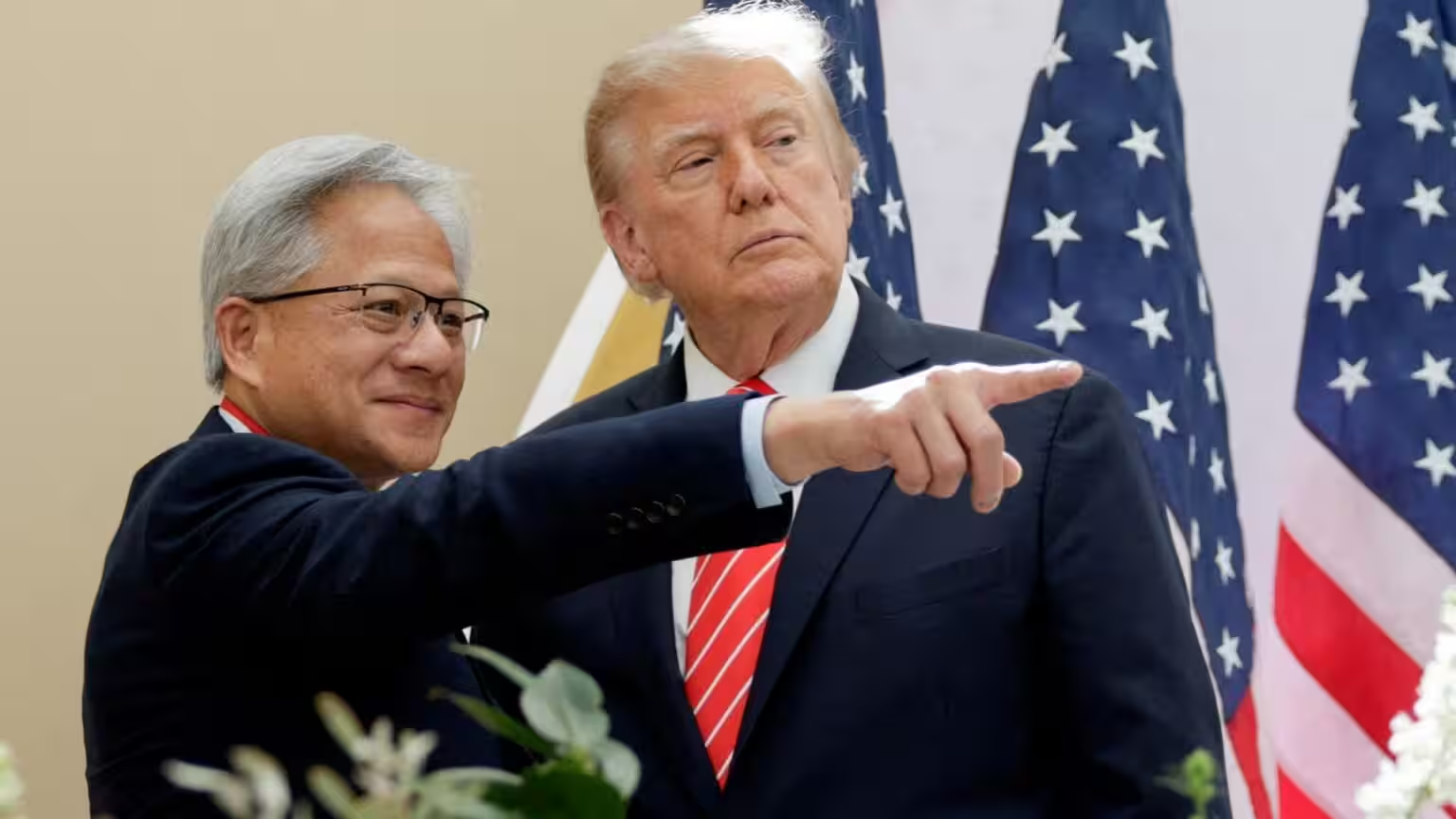
US President Donald Trump has played down concerns over a series of major technology and infrastructure disruptions affecting the United States, describing them as separate incidents involving large companies and newly installed equipment. His remarks came ahead of a major summit with Chinese President Xi Jinping, where technology security, trade relations and allegations of espionage are expected to remain important issues. Trump also addressed concerns surrounding Nvidia chief executive Jensen Huang and his reported relationship with a woman suspected of having links to Chinese intelligence, saying the situation was a tragedy and that the United States needed to protect its talented business leaders.
Speaking to Fox News on Wednesday, Trump was asked about a series of outages that had affected several major American institutions and businesses during the week. The disruptions reportedly involved Microsoft services, US banks, United Airlines computer systems, the National Security Agency’s internal communications network, Apple services and the country’s air traffic control system.

The incidents raised questions about the resilience of America’s technology infrastructure and the potential consequences of disruptions affecting essential public and private services. However, Trump dismissed suggestions that the events represented a connected national security problem.
He described the outages as individual incidents, arguing that large companies regularly introduce new equipment and technological systems, which can sometimes lead to operational difficulties. According to Trump, the disruptions were separate events rather than evidence of a wider coordinated problem.
His comments came at a sensitive moment for the United States, as the administration continues to emphasise technological leadership and national security in its competition with China. Modern American infrastructure depends heavily on interconnected digital systems, making reliability and cybersecurity increasingly important for government agencies, financial institutions, airlines and technology companies.
Although Trump did not indicate that the incidents were linked to foreign interference, the timing of the disruptions has attracted attention because of growing concerns about cyber threats and international espionage. A series of simultaneous or closely timed failures involving important services can create uncertainty among businesses and the public, particularly when the underlying causes have not been fully established.
The president’s remarks also touched on a separate controversy involving Nvidia chief executive Jensen Huang, one of the most influential figures in the global semiconductor industry. Huang has attracted considerable attention because of Nvidia’s central role in producing advanced artificial intelligence chips, which have become strategically important to both the United States and China.
During the interview, Trump was asked whether he had raised allegations concerning Huang’s reported relationship with a woman suspected of being a Chinese spy during his discussions with Xi Jinping.
Trump acknowledged that he might have mentioned the matter briefly. However, he described the situation as a tragedy and praised Huang as an exceptionally talented businessman. He suggested that the United States needed to take care of its most capable individuals rather than allow controversies to undermine their contributions.
Referring to the woman identified in the reports as Alice Huang, Trump said he had not heard that she was a spy. He described her as a businesswoman who had purchased computer chips and questioned whether those transactions had been conducted properly.
The president also emphasised the commercial importance of the semiconductor industry, suggesting that the United States wanted to continue making money through technology sales and international business relationships.
The allegations have nevertheless raised questions about the relationship between commercial technology transactions and national security. Advanced semiconductor chips are increasingly regarded as strategic assets because they are essential for artificial intelligence development, military applications, high-performance computing and advanced data processing.
Nvidia has become one of the world’s most valuable technology companies because of its leading position in the market for artificial intelligence processors. Its products are used by major technology companies, research institutions and governments seeking to develop sophisticated AI systems.
Consequently, any controversy involving the company’s leadership or potential intelligence-related risks could have implications extending beyond the personal life of its chief executive.
According to a report by The New York Times, Trump had received an intelligence briefing aboard Air Force One in May while travelling to China. The briefing reportedly informed him that US intelligence agencies believed Huang was involved in a relationship with a woman suspected of being a Chinese spy.
The reported briefing suggests that concerns surrounding the matter had reached the highest levels of the American administration several months before the latest public discussion.
However, the allegations have not established that Huang knowingly participated in espionage or that the woman was definitively acting on behalf of Chinese intelligence. Questions surrounding the nature of the relationship and any possible security implications therefore remain sensitive.
Trump also faced questions about whether he intended to confront Xi over allegations of Chinese espionage against American interests. Rather than promising a direct confrontation, the president responded by acknowledging that the United States also conducts intelligence operations against other countries.
“We spy on them too,” Trump said, adding that he believed the United States was better at intelligence gathering than China.
His response reflected the complicated nature of relations between Washington and Beijing, where economic cooperation exists alongside strategic rivalry, intelligence competition and disagreements over technology security.
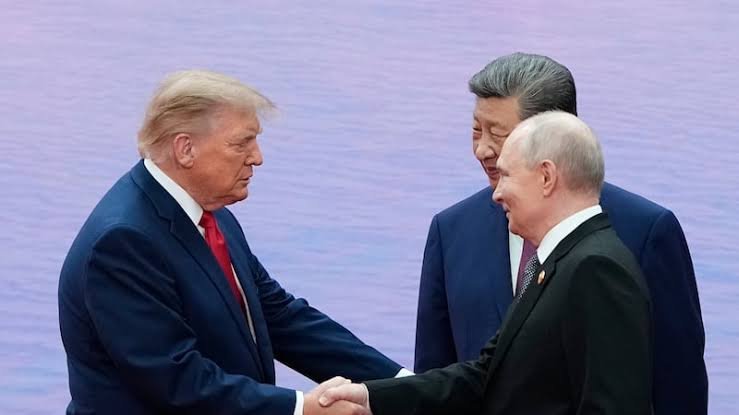
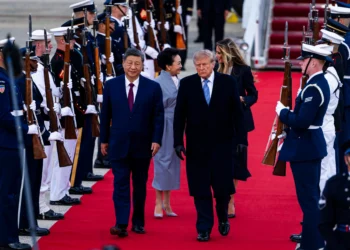
The comments came as Trump continued his diplomatic visit to China for discussions connected to the Asia-Pacific Economic Cooperation summit. Images from the visit showed Trump walking alongside Xi Jinping after arriving at Shenzhen Bao’an International Airport on 18 November.
The meeting represents another important opportunity for the two leaders to address disagreements affecting the world’s two largest economies. Trade, semiconductor exports, artificial intelligence, investment restrictions and national security are among the issues that continue to shape their relationship.
The semiconductor industry has become particularly important in US-China relations. Washington has introduced restrictions on the export of certain advanced chips and semiconductor technologies to China, arguing that unrestricted access could create military and national security risks.
Beijing, meanwhile, has sought to strengthen its domestic semiconductor industry and reduce dependence on foreign technology. These competing priorities have made companies such as Nvidia central players in a much wider geopolitical contest.
The question of whether advanced American chips should be sold to Chinese customers remains politically sensitive. While technology companies have commercial incentives to access the Chinese market, US policymakers are concerned about the potential transfer of strategically important computing capabilities.
Trump’s comments about wanting to make money through chip sales indicate the importance he places on commercial opportunities. However, balancing those interests against national security considerations remains a major challenge for his administration.
The wider technology disruptions in the United States have also highlighted the country’s dependence on a relatively interconnected digital infrastructure. Airlines, banks, government agencies and communication networks rely on complex systems that must operate continuously to maintain essential services.
An interruption affecting one organisation can sometimes create consequences for customers, businesses and other connected institutions. This makes identifying the causes of outages particularly important, especially when disruptions involve critical services.
Microsoft and Apple provide technology services used by millions of individuals and organisations, while banking networks and airline computer systems support essential economic activities. The reported disruption involving the National Security Agency’s internal communications network has also attracted attention because of the sensitive nature of the institution’s work.
However, the available information does not establish that these incidents were connected or caused by a common cyberattack. Trump’s explanation that they were individual events represents his assessment, rather than a confirmed technical conclusion covering every disruption.
The president’s remarks also came during a politically significant week in Washington. American political leaders have been dealing with developments following the midterm elections, while discussions over technology, national security and the country’s economic direction continue to influence the political agenda.
Trump’s approach to the China visit suggests that he is seeking to maintain room for economic cooperation despite continuing strategic disagreements. His comments on espionage indicate an awareness that intelligence activities are part of the broader relationship between major powers, although the issue remains a potential source of diplomatic tension.
For Nvidia and the wider technology industry, the developments underline the growing difficulty of operating across international markets where commercial opportunities and national security priorities frequently overlap.

As discussions between Trump and Xi continue, the future of semiconductor trade, artificial intelligence cooperation and intelligence security could become increasingly important. The United States must also address concerns about the reliability of its domestic technology infrastructure, particularly as digital systems become more deeply integrated into essential services.
Trump’s dismissal of the recent outages may offer reassurance to some businesses and consumers, but questions about their causes and the resilience of critical systems remain important. At the same time, the controversy surrounding Nvidia’s chief executive demonstrates how personal relationships, corporate leadership and international security can become intertwined in an era of intensifying technological competition.
Related News:
 Xi urges Trump to avoid US-China military conflict
 Meta Faces Election Bias Claims Ahead of Brazil Runoff
 Elon Musk’s $446m Midterm Gamble Ends in Defeat
 Australia Faces Political Risks After US Midterm Shift
 Nvidia Scandal Fuels US-China Security Crisis
 Rubio Rejects Links Between US Tech Outages
 Reform UK funding: mystery billionaire revealed
 Why AI Doomsday Warnings Failed to Slow the Race
 Tom Watson Takes Senior Role at Palantir
 AI Takes Centre Stage in Trump-Xi Talks
 Trump gives Xi red-carpet welcome as trade truce extends
 AI Deepfakes Put New Pressure on Election Trust
 Food Industry Mobilises Against the MAHA Movement
 Brown Targets Ohio Data Centers in Senate Comeback
 UK Must Build Its Own AI to Protect National Security
 US Bans BYD Vehicles at Japan Military Base
 Anthropic IPO Reveals AI Boom’s Huge Costs and Risks
 Global Crises Test Diplomacy as Trump’s Policies Face Scrutiny
 Big Tech Faces a New Political Reckoning in America
 UK Warned Over Dangerous Dependence on China for Minerals
 Zelenskyy Seeks Urgent Help as Russia Hits Ukraine’s Power Grid
 Nvidia and Jensen Huang Face Shareholder Lawsuit
 Elon Musk Leads 165,000 Calls to Reinstate Nvidia CEO
 Trump Defends Lutnick Amid Nvidia Chip Export Controversy
 Musk Distances Himself From MAGA After Costly GOP Bet
 Government Unveils Northern Powerhouse Rail Plans
 Trump Fed bid heads to Supreme Court
 Can Congress Stop US Sports Teams From Moving Cities?
 Iron Worker Challenges Trump Loyalist in Ohio
 Trump approval plunges amid Iran war fears
 Trump Threatens UN Budget Cuts as US Pushes ‘Trade Over Aid’ Agenda
 US Awaits Iran Reply on New Ceasefire Proposal
 Kevin Warsh sworn in as Fed chair amid economic backlash
 Hormuz Talks Near Critical Stage
 Trump Faces Backlash Over $2bn Earnings Since Return
 Trump Refuses to Sign Housing Bill, But Law Takes Effect
 UK Risks Falling Behind in AI Race
 London Launches First Self-Driving Taxis
 Trump Hardens Canada Trade Stance as Talks Stall
 Trump Calls Iran War ‘Small Potatoes’ Despite US Deaths
 New Mexico Takes Facebook to Trial Over Data Scandal
 AI CEOs Call for Slower Development
 Trump’s Washington Projects Face Architectural Criticism
 Trump Faces Congress Push for AI Guardrails
 Trump and Mamdani Hold Cordial Gracie Mansion Meeting
 Trump Eyes Major Belarus Fertiliser Deal Amid Canada Trade Dispute
 UK Unveils Centre to Counter Foreign Disinformation
 UK Plans New Centre to Counter Information Warfare
 Lula accuses Trump of seeking control over Brazil
 Trump backs voluntary AI safety pact with tech giants
 Sheikh Tahnoon and the UAE’s AI Ambitions
 Trump Immigration Policy Faces New Legal Tests
 Jessica Watkins Leads Record-Breaking SpaceX Flight
 Musk’s DOGE Sparks Turmoil Inside US Government
 US Man Arrested Over Canada School Shooting Plot
 IMF Warns Governments Over Rising Debt Burdens
 Doubts Grow Over Trump’s $15bn Iowa Steel Plant
 Trump’s Russian Diesel Deal Sparks Ukraine Fury
 Brazil Court Scandal Threatens Lula as Bolsonaros Rise
 Millions Face Tougher Medicaid Rules From January
 Trump Rallies GOP as Senate Democrats Boost Key Races
 Serbia Leader Linked to Controversial Trump Tower Plan
 Trump Halts New Russia Sanctions Amid Ukraine Rift
 NHS Trusts Reject Palantir’s £330m Patient Data Platform
 UN Warns World Must Cut Emissions by 18% by 2030
 Spain Deepfake Ad Sparks Election Outrage
 Healey Pledges Major AI Investment for UK Security
 China’s AI Ambitions Hit $2.4 Trillion Market Setback
 Fed Expected to Hold Rates Steady Ahead of US Midterms
 Trump’s Global Policies Put Republicans at Risk
 North Korea Linked to Record $6.3bn Binance Crypto Heist
 Haley Stevens Backs Republican Rival in Michigan Senate Race
 James Talarico Makes History with Texas Senate Victory
 Paraguay President Quits After Major Bank Collapse
 Democrats Expand House Majority in Major Midterm Victory
 Paraguay President Impeached and Arrested After Banking Crisis
 US Treasury Chief Moves to Military Base Over Iran Threat
 UK Civil Service Chief Vows Radical Whitehall Reform
 Megaspeed Mystery Deepens After Nvidia CEO Resigns
 UN Climate Talks Renew Push for Carbon Removal Technology