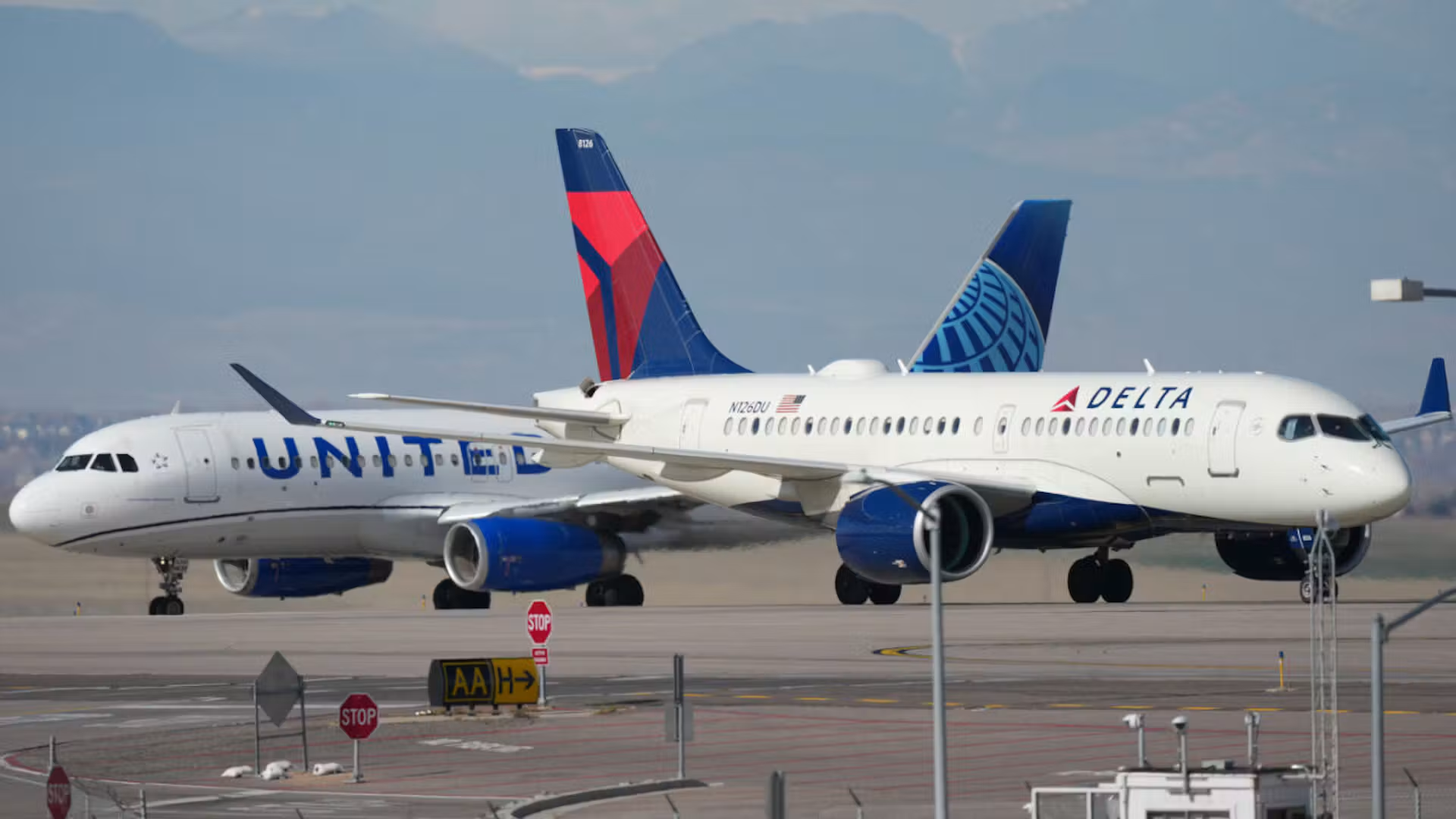
The United States has reopened its national airspace after an unprecedented aviation disruption forced the Federal Aviation Administration (FAA) to temporarily halt departing flights across the country, leaving thousands of passengers stranded, disrupting airline operations and creating widespread uncertainty at major airports. Although authorities confirmed that the technical problem had been identified and the air traffic control system was operational again, the immediate reopening did not bring an instant return to normality, as airlines faced the difficult task of reorganising schedules and helping passengers reach their destinations.
The nationwide ground stop, introduced on Friday afternoon, 13 November, was one of the most significant disruptions to American air travel in recent years. According to aviation tracking service FlightAware, more than 11,000 flights were delayed or cancelled as the incident affected airports and airline operations across the United States. The suspension came after a technical failure disrupted communications within the country’s air traffic control network, prompting aviation authorities to take precautionary action to protect passenger and aircraft safety.

US Transportation Secretary Sean Duffy announced that the country’s airspace had officially reopened at 8.15pm Eastern Time on Friday. He said the government had identified the problem responsible for the disruption and that the air traffic control system was functioning again. However, he warned that restoring normal operations would take time because of the extensive delays and operational complications created during the shutdown.
The announcement offered some relief to passengers who had spent hours waiting for information about their journeys. Nevertheless, the reopening did not mean that every affected flight could immediately depart. Aircraft, crews and passengers had become separated from their original schedules, while airlines needed to determine which services could still operate safely within the remaining hours of the day. Consequently, travellers were advised to check directly with their airlines before travelling to airports or making alternative arrangements.
The technical failure was linked to the communications infrastructure supporting the Federal Aviation Administration’s air traffic control operations. During a White House briefing, Duffy explained that the country’s ageing system had experienced difficulties after its network routers became overloaded with data. The malfunction resulted in inconsistent information being transmitted through the network, creating conditions that authorities considered unsuitable for maintaining normal air traffic operations.
According to the transportation secretary, officials decided to shut down the affected system rather than risk operating an unreliable network. The decision demonstrated the importance of maintaining dependable communication between air traffic controllers and aircraft, particularly in a country where thousands of flights operate daily.
Earlier on Friday, Duffy had described the incident as a communication problem affecting all Air Route Traffic Control Centers. FAA technicians began investigating the disruption, while airlines and airports attempted to manage the growing number of delays and cancellations.
The FAA subsequently confirmed that its technicians had thoroughly tested the system before authorising flights to resume. Authorities said the checks were intended to establish that the network was stable and reliable enough to support the safe movement of aircraft.
The scale of the disruption became clearer as information emerged from government officials and aviation authorities. Duffy revealed that more than 3,500 aircraft were already in the air when the ground stop was announced. Aircraft that had taken off before the order were generally permitted to continue flying and reach their destinations, while departing flights were required to remain on the ground. This distinction helped prevent additional pressure on an already disrupted air traffic management network.
The Department of Homeland Security also sought to reassure the public that there was no immediate evidence of a deliberate attack. Homeland Security Secretary Markwayne Mullin said preliminary investigations had not indicated that the incident was connected to a cyberattack or other malicious activity. He described the situation as a telecommunications outage and emphasised that investigators would continue examining the circumstances surrounding the failure.
Although the absence of an initial indication of malicious activity provided some reassurance, the incident raised important questions about the reliability of the infrastructure responsible for managing American aviation. The investigation will be particularly important in determining whether the disruption resulted from a specific equipment failure, a broader weakness in the communications network or a combination of technical problems.
According to reports citing information provided to airlines by the FAA, router malfunctions were believed to have originated at Chicago Midway International Airport before affecting the wider national network. Chicago’s O’Hare and Midway airports experienced restrictions earlier in the day, before the FAA expanded its response into a nationwide ground stop. The precise technical sequence and underlying cause remained subjects for further investigation.
The consequences were felt far beyond Chicago. Major airports across the country experienced crowded departure areas, lengthy queues, cancelled connections and uncertainty over departure times. Passengers who had planned business trips, family visits, holidays and international journeys found themselves facing unexpected changes. Some travellers were left waiting for hours without clear information about when their flights would operate.
At John F Kennedy International Airport in New York, passengers expressed frustration even after the reopening announcement. One traveller, identified only as Lola, said she had already changed her flight to Atlanta for another day and decided to return home. Her reaction illustrated a major difficulty during large-scale aviation disruptions: even when restrictions are removed, passengers who have already made alternative arrangements may be unable or unwilling to resume their original journeys.
Airports also faced the challenge of communicating accurate information to travellers. San Francisco International Airport announced that certain flights heading towards Hawaii and Asia had been cleared to depart. Meanwhile, authorities at JFK advised passengers to confirm their flight status with their respective airlines before travelling to the airport. Such guidance became essential as airlines attempted to rebuild their schedules and prevent further confusion.
The disruption also attracted criticism from political leaders. California Governor Gavin Newsom called for clearer communication from the Trump administration, arguing that passengers stranded at airports deserved reliable updates and a practical plan to reach their destinations safely. He criticised the administration’s handling of public communication during the emergency, highlighting the growing frustration among travellers seeking straightforward answers.
Congressman Ro Khanna also expressed concern about the lack of detailed information available to the public. Speaking to CNN, he said he was waiting for a briefing explaining precisely what had happened and called for more frequent updates from the transportation secretary. He suggested that regular public briefings could help reduce anxiety and provide passengers with a clearer understanding of the recovery process.
Major American airlines began announcing the resumption of services after the FAA lifted the order. United Airlines said it was restarting operations, including some flights scheduled for Friday night. American Airlines also indicated that it would attempt to operate as many of its remaining services as possible. Other major carriers, including Delta Air Lines and Southwest Airlines, also began working to restore their operations.
However, the international aviation sector was not immediately free from the consequences. British Airways cancelled a flight scheduled to travel from London’s Heathrow Airport to New York on Friday night. Manchester Airport also warned that three Virgin Atlantic flights scheduled to depart for the United States on Saturday morning were likely to be affected if the situation was not resolved quickly. These developments demonstrated how a technical failure within one country’s aviation infrastructure could disrupt international travel networks.
The incident has also renewed attention on the condition of the United States’ ageing air traffic control infrastructure. The FAA employs more than 14,000 air traffic controllers, who collectively manage a vast network of flights operating across the country. According to FAA data, more than 44,000 flights take off from American airports each day, making reliable communication and coordination systems essential to maintaining the safety and efficiency of the national aviation network.
The scale of the infrastructure challenge was acknowledged during the White House briefing, where Duffy and Mullin called on Congress to provide additional financial support for modernisation. Duffy argued that the existing system was outdated and that the country needed a completely new air traffic control infrastructure rather than relying on ageing technology that could become vulnerable to technical failures.
Congress had already approved $12.5 billion last year to address problems within the FAA’s ageing communications infrastructure. However, the FAA and the White House requested an additional $30.1 billion on Friday to address other shortcomings and accelerate improvements. The latest disruption has strengthened arguments that modernisation is no longer simply a long-term technological ambition but an urgent national priority.
The government had recently announced progress in introducing digital air traffic control towers, with the first facilities officially becoming operational in Alaska and Florida. The initiative forms part of a broader effort to modernise aviation management, reduce delays and improve the movement of aircraft. Nevertheless, the latest communications outage has demonstrated that technological improvements must extend across the entire network, including the systems connecting controllers, airports and aircraft.
Nationwide flight suspensions are extremely rare in the United States. The country experienced a complete aviation shutdown following the terrorist attacks of 11 September 2001. Another nationwide departure suspension occurred in January 2023, when a malfunction in the FAA’s Notice to Air Missions system disrupted the distribution of essential safety information to pilots. That incident resulted in a temporary pause lasting less than two hours. The November 2026 disruption therefore represents another major test of the country’s ability to manage unexpected failures in its aviation infrastructure.

For passengers, the immediate priority remains reaching their destinations safely. The lifting of the ground stop has removed the most significant restriction, but delays, cancellations and missed connections may continue as airlines work through the backlog. Travellers with connecting flights or international journeys could face additional complications, particularly where aircraft and crew members are not in their expected locations.
The incident has also highlighted the importance of transparent communication during national emergencies. Passengers need timely information about cancellations, alternative arrangements and expected departure times, while airlines and airport authorities must coordinate closely with federal regulators to restore confidence.
Although American airspace has reopened, the wider implications of the outage are likely to remain under scrutiny. Investigators must establish the precise technical cause, while policymakers face renewed pressure to strengthen the country’s aviation infrastructure. The episode has provided a stark reminder that even a highly developed aviation network can experience widespread disruption when essential communication systems fail. Ensuring that such an incident does not happen again will require sustained investment, reliable technology and effective coordination between government agencies, airlines and airports.
Related News:
 AI Takes Centre Stage in Trump-Xi Talks
 Trump gives Xi red-carpet welcome as trade truce extends
 Xi urges Trump to avoid US-China military conflict
 Meta Faces Election Bias Claims Ahead of Brazil Runoff
 US Bans BYD Vehicles at Japan Military Base
 Global Crises Test Diplomacy as Trump’s Policies Face Scrutiny
 Zelenskyy Seeks Urgent Help as Russia Hits Ukraine’s Power Grid
 Nvidia and Jensen Huang Face Shareholder Lawsuit
 Nvidia Scandal Fuels US-China Security Crisis
 US Clears Nvidia AI Chip Sales to China in Policy Shift
 UK New Car Discounts Near £6,000 as Prices Are Slashed
 ABC Staff Strike Over Pay and AI Concerns
 Apple at 50: Three Products That Changed How We Live
 Trump approval plunges amid Iran war fears
 Trump Threatens UN Budget Cuts as US Pushes ‘Trade Over Aid’ Agenda
 US Awaits Iran Reply on New Ceasefire Proposal
 Trump: Preventing Nuclear Iran Is ‘The Only Thing That Matters’
 Hormuz Talks Near Critical Stage
 China mine blast death toll rises to 90
 Trump announces major US oil deal with Venezuela
 Turkmenistan Begins Fixing Major Methane Mega-Leaks
 Trump Hardens Canada Trade Stance as Talks Stall
 Trump Calls Iran War ‘Small Potatoes’ Despite US Deaths
 Trump Pledges $5,000 if Republicans Win Midterms
 Indonesia Receives First Aircraft Carrier
 Macron and Carney deepen France-Canada ties
 Trump Eyes Major Belarus Fertiliser Deal Amid Canada Trade Dispute
 Lula accuses Trump of seeking control over Brazil
 Elizabeth Holmes Set for Halfway House Transfer
 Trump backs voluntary AI safety pact with tech giants
 AI Deepfakes Put New Pressure on Election Trust
 Trump Ads Trigger Fight Over Taxpayer Money
 Food Industry Mobilises Against the MAHA Movement
 Tanker Attacked Near Qatar as Hormuz Tensions Escalate
 US Moves to Restrict Chinese Labs Testing Electronics
 Trump’s Russian Diesel Deal Sparks Ukraine Fury
 Hall and Woodford Win Nobel Economics Prize
 Brazil Court Scandal Threatens Lula as Bolsonaros Rise
 Millions Face Tougher Medicaid Rules From January
 Ukraine Combat Units Face Sudden Starlink Restrictions
 Trump Targets Arizona and Montana Amid GOP Election Worries
 Brazil Cuts Working Week to 40 Hours in Lula Election Boost
 Trump Rallies GOP as Senate Democrats Boost Key Races
 Serbia Leader Linked to Controversial Trump Tower Plan
 Trump Halts New Russia Sanctions Amid Ukraine Rift
Trump Falsely Questions Ossoff’s Election Legitimacy
 Trump Fears Shock Democratic Senate Win in Kansas
 UN Warns World Must Cut Emissions by 18% by 2030
 Trump, Musk, and Zelenskyy Trade Blame Over Ukraine Starshield Access
 China’s AI Ambitions Hit $2.4 Trillion Market Setback
 Anthropic IPO Reveals AI Boom’s Huge Costs and Risks
 Fed Expected to Hold Rates Steady Ahead of US Midterms
 Trump’s Global Policies Put Republicans at Risk
 G20 Photo Cancelled as Russia Deepens Western Rift
 Haley Stevens Backs Republican Rival in Michigan Senate Race
 US Midterms Put Trump’s Presidency to the Test
 US Strikes Iran Island as Vance Signals Hope for Peace
 Measles Claims Child’s Life in New York After 30 Years
 Democrats Seize Senate Control in Major Trump Setback
 Democrats Retake US House in Major Trump Backlash
 James Talarico Makes History with Texas Senate Victory
 Elon Musk’s $446m Midterm Gamble Ends in Defeat
 Big Tech Faces a New Political Reckoning in America
 Paraguay President Quits After Major Bank Collapse
 Democrats Expand House Majority in Major Midterm Victory
 Australia Faces Political Risks After US Midterm Shift
 Paris Climate Agreement Faces a Critical Test After 10 Years
 Paraguay President Impeached and Arrested After Banking Crisis
 Qatar Pushes Iran Deal to Reopen Strait of Hormuz
 Trump’s Midterm Defeat Puts Maga’s Future in Doubt
 Pope Leo Rebukes Milei Over Argentina’s Austerity Policies
 EU Manufacturers Face Growing Chinese Competition
 US Treasury Chief Moves to Military Base Over Iran Threat
 Megaspeed Mystery Deepens After Nvidia CEO Resigns
 The Kill Line: A Shifting Vision of the American Dream
 Trump Faces Backlash Over $2bn Earnings Since Return
 Tom Watson Takes Senior Role at Palantir
 British Columbia Sues OpenAI Over School Shooting
 Trump Names Katie Zachariah as Next White House Press Secretary
 Lula Supporters Make Final Push Ahead of Brazil Runoff