Published: 09 October 2026. The English Chronicle Desk. The English Chronicle Online
Zack Polanski is facing mounting pressure over his leadership of the Green Party of England and Wales after Vivien Lichtenstein, leader of the Jewish Greens, called on him to resign following a controversial party policy equating Zionism with racism and advocating the replacement of Israel with a single Palestinian state. The demand has intensified an internal debate over political leadership, antisemitism concerns, the future of the party’s position on Israel and Palestine, and the responsibility of senior figures to represent the concerns of members.
Lichtenstein’s intervention came after the Greens’ recent conference adopted the disputed policy and Polanski subsequently suffered a setback in the Holborn and St Pancras parliamentary byelection, where the party finished behind Labour. The combination of the controversial vote and the electoral defeat has raised questions about the direction of the party under Polanski, who became its leader in September 2025.
Speaking to Times Radio, Lichtenstein argued that Polanski should have taken a more active role in opposing the motion, even though he was campaigning in the byelection when the conference debate took place. She said he could have participated in the amendments and voting process remotely, and criticised his failure to do so.

“He should have done that. And I think that was a big mistake on his part,” she said, explaining that she believed the leader should have made his position clear when the policy was being considered.
Asked directly whether Polanski should remain in his position, Lichtenstein replied that he should resign. Her comments represent a significant challenge from within a group whose concerns have become central to the party’s efforts to explain its approach to Jewish members and the wider public.
The controversy centres on a motion adopted at the party conference that describes Zionism as racism and calls for Israel to be replaced by a single Palestinian state. The issue has prompted disagreement within the Greens over the meaning of Zionism, the distinction between criticism of Israeli government policies and opposition to the existence of Israel, and the implications of the proposed policy for Jewish members who hold different views about the movement and the Israeli-Palestinian conflict.
Zionism encompasses a range of historical and contemporary political beliefs associated with Jewish self-determination and the establishment and continued existence of a Jewish homeland in Israel. People who identify as Zionists hold differing positions on borders, settlements, Palestinian statehood, religion and the future political arrangements between Israelis and Palestinians. Critics of Zionism also hold varied views, including opposition to particular national or state structures and criticism of Israeli policies. The Green Party dispute has exposed how difficult it can be for a political organisation to adopt a single definition of such a contested term without alienating members who interpret it differently.
Lichtenstein had previously warned that she was considering leaving the party after the conference vote. Her latest remarks indicate that concerns among Jewish Greens have not been resolved by the subsequent explanations offered by the party leader.
She also challenged Polanski’s statement that he had been working with Jewish members of the party. Lichtenstein said she did not know which Jewish members he had been consulting and added that his engagement had not included the Jewish Greens committee. Her comments raised questions about whether party leadership had adequately consulted a group directly affected by the policy debate.
The disagreement has developed alongside criticism from other prominent Green figures, including former party leader Caroline Lucas. Lucas, the party’s first member of parliament, said Polanski should have attended the conference debate and voted on the motion. Her intervention was notable because she remains one of the party’s best-known figures and has previously played a major role in establishing its public profile.
Speaking to the BBC’s Newsnight programme before the byelection result was announced, Lucas said she believed Polanski should have been present and should have voted. She also said she had hoped he would become a strong critic of the motion, which she considered fundamentally flawed.
Lucas argued that the policy was dangerous and divisive because it attempted to impose a single definition of Zionism despite the movement’s diverse interpretations. Her comments reflected concern that the party’s position could deepen divisions rather than help develop a coherent approach to the conflict.
However, Lucas stopped short of explicitly demanding Polanski’s resignation. Instead, she called on him to address the decision and demonstrate the leadership she believed had been missing during the conference debate. She indicated that the coming days and weeks would be important in determining how he responded, while making clear that her remarks did not amount to unqualified support for his leadership.
That distinction is important for the future of the party. While Lichtenstein has called directly for Polanski to leave his post, Lucas has left open the possibility that he could respond to the criticism and attempt to rebuild confidence. The differing positions suggest that dissatisfaction within the Greens does not necessarily translate into a unified demand for an immediate leadership change.
Jonathan Bartley, who previously served as co-leader alongside Lucas and is now a councillor in Lambeth, south London, has also criticised Polanski’s handling of the issue. Bartley urged the leader to acknowledge responsibility and apologise, describing the conference vote as a failure of leadership.
He also warned that the controversy had created a damaging atmosphere for the party. His intervention adds to the growing number of senior and former Green figures who believe the policy debate has become a test of Polanski’s ability to manage internal disagreement and maintain public confidence.
The timing has made the situation more difficult for the party. Polanski was campaigning in Holborn and St Pancras when the conference debated the motion, an election in which the Greens hoped to make a significant breakthrough. He later finished second to Labour, leaving the party to assess both its electoral performance and the political consequences of the conference decision.
After the result, Polanski said he would have voted against the motion had he attended the conference. He also said that two amendments he supported had been rejected. One of those amendments advocated a two-state solution rather than the creation of a single Palestinian state. The amendments’ defeat illustrates the difficulty faced by party leaders who may disagree with a conference decision but are nevertheless expected to explain the outcome to members, supporters and voters.
Polanski’s absence from the debate has become a focal point of the criticism because the issue was both politically sensitive and closely connected to the party’s public identity. His supporters may argue that campaigning in a parliamentary byelection was an important responsibility, while critics contend that remote participation was available and that the leader should have prioritised the debate.
The controversy also presents a broader challenge for the Greens as they attempt to expand their electoral appeal. Parties that campaign on human rights, equality and international justice can face particularly intense scrutiny when internal policies touch on questions of identity, discrimination and national self-determination. The challenge is to articulate a position on the Israeli-Palestinian conflict that permits robust criticism of governments and policies while addressing concerns about prejudice and the rights of affected communities.
For Jewish members of the Green Party, the dispute has raised questions about whether their concerns are being heard and whether the party’s policy language adequately reflects the diversity of Jewish political views. For other members, the debate involves how the party should respond to Palestinian rights, the occupation of Palestinian territories and the future of the Israeli state. Those questions are politically and morally complex, and disagreement over them has now become a test of the party’s internal democratic processes.
There is no formal mechanism for immediately removing a Green Party leader from office. However, the leadership is subject to re-election every two years. Polanski, who assumed the position in September 2025, is therefore expected to face party members again in less than a year.
That timetable gives him time to respond to the criticism, clarify his position and seek to restore confidence among members. It also means that the dispute could continue to influence internal party debate as the next leadership election approaches. Whether the calls for resignation gain wider support may depend on how Polanski addresses the policy, engages with Jewish Greens and explains the party’s approach to Israel and Palestine.

The immediate challenge for Polanski is to demonstrate that he can lead a party divided over a deeply contentious issue while maintaining a clear political direction. His response will be closely watched by members who want a change in leadership, those who believe the controversy can be resolved through further dialogue, and voters assessing whether the Greens can translate their stated principles into consistent political practice.
The episode has become more than a disagreement over one conference motion. It has developed into a test of leadership, consultation and the party’s ability to handle competing views on human rights and national identity. With senior figures publicly criticising his decisions and the next leadership contest approaching, Polanski faces growing pressure to show how he intends to unite the party and rebuild confidence in its direction.
Related News:
 Farage and Reform UK Reshape British Politics
 Starmer Leadership Under Pressure After Setbacks
 Dreyfus Statue Finally Gets Permanent Paris Home
 Green Leader Targets Starmer’s Former Seat
 Masked Protesters Bring Dover Port Traffic to Standstill
 New Evidence Deepens Church of England Slavery Reckoning
 Lib Dems Prepare for Election Amid Reform Challenge
 King Refers Jamaica Slavery Petition to Privy Council
 Elif Eralp Emerges as Berlin’s Next Political Force
 Three Die in Channel Crossing Attempt Near France
 Burnham Opens Door to Possible UK Return to EU
 Drumcree Talks Falter as Legal Challenge Deepens
 UK-France Returns Deal Faces Expiry as Talks Stall
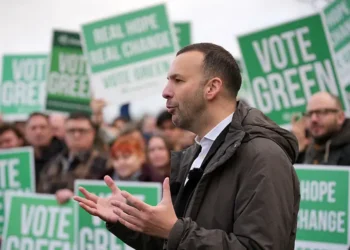 Green Party faces dispute over Zionism motion
 British Jews Show Stronger Israel Ties After October 7
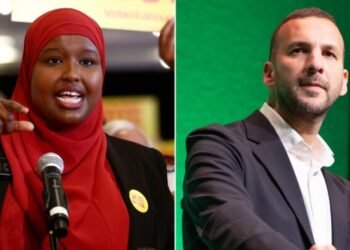 Holborn and St Pancras Vote Tests Labour and Greens
 Labour Wins Key London By-election as Greens Fall Short
 Burnham Rises as Farage and Polanski Face Setbacks
 Labour Beats Greens in Crucial London By-election
 British Woman in Iran ‘Losing Hope’ Amid Ongoing Detention
 BBC Journalist Held and Interrogated in Vietnam
 Rama Rebukes Mahmood for Targeting Albanian Families
 Russian Vessel Used Lasers on RAF Pilots, UK Claims
 UK and EU Signal Fresh Push for Defence Cooperation Talks
 Starmer Condemns ‘Depraved’ Russian Strikes on Ukraine
 Trump and Chagos Deal Rift Over Iran Strikes
 Trump Tariffs Threat Spark UK and EU Alarm
 Gordon Brown urges court for crimes against children
 Yvette Cooper: UK Must Follow Principles, Not US Pressure
 UK Minister Denies Iran Missile Threat to Britain
 Army Probes Apache Flyover at Kid Rock’s Nashville Estate
 Relationship with Trump may be beyond repair, Starmer warned
 Kezia Dugdale Warns of Possible Reversal of Equal Rights Gains
 Synagogue Arson Attempt Sparks Security Fears
 NHS Safety Fears as Nurses Cover Doctor Gaps
 UK Stands Firm on Falklands Amid US Rift
 John Terry Faces Backlash Over Political Posts
 Greens Face Internal Row Over Antisemitism Claims
 France Faces Record Presidential Crowded Race Amid Far-Right Surge
 Labour Members Turn Against Starmer Leadership
 UK Pushes for New EU Goods Trade Deal
 Deadly Russian Air Raids Strike Across Ukraine
 UK Nations Brace for Potential Breakup Amid Reform Surge
 New South Wales Premier Chris Minns Signals Tough Road Ahead for Labor
 Millions Gather for Khamenei’s Six-Day State Funeral
 Le Pen’s Popularity Holds Despite Conviction
 UK’s Largest Muslim Convention Scales Up Security Amid Rising Bigotry
 Three-Quarters of England’s Riverbanks Still Off Limits
 Is America Ready for an AOC Presidential Run?
 Burnham unveils £65m drought aid for farmers
 Former Diplomats Urge UK and France to Act on Palestine
 Ghent Professors Questioned Cofnas Appointment
 RAF Barnham Protests Fuel Tensions in Norfolk Town
 Bayeux Tapestry Revives Franco-British Ties
 UK plans tougher Israel stance with settlement trade ban
 Europe’s democracies face a growing far-right threat
 Pavlohrad Strike Kills Five, Injures 67
 Mahmood Warns Far Right Over Asylum Protests
 Disabled Travellers Seek Fairer UK Care Rules
 Middle powers seek new alliances amid Trump era
 UK Plans New Centre to Counter Information Warfare
 Greece Pushes for Parthenon Marbles Reunification
 Free Speech Emerges as Key UK Election Issue
 Madrid Tent Camp Grows as Spain Housing Crisis Deepens
 French Student Protests Escalate Into Violent Clashes
 Brazil Election Draws Religion Into Final Campaign
 Badenoch Raises Prospect of 2027 UK Election
 French School Protests Escalate as 400 Schools Close
 Polanski Says Leadership Not Tied to By-election Result
 Families Await USS Abraham Lincoln Homecoming
 Bosnia’s Young People Look Beyond Election Hope
 Gosport Protesters Clash With Police Over Migrant Rescue
 UK Mission in East Jerusalem to Remain Open
 Luton Residents Reject Claims of ‘No-Go Zones’
 USS Lincoln Ends Record 265-Day Deployment
 French Student Protests Grow Despite Government Pledge
 India’s Youth Movement Alleges Mass Detentions Before Protest
 Gaza War Deepens India’s Strategic Ties With Israel
 Turkey Rules Out Troops in Saudi Arabia’s Houthi Conflict
 Bolsonaro Gains Key Endorsement Ahead of Brazil Runoff