Published: 20 October 2026. The English Chronicle Desk. The English Chronicle Online
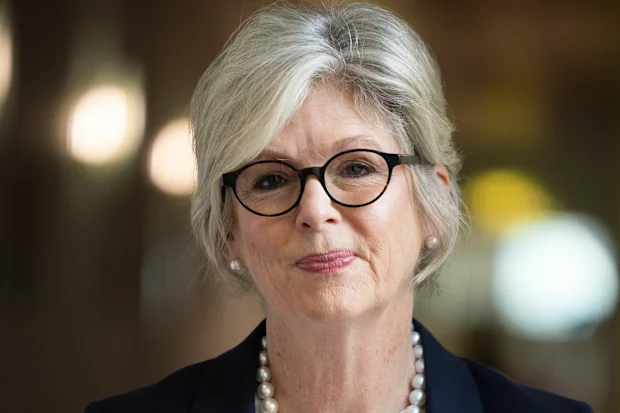
Australian independent MP Helen Haines has lost one of her legs after allegedly being struck twice by a vehicle outside her electorate office in Wangaratta, northern Victoria, in an incident that has shocked the country and intensified concerns about the safety of elected representatives. The 65-year-old politician remained in a critical but stable condition on Tuesday as surgeons worked to save her other leg following emergency surgery in Melbourne.
Police arrested a 43-year-old man at the scene on Monday night after the alleged attack. Investigators are examining witness accounts that the driver made a U-turn before deliberately driving into Haines, reversing and striking her a second time. Authorities believe the incident was deliberate, although the allegations remain subject to investigation and legal proceedings.
Haines, who represents the federal electorate of Indi, was airlifted from Wangaratta to the Alfred Hospital in Melbourne after sustaining catastrophic injuries. The severity of her condition prompted an urgent medical response, while the circumstances surrounding the incident led to renewed calls for stronger protections for public officials and a reduction in increasingly hostile political discourse.

Australian Prime Minister Anthony Albanese expressed support for Haines and praised her commitment to representing her constituents. Speaking on Tuesday, he described her as a compassionate and principled public representative who had worked tirelessly for the people of her region.
“Helen Haines represents the best of our political representatives,” Albanese said, highlighting her integrity, kindness and dedication to the community she serves.
The prime minister’s comments reflected the widespread concern that followed the incident, with political leaders and members of the public expressing solidarity with the injured MP. The attack has also raised difficult questions about the risks faced by elected representatives, particularly those who maintain close relationships with constituents through local offices and community engagements.
According to Home Affairs Minister Tony Burke, witnesses described a sequence of events in which the driver allegedly made a U-turn to enter a car park before ramming Haines against another vehicle. The driver then allegedly reversed and struck her again.
“What witnesses have described is the driver doing a U-turn to get into the car park and to ram Helen against a vehicle, then to reverse and do it a second time,” Burke told ABC radio.
The minister said a bystander intervened immediately after the incident, approaching the vehicle, removing the driver and restraining him until police arrived. The intervention may have helped prevent further harm, although investigators will need to establish the full sequence of events through witness statements and other evidence.
The man arrested at the scene was identified as Brendan Nugent, a resident of Tarrawingee, according to reporting by Guardian Australia. Police were expected to interview the suspect on Tuesday as they continued investigating the alleged attack.
Ricky Jefferies, a barber whose shop is next door to Haines’s electorate office, was among those who responded to the incident. He said he rushed outside after hearing the crash and intervened to remove the driver from the vehicle.
“I had no choice but to take him out of the car because it was the right and safest thing to do,” Jefferies told reporters on Tuesday morning.
Jefferies also alleged that the driver had a knife, although he said the weapon was not brandished during the incident. According to the barber, the man took it from his pocket and threw it away. Police will need to establish the relevance of the alleged weapon as part of their investigation.
The barber’s actions drew praise from political leaders and local residents. Burke described the intervention as an example of extraordinary courage, expressing gratitude to people who run towards danger to protect others.
Wangaratta Mayor Irene Grant also commended Jefferies, saying he appeared remarkably modest about what he had done. She said his willingness to intervene had made a significant difference during an extremely distressing incident.
Jefferies returned to work on Tuesday, even as the community continued to come to terms with the attack. His response has become a focal point of local appreciation, highlighting the role ordinary people can play in emergencies while also underscoring the danger faced by those who intervene.
In Wangaratta, a regional city in north-eastern Victoria with a population of approximately 20,000 at the last census, the incident has had a profound emotional impact. Residents began placing flowers outside Haines’s electorate office, transforming the area into a place of reflection and support for the injured politician.
The office, which normally serves as a point of contact between the MP and local constituents, became the centre of an investigation into one of the most disturbing incidents involving an Australian federal parliamentarian in recent years.
Haines had reportedly spent part of Monday morning speaking with local residents at a dog park. By the afternoon, she was fighting for her life following the alleged vehicle attack. The contrast between her routine community engagement and the subsequent emergency has intensified the shock felt by people who know her and those who follow her work.
Haines entered federal parliament in 2019 as an independent representative for Indi. During her time in office, she has been involved in efforts to strengthen accountability in government, improve rural health services and expand telecommunications access in regional communities.
She played an important role in the establishment of Australia’s National Anti-Corruption Commission, an institution created to investigate and address serious or systemic corruption in the federal public sector. She has also campaigned against the misuse of taxpayer funds and criticised practices commonly described as pork-barrelling, in which public money is directed towards politically advantageous projects.
Her work on rural issues has made her a prominent voice for communities outside Australia’s major metropolitan centres. Access to healthcare, reliable telecommunications and government services remains a significant concern for many regional residents, and Haines has consistently advocated for policies addressing those challenges.
The attack has therefore affected more than the immediate political sphere. For many people in Indi, the electorate office represents a direct connection to a representative who has worked on issues central to regional life. The loss of that sense of accessibility would be a concern for constituents even as they focus primarily on Haines’s recovery.
Burke said the incident had renewed attention to the security of people holding high public office. He revealed that authorities had received 1,067 reports of harassment or threats against high office holders in Australia during the previous financial year, compared with 951 in the year before.
The figures indicate an increase in reported incidents and have intensified discussion about the risks associated with political service. Although harassment and threats do not necessarily lead to physical violence, officials have warned that hostile behaviour can create an environment in which public figures face greater personal risks.
Burke said the government had already significantly increased its security spending, although detailed figures and specific arrangements were not being made public for security reasons. He also argued that the tone of political debate could influence whether some individuals felt encouraged to move from verbal hostility to action.
“There is a direct line between the temperature of debate and things willing people will say, and then when people are willing to take action,” the minister said.
His comments reflected growing concern among Australian leaders about the relationship between public discourse and the safety of politicians. Across democratic societies, elected representatives have increasingly faced threats, online abuse and confrontations linked to political disagreements. The incident involving Haines has brought those concerns into sharper focus in Australia.
Albanese and other political figures have called for a calmer political environment, emphasising that disagreement should not become a justification for intimidation or violence. Protecting elected representatives, they argue, is essential to ensuring that public officials can continue serving their communities without fear of physical harm.
At the same time, the investigation must establish what happened in Wangaratta, why the alleged driver acted as he did and whether any further security measures could have prevented the incident. Burke said police and national security agencies would examine what lessons could be learned to help protect other public officials.
For now, the immediate priority remains Haines’s medical condition. Surgeons were fighting to save her remaining leg on Tuesday, while she continued to receive treatment for critical injuries at the Alfred Hospital. Her family, colleagues and constituents face an uncertain period as doctors assess her condition and the longer-term consequences of the attack.

The investigation is also continuing, with police expected to question the arrested man and examine the accounts provided by witnesses. Any criminal allegations will need to be tested through the appropriate legal process.
The events in Wangaratta have left a regional community grieving, a national political establishment searching for answers and an injured parliamentarian facing an arduous recovery. The flowers outside her office and the praise for Jefferies’s intervention reflect the solidarity that has emerged in response to the violence.
As Australia awaits further information about Haines’s condition and the police investigation, the incident has become a stark reminder of the vulnerability of public representatives and the importance of maintaining a political culture in which disagreement does not descend into violence. For the people of Indi, the immediate hope remains that Haines will survive her injuries and receive the care and support needed in the difficult months ahead.
Related News:
 NSW Police Bid Delays Inquiry Into Sydney Protest
 Elizabeth Struhs Inquest Examines Child Safety Failures
 Camera Discovery Triggers Navy Ship Investigation
 One Nation Pledges $2,000 Baby Subsidy in Victoria
 NHS Safety Fears as Nurses Cover Doctor Gaps
 Barrister Criticises Trial After Suicide Case Verdict
 Armed Suspect Attacks Ohio Governor Candidate
 Ministers Condemn Far-Right Unrest in Portsmouth
 Patriot Platform Raises Concern Across Britain
 Texas Transfers Raise Fears for Migrant Children
 Memphis Questions National Guard Crime Surge
 Mahmood Warns Far Right Over Asylum Protests
 Disabled Travellers Seek Fairer UK Care Rules
 Patrick Clancy speaks publicly about children’s deaths
 UK Reviews Hague Child Abduction Cases Involving Abuse
 Democrat Says ICE Restricted Detention Camp Oversight
 King Refers Jamaica Slavery Petition to Privy Council
 Far-Right Activist Arrested After Channel Dinghy Incident
 Portadown protest ends after tense Orange Order standoff
 Fayed Survivors Demand Inquiry Into Medical Regulator
 French Student Protests Escalate Into Violent Clashes
 Hundreds of UK prisoners released early amid overcrowding
 Drumcree Talks End Without Agreement Ahead of Appeal
 French School Protests Escalate as 400 Schools Close
 Latin America women fear rollback of rights
 Gosport Protesters Clash With Police Over Migrant Rescue
 Botstein Quits Bard Amid Epstein Investigation Calls
 Sam Wood Denied Bail Over Alleged Domestic Assault
 ICE Agent Shoots Man in New York as Child Escapes Harm
 South Africa Withdraws Directive on Asylum Applications
 Navi Pillay Wins Nobel Peace Prize for Justice
 US Execution Livestream Plan Sparks Global Outrage
 Three Convicted in Mexico Surfing Trip Murders
 Controversial Vaccine Trial Approved in Guinea-Bissau
 Recruitment Boss Accused of Leading Doxxing Campaign
 Baby Boy Found Dead at Adelaide Motel: Two Charged
 England and Wales Begin Second Wave of Early Prison Releases
 Greens Block Labor’s Health Rebate Cuts for Pensioners
 Senegal LGBTQ+ Crackdown Drives People Into Hiding
 Macron Condemns Violence as France Faces 2,400 Arrests
 Marseille Activist Defies France’s Powerful Drug Gangs
 French Taxi Driver Cleared in David Lammy Theft Case After Fare Dispute
 Melania Trump Epstein remarks spark survivor backlash
 Florida Surgeon ‘Devastated’ Over Fatal Surgery Error
 Immigration Judges Fear Pressure in Trump Era
 Le Pen’s Popularity Holds Despite Conviction
 Westminster Council Threatens Charing Cross Soup Kitchen
 BBC Warned About Missing Clothes of Murder Victim
 Councils spend £125m on illegal children’s care
 Abusive ex used Tesla to control and harass former partner
 Israel Accused of Undermining Palestinian Life
 Fugitive Developer Rants at NSW Corruption Inquiry
 Texas Charges Seven Noncitizens in Voting Crackdown
 Yemen War Displaces 125,000 as Fighting Intensifies
 Clancy Defense Seeks Inquiry Into Lone Juror
 Japan PM Backs International Criminal Court
 Free Speech Emerges as Key UK Election Issue
 Tennessee Set to Execute Woman After Clemency Denied
 Cornell Fraternity Assault Investigation Reopened
 London Facial Recognition Trial Ends With False Alert
 Burnham Opens Door to Possible UK Return to EU
 Drumcree Talks Falter as Legal Challenge Deepens
 Badenoch Raises Prospect of 2027 UK Election
 New Prosecutor Takes Over Cornell Assault Case
 Palace Rejects Funding Andrew’s Police Legal Challenge
 Police accused of failing abuse victims
 Royal Navy Sailor Charged With Alleged Spying
 Sri Lanka Ex-First Lady Arrested Over Donation Probe
 Delhi Tightens Security Ahead of Election Protest
 EU Divisions Deepen Over Israel Policy
 Australian Advocates Seek Subsidised Drugs for PMOS
 British Military School Abuse Victims Denied Justice
 Former Students Raise Concerns Over School Culture
 Seekers Condemn CPAC Use of I Am Australian
 Millions Face Tougher Medicaid Rules From January
 Iranian Woman Faces Death Sentence Over Social Media Post
 Gadi Eisenkot: Israel’s Anti-Netanyahu Challenger
 UK Bill Faces Warning Over Fayed Trafficking Victims
 Up to 20 English Maternity Units Face Possible Closure
 UK Pledges Stronger Protections for Disabled Air Passengers