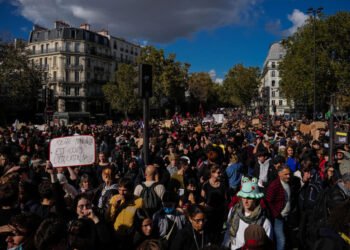
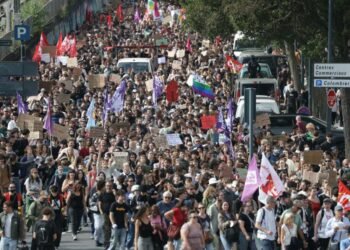
France is preparing for a major day of nationwide strike action and demonstrations, with hundreds of thousands of people expected to take to the streets amid growing frustration over rising living costs, public spending cuts and deteriorating conditions in the education system. Workers from several key sectors, including healthcare, aviation, rail transport, postal services and schools, are expected to participate, raising the prospect of widespread disruption to public services across the country.
The coordinated action comes at a difficult moment for President Emmanuel Macron’s government, which is facing mounting domestic pressure during the final months of his presidency. The administration is struggling to manage a series of overlapping political, economic and social challenges, with public dissatisfaction growing over the cost of living, the state of public services and proposed government spending reductions.
Trade unions from different parts of the political spectrum have joined the call for industrial action. Their mobilisation reflects concerns that the government’s proposed budget measures could place additional pressure on households and public-sector employees already struggling with financial uncertainty. Unions argue that reducing public expenditure without adequately protecting essential services could deepen inequality and weaken the institutions on which millions of people depend.

France’s four main rail unions have strongly criticised the proposed budget cuts ahead of Thursday’s action. They warned that the government’s plans could worsen poverty, weaken social security, freeze salaries for state employees and reduce investment needed to support environmental programmes. Their position highlights the wider disagreement between organised labour and the government over how France should address its financial difficulties.
The country’s public debt has approached 120 per cent of economic output, intensifying pressure on the government to control expenditure and demonstrate financial discipline. However, attempts to introduce a restrictive budget have become increasingly complicated by divisions within parliament. Political disagreements have made it difficult for the administration to secure sufficient support for its financial plans, leaving the government exposed to criticism from both opposition parties and trade unions.
For workers and campaigners, the dispute is not simply about government accounting. They fear that reductions in public spending could translate into lower-quality services, fewer opportunities and greater financial insecurity. Public-sector employees have also expressed concern that wage freezes and limited investment could make it increasingly difficult to retain staff and maintain essential services.
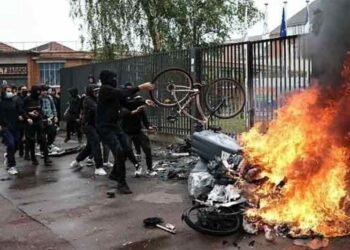
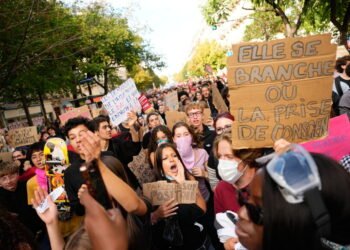
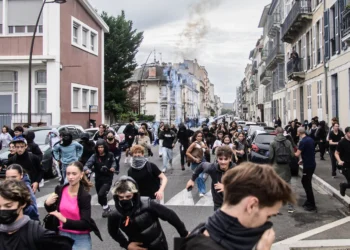
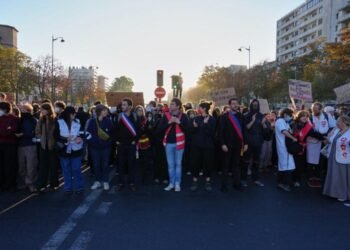
The strike movement has gained momentum alongside protests by high school and university students. Young people have been demonstrating against overcrowded classrooms, inadequate teaching conditions and deteriorating school buildings. Several schools have faced blockades as students attempted to draw attention to what they describe as long-standing failures in the education system.
Students argue that many educational institutions lack adequate facilities and resources to provide a suitable learning environment. Concerns have included overcrowded classes, ageing buildings and insufficient investment in improvements. University students have also joined the protest movement, with some faculties facing blockades as dissatisfaction spreads beyond secondary education.
The government has proposed measures intended to address some of these problems, including limiting the size of certain classes and providing loans to regional authorities to help repair school buildings. However, student protesters say the proposals do not go far enough to resolve the scale of the difficulties facing educational institutions.
Their concerns have increasingly attracted support from teachers and trade unions. Teachers from both state and private schools are expected to participate in Thursday’s industrial action, creating the possibility of disruption for families and students across the country. The education ministry estimates that almost 18 per cent of nursery and primary school teachers will join the strike. Unions expect participation among secondary school teachers as well.
The involvement of teachers reflects a broader argument about the future of France’s education system. Staff members and campaigners are concerned that limited resources, growing classroom pressures and inadequate infrastructure could undermine educational standards. They also argue that improvements cannot be achieved through isolated measures without sustained investment in schools and working conditions.
The impact of the strike is expected to extend well beyond education. France’s national railway operator, SNCF, has warned of disruptions to regional train services and some parts of the greater Paris transport network. Commuters, students and travellers may therefore face delays, cancellations and difficulties reaching their destinations.
Air traffic control workers are also expected to take part, potentially affecting flight operations and creating uncertainty for passengers. Postal workers and hospital employees are among the other groups expected to join the action. Dockworkers have warned of disruption at French ports, raising concerns about the movement of goods and the wider impact on commercial activities.
Although the scale of disruption will vary between sectors and locations, the participation of workers across essential services demonstrates the breadth of dissatisfaction. Hospitals may need to adjust operations, while transport interruptions could affect businesses and employees who rely on regular public services. Families may also have to make alternative arrangements if schools experience significant staff shortages.
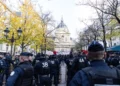
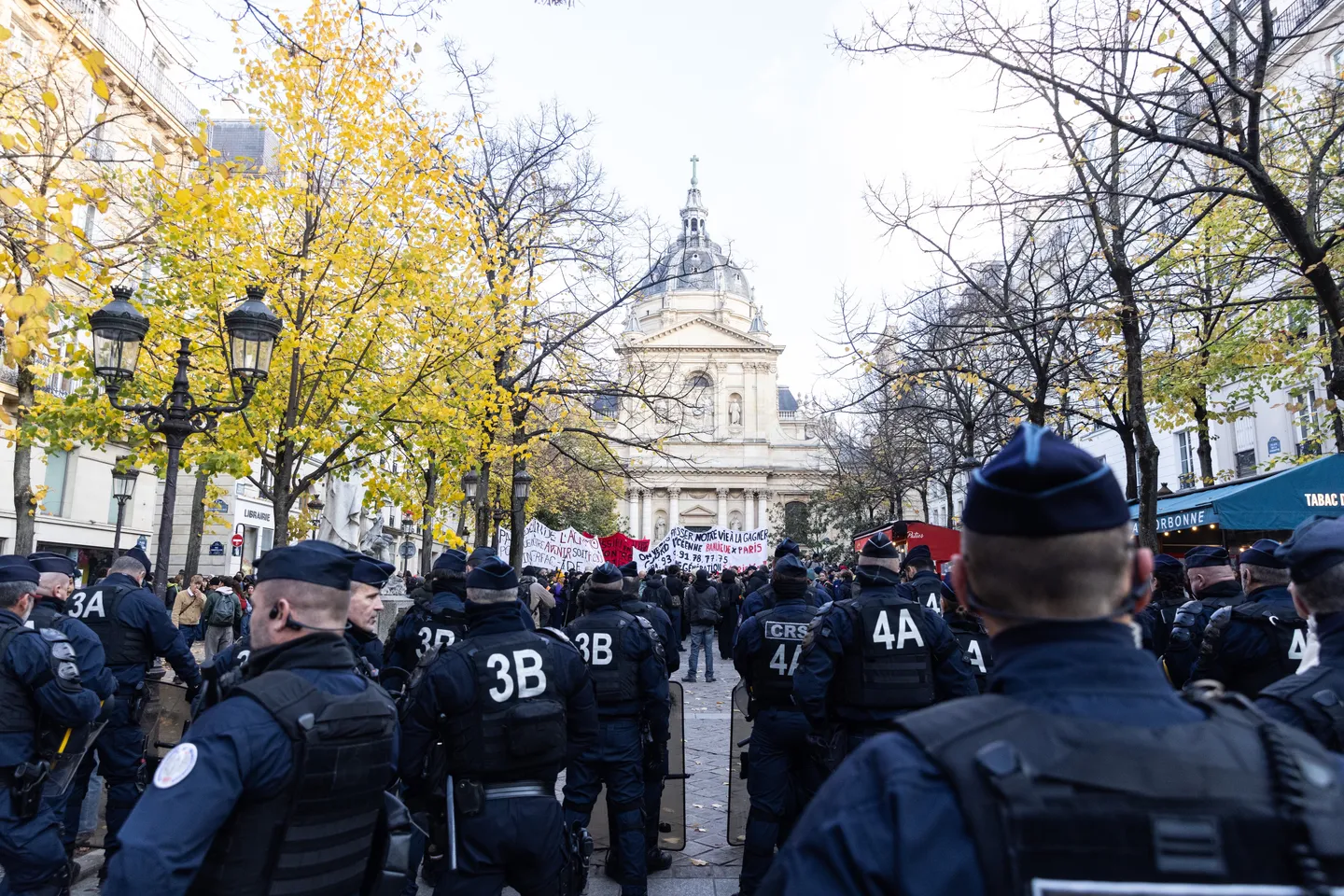
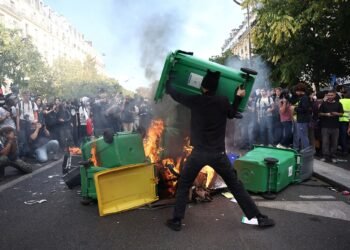
The demonstrations have also raised questions about public order and the government’s approach to managing protests. Authorities have introduced extensive security measures ahead of the nationwide mobilisation, including restrictions on demonstrations in some city centres and curfews in certain areas. Heavy police deployments have drawn criticism from civil liberties organisations and campaigners who argue that the right to protest must be protected.
The French Human Rights League has accused the authorities of encouraging what it describes as an authoritarian shift aimed at limiting dissenting voices. Rights groups have expressed concern that restrictions on demonstrations could undermine the freedom of assembly and discourage citizens from participating in peaceful political activity.
Sophie Binet, head of the leftwing CGT trade union, has also criticised the government’s approach. She described the situation as extremely serious and warned of what she called a dangerous authoritarian drift. Her criticism followed decisions by authorities in cities including Rennes, Toulouse and Lyon to move demonstrations away from central areas.
Union leaders argue that demonstrations must remain visible if they are to communicate public concerns effectively. Marylise Léon, head of the moderate CFDT trade union, stressed that visibility is fundamental to the purpose of a demonstration. Her remarks reflect the unions’ opposition to restrictions that could reduce the public impact of the protests.
The disagreement over policing adds another dimension to the growing confrontation between the government, organised labour and protest movements. While authorities face the responsibility of maintaining public safety, campaigners insist that security measures should not be used to suppress legitimate political expression. The balance between public order and democratic freedoms is therefore likely to remain a significant issue as the demonstrations unfold.
The political consequences could also become increasingly important as France approaches the 2027 presidential election. Macron’s final months in office are unfolding against a backdrop of economic pressure, parliamentary divisions and repeated public protests. The continuing unrest has created an environment in which opposition movements are seeking to turn dissatisfaction with government policies into broader political support.
Marine Le Pen, the far-right anti-immigration candidate, has been polling strongly ahead of the presidential contest expected next spring. Her position highlights the political uncertainty surrounding the country as voters consider alternatives to the current leadership. Economic concerns, public-service problems and dissatisfaction with the political establishment are likely to remain important issues in the campaign.
However, the current protest movement brings together people with different political positions and priorities. Students are demanding better educational conditions, public-sector employees are defending wages and services, and trade unions are challenging the government’s budget strategy. Their participation in a common day of action does not necessarily indicate agreement on every political question, but it demonstrates the scale of opposition to policies they believe threaten social and economic security.

For ordinary citizens, the immediate concern will be the practical consequences of the strike. Commuters may struggle to travel, families could face school closures or reduced services, and businesses may experience interruptions to their daily operations. Patients and people dependent on public services may also need to prepare for possible changes, depending on the level of participation in their local areas.
The wider challenge for the government will be whether it can respond to public concerns without further deepening the political confrontation. France must address serious fiscal pressures, but the debate over how those pressures should be managed has exposed competing priorities involving social protection, public investment and economic stability.
Thursday’s demonstrations are therefore about more than a single budget proposal or a temporary dispute over working conditions. They reflect accumulated frustration over the cost of living, public services, education and the relationship between citizens and political authority. As workers and students prepare to demonstrate across the country, the scale of participation will provide an important indication of the depth of public dissatisfaction and the challenges facing France’s leadership in the months ahead.
Related News:
 French Student Protests Escalate Into Violent Clashes
 French School Protests Escalate as 400 Schools Close
 French Student Protests Grow Despite Government Pledge
 France Promises 3,000 Teachers as Student Protests Grow
 French Students Protest Poor Conditions in Paris Suburbs
 Greta Thunberg Backs French Students in School Protests
 Canadian astronaut French words ease language row
 France Faces Record Presidential Crowded Race Amid Far-Right Surge
 Elif Eralp Emerges as Berlin’s Next Political Force
 Madrid Tent Camp Grows as Spain Housing Crisis Deepens
 Bosnia’s Young People Look Beyond Election Hope
 Spain Sets Snap Election as Housing Crisis Deepens
 France Schools Protests Draw 250,000 as Police Clash
 France Suspends Stun Grenades After Student Injury
 France Faces Debt Crisis as Protests and Markets Clash
 Albania’s Rama Defies Calls to Quit Amid Student Protests
 French Police Face Scrutiny Over Injured Teenagers
 Trump Slams Ukraine Strikes as Russia Ceasefire Collapses
 Macron Condemns Violence as France Faces 2,400 Arrests
 Milan Luxury Stores Shut as Italy Plans Troop Deployment
 Milan Braces for Unrest as Debate Intensifies Over Lost Generation
 France to Deploy 70,000 Police Amid Unrest Fears
 Serbia’s Student Victory Sparks a ‘Smell of Freedom’
 Spain Mourns 68 Dead After High-Speed Train Crash
 Albania Introduces $6,000 Fines for Violent Protests
 Novaya Gazeta to Close After Russian Government Pressure
 Denmark Seeks EU-Wide Ban on Fast-Growing Turbo Chickens
 UK Apologises to Ukrainian Refugees Over Russian GCSE
 German Politician Hubert Aiwanger Found Dead in Berlin
 UK University Suspends Human Rights Research Following Pressure from China
 UK University Faces Counter-Terror Probe Over China Pressure
 Italian Town Buys Mussolini Villa to Keep Away Fascist Fans
 Hungary election: Orbán faces biggest test amid scandal
 Pope Meets Families in Italy Toxic Waste Zone
 Farage and Reform UK Reshape British Politics
 Starmer Leadership Under Pressure After Setbacks
 Le Pen to Run for President Despite Embezzlement Conviction
 Le Pen’s Popularity Holds Despite Conviction
 England and Norway Fans Turn Miami Into World Cup Carnival
 Russian Missiles Intensify Pressure on Kyiv
 Ghent Professors Questioned Cofnas Appointment
 Ukraine Villagers Demand Answers After Deadly Arms Depot Strike
 Bayeux Tapestry Revives Franco-British Ties
 Europe’s democracies face a growing far-right threat
 Sweden Election Hangs on Far-Right Breakthrough
 Lib Dems Prepare for Election Amid Reform Challenge
 Greece Pushes for Parthenon Marbles Reunification
 Burnham Opens Door to Possible UK Return to EU
 Drumcree Talks Falter as Legal Challenge Deepens
 Green Party faces dispute over Zionism motion
 Families Await USS Abraham Lincoln Homecoming
 Former German Intelligence Chief Arrested Over Espionage
 USS Lincoln Ends Record 265-Day Deployment
 Labour Wins Key London By-election as Greens Fall Short
 Gaza War Deepens India’s Strategic Ties With Israel
 Turkey Rules Out Troops in Saudi Arabia’s Houthi Conflict
 EU Divisions Deepen Over Israel Policy
 Delhi Detains Protest Leaders as Youth Rally Escalates
 Trump Names Katie Zachariah as Next White House Press Secretary
 Glucksmann Urges French Left to Fight Far Right
 Millions Face Tougher Medicaid Rules From January
 Ukrainian Soldier Faces Trial Over Nord Stream Blast
 Gadi Eisenkot: Israel’s Anti-Netanyahu Challenger
 Up to 20 English Maternity Units Face Possible Closure
 Zelenskyy Says US Failed to Warn Kyiv of Russian Strikes
 Greens Face Leadership Test as Jordon Steele-John Misconduct Claims Leave Party in Limbo
 UK-EU Youth Mobility Scheme Delayed Over Fee Row
 Lula Supporters Make Final Push Ahead of Brazil Runoff
 Fire Engulfs Hitler’s Eagle’s Nest Retreat
 Spain Deepfake Ad Sparks Election Outrage
 Rubio Urges Cubans to Seize Moment for Change
 Ukraine Peace Talks Set to Resume in November
 Melting Dolomites Glaciers Reveal 250 WWI Explosives
 Riot Police Deployed as Poland Court Row Escalates
 King Charles Faces Reparations Protests at Antigua Summit
 Bedouin Women Drive Historic Arab Election Gains
 Australia Reviews UK Visa Rules Amid Worker Influx
 Canada Joins Boycott of Russian Ice Hockey Teams
 ANC Faces Voter Backlash in South African Elections
 Exiled Journalists Defy Putin’s Growing Media Crackdown