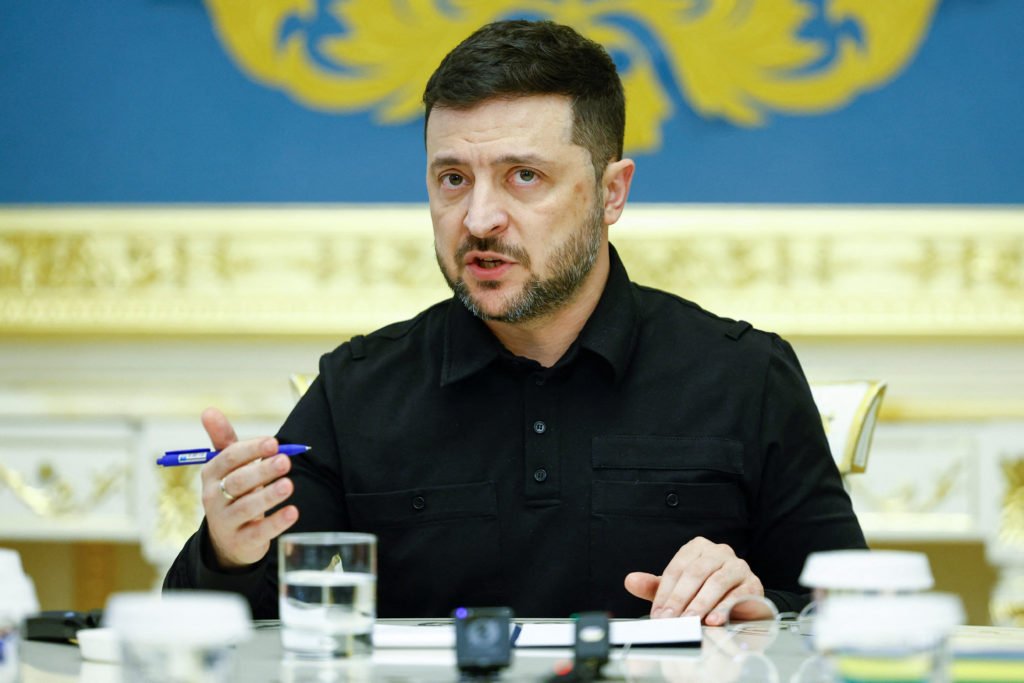
Ukraine’s President Volodymyr Zelenskyy has appealed to Latin American countries for urgent assistance in repairing the country’s electricity infrastructure, warning that Russian attacks have damaged every power plant in Ukraine. As the war continues into its 1,717th day, Kyiv is facing growing pressure to protect its energy system, maintain essential services and secure the equipment needed to withstand further attacks during the difficult winter period.
Speaking at a summit in Madrid on Thursday, Zelenskyy urged international partners to help Ukraine obtain specialised equipment compatible with its electricity network. He said repair teams were working continuously to restore damaged facilities but stressed that the scale of destruction required much broader international cooperation.
According to the Ukrainian president, every power plant in the country had suffered damage in one way or another as a result of Russian strikes. Although the extent of the destruction varies between facilities, the widespread attacks have placed enormous pressure on the country’s energy infrastructure and increased concerns about the reliability of electricity supplies.

Zelenskyy made the appeal during discussions on the sidelines of a summit of the Ibero-American Community, a group comprising 22 countries, primarily from Latin America, Spain and Portugal. He specifically highlighted the potential contribution of Spanish and Latin American companies, saying their technical expertise and industrial capacity could help Ukraine obtain the equipment necessary to repair its power network.
The Ukrainian leader emphasised that time was a critical factor. He explained that Ukraine needed equipment designed to operate with its existing electricity grid and required the supplies as quickly as possible. His appeal reflects the growing importance of international cooperation as the country attempts to maintain electricity generation and distribution despite repeated attacks.
Damage to power plants can have consequences extending far beyond the electricity sector. Hospitals, schools, transport networks, water facilities, manufacturing businesses and residential buildings all depend on reliable energy supplies. Prolonged disruptions can also affect heating systems, particularly during winter, when households become more vulnerable to falling temperatures.
Ukraine’s repair crews have continued working under difficult conditions, often facing the challenge of restoring essential infrastructure while the possibility of further attacks remains. The government’s immediate objective is to maintain the functioning of the national energy system while securing additional technical assistance from international partners.
The diplomatic appeal came as US President Donald Trump made fresh comments suggesting that Washington could be moving towards a major agreement with Russia. Speaking after an unexpected meeting with Kirill Dmitriev, an envoy of Russian President Vladimir Putin, Trump predicted a potentially significant deal that could extend beyond the war in Ukraine and involve the wider European region.
Trump revealed that he had held an unscheduled discussion with Dmitriev, who was visiting the White House for talks involving Ukrainian officials hosted by US First Lady Melania Trump. The US president declined to disclose the details of their conversation but indicated that he believed an agreement could eventually emerge.
He described the potential arrangement as a very large deal and suggested that its implications could extend across Europe rather than being limited to the conflict between Russia and Ukraine. Trump expressed confidence that the outcome would satisfy a broad range of parties.
However, his remarks immediately raised questions about the direction of American diplomacy and the possibility of a negotiated settlement that could affect Ukraine’s territorial and security interests. European governments have repeatedly expressed concern that Washington could pursue an agreement with Moscow without providing Kyiv and its European partners with sufficient influence over the final arrangements.
Trump also confirmed that he had not personally met the Ukrainian officials who were present at the White House on Thursday. The distinction is politically significant because Ukraine continues to depend heavily on American military, diplomatic and financial support while attempting to defend itself against Russia’s invasion.
European leaders are particularly concerned about the possibility that pressure could be placed on Ukraine to accept conditions that undermine its long-term security. Any agreement involving the wider European security structure would also have consequences for NATO, regional defence arrangements and relations between Moscow and Western governments.
Meanwhile, Russia and Ukraine continued exchanging aerial attacks overnight as diplomatic discussions about Ukraine’s future security and reconstruction concluded their second day in Brussels on Thursday.
The latest developments highlighted the continuing gap between diplomatic efforts and the realities of the battlefield. While officials discussed rebuilding infrastructure and providing security guarantees for a postwar Ukraine, attacks continued to affect military positions, industrial facilities and civilian areas.
In Ukraine’s Russian-occupied Luhansk region, a bus was reportedly struck in a Ukrainian attack, killing five people and injuring 13, according to the Moscow-backed regional leader Leonid Pasechnik. The reported casualties added to the humanitarian concerns surrounding the conflict, although the circumstances of the incident could not be independently established from the available account.
Another serious situation unfolded in Komyshuvakha, near the frontline in the Zaporizhzhia region. Rescue workers continued searching through the remains of a former school and a nearby shelter that had been struck by Russian guided bombs on Monday.
More than 30 people were initially believed to be trapped in the wreckage, creating an urgent challenge for emergency personnel attempting to locate survivors and recover victims. Zelenskyy said that 43 people had been confirmed dead and reported that someone previously listed as missing had been found alive.
The incident demonstrated the continuing danger faced by civilians living close to active combat zones. Schools, shelters and other public facilities can become places of refuge during attacks, but their vulnerability highlights the devastating humanitarian consequences of the war.
The conflict also continued to affect Russia’s industrial infrastructure. One of the country’s major oil refineries, located in Ryazan, appeared to have come under attack during a large overnight drone operation targeting industrial facilities in the city south-east of Moscow.
A Reuters video analysis indicated that the refinery may have been affected by the incident. However, the full extent of the damage and its potential impact on production remained unclear.
Attacks on energy and industrial facilities have become an important feature of the wider conflict, with both countries facing growing pressure to protect infrastructure that supports their economies and military operations. For Russia, damage to oil-processing facilities could create additional logistical and economic challenges, while Ukraine’s energy infrastructure remains particularly vulnerable to repeated missile and drone strikes.
Beyond the battlefield, newly reported information about military cooperation between Russia and Iran has raised further international security concerns. Leaked defence industry documents reportedly indicate that Moscow arranged to supply Tehran with 90 launchers for advanced guided missiles.
The documents were obtained by a Ukrainian private intelligence company and shared with international media. They reportedly describe arrangements involving launchers for the LMUR guided missile, a weapon designed to be fired from attack helicopters and used extensively by Russian forces in the war against Ukraine.
The reported arrangement provides another indication of the military relationship between Moscow and Tehran. Advanced missile systems and related equipment could strengthen Iran’s military capabilities while demonstrating the broader international dimensions of Russia’s defence partnerships.
The development is likely to attract attention from Western governments, which have expressed concerns about military cooperation between countries facing sanctions and diplomatic pressure. Any expansion of weapons-related cooperation could further complicate efforts to manage regional security and reduce international tensions.
Political divisions within Europe have also become increasingly visible as governments attempt to coordinate their positions on negotiations with Russia.
Italian Prime Minister Giorgia Meloni criticised what she described as Europe’s disorderly approach to discussions about ending the war. In a letter to European Council President António Costa, she argued that the European Union needed to establish a clearer system for deciding who represents the bloc in negotiations.
Meloni expressed concern about the growing number of meetings and diplomatic initiatives taking place through different formats. She warned that the lack of coordination risked damaging Europe’s credibility at a time when the conflict represented one of the most complicated challenges facing the continent.
Her criticism reflects a broader debate about European influence in negotiations involving Washington, Moscow and Kyiv. Although European countries have provided substantial support to Ukraine, differences in diplomatic priorities and approaches have sometimes made it difficult to present a unified position.
Costa responded by acknowledging the importance of coherence, unity and determination in Europe’s approach to the conflict. His response suggested agreement that the European Union needs stronger coordination, particularly as discussions about Ukraine’s future security and reconstruction become increasingly important.
The diplomatic disagreements are emerging at a particularly sensitive moment. Ukraine needs immediate assistance to restore damaged infrastructure, while its government is also seeking reliable international guarantees that could prevent renewed aggression in the future. At the same time, Washington’s discussions with Moscow have introduced fresh uncertainty about the direction of potential peace negotiations.

For millions of Ukrainians, the consequences of these developments are measured not only in diplomatic statements or military calculations but also in access to electricity, heating, safe housing and essential public services. The destruction of energy facilities has made infrastructure protection a central element of national survival.
As the conflict continues, Kyiv faces the difficult task of defending its territory while rebuilding damaged facilities and maintaining international support. Zelenskyy’s appeal to Latin American countries demonstrates that Ukraine is seeking a broader network of partners beyond its traditional Western allies.
Whether these diplomatic efforts produce meaningful assistance remains to be seen. However, the urgency of Ukraine’s energy requirements, Trump’s proposed agreement with Russia, continuing battlefield attacks and divisions within Europe indicate that the conflict is entering another consequential phase, with the country’s security and future reconstruction still uncertain.
Related News:
 Xi urges Trump to avoid US-China military conflict
 UN Warns World Must Cut Emissions by 18% by 2030
 Meta Faces Election Bias Claims Ahead of Brazil Runoff
 Global Crises Test Diplomacy as Trump’s Policies Face Scrutiny
 Capitalism ‘Suicidal’, Warns Petro at Climate Summit
 Trump approval plunges amid Iran war fears
 Trump Threatens UN Budget Cuts as US Pushes ‘Trade Over Aid’ Agenda
 Norway Doubles Down on Oil and Gas for Europe Energy Security
 Doomsday Clock Nears Midnight Amid Global Crises
 US Awaits Iran Reply on New Ceasefire Proposal
 Hormuz Talks Near Critical Stage
 Trump announces major US oil deal with Venezuela
 Turkmenistan Begins Fixing Major Methane Mega-Leaks
 Trump Hardens Canada Trade Stance as Talks Stall
 Trump Calls Iran War ‘Small Potatoes’ Despite US Deaths
 Trump Pledges $5,000 if Republicans Win Midterms
 Macron and Carney deepen France-Canada ties
 Trump Eyes Major Belarus Fertiliser Deal Amid Canada Trade Dispute
 AI Takes Centre Stage in Trump-Xi Talks
 Trump gives Xi red-carpet welcome as trade truce extends
 Lula accuses Trump of seeking control over Brazil
 AI Deepfakes Put New Pressure on Election Trust
 Trump Ads Trigger Fight Over Taxpayer Money
 Food Industry Mobilises Against the MAHA Movement
 Argentina Protesters Resist Milei’s Land Sale Drive
 Tanker Attacked Near Qatar as Hormuz Tensions Escalate
 NSW Leader Downplays Impact of Landmark Coal Ruling
 Trump’s Russian Diesel Deal Sparks Ukraine Fury
 Australia Rejects Russian Fuel as Trump Strikes Deal
 Brazil Court Scandal Threatens Lula as Bolsonaros Rise
 Millions Face Tougher Medicaid Rules From January
 Ukraine Combat Units Face Sudden Starlink Restrictions
 Trump Targets Arizona and Montana Amid GOP Election Worries
 Brazil Cuts Working Week to 40 Hours in Lula Election Boost
 Trump Rallies GOP as Senate Democrats Boost Key Races
 Serbia Leader Linked to Controversial Trump Tower Plan
 Trump Halts New Russia Sanctions Amid Ukraine Rift
Trump Falsely Questions Ossoff’s Election Legitimacy
 Trump Fears Shock Democratic Senate Win in Kansas
 Trump, Musk, and Zelenskyy Trade Blame Over Ukraine Starshield Access
 US Bans BYD Vehicles at Japan Military Base
 Fed Expected to Hold Rates Steady Ahead of US Midterms
 Trump’s Global Policies Put Republicans at Risk
 G20 Photo Cancelled as Russia Deepens Western Rift
 Democrats Court Maha Voters as Trump Alliance Frays
 Haley Stevens Backs Republican Rival in Michigan Senate Race
 US Midterms Put Trump’s Presidency to the Test
 US Strikes Iran Island as Vance Signals Hope for Peace
 Denmark Seeks EU-Wide Ban on Fast-Growing Turbo Chickens
 Democrats Seize Senate Control in Major Trump Setback
 Democrats Retake US House in Major Trump Backlash
 James Talarico Makes History with Texas Senate Victory
 Elon Musk’s $446m Midterm Gamble Ends in Defeat
 Big Tech Faces a New Political Reckoning in America
 UK Warned Over Dangerous Dependence on China for Minerals
 Paraguay President Quits After Major Bank Collapse
 Britain deploys RAF specialists to assist Belgium with drone threats
 Canada Passes Carney’s First Budget in Tight Parliamentary Vote
 Trump Fed bid heads to Supreme Court
 UK Stands Firm on Falklands Amid US Rift
 Oil Prices Surge Above $120 Amid Iran Blockade Fears
 Trump orders US troop pullout from Germany
 Kevin Warsh sworn in as Fed chair amid economic backlash
 Trump Faces Backlash Over $2bn Earnings Since Return
 Houthis Strike Saudi Arabia as Middle East Tensions Rise
 Burnham unveils £65m drought aid for farmers
 Tom Watson Takes Senior Role at Palantir
 US Networks Suspend Trump White House Pool Coverage
 Chinese Hybrid Car Surge Raises EU Auto Industry Concerns
 Republican Senator Questions Trump Ad Spending
 Lula Warns of Bolsonaro Family Return as Brazil Votes
 Quebec separatists return to power without majority
 South Korea Probes Fuel Shipments to Russia
 Trump Says He Deserves Nobel Peace Prize
 UK Water Firms Earn Millions From Industrial Wastewater
 Trump Names Katie Zachariah as Next White House Press Secretary
 Hall and Woodford Win Nobel Economics Prize
 Lula Supporters Make Final Push Ahead of Brazil Runoff
 UK Land Registry Plan Faces Opposition From Landowners
 Hegseth Faces Growing Pressure After GOP Election Defeat