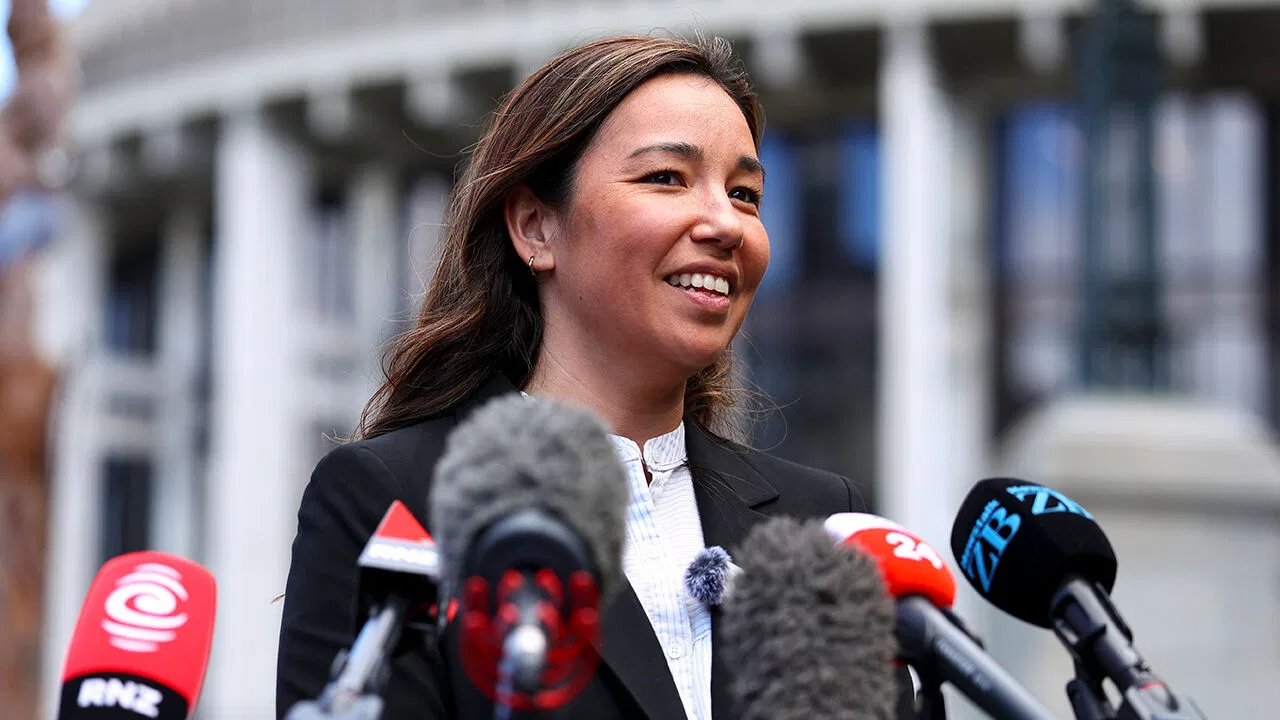
New Zealand’s political landscape is entering an uncertain new phase after the Opportunity Party secured a historic breakthrough in the country’s latest general election, positioning itself as a potential kingmaker in the formation of the next government. Led by businesswoman Qiulae Wong, the centrist party has criticised populist politics and promised to prioritise practical solutions, climate action and long-term national development as it prepares to negotiate with the country’s major political parties.
The election, held on Saturday, produced a closely contested result, leaving neither the incumbent centre-right coalition nor the opposition left bloc with a clear parliamentary majority. The narrow gap between the two political camps means that smaller parties could play a decisive role in determining who governs New Zealand over the coming years.
Although the final election outcome remains uncertain, the Opportunity Party has already emerged as one of the most significant political success stories. The party secured 5.9 per cent of the party vote, comfortably crossing the electoral threshold required to enter parliament. It is expected to hold seven parliamentary seats, giving it a potentially influential position during the upcoming government formation negotiations.

The achievement is particularly significant because Opportunity has become the first new political party since the introduction of New Zealand’s mixed-member proportional representation system in 1996 to enter parliament without emerging from an existing political party or parliamentary representative.
Its leader, Qiulae Wong, has also made history as the first leader of a New Zealand political party of Asian ethnicity. Of Chinese and European descent, Wong has presented the party as an alternative to established political divisions, arguing that voters are increasingly interested in practical policies rather than ideological confrontation.
Speaking outside parliament in Wellington on Monday, Wong described the arrival of the party’s newly elected representatives as a major moment for the organisation and its supporters. Nearly 150,000 voters backed Opportunity, reflecting growing public interest in a different approach to political leadership.
Wong used the occasion to criticise the growing influence of populism in politics. She argued that populist promises frequently lacked substance and failed to produce meaningful improvements in people’s lives.
According to her, political movements that rely heavily on popular slogans without presenting workable policies cannot provide the stability and direction needed to move a country forward. She said the election result demonstrated that a considerable number of New Zealanders wanted a more pragmatic political approach focused on measurable outcomes.
The Opportunity Party intends to begin negotiations with whichever political party secures the highest number of parliamentary seats once the official election results are confirmed. However, Wong has made clear that the party’s decision will not be based solely on political calculations or the distribution of ministerial positions.
Instead, its support will depend on whether a potential governing arrangement reflects its broader vision for New Zealand, particularly regarding environmental protection, economic fairness and stronger public services.
The party has identified five major policy priorities that will form the foundation of its negotiations. These include addressing the dominance of New Zealand’s supermarket industry, placing limits on political donations, developing a 10-year cross-party plan for healthcare, ending bottom trawling in the fishing industry and strengthening the country’s climate commitments.
The supermarket issue is particularly important because the country’s grocery market has long faced criticism over limited competition and the influence of a small number of major retailers. Opportunity wants meaningful action to improve competition and address concerns about the cost of essential goods.
Its proposal to introduce restrictions on political donations is intended to strengthen transparency and public confidence in the democratic process. The party also wants political leaders to cooperate on healthcare planning beyond individual parliamentary terms, arguing that long-term reforms require consistency rather than frequent changes in government priorities.
Environmental policy is another central element of Wong’s political programme. The party has promised to push for stronger climate commitments and a transition towards a low-emissions economy. It also wants an end to bottom trawling, a fishing method that can cause significant damage to marine ecosystems.
Wong has emphasised that the future direction of the country must be the central consideration in negotiations. She suggested that Opportunity would be prepared to work with different political groups, provided there was sufficient agreement on its priorities and long-term national objectives.
The possibility of cooperation has already attracted attention from Prime Minister Christopher Luxon, leader of the centre-right National Party. Luxon had previously ruled out working with Opportunity, but his position appeared to soften on Monday as the election result made smaller parties increasingly important.
Speaking to Radio New Zealand, Luxon said he intended to contact Wong shortly to discuss opportunities for cooperation and identify areas of common ground. He indicated that building a constructive relationship with the new parliamentary leader would be important for the political process ahead.
His comments suggest that National may be reconsidering its earlier position as it assesses the parliamentary numbers and the possibility of forming a stable government.
The centre-left Labour Party, meanwhile, is also facing an important political challenge. National and Labour both secured less than 30 per cent of the vote, marking their weakest combined performance since the introduction of the proportional representation system.
The decline in support for the two traditional major parties reflects broader public dissatisfaction with established political leadership. Persistent living costs, economic uncertainty and frustration over gradual policymaking have encouraged many voters to consider smaller political organisations.
Several minor parties benefited from this changing political mood. The Green Party and ACT recorded their strongest electoral performances to date, while New Zealand First increased its vote share by nearly four percentage points compared with the 2023 election.
Te Pāti Māori also retained five electorate seats despite internal disagreements and significant political challenges during the previous year. These results demonstrate how New Zealand’s political environment is becoming increasingly fragmented, with smaller parties gaining greater influence over national policy debates.
However, the election has not only created opportunities for smaller political organisations. It has also raised questions about the country’s electoral system and the final composition of parliament.
New Zealand uses a mixed-member proportional representation system, commonly known as MMP. Under this arrangement, voters cast two separate ballots: one for a local electorate representative and another for their preferred political party.
The system is designed to ensure that the overall composition of parliament broadly reflects each party’s share of the nationwide party vote. However, complications arise when a political party wins more electorate seats than its proportion of the party vote would normally entitle it to receive.
Such additional seats are known as overhang seats. The representatives retain their positions, even if this means parliament temporarily expands beyond its usual size.
Based on the preliminary election figures, New Zealand’s parliament could include as many as 11 additional overhang seats. National and Te Pāti Māori have both secured more electorate victories than their respective party vote shares would ordinarily provide.
The situation has prompted debate about whether political campaigns deliberately attempted to manipulate the electoral system.
Te Pāti Māori encouraged supporters to give the party their electorate vote while using their party vote for another political organisation. The strategy was intended to increase its representation through victories in the country’s seven Māori electorates. So far, the party appears on course to secure five of those seats.
Similar strategies were reportedly promoted by several right-wing groups. Some organisations, including a group backed by wealthy businessman Harry Mowbray, encouraged voters to support National candidates in electorate contests while giving their party votes to ACT or New Zealand First.
These tactics were designed to increase the possibility of additional electorate victories and consequently create overhang seats.
Political scientist Dr Lara Greaves of Victoria University of Wellington has expressed concern about the implications of these strategies. She argued that deliberately creating overhangs could undermine the fundamental purpose of proportional representation.
New Zealand adopted MMP in the 1990s following dissatisfaction with the previous first-past-the-post electoral system, which had produced parliamentary outcomes that did not accurately reflect the national distribution of votes.
Greaves warned that the growing complexity of the current election result could create further political polarisation and weaken public confidence in the legitimacy of parliament and the government eventually formed.
Another concern is voter participation. Preliminary figures indicate that turnout could become the second lowest in New Zealand’s electoral history. The relatively low participation rate has added to questions about public engagement with traditional political institutions.
The final election results are expected on 27 November, when approximately 400,000 special votes will be included in the official count. These votes include ballots cast by New Zealanders overseas and people voting outside their registered electorates.
Their inclusion could change the distribution of parliamentary seats and influence the negotiations between political parties. Until the final figures are confirmed, the country’s political future remains uncertain.

For Opportunity, the coming weeks will be crucial. Its seven elected representatives may hold considerable influence despite the party’s relatively modest share of the national vote. Wong will need to demonstrate that her organisation can translate its electoral breakthrough into meaningful political influence without compromising its stated principles.
The election has revealed growing demand for alternatives to traditional political leadership. Whether Opportunity can turn that demand into lasting reforms will depend on its negotiating strategy, the willingness of major parties to compromise and its ability to maintain a consistent political identity.
As New Zealand awaits the final results, the rise of the Opportunity Party represents more than the entry of another minor political organisation into parliament. It reflects a broader debate about the future of democratic representation, the limits of populist politics and the growing importance of cooperation in an increasingly divided political environment.
Related News:
 Denmark Seeks EU-Wide Ban on Fast-Growing Turbo Chickens
 Athens Mayor Moves to Tackle Overtourism Crisis
 Capitalism ‘Suicidal’, Warns Petro at Climate Summit
 Norway Doubles Down on Oil and Gas for Europe Energy Security
 Burnham unveils £65m drought aid for farmers
 Green Leader Targets Starmer’s Former Seat
 Burnham Opens Door to Possible UK Return to EU
 Spain Sets Snap Election as Housing Crisis Deepens
 Pacific Climate Summit Draws Limited Global Leaders
 Turkey Rules Out Troops in Saudi Arabia’s Houthi Conflict
 France Faces Debt Crisis as Protests and Markets Clash
 Hanson Attacks Taylor as Australian Conservatives Clash
 Australia Rejects Russian Fuel as Trump Strikes Deal
 Millions Face Tougher Medicaid Rules From January
 Brazil Cuts Working Week to 40 Hours in Lula Election Boost
 Cormann Warns Australia Against Populist Migration Caps
 Alberta Referendum Exposes Deep Divisions Over Independence
 Milan Luxury Stores Shut as Italy Plans Troop Deployment
 Alberta Voters Reject Push for Canadian Independence
 UN Warns World Must Cut Emissions by 18% by 2030
 UK Aid Set to Fall Short of Reduced 2027 Target
 Brexit Deal Not Good Enough for Britain, Burnham Says
 UK Land Registry Plan Faces Opposition From Landowners
 Australia Reviews UK Visa Rules Amid Worker Influx
 UK Parliament Faces Risk of Notre Dame-Style Fire
 Zelenskyy Seeks Urgent Help as Russia Hits Ukraine’s Power Grid
 Canada Passes Carney’s First Budget in Tight Parliamentary Vote
 Trump to Deploy “God Squad” Over Gulf Wildlife Protections
 Oil Prices Surge Above $120 Amid Iran Blockade Fears
 Trump approval plunges amid Iran war fears
 US Awaits Iran Reply on New Ceasefire Proposal
 Pope Meets Families in Italy Toxic Waste Zone
 Farage and Reform UK Reshape British Politics
 Starmer Leadership Under Pressure After Setbacks
 Ukraine Creates Long-Range Strike Command
 Le Pen’s Popularity Holds Despite Conviction
 Olympus Awaits Unesco Heritage Recognition
 Trump Hardens Canada Trade Stance as Talks Stall
 Trump Calls Iran War ‘Small Potatoes’ Despite US Deaths
 UK Subsidence Claims Surge After Record-Breaking Summer
 Swedish Mining Push Puts Sami Land Rights Under Pressure
 UK plans tougher Israel stance with settlement trade ban
 Mayors Could Gain Greater Powers Over Water Firms
 Lib Dems Prepare for Election Amid Reform Challenge
 Tropics May Wait Longest for Net-Zero Climate Benefits
 Xi urges Trump to avoid US-China military conflict
 Lula accuses Trump of seeking control over Brazil
 Madrid Tent Camp Grows as Spain Housing Crisis Deepens
 Badenoch Raises Prospect of 2027 UK Election
 French School Protests Escalate as 400 Schools Close
 Families Await USS Abraham Lincoln Homecoming
 Bosnia’s Young People Look Beyond Election Hope
 South Korea Probes Fuel Shipments to Russia
 Houthi Missile Claim Sparks Riyadh Airport Disruption
 UK Water Firms Earn Millions From Industrial Wastewater
 UK Pharmacy Body Drops Teva After Ethical Concerns
 Trump’s Russian Diesel Deal Sparks Ukraine Fury
 Panama Hit by Powerful 7.7-Magnitude Earthquake
 Trump Names Katie Zachariah as Next White House Press Secretary
 French Students Protest Poor Conditions in Paris Suburbs
 Brazil Court Scandal Threatens Lula as Bolsonaros Rise
 Greta Thunberg Backs French Students in School Protests
 Gadi Eisenkot: Israel’s Anti-Netanyahu Challenger
 Serbia Leader Linked to Controversial Trump Tower Plan
 UK Could Rejoin EU Through a Switzerland Plus Deal
 Brexit Debate Returns as UK Voters Reconsider EU Exit
 Zelenskyy Says US Failed to Warn Kyiv of Russian Strikes
 Middleton Revitalisation Blueprint for UK Towns
 Greens Face Leadership Test as Jordon Steele-John Misconduct Claims Leave Party in Limbo
 Lula Supporters Make Final Push Ahead of Brazil Runoff
 UK Chancellor Moves to Scrap Gas Standing Charges
 Trump’s Global Policies Put Republicans at Risk
 King Charles Faces Reparations Protests at Antigua Summit
 Global Crises Test Diplomacy as Trump’s Policies Face Scrutiny
 Australia Raises Interest Rates to 18-Year High
 James Talarico Makes History with Texas Senate Victory
 Canada Joins Boycott of Russian Ice Hockey Teams
 Paraguay President Quits After Major Bank Collapse
 UK Employers to Be Forced to Publish Job Salaries
 EU Citizens Sue Home Office Over UK Residency Rights