Published: 06 October 2026. The English Chronicle Desk. The English Chronicle Online
Japan’s Prime Minister Sanae Takaichi has condemned the alleged killing of a woman in Okinawa involving a US Marine, intensifying renewed public concern over the long-running presence of American military forces on the southern Japanese island.
Takaichi described the alleged crime as “heinous” during a speech in parliament and called on US military authorities to strengthen discipline among American servicemen stationed in Okinawa. The incident has quickly become a major political and social issue in a region where crimes and accidents involving US personnel have repeatedly strained relations between local communities and the Japanese and American governments.
The suspect, identified by Japanese police as 20-year-old US Marine lance corporal Devin Ballard, was arrested on Saturday on suspicion of strangling 39-year-old Anna Yagi at a hotel in Naha, the capital of Okinawa. Police also suspect that he took Yagi’s wallet and backpack. Ballard has denied the allegations, according to police.

The case remains under investigation, and an allegation of murder has not been established as a conviction. If found guilty of the most serious charges, Ballard could face severe punishment, potentially including life imprisonment or the death penalty under Japanese law.
The arrest has generated particular anger because of Okinawa’s complicated history with the US military presence. The island lies roughly 1,000 miles south of Tokyo and hosts the majority of the approximately 50,000 US military personnel stationed in Japan. Around 70% of Japan’s US military facilities are concentrated in Okinawa, placing a substantial portion of the American military footprint close to densely populated communities.
For many Okinawans, the latest incident has revived long-standing concerns about safety, noise, accidents, crime and the social burden associated with hosting US bases. Local opposition has persisted for decades despite repeated efforts by Tokyo and Washington to address tensions and reduce the impact of military facilities on residents.
The arrest came only days after Okinawa elected Genta Koja as its governor. Koja, who supports the continued US-Japan security alliance and was backed by Takaichi’s Liberal Democratic party, defeated incumbent Denny Tamaki, a prominent critic of the American military presence.
Koja’s victory had raised expectations among supporters of the US-Japan alliance that negotiations over the future of American military installations might move forward. In particular, attention had focused on the long-delayed relocation of Marine Corps Air Station Futenma from a densely populated part of Okinawa to a less populated coastal area.
Instead, the arrest has immediately placed the issue of military-related crime back at the centre of political debate.
Koja described the case as a “major shock” for Okinawa and said it had heightened fears among residents who already live close to American bases. He called the alleged killing unacceptable and expressed anger over the loss of an Okinawan resident.
The governor also questioned whether previous American efforts to improve discipline among military personnel had been effective. His criticism reflects a broader frustration among some local residents who argue that Okinawa has carried a disproportionate share of the security alliance’s costs for decades.
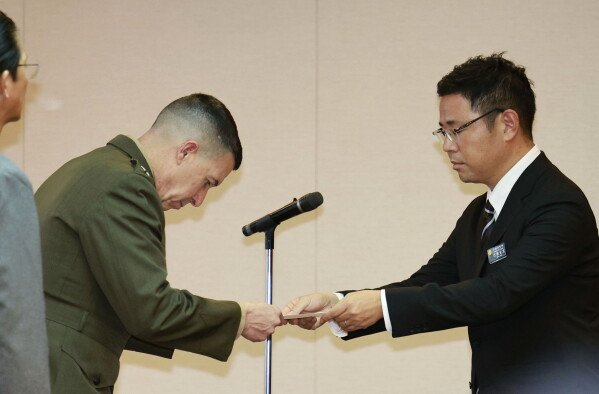
The commander of the US Marine forces in Okinawa, Lt Gen Benjamin Watson, acknowledged the anxiety caused by the incident. He said the US military understood the concerns of local residents and remained committed to being a good neighbour while working to rebuild trust with the Okinawan population.
The relationship between Okinawa and the US military has been particularly sensitive since a notorious 1995 case in which three American servicemen raped a 12-year-old Japanese girl. The crime prompted widespread demonstrations and intensified calls for a reduction in the US military presence.
In the following year, Tokyo and Washington agreed to close Futenma and relocate its functions to Henoko, an area on Okinawa’s northeastern coast. However, the relocation plan has remained controversial and repeatedly stalled. Some residents and local political groups have opposed the construction of a replacement facility, while others have argued that American military installations should be moved completely away from Okinawa.
The issue has therefore become much more than a question of where a single air station should be located. It has come to represent a wider debate about the distribution of Japan’s national security responsibilities and the burden placed on communities that host foreign military forces.
Public anger was renewed again in 2024 following the rape of a teenage girl by a US service member. Local frustration was compounded by the delayed disclosure of the case, which raised questions about communication between authorities and the transparency of the handling of crimes involving American personnel.
According to Okinawa prefectural police figures cited in the report, crimes involving US troops have increased in recent years. The number reportedly rose from around 40 cases in 2020 to 101 last year, adding to concerns among residents about whether existing measures are sufficient to protect local communities.
At the same time, Okinawa remains strategically important to Japan and the wider US security system in East Asia. Tokyo argues that the American military presence provides a critical deterrent at a time of increasing regional tensions, including disputes involving China in the East and South China Seas and the continuing threat posed by North Korea’s nuclear and missile programmes.
For Japan, the US military alliance remains a central component of national defence. Okinawa’s geographical position also gives American forces access to areas considered strategically important for regional security. This makes the question of reducing the military footprint particularly complicated.
Under the Japan-US Status of Forces Agreement, Ballard, who was reportedly off duty when the incident occurred, will remain in Japanese custody. The circumstances surrounding the death are now being examined by Japanese authorities as they gather evidence and determine the appropriate charges.
Security footage reportedly showed Ballard entering the hotel with Yagi and later leaving alone. Investigators will need to establish the sequence of events inside the hotel and determine what happened before and after Yagi’s death.
For Yagi’s family, the political debate surrounding the US military presence is secondary to the personal tragedy they are facing. Her relatives said they were devastated by her death, while her brother said their parents were particularly exhausted by grief after losing their daughter.

The case has therefore placed a deeply personal tragedy within one of Okinawa’s most sensitive political disputes. While the investigation will ultimately determine the circumstances surrounding Yagi’s death, the arrest has already reignited questions that have troubled Okinawa for decades: how the burden of hosting US forces should be shared, how military personnel should be held accountable for alleged crimes, and whether the existing security arrangements adequately protect local residents.
For Prime Minister Takaichi, the incident also presents a delicate diplomatic challenge. Japan relies heavily on its alliance with the United States for national and regional security, yet the government must also respond to growing concerns among Okinawan communities.
The coming weeks are likely to bring renewed scrutiny of US military discipline, the Futenma relocation plan and the broader future of American bases in Okinawa. For residents who have lived alongside those facilities for generations, the latest arrest has once again brought questions of safety, justice and trust into sharp focus.
Related News:
 US ‘Narco Boat’ Strikes Draw Global Outcry
 US Awaits Iran Reply on New Ceasefire Proposal
 Hormuz Talks Near Critical Stage
 Gunman Killed After White House Security Shootout
 Houthis Strike Saudi Arabia as Middle East Tensions Rise
 Israeli Strike in Southern Lebanon Kills Seven
 Middle powers seek new alliances amid Trump era
 Japan PM Backs International Criminal Court
 Xi urges Trump to avoid US-China military conflict
 Trump Asked Xi About Buying US Weapons
 Latin America women fear rollback of rights
 UK University Faces Counter-Terror Probe Over China Pressure
 Ukraine-Russia war latest: Putin’s troops exploit bad weather to force Kyiv withdrawal from multiple towns
 Greene Pushes Epstein Files Amid Trump Fallout
 Venezuela Threatens Nobel Winner Machado with Fugitive Status
 Trump Envoy to Discuss Ukraine Peace at Kremlin
 Two National Guard Soldiers Critically Injured Near White House
 Video shows Israeli troops kill Palestinians after surrender
 American Mother Extradited From UK to U.S. on Murder Charges
 Trump Escalates Minnesota Immigration Surge Amid Rising Tensions
 Greenland Faces Pivotal Summit Over Arctic Power Struggle
 Thousands Protest ICE Operations in Nationwide US Day of Action
 Epstein Files Reveal Trump Officials’ Emails with Financier
 Thousands Protest ICE in New York Against Trump Deportation Campaign
 Clinton Testimony Erupts in Fiery Exchange
 Melania Trump Epstein remarks spark survivor backlash
 Trump Faces Crisis as Iran Reopens Hormuz Tensions
 UK Stands Firm on Falklands Amid US Rift
 Southeast Asia Turns to Russia Amid Energy Crisis
 Cartel crackdown raises fears of fresh violence
 Trump orders US troop pullout from Germany
 Judge halts deportation of Yemeni refugees in US
 Trump approval plunges amid Iran war fears
 Ohio’s Battle for Trust: Democrats Vying to Flip the Buckeye State
 Trump Threatens UN Budget Cuts as US Pushes ‘Trade Over Aid’ Agenda
 China Fireworks Factory Blast Kills 21 in Hunan
 Trump warns Iran as Middle East tensions surge again
 Australia pushes Pacific security pact amid China tension
 Ohio Primaries Set Stage for Crucial Midterms
 Afghan Families Left in Limbo Face Risk of Deportation
 Tensions Emerge in Netanyahu-Trump Alliance
 Discontent grows around Putin amid war strain
 Former ICC prosecutor condemns US sanctions
 DeSantis’s ‘Alligator Alcatraz’ Faces Final Shutdown
 House Curbs Trump’s War Powers in Rare Rebellion
 Millions Gather for Khamenei’s Six-Day State Funeral
 Ukraine Creates Long-Range Strike Command
 Venezuela Quake Death Toll Surpasses 4,000
 Trump Calls Strait of Hormuz ‘American Territory’
 Ukraine Villagers Demand Answers After Deadly Arms Depot Strike
 Trump Hardens Canada Trade Stance as Talks Stall
 Trump Calls Iran War ‘Small Potatoes’ Despite US Deaths
 Masked Protesters Bring Dover Port Traffic to Standstill
 Saudi Arabia Shuts Oil Pipeline After Drone Attack
 Nearly 50,000 Flee as Houthis Advance in Yemen
 Israel Accused of Undermining Palestinian Life
 Yemen War Displaces 125,000 as Fighting Intensifies
 Saudi Pact Raises Risk of Pakistan Entering War
 US Networks Suspend Trump White House Pool Coverage
 Trump Eyes Major Belarus Fertiliser Deal Amid Canada Trade Dispute
 Democrat Says ICE Restricted Detention Camp Oversight
 King Refers Jamaica Slavery Petition to Privy Council
 Iran Rejects Claims of Shift in US Talks
 Trump gives Xi red-carpet welcome as trade truce extends
 Ukraine and Russia Escalate Long-Range Drone War
 Lula accuses Trump of seeking control over Brazil
 Saudi intercepts Houthi missiles as oil fears grow
 Republican Senator Questions Trump Ad Spending
 South Korea-Ukraine Row Erupts Over North Korean POWs
 French Student Protests Escalate Into Violent Clashes
 New Maps Reveal Gaza’s Vast Destruction
 US Sends Third Carrier to Middle East
 Brazil Election Draws Religion Into Final Campaign
 Trump Immigration Policy Faces New Legal Tests
 Pilot Recalls Fight to Save Flydubai Passengers
 French School Protests Escalate as 400 Schools Close
 Lula Warns of Bolsonaro Family Return as Brazil Votes
 North Korea Fires Missile Amid DMZ Tensions
 Families Await USS Abraham Lincoln Homecoming
 Germany Pledges €1bn Military Aid to Ukraine