Published: 09 October 2026. The English Chronicle Desk. The English Chronicle Online.
The French government has pledged to deploy 3,000 substitute teachers to address severe staffing shortages in secondary schools as student protests across the country entered their tenth day, with demonstrators demanding urgent investment in education, safer school buildings and improved learning conditions. The announcement represents a significant attempt by ministers to respond to mounting public pressure, but student representatives have warned that temporary staffing measures will not be enough to end a movement driven by years of frustration over the condition of France’s education system.
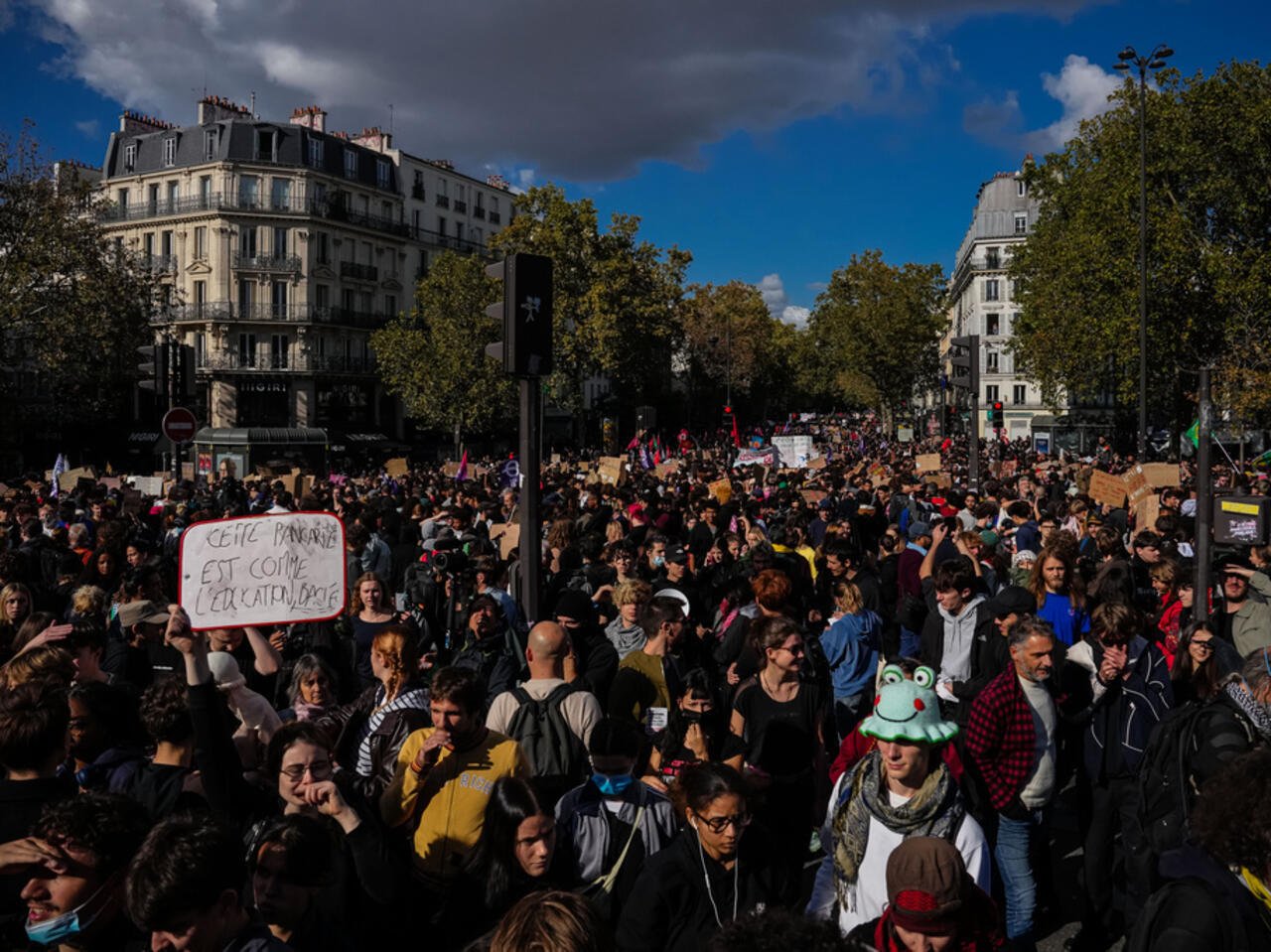
Large crowds took to the streets on Thursday, 8 October, in cities including Paris, Lille, Rennes, Nantes, Lyon, Toulon and Marseille. Although many demonstrations remained peaceful, confrontations between protesters and riot police intensified in several locations, with officers using tear gas, batons and crowd-dispersal ammunition to clear barricades. The unrest has left hundreds of students, education workers and police officers injured, deepening concerns about both the state of public education and the government’s response to young people demanding change.

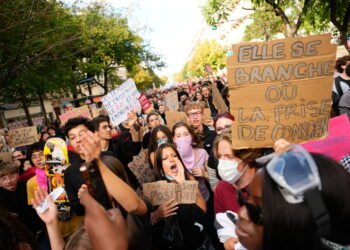
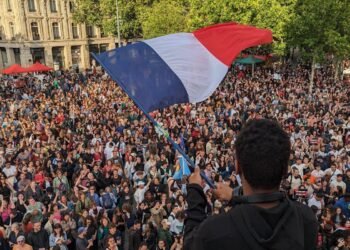
In Paris, an estimated 25,000 students gathered at the Place de la Bastille, a historic location associated with the French Revolution. Some demonstrators climbed the monument at the centre of the square, waving French flags and singing the national anthem, La Marseillaise. The gathering reflected the scale of the movement, which has expanded beyond individual school complaints into a broader campaign for improvements to public services and greater political accountability.
As evening approached, riot police moved to disperse sections of the crowd. Officers fired tear gas and crowd-control rounds and carried out repeated baton charges. Some demonstrators responded by throwing bottles, paving stones and other objects towards heavily equipped police units. The confrontations added to tensions that had already been building around school blockades and demonstrations throughout the country.
For many students, however, the protests represent a demand to be heard rather than simply an opportunity to challenge the authorities. Eliane, a 16-year-old student taking part in the Paris march, said she had joined to support schools facing even worse conditions than her own. Describing the demonstration as magnificent, she said she intended to continue protesting until meaningful progress was achieved.
The government’s latest response came from Education Minister Édouard Geffray, who announced during an interview with French television channel TF1 that 3,000 substitute teachers would be deployed to approximately 100 high schools experiencing particularly serious shortages. He said the appointments would take place between the following day and Tuesday, 13 October.
Geffray also indicated that the government would authorise the recruitment of several hundred additional teachers. The measures are intended to provide relief to schools where lessons have been disrupted by unfilled teaching positions and repeated staff absences. However, the effectiveness of the initiative will depend on whether the government can recruit suitable candidates quickly and ensure that the teachers are distributed to the schools most in need.
Prime Minister Sébastien Lecornu has also promised to propose amendments to the 2027 national budget to translate some student demands into practical measures, particularly in relation to teacher replacements. The commitment suggests that ministers recognise the need to address structural problems rather than relying exclusively on immediate measures to restore order.
Student representatives nevertheless remain sceptical. Ryad Rani, president of a high school students’ union, said protesters had yet to hear sufficiently concrete commitments addressing their demands. He argued that the movement would continue because the government’s response had not provided the assurances students were seeking.
Sabrine Kharbach, representing another student association, said the campaign was about much more than filling vacant teaching positions. Students have highlighted long school days, overcrowded classrooms and deteriorating school buildings as evidence of a wider crisis in public education. Some demonstrators and leftwing politicians have called for €10bn in urgent investment, arguing that substantial funding is necessary to reverse years of deterioration.
The demand reflects growing concerns about the everyday experiences of pupils and teachers. Staff shortages can leave students without lessons, increase workloads for existing teachers and disrupt preparation for important examinations. Overcrowded classrooms can make it harder for teachers to give individual attention, while poorly maintained buildings may undermine students’ comfort, safety and ability to learn effectively.
School conditions also vary across communities, raising concerns about educational inequality. Students who attend schools with inadequate facilities or insufficient staffing may have fewer opportunities to receive the same quality of education as their peers in better-resourced institutions. Protesters argue that improving school infrastructure and recruitment is therefore not simply a question of convenience but one of fairness and equal opportunity.
The demonstrations have received considerable public sympathy. According to an Elabe poll conducted for BFM TV, 72% of French respondents considered the students’ demands legitimate. At the same time, 55% believed the protests should stop, highlighting a tension between support for educational reform and concern about the disruption caused by sustained demonstrations.
The French education ministry reported that fewer secondary schools were forced to close on Thursday than in recent days. A total of 224 high schools were closed in the morning, falling to 157 by lunchtime. Despite the disruption, the ministry said approximately 95% of the country’s high schools remained at least partially open.
The interior ministry estimated that more than 71,000 people took part in demonstrations nationwide. Teachers, parents and trade unions joined or supported the campaign, helping to broaden the movement beyond the student population. Unions have called for another national day of action on Tuesday, 13 October, suggesting that pressure on the government could continue even if some schools gradually return to normal operations.
Policing has become one of the movement’s most contentious issues. Student banners have criticised what demonstrators describe as excessive force, with one message in Paris declaring that young people were considered too young to be heard but old enough to be tear-gassed. The slogan captured the frustration of pupils who believe their concerns have been dismissed while they face increasingly confrontational responses from law enforcement.
Over the preceding two weeks, some protesters set rubbish bins on fire, damaged bus shelters and threw objects at riot police. Authorities have responded with batons, tear gas and other crowd-control measures. In Rennes, riot officers used water cannon to disperse demonstrators, while clashes were also reported around school barricades in Paris and Nantes.
The human cost has been substantial. Figures cited in reporting on the protests indicate that at least 215 teenagers, 89 school staff members and 761 police officers had been injured since the movement began. These figures underline the seriousness of the unrest and the need for measures that can reduce confrontation while allowing legitimate concerns about education to be addressed.
The government has faced particular scrutiny over its use of crowd-control equipment. On Wednesday, authorities suspended the use of stun grenades by police after a teenager suffered the loss of a hand. Officials described the situation as serious but rejected characterisations of the police response as repression, also denying that officers had been ordered to confront young protesters.
The suspension has not resolved the broader dispute over policing. Student groups and civil liberties advocates continue to question whether the tactics used against demonstrations are proportionate, particularly when minors are involved. Any further escalation could deepen mistrust between young people and public institutions at a time when the government is attempting to persuade students that their concerns are being taken seriously.
The protests have also exposed a difficult political and economic dilemma. France is under pressure to improve deteriorating public services while controlling a growing budget deficit and a substantial public debt burden. Education Minister Geffray’s proposed staffing measures and Lecornu’s budget commitments must therefore compete with other government priorities.
Economy Minister Roland Lescure has said there is room to address demands for additional school resources in the 2027 budget. Under the current draft, education would receive the second-largest funding increase after defence, with its allocation rising by 1.4% to €90.9bn. Students and their supporters argue, however, that the scale of the problems requires a more ambitious and immediate response.
The crisis is unfolding approximately six months before a crucial presidential election to replace Emmanuel Macron, giving political parties an incentive to shape public debate around the demonstrations. Marine Le Pen, the far-right political frontrunner, has highlighted damage to school buildings and called for parents to contribute towards repair costs. Jean-Luc Mélenchon, a prominent figure on the hard left, has praised the protesters and condemned what he considers police brutality.
The involvement of political figures adds another layer of complexity to a movement whose central demands concern teachers, classrooms and school infrastructure. While political support can help students secure attention and resources, competing parties may also attempt to use the unrest to advance their wider electoral agendas.
For the government, the immediate challenge is to demonstrate that its promises will produce tangible improvements. Deploying thousands of substitute teachers could help restore lessons in the most affected schools, while additional recruitment and budget amendments could form the basis of a longer-term response. Yet students have made clear that staffing announcements alone will not resolve concerns about crowded classrooms, deteriorating buildings and the treatment of protesters.

The coming days will therefore be an important test of whether ministers can turn their commitments into a credible programme of reform. With unions preparing further action and demonstrators refusing to abandon their campaign, the government faces continued pressure to balance public order with the need to listen to a generation demanding better educational opportunities.
Ultimately, the dispute is about the future of France’s public education system and the expectations young people have of the state. For students struggling with absent teachers, inadequate facilities and long school days, the promises announced this week offer a possible beginning rather than a final solution. Whether the protests subside will depend on the government’s ability to deliver visible improvements, maintain constructive dialogue and convince students that their concerns are being addressed through lasting action rather than temporary concessions.
Related News:
 French Student Protests Escalate Into Violent Clashes
 French School Protests Escalate as 400 Schools Close
 French Student Protests Grow Despite Government Pledge
 UK University Faces Counter-Terror Probe Over China Pressure
 Canadian astronaut French words ease language row
 NHS Safety Fears as Nurses Cover Doctor Gaps
 France Faces Record Presidential Crowded Race Amid Far-Right Surge
 Irish Gangland Figure Fails in Dublin Election Bid
 Dreyfus Statue Finally Gets Permanent Paris Home
 Ukraine Villagers Demand Answers After Deadly Arms Depot Strike
 Masked Protesters Bring Dover Port Traffic to Standstill
 King Refers Jamaica Slavery Petition to Privy Council
 Elif Eralp Emerges as Berlin’s Next Political Force
 Three Die in Channel Crossing Attempt Near France
 Madrid Tent Camp Grows as Spain Housing Crisis Deepens
 Bosnia’s Young People Look Beyond Election Hope
 Latin America women fear rollback of rights
 Spain Sets Snap Election as Housing Crisis Deepens
 Former German Intelligence Chief Arrested Over Espionage
 France Schools Protests Draw 250,000 as Police Clash
 France Suspends Stun Grenades After Student Injury
 UK University Suspends Human Rights Research Following Pressure from China
China-critical UK academics face ‘extremely heavy’ pressure from Beijing
UK University Suspends Human Rights Research Following Pressure from China
China-critical UK academics face ‘extremely heavy’ pressure from Beijing
 Ukraine-Russia war latest: Putin’s troops exploit bad weather to force Kyiv withdrawal from multiple towns
 Greene Pushes Epstein Files Amid Trump Fallout
 Venezuela Threatens Nobel Winner Machado with Fugitive Status
 Trump Envoy to Discuss Ukraine Peace at Kremlin
 Video shows Israeli troops kill Palestinians after surrender
 Italian Town Buys Mussolini Villa to Keep Away Fascist Fans
 Hungary election: Orbán faces biggest test amid scandal
 Melania Trump Epstein remarks spark survivor backlash
 Two Dead in Adelaide Airport Plane Crash Fire
 Cartel crackdown raises fears of fresh violence
 China Fireworks Factory Blast Kills 21 in Hunan
 US ‘Narco Boat’ Strikes Draw Global Outcry
 Hybrid village stores fight rural decline
 Pope Meets Families in Italy Toxic Waste Zone
 Former ICC prosecutor condemns US sanctions
 Gunman Killed After White House Security Shootout
 Farage and Reform UK Reshape British Politics
 Starmer Leadership Under Pressure After Setbacks
 Deadly Russian Air Raids Strike Across Ukraine
 UK Nations Brace for Potential Breakup Amid Reform Surge
 Le Pen to Run for President Despite Embezzlement Conviction
 Ukraine Creates Long-Range Strike Command
 Le Pen’s Popularity Holds Despite Conviction
 England and Norway Fans Turn Miami Into World Cup Carnival
 Israeli Strike in Southern Lebanon Kills Seven
 Russian Missiles Intensify Pressure on Kyiv
 Ghent Professors Questioned Cofnas Appointment
 Bayeux Tapestry Revives Franco-British Ties
 Councils spend £125m on illegal children’s care
 Europe’s democracies face a growing far-right threat
 Sweden Election Hangs on Far-Right Breakthrough
 Israel Accused of Undermining Palestinian Life
 Yemen War Displaces 125,000 as Fighting Intensifies
 Mahmood Warns Far Right Over Asylum Protests
 Lib Dems Prepare for Election Amid Reform Challenge
 Democrat Says ICE Restricted Detention Camp Oversight
 Japan PM Backs International Criminal Court
 Greece Pushes for Parthenon Marbles Reunification
 Yemen fighting forces children out of school and into work
 Cornell Fraternity Assault Investigation Reopened
 Burnham Opens Door to Possible UK Return to EU
 Drumcree Talks Falter as Legal Challenge Deepens
 UK-France Returns Deal Faces Expiry as Talks Stall
 Green Party faces dispute over Zionism motion
 Pilot Recalls Fight to Save Flydubai Passengers
 New Prosecutor Takes Over Cornell Assault Case
 Polanski Says Leadership Not Tied to By-election Result
 Families Await USS Abraham Lincoln Homecoming
 Germany Pledges €1bn Military Aid to Ukraine
 Gosport Protesters Clash With Police Over Migrant Rescue
 Ukraine claims strikes have crippled Russia’s oil refining
 Iran Nobel Laureate Reveals Prison Torture and Fears
 WHO Says Russia Plague Epidemic Risk Remains Low
 EU-China Talks Target Surge in Hybrid Car Imports
 Botstein Quits Bard Amid Epstein Investigation Calls
 Luton Residents Reject Claims of ‘No-Go Zones’
 USS Lincoln Ends Record 265-Day Deployment