Published: 13 October 2026. The English Chronicle Desk. The English Chronicle Online
A growing scandal involving Brazil’s Supreme Federal Court is reshaping the country’s presidential election campaign, threatening to weaken President Luiz Inácio Lula da Silva while creating fresh opportunities for the political comeback of the Bolsonaro family. At the centre of the controversy is Supreme Court Justice Alexandre de Moraes, the judge who played a prominent role in the prosecution of former president Jair Bolsonaro over an alleged attempt to overturn Brazil’s democratic order.
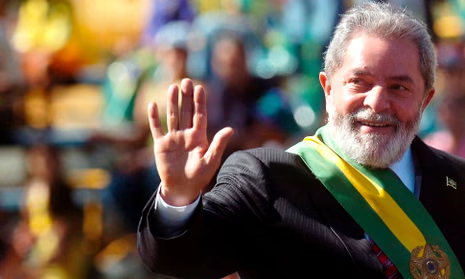
The controversy has become a major political liability for Lula, who is preparing for a presidential runoff against Senator Flávio Bolsonaro on 25 October. Flávio, the son of the former president, has emerged as a formidable challenger after performing unexpectedly strongly in the first round. Political analysts say public anger over allegations surrounding the judiciary may be influencing undecided voters and strengthening the far right’s message that Brazil’s established institutions cannot be trusted.
The scandal is particularly damaging because Moraes was once celebrated by supporters of Brazilian democracy for standing up to Jair Bolsonaro and resisting attempts to undermine the country’s institutions. His involvement in controversial financial allegations has now placed his reputation under intense scrutiny, allowing political opponents to portray him as a symbol of the very institutional failures he was previously credited with confronting.

The crisis began with an investigation into Banco Master, a financial institution whose former owner, Daniel Vorcaro, is accused of orchestrating a major banking fraud. Police investigations reportedly uncovered a contract worth approximately £20m between Vorcaro and the law firm run by Moraes’s wife, Viviane Barci de Moraes. Messages recovered from Vorcaro’s phone also raised questions about the banker’s relationship with the judge, although Moraes disputes the authenticity of the messages and denies wrongdoing.
The reported contract and alleged communications have triggered questions about potential conflicts of interest, particularly given the enormous sums involved and the political sensitivity of the investigation. Moraes has acknowledged the contract involving his wife’s firm but maintains that he never ruled on a case involving Vorcaro and therefore had no conflict of interest in his judicial work.
The controversy has expanded beyond Moraes. Investigations have reportedly identified connections between Vorcaro and at least four other Supreme Court justices, potentially involving financial arrangements, business relationships or associates. Those implicated have denied wrongdoing, and the reported connections do not in themselves establish that any justice committed an offence.
Nevertheless, the allegations have damaged public confidence in a court that occupies a central position in Brazil’s political system. With half of the court’s current members reportedly drawn into the controversy in some way, the issue has grown from a dispute over one judge into a broader debate about judicial accountability, transparency and the relationship between political power and financial interests.
The dispute has also exposed divisions within the court itself. Last month, Moraes and another justice exchanged sharp accusations during a televised session, followed by a series of rulings in which judges aligned with opposing sides overturned or challenged one another’s decisions. The public confrontation intensified scrutiny of the judiciary and kept the scandal at the centre of national debate during a crucial stage of the election campaign.
For Flávio Bolsonaro, the controversy provides a powerful political argument. Speaking to supporters during Brazil’s Independence Day celebrations in São Paulo on 7 September, he sought to link Lula directly to Moraes, despite the president not having appointed the judge to the Supreme Court. Flávio argued that voting for Lula meant supporting Moraes, presenting the election as a choice between his political movement and a judicial establishment he portrays as compromised.
The strategy draws on long-standing resentment among Jair Bolsonaro’s supporters towards Moraes. The judge oversaw important proceedings involving the former president, who was sentenced to 27 years in prison over an attempt to stage a coup following the 2022 election. The ruling made Moraes a target for the far right, while supporters of democracy viewed his actions as part of an effort to defend Brazil’s constitutional system.
Now, allegations surrounding the judge have complicated that narrative. Voters who previously saw the court as a necessary defence against authoritarianism may be questioning whether its members are sufficiently accountable. Political scientist Camila Rocha, who has studied Brazil’s emerging right-wing movement and interviewed undecided voters, said the crisis had deepened anti-establishment sentiment.
According to Rocha, some voters who already distrusted Congress have begun to regard the Supreme Court as equally compromised. Confusion surrounding the allegations has also made Moraes a central figure in public anger, potentially weakening Lula among people who might otherwise have supported the president.
The effect on the election is difficult to isolate. Analysts have identified several factors behind Flávio Bolsonaro’s strong performance, including household debt, voters’ economic concerns and the enduring appeal of the Bolsonaro political brand. However, the court scandal appears to have become an additional factor in an election where the electorate remains sharply divided between broadly comparable left-wing and right-wing camps.
Lula acknowledged the political damage after losing the first round, saying he had been forced to carry the burden of what he described as impropriety within the Supreme Court. His campaign coordinator, Edinho Silva, argued that the president was paying the price for damage to public confidence in institutions. The comments suggested that Lula’s campaign was attempting to distance itself from the judicial controversy rather than defend every action taken by the court.
The scandal has not been confined to allegations involving Moraes. Reports have also raised questions about financial connections involving other justices, including an institute associated with Justice André Mendonça, who was appointed by Jair Bolsonaro. Mendonça’s institute reportedly received a loan from an associate of Vorcaro, which he says has been repaid. Other reported links include substantial contracts and alleged investments involving funds connected to the banker. Those involved have denied wrongdoing, and the allegations remain distinct from proven findings of misconduct.
The controversy has also touched Lula’s political camp, although Brazilian federal police and prosecutors reportedly said Vorcaro had not made an allegation that he paid to finance a documentary about Lula and had provided no supporting evidence in his testimony. Lula has denied receiving money from the banker. The distinction is important as competing political narratives threaten to blur the line between verified evidence, disputed allegations and campaign claims.
Flávio Bolsonaro also faces scrutiny over a separate financial matter. He is being investigated over money he was recorded asking Vorcaro to provide for a film about his father. Flávio has maintained that the funds were intended to sponsor the production, which has not yet been released. Investigators have reportedly examined whether some of the money may have been used to cover expenses for his brother Eduardo Bolsonaro while he was in the United States. These questions remain subject to investigation, and no conclusion should be assumed before the evidence is established.
Beyond the immediate presidential contest, the election could have far-reaching consequences for Brazil’s institutions. The far right’s strong showing has also contributed to the prospect of a more conservative Congress in 2027. If Flávio Bolsonaro wins the presidency, a conservative Senate majority could strengthen calls from his father’s supporters to impeach Supreme Court justices.
Constitutional law scholar Conrado Hübner Mendes has argued that the scandal has provided Bolsonaro supporters with a new basis for demanding the removal of judges. He warned that a court perceived as entangled with political and economic power risks undermining its own legitimacy. His criticism reflects a wider debate about whether the judiciary has accumulated too much political influence and whether its decisions are subject to adequate scrutiny.
A Bolsonaro victory could also allow the incoming president to appoint new Supreme Court justices as vacancies arise. According to the analysis presented in the source report, four seats could become available during a Bolsonaro term, potentially enabling the family’s political camp to shape the court’s future composition. Such appointments could have lasting consequences for the balance of power between the executive, legislature and judiciary.
Critics warn that a court dominated by judges appointed by Bolsonaro or his political allies could become less willing to challenge the government. Supporters of judicial reform, meanwhile, argue that the current crisis demonstrates the need for stronger transparency and accountability regardless of which political faction benefits electorally.
The central challenge for Brazil is therefore larger than the fortunes of individual politicians. The Supreme Court is expected to uphold constitutional protections and resolve disputes impartially, while elected leaders are responsible for governing within legal limits. Public confidence can deteriorate when allegations of conflicts of interest are not addressed convincingly, but political attacks on judges can also threaten judicial independence if they are used to weaken legitimate oversight.

As the 25 October runoff approaches, the scandal has become a test of whether Lula can persuade voters to separate his government from the controversy and whether Flávio Bolsonaro can convert public anger into electoral victory. The outcome remains uncertain, but the political consequences are already significant.
A crisis that initially centred on a banker’s alleged financial misconduct and questions surrounding judicial relationships has evolved into a wider confrontation over democracy, institutional trust and the future direction of Brazil. Whatever the result of the election, the country will face pressure to establish the facts, strengthen accountability and ensure that its courts can command public confidence without becoming instruments of political power.
Related News:
 Trump Ads Trigger Fight Over Taxpayer Money
 US states redraw maps after voting rights ruling
 Trump Refuses to Sign Housing Bill, But Law Takes Effect
 Trump Calls Iran War ‘Small Potatoes’ Despite US Deaths
 Trump Pledges $5,000 if Republicans Win Midterms
 US House Passes Russia Sanctions Bill Amid Debate
 Trump Media Ban Triggers First Amendment Clash
 US Networks Suspend Trump White House Pool Coverage
 Lula accuses Trump of seeking control over Brazil
 Republican Senator Questions Trump Ad Spending
 Latin America women fear rollback of rights
 Tanker Attacked Near Qatar as Hormuz Tensions Escalate
 Trump Says He Deserves Nobel Peace Prize
 US Senate Debates Turn Bitter as Midterms Near
 Trump Attacks Norway After Nobel Peace Prize Snub
 Thousands Protest ICE Operations in Nationwide US Day of Action
 US Court Ruling Reshapes Voting Rights Landscape
 Cartel crackdown raises fears of fresh violence
 Judge halts deportation of Yemeni refugees in US
 Trump approval plunges amid Iran war fears
 Trump Threatens UN Budget Cuts as US Pushes ‘Trade Over Aid’ Agenda
 Trump warns Iran as Middle East tensions surge again
 US ‘Narco Boat’ Strikes Draw Global Outcry
 US Awaits Iran Reply on New Ceasefire Proposal
 Immigration Judges Fear Pressure in Trump Era
 Hormuz Talks Near Critical Stage
 Reeves Fights to Keep Treasury Role Amid Labour Turmoil
 Former ICC prosecutor condemns US sanctions
 Gunman Killed After White House Security Shootout
 Mystery Grows Over Mitch McConnell’s Health
 Is America Ready for an AOC Presidential Run?
 Trump Hardens Canada Trade Stance as Talks Stall
 Judge Allows Pentagon Firings at Stars and Stripes
 Reform Faces Fresh Financial Controversy
 UK plans tougher Israel stance with settlement trade ban
 Trump gives $45,000 holiday gifts to White House aides
 Experts Warn of Growing US Terrorism Risks 25 Years After 9/11
 New Mexico Takes Facebook to Trial Over Data Scandal
 Reform UK Receives Record £36m Donation From Crypto Billionaire
 Israel Accused of Undermining Palestinian Life
 Trump’s Washington Projects Face Architectural Criticism
 Fugitive Developer Rants at NSW Corruption Inquiry
 Slave-Trade Wealth Embedded in Britain’s Financial System
 Trump Threatens EU With Tariffs Over Canada Proposal
 Trump Threatens EU Over Canada Partnership Proposal
 US Sanctions Open New Battle for Cuba Assets
 Omar Proposes Bill to Redirect ICE Funding
 Reform UK Faces Internal Debate Over £72m Spending
 Macron and Carney deepen France-Canada ties
 US Deportation Deals Send Migrants to Unfamiliar Countries
 Trump and Mamdani Hold Cordial Gracie Mansion Meeting
 Trump Eyes Major Belarus Fertiliser Deal Amid Canada Trade Dispute
 Democrat Says ICE Restricted Detention Camp Oversight
 UK Pauses Chagos Deal Amid US Opposition
 Tony Blair Calls for Britain to Rejoin EU Within a Decade
 Xi urges Trump to avoid US-China military conflict
 Saudi intercepts Houthi missiles as oil fears grow
 Economic growth and political strain reshape Benin
 Ukraine Faces $45m Hourly Cost From Missile Alerts
 AI Deepfakes Put New Pressure on Election Trust
 Burnham Opens Door to Possible UK Return to EU
 Drumcree Talks Falter as Legal Challenge Deepens
 UK-France Returns Deal Faces Expiry as Talks Stall
 Senators warn US childcare policies could raise costs
 Trump Immigration Policy Faces New Legal Tests
 Badenoch Raises Prospect of 2027 UK Election
 DOJ Declines to Reopen Powell Renovation Probe
 Musk’s DOGE Sparks Turmoil Inside US Government
 Lithuania Offers to Fund Permanent US Military Base
 EU-China Talks Target Surge in Hybrid Car Imports
 Trump Rally Faces Protests as Texas Race Tightens
 Report Urges UK to Rethink Overseas Military Spending
 ICE Agent Shoots Man in New York as Child Escapes Harm
 Bolsonaro Gains Key Endorsement Ahead of Brazil Runoff
 Trump’s Russian Diesel Deal Sparks Ukraine Fury
 Controversial Vaccine Trial Approved in Guinea-Bissau
 France Faces Debt Crisis as Protests and Markets Clash
 Premier League Faces a Crisis of Trust After City Verdict
 Leaked Files Raise Questions Over Abramovich’s Finances
 Ten US Midterm Races That Could Defy Expectations