Published: 24 October 2026. The English Chronicle Desk. The English Chronicle Online
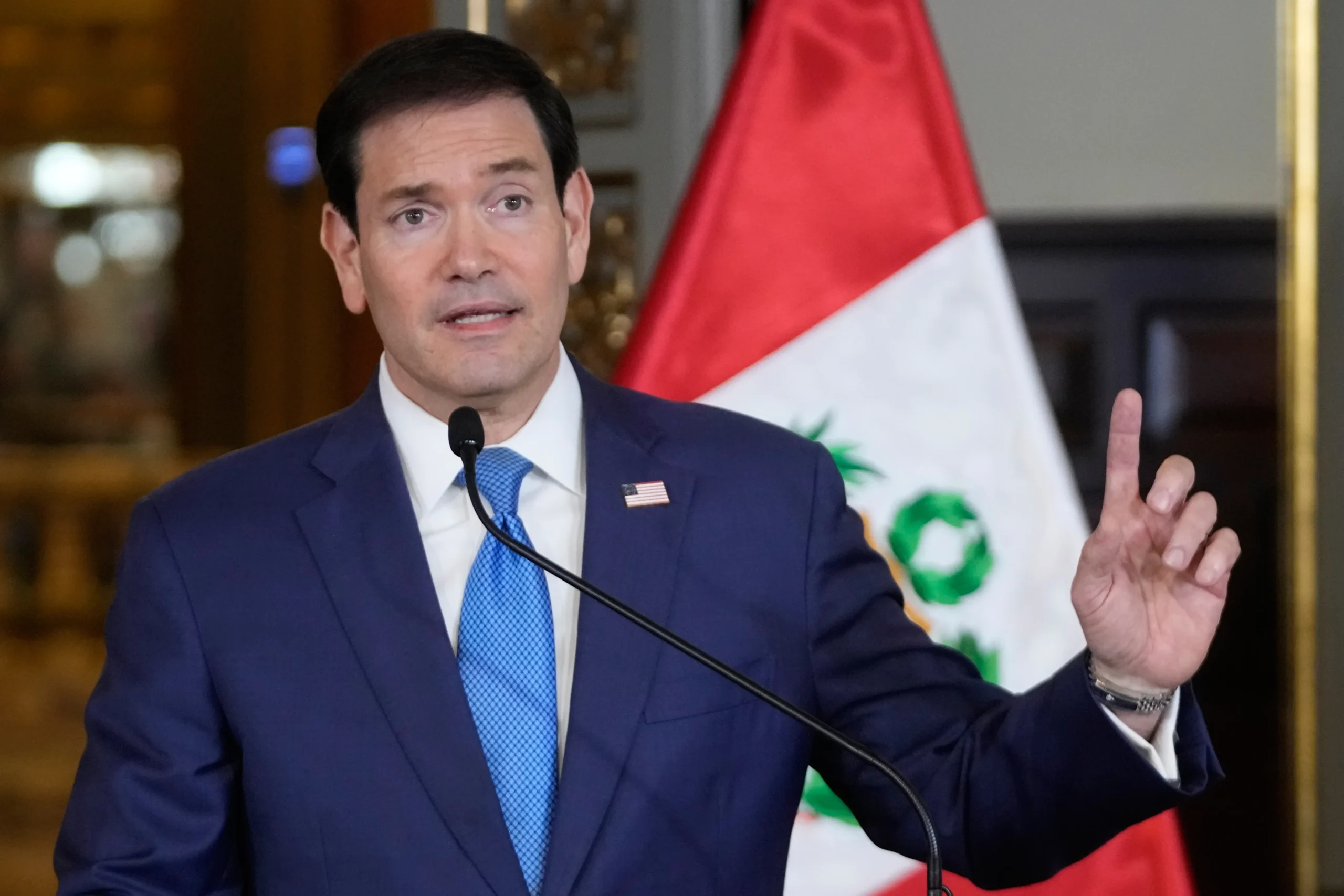
US Secretary of State Marco Rubio has urged Cubans seeking political change to take advantage of what he described as an important moment for the island, shortly after President Donald Trump revived talk of possible US military action involving Cuba. Rubio’s remarks have intensified an already tense relationship between Washington and Havana and raised fresh questions about the direction of US policy toward the Caribbean nation.
Rubio made the appeal in a social media statement directed at Cubans who want what he called positive change. He encouraged opponents of Cuba’s current political system to act amid growing economic hardship, corruption and frustration over the country’s leadership. His comments came only moments after Trump told a political rally in south Florida that American warships returning from the Iran conflict could potentially stop near Cuba.
The unusually direct comments from the two senior US officials immediately drew a sharp response from Havana. Cuban authorities accused Washington of showing desperation and mocked the suggestion that the United States was openly encouraging intelligence activity on the island.

Rubio’s message was particularly significant because of his personal background and long-standing opposition to Cuba’s socialist government. His parents left Cuba for the United States before the 1959 revolution, and Rubio has consistently taken a hard line against Havana during his political career. His latest remarks therefore carry considerable political weight, particularly among Cuban-American voters in Florida.
In his statement, Rubio referred to what he described as failed promises, corruption and a system in which privileges were concentrated among a small group. He called on Cubans who wanted change to take advantage of the current circumstances. His wording appeared to contain a possible mistake, however, as he used “discrete” rather than “discreet” when referring to a private or secret partnership.
Trump, meanwhile, revived his own rhetoric about Cuba during a campaign appearance in Florida. Responding to a shouted question from the audience, the president described a scenario in which US naval vessels returning from the Iran war could pass Cuba and one could stop offshore. He then suggested that Rubio could be sent to negotiate or “finish up the deal.”
The comments marked a renewed focus on Cuba at a politically sensitive moment for the Trump administration. The president has previously suggested that Cuba could become the next target of US pressure after the conclusion of the Iran conflict. Although he has sometimes spoken about a possible military option, his administration has also indicated that Washington would prefer to achieve its objectives through negotiations if possible.
Cuban officials reacted angrily to the latest statements. Deputy Foreign Minister Carlos Fernandez de Cossio accused the United States of effectively engaging in public recruitment for the Central Intelligence Agency. He portrayed the remarks as evidence of desperation inside the US administration and questioned the credibility of Washington’s approach.
The exchange reflects a relationship that has deteriorated considerably despite recent attempts at diplomatic engagement. Rubio and other senior Trump administration officials have held discussions with Cuban representatives in recent months in an effort to explore possible improvements in relations. Those discussions, however, have produced limited progress, with Washington becoming increasingly dissatisfied with Havana and imposing additional sanctions.
The Trump administration has repeatedly described Cuba as a national security concern because of its relationships with countries viewed by Washington as adversaries. Rubio has argued that the Cuban government must change its policies and has warned that the United States will not tolerate the island becoming a base for activities that threaten American interests.
At the same time, Rubio has previously acknowledged that Washington would prefer a peaceful solution. The secretary of state has expressed doubts, however, about whether meaningful diplomatic progress can be achieved with Cuba’s current leadership. His latest intervention appears to reflect the administration’s belief that internal pressure within Cuba could become an important factor in determining the country’s future.
Rubio’s previous public comments on Cuba had focused more heavily on the island’s economic and political deterioration. In a September interview, he argued that Cuba’s economic system had effectively failed and criticized its leadership for continuing to promote a revolutionary model that, in his assessment, had not delivered prosperity or stability.
He also said Washington hoped Cubans would choose a different political path. At the same time, Rubio emphasized that the United States would not permit Cuba to become a platform for foreign adversaries or a direct threat to American national security.
Trump has delivered a similarly mixed message. During an address to the United Nations, he described Rubio as being deeply involved in negotiations with Cuba and emphasized that Washington would not accept a situation in which foreign powers could use the island to threaten the United States. Shortly afterward, Trump said he expected the two countries could reach an agreement and suggested that military action might not be necessary because Cuba was already experiencing severe difficulties.
Those remarks now appear to have been overshadowed by the president’s latest comments about US warships. Although Trump did not announce a specific military operation against Cuba, his description of American naval vessels approaching the island has revived concerns about whether Washington could eventually move beyond economic and diplomatic pressure.
The possibility of military intervention is particularly sensitive given the history of US-Cuba relations. The two countries have spent decades locked in political confrontation, with Washington maintaining extensive economic restrictions against Havana. Cuba has repeatedly accused successive US administrations of attempting to undermine its government, while American officials have argued that the Cuban leadership has failed to respect political freedoms and economic rights.
The latest dispute also comes as Cuba faces one of the deepest economic crises in its modern history. Since 2020, the country has struggled with declining economic activity, severe energy shortages, inflation and shortages of essential goods. Regular power blackouts have disrupted daily life, while difficulties obtaining food and other necessities have increased pressure on households.
The economic crisis has contributed to repeated demonstrations and growing public dissatisfaction. Large numbers of Cubans have also left the country in recent years, with many attempting to reach the United States. The migration has added another layer of complexity to relations between Washington and Havana, particularly as US policymakers debate how economic pressure can influence political change without producing a wider humanitarian crisis.
Cuba and the United States also recently clashed at the United Nations over Washington’s long-standing economic embargo. The Cuban government has repeatedly sought international condemnation of the restrictions, while the Trump administration has defended its policy as necessary to pressure Havana into changing its political and economic course.
For now, it remains unclear whether Rubio’s call for Cubans to act represents a broader operational shift in US policy or a more forceful expression of the administration’s existing position. The absence of a detailed announcement about any CIA activity or military operation leaves considerable uncertainty surrounding the remarks.

What is clear is that Washington’s rhetoric toward Havana has become significantly sharper. Trump’s public reference to US warships near Cuba, combined with Rubio’s direct appeal to Cubans seeking political change, signals that the administration is prepared to increase pressure on the Cuban government.
For Cuba, the challenge is occurring against a backdrop of severe economic hardship and growing social frustration. For Washington, the challenge will be balancing its desire for political change with the risks associated with military confrontation, migration and further instability in the Caribbean.
The latest exchange therefore represents more than another dispute between Washington and Havana. It suggests that Cuba may once again become a major foreign-policy issue for the United States, with the Trump administration considering a combination of diplomatic pressure, economic sanctions and political engagement with opponents of the Cuban government. Whether that pressure produces negotiations, internal political change or a deeper confrontation remains uncertain, but the language coming from Washington indicates that Cuba is once again moving toward the centre of the US foreign-policy agenda.
Related News:
 Trump’s Revenge Drive Deepens GOP Divide
 Is America Ready for an AOC Presidential Run?
 Families Await USS Abraham Lincoln Homecoming
 Latin America women fear rollback of rights
 USS Lincoln Ends Record 265-Day Deployment
 Bolsonaro Gains Key Endorsement Ahead of Brazil Runoff
 Trump Attacks Norway After Nobel Peace Prize Snub
 Trump Names Katie Zacharia as Next White House Spokesperson
 Trump Names Katie Zachariah as Next White House Press Secretary
 Ten US Midterm Races That Could Defy Expectations
 Millions Face Tougher Medicaid Rules From January
 Ohio Airports Become Key Hubs for ICE Deportation Flights
 Brazil Cuts Working Week to 40 Hours in Lula Election Boost
 Talarico Faces Tough Voter Test in Texas Senate Race
 Trump Slams Ukraine Strikes as Russia Ceasefire Collapses
 Obama Warns Against Threat to Ilhan Omar’s Citizenship
 Lula Supporters Make Final Push Ahead of Brazil Runoff
 Greenland Faces Pivotal Summit Over Arctic Power Struggle
 Thousands Protest ICE Operations in Nationwide US Day of Action
 Epstein Files Reveal Trump Officials’ Emails with Financier
 Thousands Protest ICE in New York Against Trump Deportation Campaign
 Clinton Testimony Erupts in Fiery Exchange
 Melania Trump Epstein remarks spark survivor backlash
 UK Stands Firm on Falklands Amid US Rift
 Trump orders US troop pullout from Germany
 Judge halts deportation of Yemeni refugees in US
 Trump approval plunges amid Iran war fears
 Ohio’s Battle for Trust: Democrats Vying to Flip the Buckeye State
 US ‘Narco Boat’ Strikes Draw Global Outcry
 Ohio Primaries Set Stage for Crucial Midterms
 Afghan Families Left in Limbo Face Risk of Deportation
 Tensions Emerge in Netanyahu-Trump Alliance
 US Awaits Iran Reply on New Ceasefire Proposal
 Immigration Judges Fear Pressure in Trump Era
 Hormuz Talks Near Critical Stage
 Farage and Reform UK Reshape British Politics
 Starmer Leadership Under Pressure After Setbacks
 House Curbs Trump’s War Powers in Rare Rebellion
 Trump’s Mount Rushmore Speech: A Divisive Anniversary
 Le Pen’s Popularity Holds Despite Conviction
 Houthis Strike Saudi Arabia as Middle East Tensions Rise
 Trump Hardens Canada Trade Stance as Talks Stall
 Trump Calls Iran War ‘Small Potatoes’ Despite US Deaths
 Lib Dems Prepare for Election Amid Reform Challenge
 US Networks Suspend Trump White House Pool Coverage
 Democrat Says ICE Restricted Detention Camp Oversight
 Xi urges Trump to avoid US-China military conflict
 Lula accuses Trump of seeking control over Brazil
 Republican Senator Questions Trump Ad Spending
 Madrid Tent Camp Grows as Spain Housing Crisis Deepens
 Burnham Opens Door to Possible UK Return to EU
 Drumcree Talks Falter as Legal Challenge Deepens
 Green Party faces dispute over Zionism motion
 Brazil Election Draws Religion Into Final Campaign
 French School Protests Escalate as 400 Schools Close
 Lula Warns of Bolsonaro Family Return as Brazil Votes
 Bosnia’s Young People Look Beyond Election Hope
 Quebec separatists return to power without majority
 Canadian Veterans Condemn Trump Allies’ Military Remarks
 Argentina Protesters Resist Milei’s Land Sale Drive
 Vance Demands Iran Cut Nuclear Enrichment
 Trump Says He Deserves Nobel Peace Prize
 Labour Wins Key London By-election as Greens Fall Short
 Gaza War Deepens India’s Strategic Ties With Israel
 Turkey Rules Out Troops in Saudi Arabia’s Houthi Conflict
 Trump Rules Out Iran Attack Before US Elections
 Trump’s Russian Diesel Deal Sparks Ukraine Fury
 Panama Hit by Powerful 7.7-Magnitude Earthquake
 US Execution Livestream Plan Sparks Global Outrage
 Delhi Detains Protest Leaders as Youth Rally Escalates
 French Students Protest Poor Conditions in Paris Suburbs
 Brazil Court Scandal Threatens Lula as Bolsonaros Rise
 Greta Thunberg Backs French Students in School Protests
 Gadi Eisenkot: Israel’s Anti-Netanyahu Challenger
 Trump Rallies GOP as Senate Democrats Boost Key Races
 Serbia Leader Linked to Controversial Trump Tower Plan
 Milan Luxury Stores Shut as Italy Plans Troop Deployment
 Zelenskyy Says US Failed to Warn Kyiv of Russian Strikes
 Omar Claims US Raid on Residence Was Meant to Intimidate
 Greens Face Leadership Test as Jordon Steele-John Misconduct Claims Leave Party in Limbo