Published: 26 October 2026. The English Chronicle Desk. The English Chronicle Online
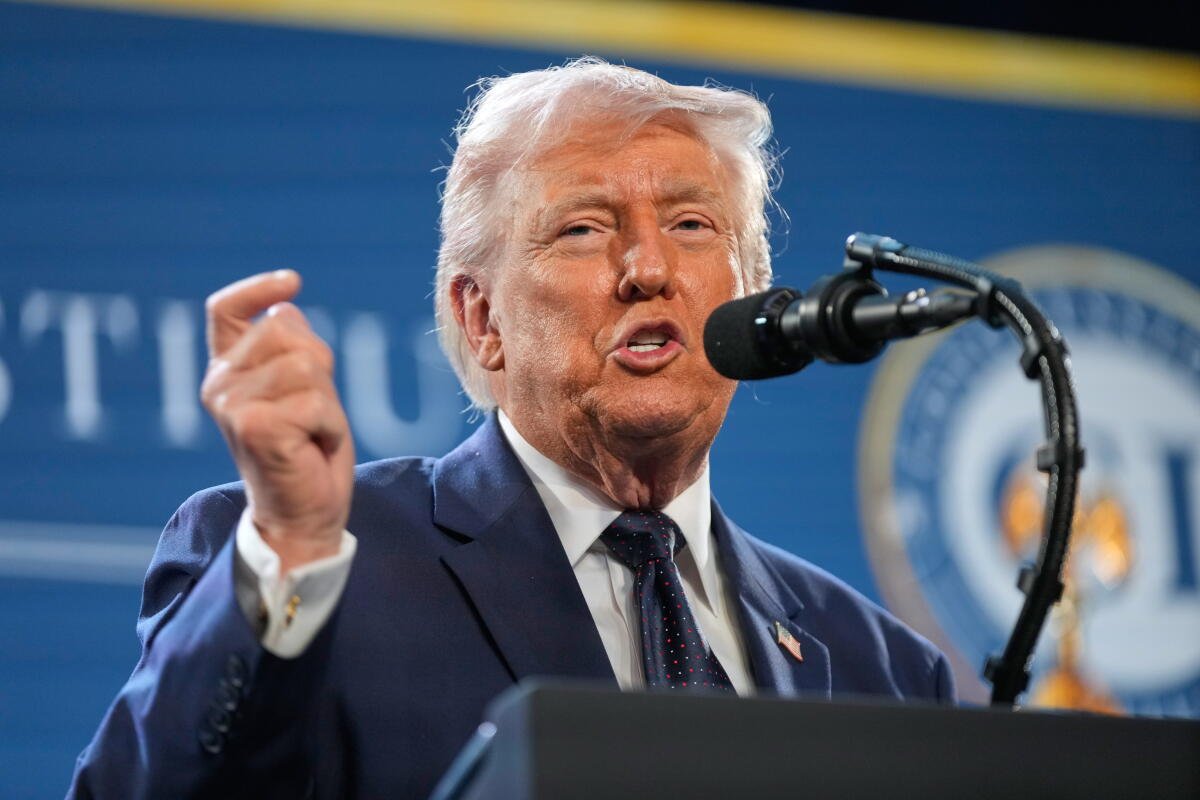
When Americans vote in the US midterm elections on 3 November, Donald Trump will not be on the ballot. Yet the outcome could have a profound effect on the remainder of his second presidency, determining whether Republicans retain control of Congress or Democrats gain enough power to obstruct, investigate and reshape the president’s domestic agenda.
Midterm elections take place roughly halfway through a president’s four-year term and are traditionally viewed as an important judgment on the administration in power. Presidents often describe them as contests over their political record, while opposition parties use them as an opportunity to mobilise voters dissatisfied with the White House. Trump himself has encouraged that interpretation, telling voters to “pretend I’m on the ballot” as Republicans seek to defend their congressional majorities.
The stakes are particularly high because Congress controls the legislative process and plays a central role in overseeing the executive branch. A shift in either chamber could therefore alter the political balance in Washington, potentially transforming the final two years of Trump’s second term.

The US Congress consists of the House of Representatives and the Senate. All 435 voting seats in the House are being contested because House members serve two-year terms. Republicans currently hold a narrow majority, meaning Democrats need a net gain of four seats to take control.
The Senate presents a different electoral map. Its 100 members serve staggered six-year terms, meaning only about one-third of the chamber normally faces voters during each election cycle. This year, 35 Senate seats are being contested, including 33 regular elections and two special elections in Florida and Ohio. Republicans currently hold 53 seats, while Democrats and independent senators who caucus with them hold 47. Democrats would need to gain four seats to establish a majority.
The elections extend beyond Capitol Hill. Voters will also choose 39 governors across 36 states and three US territories, while thousands of state legislative seats and numerous local offices will be contested. Judicial elections and ballot measures covering issues such as taxation, abortion rights and voting rules will also shape political life across the country.
The historical record gives Democrats reason for optimism. The president’s party has lost House seats in 18 of the past 20 midterm elections dating back to 1946. That pattern reflects the tendency of voters to use midterms to express dissatisfaction with the administration in power, while opposition-party supporters are often more motivated to turn out.
However, the pattern is not absolute. Republicans gained congressional seats during the 2002 midterms under President George W Bush, while Barack Obama’s Democrats suffered major losses in 2010. Trump’s Republicans also lost control of the House in the 2018 midterms during his first presidency.
The current political environment presents Republicans with a narrow margin for error in the House and a more comfortable position in the Senate. National polling in early October showed Democrats holding a significant advantage in the generic congressional ballot. Trump has consequently been campaigning in states that would normally be regarded as relatively secure Republican territory, highlighting the degree of concern within the party.
Yet national polling does not automatically translate into congressional control. Political polarisation, entrenched partisan loyalties and years of redistricting have reduced the number of genuinely competitive House districts. Only a relatively small proportion of the 435 House races are expected to be seriously contested, meaning that even a substantial national swing may not produce an equally dramatic change in congressional seats.
Several Senate races are attracting particular attention because they could determine control of the chamber. In Michigan, progressive Democrat Abdul El-Sayed is seeking to hold an open Democratic seat following Gary Peters’ decision not to seek another term. Georgia is also closely watched, with Democratic senator Jon Ossoff facing Republican challenger Mike Collins.
Maine presents another significant contest. Republican senator Susan Collins is defending her seat against Democrat Troy Jackson in a state that voted for Kamala Harris in the 2024 presidential election. Ohio is also central to the battle, with Democrat Sherrod Brown seeking a return to the Senate against Republican Jon Husted.
Texas has emerged as one of the most closely observed races because of the state’s long-standing Republican dominance. Democrat James Talarico is challenging Republican Ken Paxton, the state attorney general. Republicans have invested heavily in Paxton’s campaign, while Democrats are attempting to demonstrate that changing political attitudes can make even traditionally Republican territory competitive.
Other Senate contests in Alaska, Kansas, Iowa, North Carolina and New Hampshire could also determine the balance of power. If the Senate ends up divided 50-50, Vice-President JD Vance would hold the constitutional tie-breaking vote, giving Republicans an important advantage in such a scenario.
The House battle is spread across numerous districts. Republicans are defending potentially vulnerable seats in states including New York, Texas and Iowa, while Democrats must protect their own members in districts made more difficult by redrawn boundaries. Governors’ races in Alaska, Iowa, Florida, Georgia, Ohio and Texas could also influence the broader political narrative.
For voters, however, the elections are about more than party control. The cost of living remains one of the central concerns. Democrats have placed affordability at the heart of their campaigns, focusing on food prices, housing, fuel and healthcare. Republicans are seeking to defend the administration’s economic record while arguing that their policies will strengthen growth and household finances.
Immigration is another defining issue. Trump’s hardline approach to immigration enforcement remains a major source of political support among Republicans but has also generated criticism. Concerns over the activities of Immigration and Customs Enforcement could create difficulties for Republicans among Latino voters, a group that Trump made significant gains with during the 2024 presidential election.
Other issues include artificial intelligence and data centres, tariffs and trade, abortion rights, voting rules and the future of American democracy. Progressive candidates and Democratic socialists have also achieved notable successes in some Democratic primaries, strengthening pressure on the party’s leadership from its left wing.
At the same time, national political issues do not always decide individual races. Personal credibility, local relationships, independent voters and campaign advertising can have an important influence, particularly in closely contested districts and states.
The integrity of the elections is another major concern. Questions surrounding voter registration, mail voting, election administration and certification have become increasingly politically charged. Trump has repeatedly raised allegations about election vulnerabilities, including claims that have been criticised as misleading or unsupported.
The federal government’s efforts to obtain access to unredacted voter rolls in several states have generated additional controversy. The Justice Department has sought to compare voter information with federal immigration databases to identify potentially ineligible voters, but a federal judge ruled against the policy, citing concerns over legal authority and the possibility of inaccurate data.
Civil rights groups are also watching proposed federal involvement in election administration. The prospect of federal election monitors at polling locations has generated concern among voting-rights advocates, including the NAACP, which has challenged the planned deployment on grounds that monitors could intimidate voters.
The uncertainty may continue after polling stations close. Close races, different state procedures for counting early and postal ballots, recounts and legal challenges could delay the declaration of winners. Pressure on local officials to certify results and large-scale ballot challenges could create additional disputes in a politically polarised environment.
If Democrats win control of either chamber, the consequences for Trump could be substantial. A Democratic House majority would prevent Republicans from passing legislation without Democratic support and could give Democrats broad authority to investigate the administration, demand documents and summon officials for testimony.
The Senate would be equally important because it confirms cabinet officials, ambassadors and federal judges, including Supreme Court nominees. A Democratic Senate could therefore block or delay many presidential appointments and force the White House into negotiations over legislation.
Even if Republicans retain control of Congress, a significantly reduced majority could make governing more difficult. Internal disagreements within the Republican Party could become more consequential if the administration needs almost unanimous support from its own lawmakers to pass legislation.
State-level victories could also have lasting consequences. Governors and state legislatures influence abortion access, education, taxation and election administration. State legislatures are also deeply involved in drawing congressional district boundaries, although the process differs between states and can involve independent commissions or judicial review.

Ultimately, the 2026 midterms will determine much more than the composition of Congress for the next two years. They will provide an important measure of public sentiment toward Trump, test the strength of both political parties and potentially establish the conditions for the next presidential election.
Americans will vote on 3 November, but the final political picture may not become clear immediately. As counting continues and closely fought contests move through recounts or legal challenges, the country could face days of uncertainty before control of Congress is settled.
Whatever the result, the political campaign will not end. The outcome will immediately influence the remaining years of Trump’s presidency while providing both parties with lessons, opportunities and vulnerabilities to carry into the 2028 presidential race. In a country where political campaigning increasingly appears continuous, the midterms may be less an endpoint than the opening chapter of the next struggle for power in Washington.
Related News:
 Trump’s Revenge Drive Deepens GOP Divide
 Latin America women fear rollback of rights
 Trump Attacks Norway After Nobel Peace Prize Snub
 Ten US Midterm Races That Could Defy Expectations
 Ohio Airports Become Key Hubs for ICE Deportation Flights
 Brazil Cuts Working Week to 40 Hours in Lula Election Boost
 Talarico Faces Tough Voter Test in Texas Senate Race
 Obama Warns Against Threat to Ilhan Omar’s Citizenship
 Thousands Protest ICE Operations in Nationwide US Day of Action
 US Court Weighs Fate of TPS for Migrants
 US Court Ruling Reshapes Voting Rights Landscape
 US states redraw maps after voting rights ruling
 Judge halts deportation of Yemeni refugees in US
 Trump warns Iran as Middle East tensions surge again
 Immigration Judges Fear Pressure in Trump Era
 Former ICC prosecutor condemns US sanctions
 Gunman Killed After White House Security Shootout
 Le Pen’s Popularity Holds Despite Conviction
 Mystery Grows Over Mitch McConnell’s Health
 Trump Orders Signs Criticising Smithsonian Museum
 Is America Ready for an AOC Presidential Run?
 Armed Suspect Attacks Ohio Governor Candidate
 Texas Transfers Raise Fears for Migrant Children
 US Networks Suspend Trump White House Pool Coverage
 Trump and Mamdani Hold Cordial Gracie Mansion Meeting
 Democrat Says ICE Restricted Detention Camp Oversight
 King Refers Jamaica Slavery Petition to Privy Council
 Republican Senator Questions Trump Ad Spending
 French Student Protests Escalate Into Violent Clashes
 Trump Ads Trigger Fight Over Taxpayer Money
 Burnham Opens Door to Possible UK Return to EU
 Drumcree Talks Falter as Legal Challenge Deepens
 UK-France Returns Deal Faces Expiry as Talks Stall
 Trump Immigration Policy Faces New Legal Tests
 French School Protests Escalate as 400 Schools Close
 Families Await USS Abraham Lincoln Homecoming
 Lithuania Offers to Fund Permanent US Military Base
 Trump Rally Faces Protests as Texas Race Tightens
 Tanker Attacked Near Qatar as Hormuz Tensions Escalate
 Botstein Quits Bard Amid Epstein Investigation Calls
 Trump Says He Deserves Nobel Peace Prize
 USS Lincoln Ends Record 265-Day Deployment
 ICE Agent Shoots Man in New York as Child Escapes Harm
 US Senate Debates Turn Bitter as Midterms Near
 Bolsonaro Gains Key Endorsement Ahead of Brazil Runoff
 Navi Pillay Wins Nobel Peace Prize for Justice
 US Execution Livestream Plan Sparks Global Outrage
 Controversial Vaccine Trial Approved in Guinea-Bissau
 Delhi Braces for Youth Protests Over Voter Roll Dispute
 Delhi Detains Protest Leaders as Youth Rally Escalates
 Trump Names Katie Zachariah as Next White House Press Secretary
 Brazil Court Scandal Threatens Lula as Bolsonaros Rise
 Millions Face Tougher Medicaid Rules From January
 Farage Rejects Claims Reform Would Let Troops Shoot Migrants
 Judge Blocks Trump White House Media Ban
 Trump Warns Alaska Voters Over Rival Dan Sullivans
 Trump Targets Arizona and Montana Amid GOP Election Worries
 Gadi Eisenkot: Israel’s Anti-Netanyahu Challenger
 Trump Rallies GOP as Senate Democrats Boost Key Races
 Trump’s Ambassador Picks Face Growing Controversy
 Serbia Leader Linked to Controversial Trump Tower Plan
 Trump Slams Ukraine Strikes as Russia Ceasefire Collapses
 Trump Falsely Questions Ossoff’s Election Legitimacy
 Trump Administration Threatens California Election Officials
 Macron Condemns Violence as France Faces 2,400 Arrests
 Alberta Referendum Exposes Deep Divisions Over Independence
 Marseille Activist Defies France’s Powerful Drug Gangs
 Suu Kyi Appears in Rare Photos After Royal Gift
 Zelenskyy Accuses US of Delaying Ukraine Missile Supplies
 Alberta Voters Reject Push for Canadian Independence
 Fifth Foreign Firm Withdraws From Jerusalem Cable Car Plan
 Meta Faces Election Bias Claims Ahead of Brazil Runoff
 Trump Pledges $400m to Boost Republicans in Midterms
 Helen Haines Loses Both Legs After Alleged Attack
 Omar Claims US Raid on Residence Was Meant to Intimidate
 Milan Braces for Unrest as Debate Intensifies Over Lost Generation
 Greens Face Leadership Test as Jordon Steele-John Misconduct Claims Leave Party in Limbo
 Lula Supporters Make Final Push Ahead of Brazil Runoff
 Rubio Urges Cubans to Seize Moment for Change
 Vance Steps Up Midterm Role Amid 2028 Questions