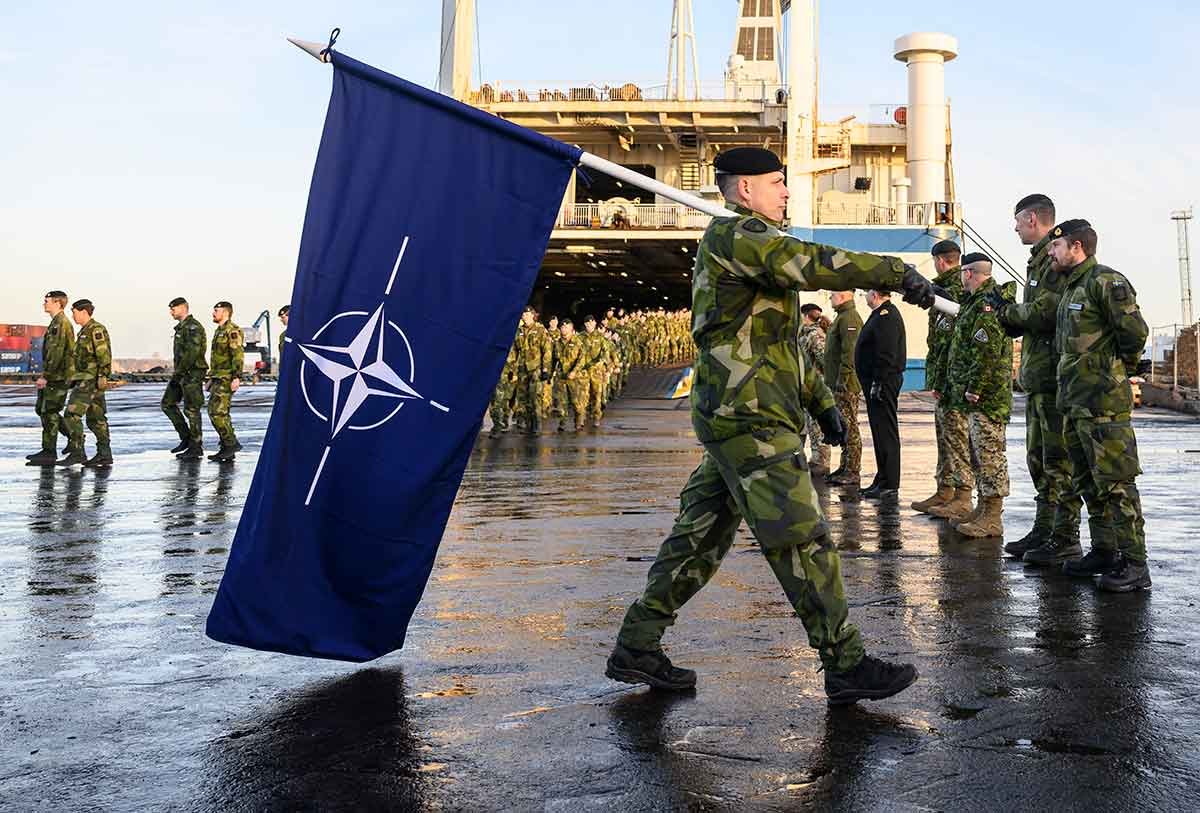
British and European troops could be authorised to return fire if attacked by Russian forces while serving as peacekeepers in Ukraine following a potential ceasefire, according to Western officials, highlighting the significant security challenges surrounding European plans to help stabilise the war-torn country.
The proposed multinational force, expected to be led by Britain and France, would provide security support to Ukraine after an agreement to end hostilities. Although its primary mission would be defensive, officials have indicated that troops would have the authority to protect themselves against attacks, including potential Russian drone strikes. The clarification underlines that any future deployment would carry considerable risks, particularly given the continuing hostility between Moscow and Kyiv.
Western officials familiar with the preparations have stressed that British and European personnel would not remain passive if their positions came under attack. One official said the force would clearly protect its members against aggression, while emphasising that any military response would be defensive in nature. The proposed rules of engagement are therefore expected to provide troops with the authority to respond to direct threats while avoiding unnecessary escalation.

The plans are emerging as Britain and France prepare for Exercise Koalicja, a major multinational military rehearsal scheduled to take place in Poland later this month. The exercise is designed to test how European armed forces could rapidly organise and deploy a stabilisation force to Ukraine if a ceasefire agreement eventually brings the current conflict to an end.
Around 2,800 military personnel, including soldiers, sailors and aircrew, are expected to participate in the exercise. France is contributing approximately 1,500 troops from its 1st Division, while Britain will provide around 300 personnel from the 7th Light Mechanised Brigade. The participation of these forces reflects the central role London and Paris expect to play in any future European security arrangement for Ukraine.
The exercise will also involve personnel from Poland, Germany, Belgium, Estonia, Lithuania, the Netherlands, Spain, Sweden and Turkey. Their participation is intended to demonstrate that European countries can coordinate military operations, move personnel and equipment quickly and operate together under a shared command structure.
Lieutenant General Tom Bateman, the commander of the proposed force, said Britain, France and their European partners remained committed to providing Ukraine with strong and binding security guarantees following a cessation of hostilities. He explained that the exercise would demonstrate military preparedness, rapid deployment capabilities and the ability of participating countries to operate effectively together.
Preparations for the multinational arrangement have reportedly been under development for more than a year. However, officials have repeatedly emphasised that the deployment remains conditional on a ceasefire or a broader agreement to end the fighting. Until such an arrangement is reached, the exercise will primarily serve as a test of European military readiness rather than the beginning of an immediate deployment.
An important feature of the proposed force is that it would operate outside NATO’s formal military structure. Although many participating countries are NATO members, the stabilisation mission itself would be organised as a separate multinational arrangement. This distinction is significant because it would allow participating European governments to establish a specific security framework for Ukraine without making the operation a direct NATO deployment.
The force is also expected to operate with little or no American military support. Western officials have indicated that European countries are taking steps to ensure that their communications and operational capabilities do not depend on US military technology. In particular, the proposed mission is not expected to rely on Elon Musk’s Starlink satellite communications system.
The decision reflects wider concerns about the reliability of American support in a prolonged European security crisis. US President Donald Trump has repeatedly sought to take a leading role in negotiations between Russia and Ukraine. However, he has indicated that Washington would not commit American troops to a peacekeeping mission inside Ukraine, even if the two countries reached a durable ceasefire.
Concerns about technological dependence have also increased following Washington’s temporary restrictions on Ukraine’s access to Starshield, the military version of Starlink. The restrictions, imposed for approximately 10 days in October, reportedly affected certain medium-range Ukrainian drone operations. The incident highlighted how decisions involving American technology could influence military capabilities and operational planning.
For European governments, developing independent communications and logistical arrangements could therefore become an important part of any future security mission. Officials want the proposed force to maintain its operational capacity without depending on systems that could become unavailable because of political disagreements or changing international circumstances.
Nevertheless, the possibility of European troops exchanging fire with Russian forces raises difficult questions about escalation. Russia has a history of low-level military incidents and violations during the previous ceasefire period in eastern Ukraine between 2014 and 2022. Those experiences have reinforced concerns that a formal end to large-scale fighting would not necessarily guarantee lasting stability.
Even if a peace agreement were reached, Russian drones, missiles or other military activities could potentially threaten the security of international personnel. Any incident involving European troops could create diplomatic and military complications, particularly if Moscow interpreted a defensive response as a broader military confrontation.
The proposed force is expected to remain well away from the frontline. Its central responsibility would be to support Ukraine’s recovery and strengthen its military capabilities after the war rather than directly participate in combat operations. General Bateman has described the mission as helping to regenerate and reinforce Ukraine’s armed forces.
European planners are also considering wider security responsibilities beyond protecting military personnel. One proposal involves using fighter aircraft to help restore the operation of Ukraine’s commercial airports. Air patrols could contribute to improving aviation security and creating conditions for civilian air travel to resume once the security situation allows.
Another important element concerns maritime security in the Black Sea. Turkey is expected to lead plans for clearing naval mines to reopen important shipping routes. Restoring safe maritime access would be particularly important for Ukraine’s agricultural exports, including grain, as well as other commercial trade. The Black Sea remains a strategically important economic corridor, and its reopening could support Ukraine’s post-war recovery.
The continuing attacks on energy infrastructure demonstrate how fragile the security situation remains. Russia and Ukraine have continued striking each other’s energy facilities, while recent cyber incidents have raised additional concerns about civilian safety. On Sunday and Monday, both countries experienced disruptions involving air-raid warning applications. Ukrainian users briefly received false alerts warning of nuclear and chemical threats as well as street fighting, prompting concerns that the systems had been compromised.
These incidents illustrate the challenges that European peacekeepers could face in an environment where conventional military threats, cyberattacks and misinformation may occur simultaneously.
Meanwhile, renewed diplomatic efforts during the autumn have produced limited progress. Washington is reportedly planning another round of three-way discussions involving Russia and Ukraine later this month. However, major disagreements remain, and there is little certainty that negotiations will produce an immediate breakthrough.

For Britain and France, Exercise Koalicja represents an attempt to prepare for a possible post-war security environment while diplomatic efforts continue. The exercise will test whether European countries can coordinate a substantial military deployment without relying heavily on American personnel, equipment or technology.
Ultimately, the success of any future peacekeeping mission will depend not only on the number of troops deployed but also on the strength of the political agreement behind it. Clear rules of engagement, reliable communication systems, effective coordination and credible security guarantees will all be essential.
European governments face a difficult balance: providing Ukraine with meaningful protection without creating conditions that could trigger a wider confrontation with Russia. The possibility that peacekeepers may have to return fire demonstrates that even after a ceasefire, maintaining peace in Ukraine could require considerable military preparedness, political determination and sustained international cooperation.
Related News:
 Farage and Reform UK Reshape British Politics
 Starmer Leadership Under Pressure After Setbacks
 Green Leader Targets Starmer’s Former Seat
 Masked Protesters Bring Dover Port Traffic to Standstill
 Lib Dems Prepare for Election Amid Reform Challenge
 King Refers Jamaica Slavery Petition to Privy Council
 Elif Eralp Emerges as Berlin’s Next Political Force
 Three Die in Channel Crossing Attempt Near France
 Burnham Opens Door to Possible UK Return to EU
 Drumcree Talks Falter as Legal Challenge Deepens
 UK-France Returns Deal Faces Expiry as Talks Stall
 Green Party faces dispute over Zionism motion
 Holborn and St Pancras Vote Tests Labour and Greens
 Labour Wins Key London By-election as Greens Fall Short
 Burnham Rises as Farage and Polanski Face Setbacks
 Labour Beats Greens in Crucial London By-election
 Jewish Greens Leader Calls for Polanski to Quit
 UK Gaza Refugee Route Criticised Over False Hope Claims
 UK Greens Face Crisis Over Zionism and Extremism Row
 Farage Rejects Claims Reform Would Let Troops Shoot Migrants
 France to Deploy 70,000 Police Amid Unrest Fears
 UK Aid Set to Fall Short of Reduced 2027 Target
 Brexit Deal Not Good Enough for Britain, Burnham Says
 King Charles Faces Caribbean Slavery Apology Demands
 Campbell Urges Australia to Defend Democratic Politics
 King Charles Faces Calls for Slavery Reparations Talks
King Charles Faces Reparations Protests at Antigua Summit
 British Woman in Iran ‘Losing Hope’ Amid Ongoing Detention
 BBC Journalist Held and Interrogated in Vietnam
 Starmer Condemns ‘Depraved’ Russian Strikes on Ukraine
 Trump Tariffs Threat Spark UK and EU Alarm
 Gordon Brown urges court for crimes against children
 Army Probes Apache Flyover at Kid Rock’s Nashville Estate
 Relationship with Trump may be beyond repair, Starmer warned
 Kezia Dugdale Warns of Possible Reversal of Equal Rights Gains
 UK Stands Firm on Falklands Amid US Rift
 New South Wales Premier Chris Minns Signals Tough Road Ahead for Labor
 Le Pen’s Popularity Holds Despite Conviction
 Burnham unveils £65m drought aid for farmers
 Former Diplomats Urge UK and France to Act on Palestine
 Ghent Professors Questioned Cofnas Appointment
 RAF Barnham Protests Fuel Tensions in Norfolk Town
 Bayeux Tapestry Revives Franco-British Ties
 UK plans tougher Israel stance with settlement trade ban
 Europe’s democracies face a growing far-right threat
 Mahmood Warns Far Right Over Asylum Protests
 Disabled Travellers Seek Fairer UK Care Rules
 UK Plans New Centre to Counter Information Warfare
 Greece Pushes for Parthenon Marbles Reunification
 Free Speech Emerges as Key UK Election Issue
 Madrid Tent Camp Grows as Spain Housing Crisis Deepens
 Badenoch Raises Prospect of 2027 UK Election
 French School Protests Escalate as 400 Schools Close
 Families Await USS Abraham Lincoln Homecoming
 Bosnia’s Young People Look Beyond Election Hope
 Gosport Protesters Clash With Police Over Migrant Rescue
 UK Mission in East Jerusalem to Remain Open
 USS Lincoln Ends Record 265-Day Deployment
 Gaza War Deepens India’s Strategic Ties With Israel
 Trump Names Katie Zachariah as Next White House Press Secretary
 French Students Protest Poor Conditions in Paris Suburbs
 Greta Thunberg Backs French Students in School Protests
 Millions Face Tougher Medicaid Rules From January
 Gadi Eisenkot: Israel’s Anti-Netanyahu Challenger
 UK Could Rejoin EU Through a Switzerland Plus Deal
 UK Visa Refusal Threatens Baby’s Family Christmas
 Brexit Debate Returns as UK Voters Reconsider EU Exit
 Up to 20 English Maternity Units Face Possible Closure
 UK Pledges Stronger Protections for Disabled Air Passengers
 Milan Luxury Stores Shut as Italy Plans Troop Deployment
 Zelenskyy Says US Failed to Warn Kyiv of Russian Strikes
 Middleton Revitalisation Blueprint for UK Towns
 Greens Face Leadership Test as Jordon Steele-John Misconduct Claims Leave Party in Limbo
 MoD Seeks Out-of-Court Resolution in LGBT Veterans Compensation Fight
 UK-EU Youth Mobility Scheme Delayed Over Fee Row
 Lula Supporters Make Final Push Ahead of Brazil Runoff
 Rubio Urges Cubans to Seize Moment for Change
 UK Land Registry Plan Faces Opposition From Landowners
 Yvette Cooper Reverses NHS Patient Watchdog Abolition Plan
 Novaya Gazeta to Close After Russian Government Pressure