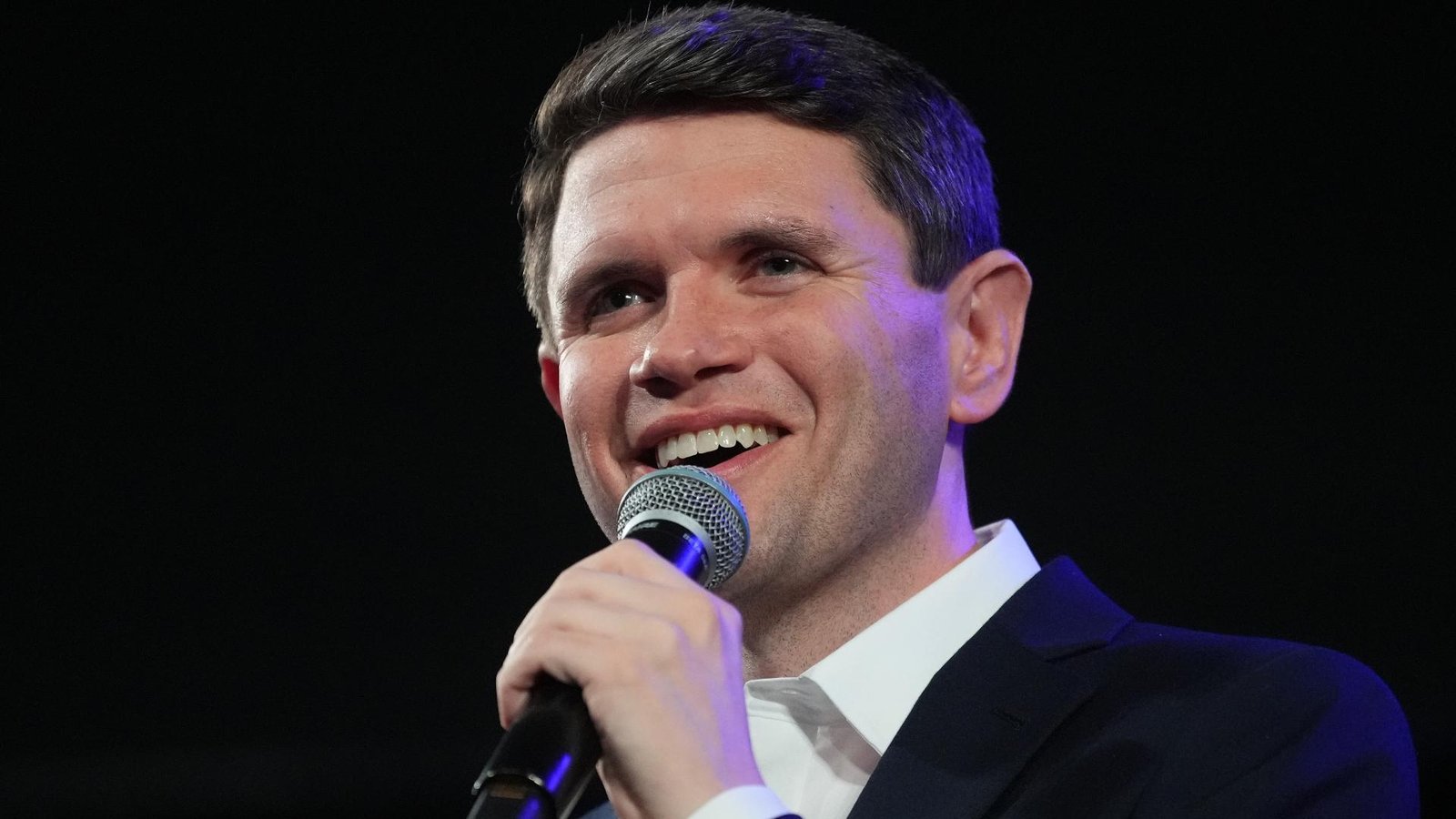
Democratic candidate James Talarico has secured a historic victory in the United States Senate election in Texas, ending nearly four decades of Republican dominance in statewide Senate contests and delivering a major political setback to President Donald Trump and his allies. The 37-year-old politician defeated Republican candidate Ken Paxton, the state’s attorney general and a prominent Trump supporter, in one of the most closely watched races of the 2026 midterm elections. His victory represents a significant breakthrough for Democrats in one of America’s most influential conservative states and could reshape the country’s political landscape during the remaining years of Trump’s presidency.
Talarico’s success is particularly remarkable because Texas has traditionally been considered a Republican stronghold. Donald Trump won the state by almost 14 percentage points in the 2024 presidential election, while Democratic attempts to secure a Senate seat there had repeatedly failed. The latest result has therefore challenged long-standing assumptions about the state’s political preferences and demonstrated that changing voter priorities can create unexpected opportunities even in traditionally conservative regions.
The Democratic candidate celebrated his victory at an election night gathering in Austin, the Texas state capital and his home city. Addressing an enthusiastic crowd of supporters, he declared that his campaign had demonstrated the power of ordinary people against wealthy political interests and powerful institutions. He described the result as a victory for a politics based on unity and compassion rather than division and confrontation.

“We just took back Texas!” Talarico told supporters, expressing confidence that the election had opened a new chapter in the state’s political history. He also argued that the financial resources available to powerful political donors could not overcome the collective determination of voters seeking change. His remarks reflected one of the central themes of his campaign: the belief that political influence should belong to ordinary citizens rather than billionaires and wealthy organisations.
The victory carries national significance because Texas has not elected a Democratic senator since 1988, when Lloyd Bentsen secured another term in the Senate. The party has also struggled to win statewide elections in Texas for decades, with its last statewide victory coming in 1994. Talarico’s achievement therefore ends a prolonged period of Democratic electoral disappointment and provides the party with a major political breakthrough.
His victory also has implications for the future composition of the Senate. Talarico will become the youngest member of the upper chamber, replacing Republican Senator John Cornyn, who is 74. Cornyn lost a difficult Republican primary contest to Paxton, whose controversial political background created divisions within the party. The decision to nominate Paxton ultimately provided Democrats with an opportunity to attract independent voters and Republicans dissatisfied with the direction of their party.
Talarico’s political journey has been different from that of many traditional Washington politicians. Before entering the Senate race, he served as a Texas state representative and worked as a middle school teacher. He also studied theology as a Presbyterian seminarian, a background that influenced the religious and moral language used throughout his campaign. Rather than relying exclusively on conventional partisan arguments, he frequently spoke about compassion, economic fairness, community responsibility and the importance of bringing people together.
The Democratic candidate built his campaign around the financial difficulties facing ordinary Texans. Rising household expenses, expensive fuel, healthcare costs and the influence of wealthy donors became central themes in his speeches. He argued that voters were increasingly concerned about the cost of living and the growing influence of powerful financial interests in American politics. His message was designed to appeal not only to traditional Democratic supporters but also to independent voters and moderate Republicans who had become dissatisfied with the Trump administration.
One of the most significant controversies surrounding the election involved Ken Paxton’s political record. The Republican candidate had served as Texas attorney general and remained closely associated with Trump’s political movement. However, his career had been affected by allegations of corruption and abuse of power. In 2023, the Republican-controlled Texas House of Representatives voted to impeach him over those allegations. He was subsequently acquitted by the state Senate.
Paxton also faced separate securities fraud charges, which were resolved in 2024 through an agreement requiring community service, ethics training and restitution. He denied wrongdoing. These controversies became important issues during the Senate campaign, with Democrats arguing that voters deserved a representative whose political record would not be overshadowed by persistent questions about personal conduct and public accountability.
The Republican nomination process further complicated the party’s position. Cornyn had been a prominent Republican senator, but his defeat in the primary cleared the way for Paxton to become the party’s candidate. Democrats viewed the nomination as an opportunity to present a contrast between their candidate’s campaign message and the controversies surrounding his Republican opponent.
The election also became one of the most expensive Senate contests in American history. Campaign spending estimates indicated that advertising expenditure exceeded $500 million, reflecting the national importance of the race. Republican-aligned organisations invested enormous sums in efforts to secure Paxton’s victory, including substantial financial support associated with billionaire entrepreneur Elon Musk.
Talarico repeatedly criticised the involvement of wealthy donors in the election, accusing powerful individuals of attempting to influence the outcome through massive financial contributions. He argued that political decisions should reflect the interests of ordinary Texans rather than the preferences of billionaires and major corporate interests.
Despite facing a substantial financial disadvantage, his campaign developed an effective fundraising operation. It reported raising approximately $64 million during the third quarter of the year, with 97 per cent of donations amounting to less than $100. The figures highlighted the campaign’s ability to mobilise large numbers of smaller contributors and build financial support from ordinary citizens.
In his victory speech, Talarico directly addressed wealthy political donors and organisations that had invested heavily in the contest. He said the election had delivered a message that political authority ultimately belonged to the people. His comments reinforced his campaign’s central argument that democracy should not be determined by the financial power of a small group of influential individuals.
The Republican campaign also focused heavily on Talarico’s positions on transgender issues, his religious beliefs and his interpretation of Christian scripture. Political advertisements sought to portray him as too progressive for Texas, while fact-checkers challenged several claims made in some of the advertisements. The campaign atmosphere became increasingly confrontational as both sides attempted to influence undecided voters.
Trump personally intervened in the contest, holding a rally in Texas and using insulting language against the Democratic candidate. He referred to Talarico by a distorted version of his name and falsely claimed that he was vegan. Vice-President JD Vance also made comments implying that Talarico was gay, despite the candidate having a girlfriend. Right-wing social media personalities circulated another false claim suggesting that he had checked into a mental health clinic in Ohio, when he had actually been suffering from influenza.
Talarico described the attacks as evidence of an increasingly desperate political establishment. He argued that his campaign had overcome years of disappointment, enormous financial spending, negative advertising and online misinformation. He also alleged that foreign bots and artificial intelligence-generated deepfakes had been used as part of the wider effort to undermine his candidacy.
Religious faith was another important feature of his political message. As a Presbyterian seminarian, Talarico frequently used Christian teachings to support his arguments about compassion, equality and social responsibility. His message of loving one’s neighbour became a recognisable theme throughout the campaign, helping him connect with voters who might not traditionally support progressive Democratic candidates.
Looking ahead to his responsibilities in Washington, Talarico expressed support for universal healthcare and called for an end to prolonged military conflicts. He also criticised the influence of large financial contributions in politics and urged the country to move away from increasingly hostile political confrontations. He described his preferred approach as a politics of love rather than a political culture dominated by personal attacks, provocation and constant conflict.
The result also represents a setback for Elon Musk, who has established significant business interests in Texas, including companies involved in developing data centres. Musk’s involvement in Republican-aligned political activities had attracted considerable attention during the campaign. Talarico’s victory demonstrated that substantial financial influence does not necessarily guarantee electoral success, even in a state traditionally favourable to Republicans.
Democratic leaders and progressive organisations welcomed the outcome. Adam Green, co-founder of the Progressive Change Campaign Committee, praised Talarico for challenging billionaire influence and presenting voters with a programme focused on structural political and economic change.
María Teresa Kumar, president and co-founder of Voto Latino, also described the result as a historic moment for Texas. She highlighted the importance of young Latino voters, who represent a significant part of the state’s population. Latinos account for more than 40 per cent of Texas residents, making their political participation increasingly important in determining statewide election outcomes. Kumar argued that the victory demonstrated the influence of younger voters when political campaigns actively engage with their concerns and priorities.
For Democrats, Talarico’s victory could provide a blueprint for competing in other traditionally Republican states. His campaign combined economic concerns, religious messaging, criticism of wealthy political interests and an appeal for political unity. The result suggests that Democratic candidates may have opportunities to broaden their electoral support by addressing issues that affect voters across traditional party boundaries.

However, winning an election in Texas is only the beginning of a much larger political challenge. Talarico will need to translate his campaign promises into legislative priorities while working within a deeply divided political system. His positions on healthcare, foreign policy and campaign finance are likely to generate significant debate in Washington.
Nevertheless, his historic victory has already changed the political conversation surrounding Texas. After decades of unsuccessful attempts, Democrats have finally broken through in a state that had long appeared beyond their reach. The defeat of Trump’s preferred Republican candidate has also raised questions about the effectiveness of presidential endorsements and the growing importance of economic concerns in American elections.
Ultimately, James Talarico’s success represents more than a Democratic Senate victory. It is a major political development that challenges established assumptions about Texas, highlights the influence of grassroots campaigning and demonstrates the continuing power of voters to reshape America’s political future.
Related News:
 Trump approval plunges amid Iran war fears
 Trump Threatens UN Budget Cuts as US Pushes ‘Trade Over Aid’ Agenda
 US Awaits Iran Reply on New Ceasefire Proposal
 Hormuz Talks Near Critical Stage
 Trump announces major US oil deal with Venezuela
 Trump Hardens Canada Trade Stance as Talks Stall
 Trump Calls Iran War ‘Small Potatoes’ Despite US Deaths
 Trump Pledges $5,000 if Republicans Win Midterms
 Macron and Carney deepen France-Canada ties
 Trump Eyes Major Belarus Fertiliser Deal Amid Canada Trade Dispute
 Netanyahu faces protests and pressure at UN
 Xi urges Trump to avoid US-China military conflict
 Lula accuses Trump of seeking control over Brazil
 Trump Ads Trigger Fight Over Taxpayer Money
 Brazil Election Draws Religion Into Final Campaign
 Tanker Attacked Near Qatar as Hormuz Tensions Escalate
 Trump’s Russian Diesel Deal Sparks Ukraine Fury
 Brazil Court Scandal Threatens Lula as Bolsonaros Rise
 Millions Face Tougher Medicaid Rules From January
 Trump Targets Arizona and Montana Amid GOP Election Worries
 Brazil Cuts Working Week to 40 Hours in Lula Election Boost
 Trump Rallies GOP as Senate Democrats Boost Key Races
 Serbia Leader Linked to Controversial Trump Tower Plan
 Trump Halts New Russia Sanctions Amid Ukraine Rift
Trump Falsely Questions Ossoff’s Election Legitimacy
 Trump Fears Shock Democratic Senate Win in Kansas
 Meta Faces Election Bias Claims Ahead of Brazil Runoff
 Fed Expected to Hold Rates Steady Ahead of US Midterms
 Trump’s Global Policies Put Republicans at Risk
 Global Crises Test Diplomacy as Trump’s Policies Face Scrutiny
 G20 Photo Cancelled as Russia Deepens Western Rift
 Haley Stevens Backs Republican Rival in Michigan Senate Race
 US Midterms Put Trump’s Presidency to the Test
 US Strikes Iran Island as Vance Signals Hope for Peace
 Democrats Seize Senate Control in Major Trump Setback
 Democrats Retake US House in Major Trump Backlash
Abdul El-Sayed Makes History as First Muslim US Senator
 Canada Passes Carney’s First Budget in Tight Parliamentary Vote
 India’s Labour Law Overhaul Sparks Fierce Debate
 Government Unveils Northern Powerhouse Rail Plans
 Trump Fed bid heads to Supreme Court
 Thousands Protest ICE Operations in Nationwide US Day of Action
 Epstein Files Reveal Trump Officials’ Emails with Financier
 Trump to Deploy “God Squad” Over Gulf Wildlife Protections
 UK Stands Firm on Falklands Amid US Rift
 Capitalism ‘Suicidal’, Warns Petro at Climate Summit
 Oil Prices Surge Above $120 Amid Iran Blockade Fears
 Trump orders US troop pullout from Germany
 Judge halts deportation of Yemeni refugees in US
 Ohio’s Battle for Trust: Democrats Vying to Flip the Buckeye State
 US ‘Narco Boat’ Strikes Draw Global Outcry
 Afghan Families Left in Limbo Face Risk of Deportation
 Kevin Warsh sworn in as Fed chair amid economic backlash
 House Curbs Trump’s War Powers in Rare Rebellion
 Ukraine Creates Long-Range Strike Command
 Houthis Strike Saudi Arabia as Middle East Tensions Rise
 Swedish Mining Push Puts Sami Land Rights Under Pressure
 UK plans tougher Israel stance with settlement trade ban
 US Networks Suspend Trump White House Pool Coverage
 Trump gives Xi red-carpet welcome as trade truce extends
 Republican Senator Questions Trump Ad Spending
 Burnham Opens Door to Possible UK Return to EU
 Lula Warns of Bolsonaro Family Return as Brazil Votes
 Families Await USS Abraham Lincoln Homecoming
 Quebec separatists return to power without majority
 Canadian Veterans Condemn Trump Allies’ Military Remarks
 Argentina Protesters Resist Milei’s Land Sale Drive
 South Korea Probes Fuel Shipments to Russia
 Trump Says He Deserves Nobel Peace Prize
 Houthi Missile Claim Sparks Riyadh Airport Disruption
 Trump Rules Out Iran Attack Before US Elections
 Australia Rejects Russian Fuel as Trump Strikes Deal
 Trump Names Katie Zachariah as Next White House Press Secretary
 UK Could Rejoin EU Through a Switzerland Plus Deal
 Brexit Debate Returns as UK Voters Reconsider EU Exit
 Japan’s Takaichi Faces a Crucial Second Year in Power
 Lula Supporters Make Final Push Ahead of Brazil Runoff
 US Bans BYD Vehicles at Japan Military Base
 Flávio Bolsonaro Reportedly Leaves Brazil After Election Defeat
 Australia Raises Interest Rates to 18-Year High