Published: 06 October 2026. The English Chronicle Desk. The English Chronicle Online.
Germany has arrested a former head of its foreign intelligence service on serious espionage allegations, in a case that has raised questions about the handling of classified information and the potential misuse of sensitive intelligence by a senior former security official.
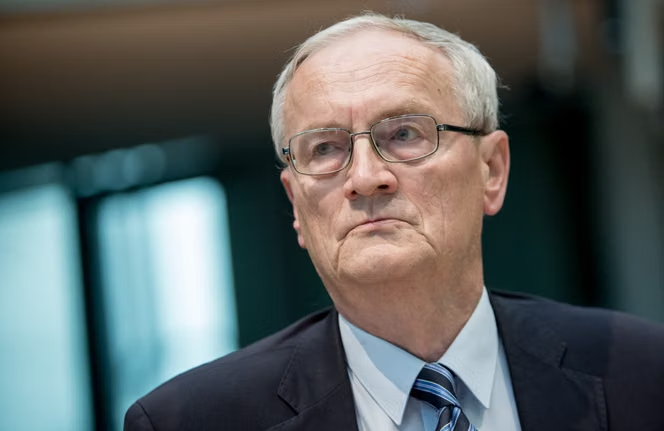
Federal prosecutors announced on Tuesday that August Hanning, who served as president of Germany’s Federal Intelligence Service, known as the BND, from 1998 to 2005, had been arrested in the southern German district of Bad Tölz-Wolfratshausen.
Prosecutors said Hanning is strongly suspected of several serious offences, including treasonous espionage, obtaining state secrets for unauthorised purposes, attempted treason and espionage. The allegations concern classified information that prosecutors say was obtained from the BND over a period of years and subsequently used by Hanning in private consulting activities.
A second man, identified by authorities only as Manfred D, was also arrested on Tuesday. He was detained in Steinfurt in western Germany and is accused of aiding and abetting attempted treason and treasonous espionage.

The federal prosecutor’s office has not disclosed the country or intelligence service that the men are suspected of assisting. Authorities have also not established whether classified information was ultimately delivered to the foreign intelligence official for whom at least some of the material was allegedly prepared.
The arrests represent a significant development because of Hanning’s former position at the centre of Germany’s intelligence establishment. As BND president, he was responsible for an organisation dealing with foreign intelligence and highly sensitive information relating to national security.
According to prosecutors, the alleged activity began in 2010, several years after Hanning had left the leadership of the BND.
Investigators believe that Hanning and Manfred D agreed that the latter would provide valuable intelligence from the BND to his former superior in exchange for financial compensation. Prosecutors allege that this arrangement continued for many years.
Manfred D had previously served as Hanning’s chief of staff. His access to sensitive material allegedly continued long after Hanning had left the BND.
Authorities said Manfred D subsequently worked as chief of staff for several BND presidents between March 2012 and March 2026. In that position, prosecutors said, he retained access to confidential information.
The investigation centres on the alleged transfer of a large quantity of intelligence documents.
Prosecutors estimate that Manfred D provided Hanning with approximately 2,000 documents over the years. Many of the documents allegedly contained classified information intended exclusively for internal use within Germany’s federal intelligence service.
The materials reportedly included information prepared for senior intelligence briefings, making them potentially valuable to anyone seeking insight into Germany’s assessment of international security developments.
Investigators allege that Hanning used some of the information in his private consulting activities after leaving government service.
The distinction between legitimate use of professional experience and the unauthorised handling of classified information is likely to be an important element of the case. Former intelligence officials often possess extensive knowledge that remains relevant after they leave government, but confidential documents and protected intelligence are subject to strict legal restrictions.
Prosecutors allege that the conduct went beyond the use of general professional knowledge.
In one instance, according to the federal prosecutor’s office, Hanning allegedly used classified intelligence supplied by Manfred D to prepare an analysis for an officer working for a foreign intelligence service.
The identity of the foreign intelligence service has not been disclosed. Prosecutors also stressed that investigators have not yet determined whether the material actually reached the intended recipient.
That uncertainty could become an important part of the continuing investigation. The allegations describe an apparent attempt to make classified information available to a foreign intelligence service, but establishing exactly where the information went and how it was used will require further investigative work.
Both men’s premises were searched on Tuesday as part of the investigation.
The arrests have drawn attention to the security risks surrounding former intelligence officials and employees who retain access to classified material. Intelligence organisations depend heavily on trust, internal controls and the ability to restrict sensitive information to people with a legitimate operational need.
The alleged long-running transfer of documents would raise serious concerns if established in court, particularly because Manfred D is believed to have retained a senior administrative role within the BND for years after the alleged arrangement with Hanning began.
The BND plays a central role in Germany’s national security system. Unlike the country’s domestic intelligence agency, the Federal Office for the Protection of the Constitution, the BND focuses primarily on foreign intelligence. Its work can involve information concerning foreign governments, military developments, terrorism, international organised crime and other threats to German security.
Because of the nature of that work, intelligence documents can contain information whose disclosure could compromise sources, methods, operations or diplomatic relationships.
The allegations against Hanning therefore have implications extending beyond his individual case. They raise questions about how sensitive intelligence is protected after officials leave public service and whether long-term access by current employees can be adequately controlled.
The case also highlights the potential consequences when former senior officials enter the private sector.
Hanning left the BND presidency in 2005 and later became involved in consulting and other activities. Prosecutors allege that classified intelligence was used in his private work. The investigation will now have to establish the extent of that alleged use, the nature of the information involved and whether any individuals or organisations outside Germany received protected material.
For Manfred D, the allegations are particularly serious because prosecutors believe he used his continuing access to confidential BND information to provide documents to Hanning.
Authorities have not publicly detailed the financial arrangements involved or specified how much remuneration was allegedly exchanged for the intelligence. They have also not explained what prompted investigators to uncover the alleged activity or how long the investigation had been underway.
The decision to arrest both men indicates that prosecutors consider the allegations sufficiently serious to warrant immediate action. However, the arrests do not establish guilt. Both suspects remain entitled to the full legal protections of Germany’s criminal justice system, and the allegations will have to be tested through the judicial process.
The secrecy surrounding the alleged foreign recipient also means that many of the most important questions remain unanswered.
If investigators establish that classified German intelligence was deliberately prepared for a foreign intelligence service, the case could have broader diplomatic and national-security implications. The seriousness would depend partly on the identity of the foreign service, the nature of the information involved and whether the information was actually transmitted.
For Germany, the case comes at a time when intelligence and counterintelligence have become increasingly important in European security. Governments across the continent have faced growing concerns over espionage, foreign influence operations, cyber threats and attempts to obtain sensitive government information.
Intelligence services are particularly vulnerable to insider threats because employees with authorised access can potentially obtain material that would otherwise be difficult for an outside actor to acquire.
The allegations described by prosecutors are therefore likely to attract close attention from security officials and lawmakers as investigators attempt to determine whether internal procedures were breached and whether additional people could have been involved.
The fact that Manfred D allegedly continued working in a senior role at the BND until March 2026 could make the investigation especially significant. Authorities may need to determine whether the alleged transfer of documents affected only historical information or whether more recent intelligence was also accessible.
They may also examine whether any of the documents contained information concerning active operations, intelligence sources or current assessments.
At the centre of the case is a former intelligence chief who once occupied one of Germany’s most sensitive national-security positions. Hanning’s experience and former authority would potentially have given any analysis based on classified material considerable credibility, particularly if it was presented to a foreign intelligence representative.
Yet the prosecution has made clear that the investigation remains ongoing and that key facts have not been established.
It is not currently known which country was allegedly involved, whether the foreign intelligence officer ever received the material, or how much classified information may have been exposed beyond the approximately 2,000 documents prosecutors say were transferred.

The coming stages of the investigation are therefore expected to focus on reconstructing the alleged flow of information, examining the documents involved and determining the intended purpose of the material.
The case serves as a stark reminder of the unusual responsibilities carried by those who work within intelligence agencies. Even after leaving government service, former officials can remain connected to knowledge and networks capable of affecting national security.
For Germany’s intelligence community, the allegations will also raise difficult questions about internal safeguards and the protection of sensitive information over long periods.
As investigators examine the evidence, the arrests of August Hanning and Manfred D mark the beginning rather than the conclusion of a potentially far-reaching espionage case. The central questions—who may have sought the information, what was contained in the documents and whether any material reached a foreign intelligence service—remain to be answered.
Related News:
 Ukraine Villagers Demand Answers After Deadly Arms Depot Strike
 Cartel crackdown raises fears of fresh violence
 US ‘Narco Boat’ Strikes Draw Global Outcry
 Irish Gangland Figure Fails in Dublin Election Bid
 Israeli Strike in Southern Lebanon Kills Seven
 Europe’s democracies face a growing far-right threat
 Israel Accused of Undermining Palestinian Life
 Elif Eralp Emerges as Berlin’s Next Political Force
 French Student Protests Escalate Into Violent Clashes
 French School Protests Escalate as 400 Schools Close
 Germany Pledges €1bn Military Aid to Ukraine
 Latin America women fear rollback of rights
 UK University Faces Counter-Terror Probe Over China Pressure
 Ukraine-Russia war latest: Putin’s troops exploit bad weather to force Kyiv withdrawal from multiple towns
 New Epstein Files Spark Political Clash in Washington
 Greene Pushes Epstein Files Amid Trump Fallout
 WhatsApp Messages Expose Nathan Gill’s Bribery
 Venezuela Threatens Nobel Winner Machado with Fugitive Status
 Trump Envoy to Discuss Ukraine Peace at Kremlin
 Video shows Israeli troops kill Palestinians after surrender
 Guinea-Bissau President Flees After Military Coup
 EU weighs response amid Greenland tariff crisis with Trump
 EU Says US Ties Have Suffered ‘Big Blow’ After Greenland Crisis
 Italian Town Buys Mussolini Villa to Keep Away Fascist Fans
 Hungary election: Orbán faces biggest test amid scandal
 Iran Crisis Tests Trump’s Global Leadership
 Ben Roberts-Smith Denies War Crime Allegations in First Statement
 Rat Poison Found in Baby Food Sparks Major Recall Row
 US states redraw maps after voting rights ruling
 France Faces Record Presidential Crowded Race Amid Far-Right Surge
 Norway Doubles Down on Oil and Gas for Europe Energy Security
 Former ICC prosecutor condemns US sanctions
 Gunman Killed After White House Security Shootout
 Deadly Russian Air Raids Strike Across Ukraine
 Le Pen to Run for President Despite Embezzlement Conviction
 New Footage Revives Peter Falconio Mystery
 Ukraine Creates Long-Range Strike Command
 Dreyfus Statue Finally Gets Permanent Paris Home
 Is America Ready for an AOC Presidential Run?
 Russian Missiles Intensify Pressure on Kyiv
 Deadly TikTok Driving Trend Alarms Ireland
 Daughter Finds Bones in Parents’ Burned-Out Car
 Bayeux Tapestry Revives Franco-British Ties
 Trump Calls Iran War ‘Small Potatoes’ Despite US Deaths
 Reform Faces Fresh Financial Controversy
 Masked Protesters Bring Dover Port Traffic to Standstill
 UN expert urges UK to rethink Israel policy
 AfD election surge leaves Magdeburg residents deeply uneasy
 Renoir Museum hit by €9m art theft on French Riviera
 Miliband Rejects Chief Rabbi’s West Bank Warning
 Sweden Election Hangs on Far-Right Breakthrough
 Patriot Platform Raises Concern Across Britain
 Royal Crown Branded Enslaved Africans in Britain’s Slave Trade
 Fugitive Developer Rants at NSW Corruption Inquiry
 Yemen War Displaces 125,000 as Fighting Intensifies
 Iran School Strike Raises War Crimes Questions, UN Says
 Gaza Strike Kills Child and Paramedic
 Lib Dems Prepare for Election Amid Reform Challenge
 Macron and Carney deepen France-Canada ties
 US Networks Suspend Trump White House Pool Coverage
 Democrat Says ICE Restricted Detention Camp Oversight
 Japan PM Backs International Criminal Court
 King Refers Jamaica Slavery Petition to Privy Council
 UK Plans New Centre to Counter Information Warfare
 UK Pauses Chagos Deal Amid US Opposition
 Ukraine and Russia Escalate Long-Range Drone War
 Lula accuses Trump of seeking control over Brazil
 Russia Targets Ukraine’s Digital Economy With Strikes
 National Rally makes historic gains in French Senate
 Republican Senator Questions Trump Ad Spending
 Three Die in Channel Crossing Attempt Near France
 Madrid Tent Camp Grows as Spain Housing Crisis Deepens
 Economic growth and political strain reshape Benin
 Drumcree Talks Falter as Legal Challenge Deepens
 UK-France Returns Deal Faces Expiry as Talks Stall
 Green Party faces dispute over Zionism motion
 Drumcree Talks End Without Agreement Ahead of Appeal
 Bosnia’s Young People Look Beyond Election Hope
 Ukraine claims strikes have crippled Russia’s oil refining
 Iran Nobel Laureate Reveals Prison Torture and Fears