
Published: 10 October 2026. The English Chronicle Desk. The English Chronicle Online.
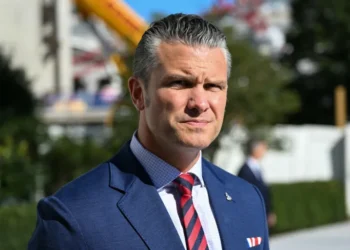
The United States is facing growing international criticism over plans to livestream the execution of Nidal Malik Hasan, the former army psychiatrist convicted of killing 13 people at Fort Hood in Texas in 2009. The Pentagon has confirmed that Hasan’s execution, scheduled for 3 December, is expected to be carried out by firing squad and made available through a public livestream, a decision that has triggered condemnation from human rights organisations, religious leaders, politicians and legal experts.
The proposed broadcast has revived a much broader debate over the death penalty in the United States and the boundaries between public accountability, government transparency and the deliberate public display of state-sanctioned violence. Critics have described the plan as barbaric, disturbing and reminiscent of public executions associated with authoritarian regimes.
The United Nations human rights office has warned that broadcasting an execution could amount to a public execution and raise serious concerns under international human rights standards. The criticism has placed Washington under unusual scrutiny at a time when the Trump administration is already facing questions over its approach to civil liberties, punishment and the use of state power.

Hasan, now 56, was sentenced to death by a military jury in 2013 after being convicted of 13 counts of premeditated murder and 32 counts of attempted premeditated murder. Twelve of those killed and 30 of those wounded were members of the US military.
The attack took place on 5 November 2009 at Fort Hood, now known as Fort Cavazos, in Texas. Hasan opened fire at a medical facility where soldiers were waiting for medical checks before deployment. He was shot by a police officer during his arrest and suffered injuries that left him partly paralysed. He now uses a wheelchair.
The Pentagon says President Donald Trump approved the execution after a recommendation from Defence Secretary Pete Hegseth. Under US military law, a presidential decision is required before an execution by firing squad can proceed.
Hegseth has openly defended the decision to make the execution public. In comments following the Pentagon’s announcement, he argued that people should be able to witness the consequences of serious crimes. His remarks have intensified criticism from those who believe the livestream would turn an already controversial punishment into a form of public spectacle.
Vice-President JD Vance, who is a practising Catholic, said he would not watch the livestream if it takes place. However, he did not directly condemn the administration’s decision. Instead, he stressed the severity of Hasan’s crimes and suggested that discussion about the method of execution should not overshadow the victims and their families.
The response from outside the administration has been considerably harsher. Former US secretary of state Hillary Clinton called the proposal barbaric and argued that it was beneath the dignity expected of the United States. Other Democratic politicians have compared the planned livestream to practices associated with authoritarian governments.
Yassamin Ansari, an Iranian American member of Congress, was among those who criticised the decision particularly strongly. She argued that publicly broadcasting an execution would represent a troubling development in American political life and questioned whether the country was moving toward practices traditionally associated with brutal regimes.
The criticism has not been confined to Democrats. Republican Senator Thom Tillis said Hasan should face the death penalty but described the decision to broadcast the execution as deeply disturbing. He argued that public executions are associated with oppressive systems and that there was no compelling reason for Americans to watch a person being killed by the state.
The UK’s response has also highlighted the international sensitivity surrounding the decision. Britain abolished the death penalty decades ago, and Equalities Minister Bridget Phillipson described the idea of a livestreamed execution as disturbing. She made clear that although the United States remains a close ally of Britain, that relationship does not mean the UK supports every decision made by the American government.
Religious leaders have also joined the criticism. Archbishop Paul Coakley, president of the US Conference of Catholic Bishops, described the proposed livestream as a promotion of a culture of death and called for the plan to be reconsidered.
Human rights organisations have argued that publicly broadcasting the execution would intensify the cruelty associated with capital punishment. Amnesty International USA said that livestreaming a death by firing squad would compound the harm caused by the death penalty and further entrench a cycle of violence.
The controversy has been amplified by another recent execution case in the United States. Tennessee death-row prisoner Christa Pike survived a botched lethal injection attempt and was reportedly taken to hospital in serious condition. Her case renewed questions about the reliability and humanity of execution procedures and has added to the debate surrounding capital punishment.
Against that backdrop, the proposed livestream has attracted particular attention. Supporters of public access argue that allowing people to witness an execution could increase transparency. If the state is going to exercise the ultimate power over a prisoner’s life, they argue, the public should not be shielded entirely from what that process entails.
Deborah Denno, a specialist in the death penalty, has suggested that greater public visibility could potentially improve transparency at a time when questions are being raised about execution procedures. From that perspective, a livestream could allow the public to see how the government carries out one of its most consequential legal punishments.
Opponents strongly disagree. They argue that the public broadcasting of an execution could transform punishment into spectacle and potentially undermine the dignity of the condemned person, regardless of the severity of the crimes involved. Some also fear that images of a state-sponsored killing could be exploited for propaganda by extremist organisations.
Former US diplomat Ned Price warned that glorifying violence could have unintended consequences, including creating propaganda opportunities for terrorist organisations. He argued that the spectacle could damage America’s international reputation and potentially contribute to further radicalisation.
The possibility of a legal challenge remains another significant uncertainty. Military law specialist Eugene Fidell has raised questions about whether Hasan could seek judicial intervention to prevent the public broadcast. Legal experts have suggested that a challenge could focus on the unusual nature of the livestream and questions concerning the government’s authority to publicly display an execution.
Elisabeth Semel, co-director of the Death Penalty Clinic at the University of California, Berkeley, has questioned the government’s motivation for staging such an unprecedented event. She argued that the emphasis on spectacle raises concerns about whether the livestream is intended primarily as a transparency measure or as a deliberate political message.
There is little modern precedent for publicly broadcasting a legal execution in the United States. The execution of Oklahoma City bomber Timothy McVeigh in 2001 was made available to relatives of victims through closed-circuit television, but it was not broadcast publicly to a general audience.
Public executions themselves have largely disappeared from modern American life. The hanging of Rainey Bethea in Kentucky in 1936 is generally considered the last public execution in the United States, although another hanging occurred in Missouri the following year. Since then, executions have generally been conducted behind controlled and restricted access.
Globally, public executions have also become increasingly rare. Human rights organisations have documented public executions in a small number of countries, including Iran and Taliban-controlled Afghanistan. Critics of the American proposal argue that joining such a limited group would damage the United States’ standing on human rights and democratic values.
The planned firing squad also has historical significance within the US military. If carried out as announced, Hasan’s execution would be the first US military firing-squad execution since 1945, when Army Private Eddie Slovik was executed for desertion during the Second World War. The last US military execution by any method took place in 1961, when John Bennett was hanged.
The debate therefore extends well beyond the fate of one convicted mass murderer. It raises fundamental questions about what punishment should look like in a modern democracy and whether the state should deliberately make an execution accessible to a mass audience.
For supporters of Hasan’s execution, the starting point remains the devastating impact of the 2009 attack and the lives lost at Fort Hood. For opponents of the livestream, however, the seriousness of the crimes does not automatically justify turning the punishment into a public event.

As the 3 December date approaches, attention is likely to focus increasingly on whether Hasan challenges the execution or the proposed livestream in court. Such a legal challenge could potentially delay the proceedings and force the government to defend an unprecedented approach to military capital punishment.
Whatever happens, the controversy has already become a significant international test of America’s approach to the death penalty. The decision to broadcast an execution would mark a major departure from decades of relatively private capital punishment in the United States and could have consequences far beyond the courtroom, affecting debates over human rights, military justice, government transparency and America’s global image.
Related News:
 Texas Transfers Raise Fears for Migrant Children
 Latin America women fear rollback of rights
 Immigration Judges Fear Pressure in Trump Era
 US judge dismisses Kilmar Abrego Garcia indictment
 Armed Suspect Attacks Ohio Governor Candidate
 Memphis Questions National Guard Crime Surge
 Clancy Defense Seeks Inquiry Into Lone Juror
 Democrat Says ICE Restricted Detention Camp Oversight
 King Refers Jamaica Slavery Petition to Privy Council
 Tennessee Set to Execute Woman After Clemency Denied
 Christa Pike Wakes After Failed Tennessee Execution
 Botstein Quits Bard Amid Epstein Investigation Calls
 ICE Agent Shoots Man in New York as Child Escapes Harm
 Navi Pillay Wins Nobel Peace Prize for Justice
 Files Link Andrew to Epstein Dinner After Prison Release
 Melania Trump Epstein remarks spark survivor backlash
 Swalwell Faces Pressure to Quit Governor Race
 Harmeet Dhillon Faces Scrutiny in DOJ Role Debate
 US Labor Department in turmoil after secretary resigns
 Trump DOJ Targets James Comey Again
 Judge Blocks Trump Bid for Arizona Voter Data
 US Court Weighs Fate of TPS for Migrants
 Police Suspect Help in Missing Alice Springs Girl Case
 Judge halts deportation of Yemeni refugees in US
 UK may ban protests amid rising antisemitism fears
 US green card applicants must apply from abroad, DHS says
 Trump’s Revenge Drive Deepens GOP Divide
 Victim says non-custodial rape sentence ‘rock in my face’
 Former ICC prosecutor condemns US sanctions
 Gunman Killed After White House Security Shootout
 Dreyfus Statue Finally Gets Permanent Paris Home
 Trump Orders Signs Criticising Smithsonian Museum
 UN expert urges UK to rethink Israel policy
 Ministers Condemn Far-Right Unrest in Portsmouth
 Turning Point USA Faces Crisis After Kirk Killing
 Miliband Rejects Chief Rabbi’s West Bank Warning
 Patriot Platform Raises Concern Across Britain
 Israel Accused of Undermining Palestinian Life
 UK Urged to Probe US Diplomat Case
 Texas Charges Seven Noncitizens in Voting Crackdown
 Mahmood Warns Far Right Over Asylum Protests
 Patrick Clancy speaks publicly about children’s deaths
 ICE Shooting in Austin Sparks Calls for Transparency
 Trump and Mamdani Hold Cordial Gracie Mansion Meeting
 UK Reviews Hague Child Abduction Cases Involving Abuse
 Japan PM Backs International Criminal Court
 Paris child pickpocketing gang leader jailed for eight years
 Far-Right Activist Arrested After Channel Dinghy Incident
 Portadown protest ends after tense Orange Order standoff
 Cornell Fraternity Assault Investigation Reopened
 Fayed Survivors Demand Inquiry Into Medical Regulator
 French Student Protests Escalate Into Violent Clashes
 Tennessee Execution Fails After Two Lethal Doses
 Hundreds of UK prisoners released early amid overcrowding
 Drumcree Talks End Without Agreement Ahead of Appeal
 Almost Half of Fayed Accusers May Be Trafficking Victims
 Calls Grow to Halt US Executions After Pike Failure
 French School Protests Escalate as 400 Schools Close
 New Prosecutor Takes Over Cornell Assault Case
Questions Grow Over Tennessee Execution Failures
New Prosecutor Takes Over Cornell Assault Case
Questions Grow Over Tennessee Execution Failures
 Gosport Protesters Clash With Police Over Migrant Rescue
Christa Pike Awake After Failed Tennessee Execution
Gosport Protesters Clash With Police Over Migrant Rescue
Christa Pike Awake After Failed Tennessee Execution
 Police accused of failing abuse victims
 NSW Police Bid Delays Inquiry Into Sydney Protest
 Pentagon Says Fort Hood Shooter’s Execution Will Be Streamed
 US Senate Debates Turn Bitter as Midterms Near
 South Africa Withdraws Directive on Asylum Applications
 EU Divisions Deepen Over Israel Policy
 French Taxi Driver Cleared in David Lammy Theft Case After Fare Dispute
 US National Guard Member Killed in DC Shooting
 Partial US Government Shutdown Hits Homeland Security Funding
 Barrister Criticises Trial After Suicide Case Verdict
 Trump’s Mount Rushmore Speech: A Divisive Anniversary
 New Footage Revives Peter Falconio Mystery
 Trump gives $45,000 holiday gifts to White House aides
 Man Arrested in Mississippi Woman’s Death
 Republican Senator Questions Trump Ad Spending
 London Facial Recognition Trial Ends With False Alert
 Badenoch Raises Prospect of 2027 UK Election
 Palace Rejects Funding Andrew’s Police Legal Challenge