Published: 23 October 2026. The English Chronicle Desk. The English Chronicle Online
An escalating wave of economic discontent and social unrest has gripped northern Italy as Milan braces for further violent demonstrations, igniting a fierce national debate over the economic prospects of what experts are calling Italy’s lost generation. What began as peaceful civil marches protesting sky-high inflation, stagnant wages, and unaffordable housing costs quickly deteriorated into intense urban clashes between riot police and crowds of disenfranchised youths, exposing deep systemic fractures between marginalized communities and state authorities under Prime Minister Giorgia Meloni’s right-wing governing coalition.
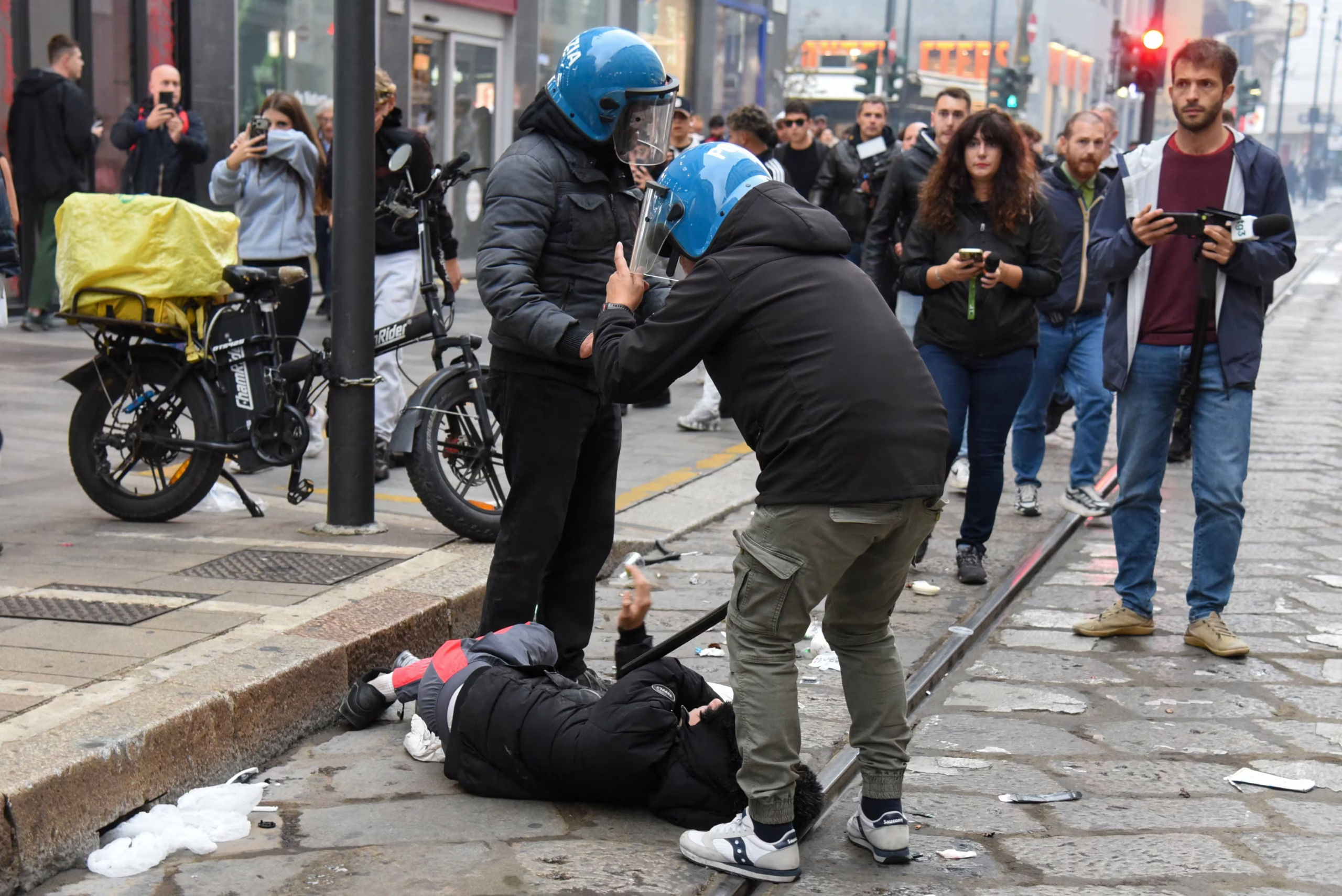
The center of the financial capital, usually renowned for its high fashion and tourism, transformed into a battleground when hundreds of demonstrators marched toward the central Piazza del Duomo. Independent journalists and eyewitnesses reported that initial public demonstrations proceeded peacefully until police lines blocked key access corridors leading away from the central square. Tensions escalated rapidly as law enforcement officers deployed riot shields, batons, and teargas to disperse the crowds, triggering widespread panic among shoppers and foreign tourists. Several eyewitnesses, including independent media workers reporting on the ground, suffered severe facial injuries and deep lacerations after being struck by flying projectiles and police charges during the chaotic scuffles.

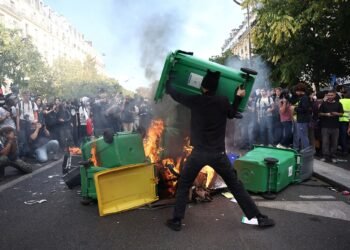
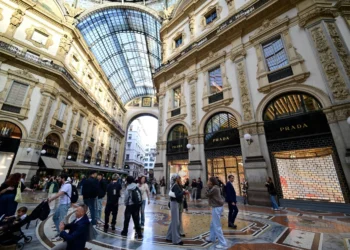
As main protest crowds were pushed back by security forces, groups of masked youths broke off toward the surrounding luxury commercial district. What followed was a wave of opportunistic property damage and looting targeting high-end retail brands, storefronts, and public infrastructure. Fringes of the demonstration set street bins ablaze, pulled down traffic signs, and shattered shop windows across major commercial streets, making off with merchandise before police reinforcements could establish perimeter control. The opportunistic vandalism re-emerged the following day as youth groups, organized through encrypted social media networks and messaging channels, returned to the city center to engage in further property destruction.
Police and judicial authorities responded aggressively to the two-day disturbance, detaining more than 271 individuals across the metropolitan area. Official reports confirmed 32 formal arrests, with a staggering proportion of those held consisting of minors and young residents of foreign origin. In direct response to the violence, Prime Minister Meloni’s administration moved swiftly to pass stringent emergency security measures aimed at penalizing civil disobedience. The newly enacted executive decrees dramatically increase criminal penalties for violent participation in public demonstrations, grant broader tactical leeway to law enforcement personnel, and introduce legal mechanisms holding parents financially liable for acts of vandalism committed by their underage children. Furthermore, the government dispatched 500 armed troops to reinforce municipal police units in Milan ahead of scheduled weekend gatherings.
The government’s heavy-handed security measures have extended far beyond Milan, impacting other major economic sectors across the Italian peninsula. In the southern regions, long-distance truck drivers and transport workers staged massive road blockades along primary transit routes and port entry points in Naples to protest soaring fuel costs and rising diesel prices. Utilizing newly expanded anti-protest laws that criminalize the obstruction of public highways, judicial authorities moved aggressively against the transport workers, fining hundreds of drivers and threatening organizers with potential prison sentences. Critics and labor representatives argue that the government’s reliance on criminal prosecution rather than economic dialogue is worsening social hostility across the country.
The recent outbreak of violence in Milan, Turin, and Bologna has brought long-simmering debates surrounding youth marginalization and racial integration to the forefront of Italian politics. A significant portion of the youths involved in the suburban unrest hail from working-class council estates and immigrant-dense peripheries, such as the Barona district southwest of Milan. Working-class Italians and second- or third-generation immigrants living in these neglected outlying areas are routinely subjected to derogatory social labels by right-wing politicians and sensationalist media outlets. Community leaders in these neighborhoods emphasize that while property destruction cannot be condoned, the outbreaks of anger represent an explosive reaction to years of economic neglect, systemic discrimination, and a complete lack of professional opportunities for young people.
Social analysts from leading academic institutions across Italy warn that addressing deep-rooted socioeconomic grievances purely through legal repression risks alienating an entire generation of young citizens. Sociologists point out that young Italians face some of the highest youth unemployment and underemployment rates in Western Europe, leaving many feeling utterly hopeless about their financial futures within the country. Young residents in Milan’s outlying districts frequently express a desire to emigrate, citing rising living costs and a lack of political representation as primary motivators for leaving their homeland behind.

The epicenter of Italy’s financial and fashion capital transformed into a scene of conflict when hundreds of demonstrators marched toward the historic Piazza del Duomo. Eyewitnesses and independent journalists covering the event reported that early protest marches proceeded without major incident until police tactical units formed physical blockades across key thoroughfares leading away from the square. Tensions escalated rapidly as law enforcement officers utilized riot shields, heavy batons, and teargas to force back the crowded lines, causing widespread panic among bystanders and tourists. Multiple observers and media workers on the scene sustained visible injuries, including deep lacerations and severe facial bruising, after being struck by flying debris and caught in heavy police charges during the ensuing commotion.
As security forces and military personnel establish heavy physical checkpoints outside luxury boutiques and historical landmarks across central Milan, right-wing counter-demonstrators have staged their own rallies demanding zero tolerance for civil unrest. Simultaneously, youth groups and grass-roots civil coalitions have pledged to continue weekly demonstrations until the administration addresses core economic issues, including housing affordability and minimum wage guarantees. With national elections looming next year, the growing rift between Italy’s disillusioned youth and the political establishment threatens to remain a primary flashpoint in European domestic politics.
Related News:
 French Student Protests Escalate Into Violent Clashes
 French School Protests Escalate as 400 Schools Close
 EU Divisions Deepen Over Israel Policy
 Trump Slams Ukraine Strikes as Russia Ceasefire Collapses
 Macron Condemns Violence as France Faces 2,400 Arrests
 Zelenskyy Accuses US of Delaying Ukraine Missile Supplies
 Hungary election: Orbán faces biggest test amid scandal
 Ukraine Urges UK to Seize Russian Oil Tankers
 Ceasefire Standoff Deepens in Ukraine War
 France Faces Record Presidential Crowded Race Amid Far-Right Surge
 Putin Declares Russia Victory at Scaled Victory Day Parade
 Trump’s Revenge Drive Deepens GOP Divide
 Former ICC prosecutor condemns US sanctions
 Irish Gangland Figure Fails in Dublin Election Bid
 Le Pen’s Popularity Holds Despite Conviction
 Russian Missiles Intensify Pressure on Kyiv
 British Man Faces Deportation Threat in Sweden
 UN expert urges UK to rethink Israel policy
 British widow says deportation from Sweden feels like a death sentence
 Saudi Pact Raises Risk of Pakistan Entering War
 King Refers Jamaica Slavery Petition to Privy Council
 Elif Eralp Emerges as Berlin’s Next Political Force
 Russia Targets Ukraine’s Digital Economy With Strikes
 Madrid Tent Camp Grows as Spain Housing Crisis Deepens
 Burnham Opens Door to Possible UK Return to EU
 Drumcree Talks Falter as Legal Challenge Deepens
 UK-France Returns Deal Faces Expiry as Talks Stall
 Russia Escalates Ukraine Energy Attacks as Winter Nears
 Ukraine’s New FP-7 Missile Makes Combat Debut
 Bosnia’s Young People Look Beyond Election Hope
 Germany Pledges €1bn Military Aid to Ukraine
 Latin America women fear rollback of rights
 Spain Sets Snap Election as Housing Crisis Deepens
 Ukraine claims strikes have crippled Russia’s oil refining
 Lithuania Offers to Fund Permanent US Military Base
 Tanker Ablaze After Drone Strike Near Sochi
 France Suspends Stun Grenades After Student Injury
 Tanker Attacked Near Qatar as Hormuz Tensions Escalate
 French Student Protests Grow Despite Government Pledge
 France Promises 3,000 Teachers as Student Protests Grow
 Navi Pillay Wins Nobel Peace Prize for Justice
 Controversial Vaccine Trial Approved in Guinea-Bissau
 France Faces Debt Crisis as Protests and Markets Clash
 Trump Attacks Norway After Nobel Peace Prize Snub
 Delhi Braces for Youth Protests Over Voter Roll Dispute
 Delhi Detains Protest Leaders as Youth Rally Escalates
 French Students Protest Poor Conditions in Paris Suburbs
 Ten US Midterm Races That Could Defy Expectations
 Greta Thunberg Backs French Students in School Protests
 Ohio Airports Become Key Hubs for ICE Deportation Flights
 Farage Rejects Claims Reform Would Let Troops Shoot Migrants
 Ukrainian Soldier Faces Trial Over Nord Stream Blast
 Brazil Cuts Working Week to 40 Hours in Lula Election Boost
 Gadi Eisenkot: Israel’s Anti-Netanyahu Challenger
 Talarico Faces Tough Voter Test in Texas Senate Race
 Albania’s Rama Defies Calls to Quit Amid Student Protests
 French Police Face Scrutiny Over Injured Teenagers
 One Nation Pledges $2,000 Baby Subsidy in Victoria
 Alberta Referendum Exposes Deep Divisions Over Independence
 Marseille Activist Defies France’s Powerful Drug Gangs
 Obama Warns Against Threat to Ilhan Omar’s Citizenship
 Milan Luxury Stores Shut as Italy Plans Troop Deployment
 Suu Kyi Appears in Rare Photos After Royal Gift
 Alberta Voters Reject Push for Canadian Independence
 Fifth Foreign Firm Withdraws From Jerusalem Cable Car Plan
 Helen Haines Loses Both Legs After Alleged Attack
 French Fast-Track Courts Face Backlash Over Riot Cases
 Russia Strikes Kyiv After Agreeing to Resume Peace Talks
 Massive Student-Led Movement Marches in Belgrade Ahead of Serbian Vote
 Trump Announces 3-Day Russia–Ukraine Ceasefire Deal
 England and Norway Fans Turn Miami Into World Cup Carnival
 Bayeux Tapestry Revives Franco-British Ties
 Democrat Says ICE Restricted Detention Camp Oversight
 Republican Senator Questions Trump Ad Spending
 Badenoch Raises Prospect of 2027 UK Election
 France Schools Protests Draw 250,000 as Police Clash
 South Africa Withdraws Directive on Asylum Applications
 Trump Names Katie Zachariah as Next White House Press Secretary
 India’s Voter Roll Crisis Sparks Nationwide Protests
 UK Visa Refusal Threatens Baby’s Family Christmas