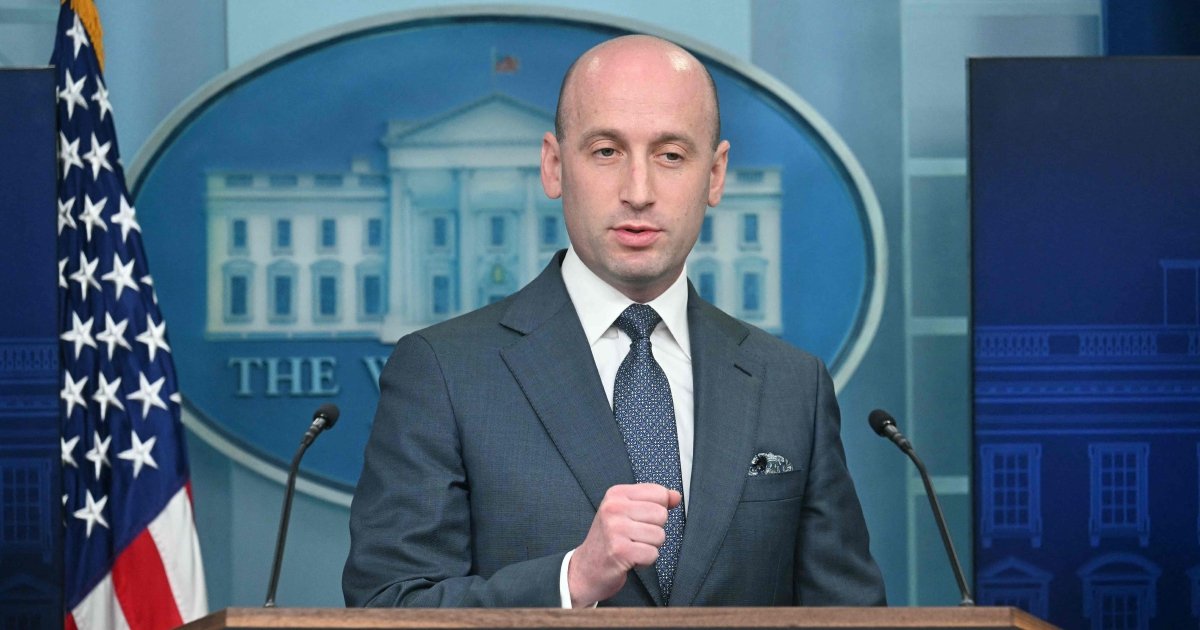
Stephen Miller, one of the most influential and controversial figures in Donald Trump’s political circle, is beginning a new chapter in his career as White House chief of staff, bringing his uncompromising views on immigration, national identity, military intervention and American power closer to the centre of the US administration. His promotion represents a significant shift in the balance of influence around the president, placing an aide known for his hardline positions in one of the most powerful roles in the White House.
At 41, Miller has been associated with Trump since the beginning of the president’s political rise. He first emerged as a prominent figure during the 2016 presidential campaign, working as a speechwriter and helping shape the language and political messaging that became central to Trump’s appeal. Over the years, he has developed a reputation as a determined advocate of restrictive immigration policies and a key architect of some of the administration’s most contentious decisions.
His appointment has attracted strong criticism from political opponents and immigration advocates, many of whom view his promotion as a warning that the administration intends to maintain, or potentially intensify, its confrontational approach to immigration and national identity. Supporters, however, have long regarded him as a committed defender of Trump’s political agenda. His influence is expected to become even more significant as he assumes responsibility for coordinating the president’s priorities and managing the flow of policy decisions across the administration.

Miller’s public statements provide an insight into the political philosophy that has shaped his career. His remarks have frequently gone beyond conventional arguments for tighter border controls, touching on cultural identity, demographic change and what he considers the future of American society.
In a 2023 television appearance, Miller described immigration as a process through which the United States was being conquered. He argued that the arrival of millions of people from different cultural backgrounds and belief systems was fundamentally changing the country. According to his assessment, the transformation would have lasting consequences unless the government carried out deportations on a massive scale.
He described the situation as a complete resettlement of the United States and suggested that future generations might no longer recognise the country in which they lived. His comments reflected a central theme in his political outlook: the belief that large-scale immigration threatens the cultural and national identity of the United States.
Such language has been sharply criticised by opponents, who argue that it portrays immigrants as a collective threat rather than recognising their individual circumstances and contributions. Immigration advocates have also warned that presenting demographic change as a form of national conquest risks encouraging hostility towards migrant communities. For Miller and those who share his approach, however, immigration enforcement is not simply an administrative issue but a defining question about the country’s future.
His role in shaping Trump’s first-term immigration policies remains one of the most significant aspects of his political record. Miller was a driving force behind the administration’s family separation policy at the US-Mexico border, under which children were separated from parents detained for crossing the border unlawfully. The policy generated widespread condemnation, including from human rights organisations, religious leaders and political figures across the country.
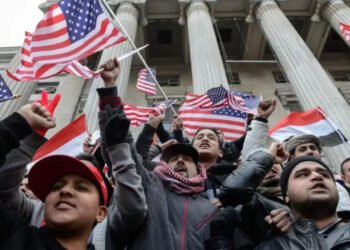
He also played an important part in the development of the travel restrictions imposed on people from several Muslim-majority countries during Trump’s first months in office. The measures triggered legal challenges and protests, becoming one of the earliest major controversies of the administration. For critics, these policies demonstrated the consequences of placing an uncompromising immigration hardliner at the centre of government decision-making.
Miller’s positions on international military involvement have also reflected a strong emphasis on American interests, although his public statements have sometimes supported limiting US involvement in overseas conflicts. During a 2018 interview with CNN, he defended Trump’s plan to withdraw American troops from Syria after the president declared that the Islamic State group had been defeated.
Miller argued that if the militant organisation attempted to reorganise and regain strength, regional countries should take responsibility for defeating it. He also questioned why American citizens should be expected to support involvement in conflicts across the world, asking when the public had agreed to participate in every war and dispute in every region.
The remarks highlighted an approach that places greater responsibility on other countries to address regional security challenges. They also reflected a broader political argument within Trump’s movement that American military resources should not be committed indefinitely to conflicts without a clearly defined national purpose.
However, Miller’s comments about the killing of Alex Pretti in Minneapolis have drawn particular scrutiny. Pretti, a 37-year-old intensive care nurse who was observing immigration officers, was shot and killed by federal immigration agents in January 2026. The incident became a major point of controversy amid growing public concern about the conduct of federal immigration operations.
In a social media post following the shooting, Miller described Pretti as a domestic terrorist. In another response to criticism of the incident, he accused Pretti of attempting to assassinate federal agents. Those descriptions were challenged by critics who pointed to video footage showing Pretti being tackled and shot by border patrol officers.
The disagreement over Miller’s characterisation of the incident raised wider questions about the administration’s treatment of people who observe or challenge immigration enforcement activities. Critics argued that labelling a person a terrorist before the circumstances of a shooting have been fully established risks prejudicing public understanding of an incident and undermining confidence in official investigations.
Miller has also made controversial statements about Greenland, an autonomous territory within the Kingdom of Denmark and a strategically important part of the Arctic region. He has argued that Greenland should become part of the United States, presenting the issue as a matter of American national security and the protection of NATO interests.
During an interview with CNN, he was asked whether the possibility of using military force to take control of Greenland could be ruled out. Miller responded that the United States should have Greenland as part of its territory, while dismissing the suggestion that the issue needed to be considered in terms of a military operation. He also argued that no country would fight the United States militarily over Greenland’s future.
The remarks intensified concerns about the administration’s approach to relations with European allies and the sovereignty of smaller territories. Denmark and Greenland have their own political and constitutional arrangements, and any attempt to change the territory’s status without the consent of its people would raise serious diplomatic and legal questions. Miller’s comments nevertheless illustrated his willingness to frame territorial questions through the lens of American strategic interests.
His opposition to birthright citizenship has been another defining feature of his political position. The principle, rooted in the US Constitution’s Fourteenth Amendment, generally grants citizenship to nearly everyone born on American soil. Trump attempted to restrict the practice, but the Supreme Court blocked the administration’s effort in June 2026.
Miller reacted angrily to the ruling, describing it as a deep wound to the American republic. In a television appearance, he questioned whether children born in the United States to parents from poorer countries should automatically receive citizenship. He also raised concerns about their future participation in the country’s democratic and judicial institutions.
His remarks included disparaging descriptions of developing nations and their technological and scientific achievements. Such comments prompted criticism over their treatment of immigrants and people from less wealthy countries. Miller further argued that a constitutional interpretation that, in his view, would lead to the destruction of American civilisation could not be correct.
The Supreme Court decision, however, demonstrated that presidential policy remains subject to constitutional limits and judicial scrutiny. The dispute over birthright citizenship is likely to remain part of the wider national debate over immigration, constitutional rights and the meaning of American citizenship.
Miller has also expressed strong views about Venezuela and its oil industry. Two weeks before the US military operation in January 2026 that resulted in the capture of Venezuelan president Nicolás Maduro, Miller posted that American labour, investment and expertise had helped create Venezuela’s oil industry. He described its nationalisation as a historic theft of American wealth and argued that the country’s resources had subsequently helped finance terrorism and criminal activity.
The operation against Venezuela, which resulted in the deaths of at least 40 people, including civilians and Venezuelan soldiers, was praised by Trump as an extraordinary military action. Miller’s earlier remarks offered a political justification centred on American property, security and the alleged consequences of Venezuela’s government policies.
Across these issues, Miller’s statements reveal a consistent emphasis on national sovereignty, strict immigration enforcement, American strategic dominance and a confrontational approach towards political opponents. His supporters see these positions as evidence of ideological commitment and loyalty to the president. His critics regard them as examples of an increasingly polarising political agenda that could deepen divisions at home and complicate relations abroad.

As chief of staff, Miller will be expected to do more than promote individual policies. The position involves coordinating the White House operation, managing access to the president, resolving competing demands among senior officials and ensuring that the administration’s priorities are implemented. His ability to perform those responsibilities while maintaining his close relationship with Trump will be closely watched in Washington.
The appointment also comes at a politically sensitive moment for the administration, following the midterm election results and growing debate over the direction of Trump’s second term. Miller’s expanded authority could influence how the White House responds to criticism, approaches immigration enforcement and handles major domestic and international disputes.
His first day in the new role therefore carries significance beyond a change in personnel. It places a figure whose words and policies have repeatedly generated national controversy in a position with direct access to the president and considerable influence over government priorities. Whether his appointment strengthens the administration’s political strategy or intensifies existing divisions will become clearer as he begins exercising his new responsibilities.
Related News:
 Latin America women fear rollback of rights
 Trump Attacks Norway After Nobel Peace Prize Snub
 Ohio Airports Become Key Hubs for ICE Deportation Flights
 Trump’s Midterm Campaign Faces Racism and Political Backlash
 US states redraw maps after voting rights ruling
 Immigration Judges Fear Pressure in Trump Era
 Trump’s Revenge Drive Deepens GOP Divide
 Is America Ready for an AOC Presidential Run?
 Trump Media Ban Triggers First Amendment Clash
 US Networks Suspend Trump White House Pool Coverage
 Democrat Says ICE Restricted Detention Camp Oversight
 Republican Senator Questions Trump Ad Spending
 Trump Ads Trigger Fight Over Taxpayer Money
 Drumcree Talks Falter as Legal Challenge Deepens
 UK-France Returns Deal Faces Expiry as Talks Stall
 Trump Says He Deserves Nobel Peace Prize
 ICE Agent Shoots Man in New York as Child Escapes Harm
 Bolsonaro Gains Key Endorsement Ahead of Brazil Runoff
 Controversial Vaccine Trial Approved in Guinea-Bissau
 Delhi Braces for Youth Protests Over Voter Roll Dispute
 Trump Names Katie Zacharia as Next White House Spokesperson
 Ten US Midterm Races That Could Defy Expectations
 Brazil Court Scandal Threatens Lula as Bolsonaros Rise
 Millions Face Tougher Medicaid Rules From January
 Farage Rejects Claims Reform Would Let Troops Shoot Migrants
 Judge Blocks Trump White House Media Ban
 Brazil Cuts Working Week to 40 Hours in Lula Election Boost
 Gadi Eisenkot: Israel’s Anti-Netanyahu Challenger
 Talarico Faces Tough Voter Test in Texas Senate Race
 Serbia Leader Linked to Controversial Trump Tower Plan
 Obama Warns Against Threat to Ilhan Omar’s Citizenship
 US Midterms Could Reshape Trump’s Second Term
 Serbia’s Student Victory Sparks a ‘Smell of Freedom’
 Obama Mocks Trump at Georgia Rally for Democrats
 Bedouin Women Drive Historic Arab Election Gains
 US Judge Blocks Pressure on Election Officials
 Judge Blocks Trump’s $100m Washington Arch Project
 Paraguay President Impeached and Arrested After Banking Crisis
 Thousands Protest ICE Operations in Nationwide US Day of Action
 Judge halts deportation of Yemeni refugees in US
 US ‘Narco Boat’ Strikes Draw Global Outcry
 Florida Surgeon ‘Devastated’ Over Fatal Surgery Error
 Le Pen’s Popularity Holds Despite Conviction
 Trump Calls Iran War ‘Small Potatoes’ Despite US Deaths
 New Mexico Takes Facebook to Trial Over Data Scandal
 Israel Accused of Undermining Palestinian Life
 Texas Charges Seven Noncitizens in Voting Crackdown
 Turkey LGBTQ Crackdown Expands With New Arrests
 Omar Proposes Bill to Redirect ICE Funding
 Lib Dems Prepare for Election Amid Reform Challenge
 Lula accuses Trump of seeking control over Brazil
 Free Speech Emerges as Key UK Election Issue
 Cornell Fraternity Assault Investigation Reopened
 Burnham Opens Door to Possible UK Return to EU
 Green Party faces dispute over Zionism motion
 Badenoch Raises Prospect of 2027 UK Election
 French School Protests Escalate as 400 Schools Close
 New Prosecutor Takes Over Cornell Assault Case
 Families Await USS Abraham Lincoln Homecoming
 USS Lincoln Ends Record 265-Day Deployment
 Gaza War Deepens India’s Strategic Ties With Israel
 US Execution Livestream Plan Sparks Global Outrage
 Trump Names Katie Zachariah as Next White House Press Secretary
 French Students Protest Poor Conditions in Paris Suburbs
 Greta Thunberg Backs French Students in School Protests
 India’s Voter Roll Crisis Sparks Nationwide Protests
 Ukrainian Soldier Faces Trial Over Nord Stream Blast
 Trump Rallies GOP as Senate Democrats Boost Key Races
 Greens Face Leadership Test as Jordon Steele-John Misconduct Claims Leave Party in Limbo
 Lula Supporters Make Final Push Ahead of Brazil Runoff
 Flávio Bolsonaro Reportedly Leaves Brazil After Election Defeat
 Trump Again Demands Peltola Prosecution as Alaska Race Escalates
 Trump’s Global Policies Put Republicans at Risk
 King Charles Faces Reparations Protests at Antigua Summit
 Global Crises Test Diplomacy as Trump’s Policies Face Scrutiny
 Alan Jones Trial Paused for Melbourne Cup Viewing
 ANC Faces Voter Backlash in South African Elections
 Hegseth Faces Growing Pressure After GOP Election Defeat
 Trump-Backed Republicans Suffer Major Midterm Defeats
 EU Citizens Sue Home Office Over UK Residency Rights