
The Pentagon has declared “total victory” after House Republicans blocked an effort to advance impeachment proceedings against US Defence Secretary Pete Hegseth, delivering a significant political reprieve to one of President Donald Trump’s most prominent cabinet officials. The House vote, which largely followed party lines, prevented the immediate advancement of eight articles of impeachment against Hegseth over allegations concerning his conduct during the Iran war and other military operations. However, the decision did not amount to a formal finding that the secretary had committed no wrongdoing. Instead, lawmakers voted to refer the impeachment articles to the House Judiciary Committee, leaving the matter at the committee stage rather than allowing the full House to consider an impeachment vote.
The motion to refer the articles to the committee passed by 211 votes to 204. Republicans overwhelmingly supported the measure, while Democrats opposed it. Representative Thomas Massie, the Republican who introduced the impeachment articles, voted against the motion alongside Democratic lawmakers. The outcome exposed the narrow political divide surrounding the issue and highlighted the difficulty facing Democrats as they attempt to hold senior members of the Trump administration accountable through congressional proceedings.

Following the vote, Pentagon spokesman Sean Parnell described the result as a decisive victory for Hegseth, the Department of War and American military personnel. In a social media statement, Parnell said the referral of what he called baseless impeachment articles to the Judiciary Committee represented “total victory” for the defence secretary and the department. He added that the Pentagon expected the impeachment effort to be brought to an end in the committee room, where, he argued, the facts would prevail and the issue could be put aside.
The statement reflected the administration’s determination to portray the congressional decision as a rejection of the allegations against Hegseth. Nevertheless, the procedural outcome was more limited than the Pentagon’s triumphant language suggested. The House had not voted directly on whether Hegseth should be removed from office, nor had lawmakers completed a comprehensive investigation into the claims contained in the impeachment articles. The referral simply moved the matter away from an immediate floor debate and into the committee process, where its future will depend on congressional decisions and political circumstances.
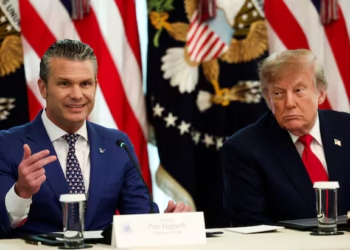
President Trump also celebrated the result, presenting it as a personal and political victory for his defence secretary. In a social media post, he said the Democrats’ attempt to impeach Hegseth had failed and praised Republicans for supporting the secretary. Trump criticised Massie for voting against the motion and portrayed the impeachment initiative as an effort by Democrats to undermine his administration.
The president also linked the outcome to what he described as military achievements in Venezuela and Iran, strong recruitment figures and improved morale within the armed forces. He argued that these developments had demonstrated Hegseth’s effectiveness and contributed to what he called the exoneration of a great American patriot. His comments reinforced the administration’s broader political message that criticism of the defence secretary was part of an attempt to weaken the government rather than a legitimate effort to examine his decisions.
The impeachment initiative was led by Massie, who put forward eight articles outlining allegations that Hegseth had repeatedly violated constitutional requirements through his handling of the Iran war and other international military operations. The allegations raised questions about the defence secretary’s responsibilities, the limits of executive authority and the relationship between the administration and Congress over decisions involving military force. Although the articles were not advanced to a full House impeachment vote, their submission brought renewed attention to the constitutional and political scrutiny facing the Pentagon leadership.
The vote also exposed divisions within the Democratic Party over attendance and the handling of the parliamentary process. Several Democratic representatives did not cast votes, prompting frustration among party members who believed the absence of even a small number of lawmakers had made it harder to defeat the Republican motion. The result was decided by a margin of only seven votes, making the missing votes particularly significant.
Among those who did not vote were representatives Julia Brownley, Lou Correa, Jonathan Jackson, Nancy Pelosi, Brittany Pettersen, Haley Stevens, Marilyn Strickland and Frederica Wilson. Senator Chris Van Hollen was also named among those absent in the account of the vote, alongside other lawmakers. Their absence became a subject of discussion among Democrats as the party assessed why it had failed to secure enough votes to prevent the impeachment articles from being referred to committee.
Congresswoman Alexandria Ocasio-Cortez expressed concern about the attendance issue, telling reporters that she did not know why some members had not been present. She acknowledged that individual lawmakers might have had health-related or other personal reasons for missing the vote, but said the absence of representatives during such a closely contested decision had hurt the party’s position.
Congresswoman Melanie Stansbury of New Mexico offered an explanation for her own absence. She said she and other members of Congress had been prevented from reaching the chamber in time because of a traffic incident and a police escort involving a bus. According to a statement posted through her social media account, she arrived after the vote had already been gaveled closed. She subsequently filed a report of her intended “no” vote, which she said was documented in the Congressional Record.
The dispute over attendance added another layer to the political fallout from the vote. While Republicans were able to present the result as evidence of party unity behind Hegseth, Democrats faced questions about their coordination and ability to maintain attendance during a closely divided House proceeding. The outcome also illustrated how procedural decisions and individual lawmakers’ presence can determine the direction of major political confrontations.
The developments took place during a broader period of leadership changes in Congress following the midterm elections. Republicans are preparing to lose control of the House to Democrats in the new Congress, which is due to begin in January. The change in political control is expected to reshape the congressional agenda and could create a different environment for investigations and oversight of the Trump administration.
Republican lawmakers elected Representative Jim Jordan of Ohio to lead their House contingent in the next Congress. Jordan defeated current House Majority Leader Steve Scalise by 106 votes to 73 in a closed-door party election. He is expected to become the Republican minority leader when Democrats assume control of the chamber. The election followed House Speaker Mike Johnson’s decision not to seek the leadership position after Republicans surrender their majority.
Johnson praised Jordan after the result, describing their longstanding relationship and recalling that Jordan had served as a mentor when he first entered Congress. Jordan’s selection signals the continued influence of conservative Republicans within the party as they prepare to operate from the minority position. His leadership will also be important in determining how Republicans respond to Democratic investigations and legislative priorities in the coming session.
In the Senate, Republicans re-elected John Thune of North Dakota as their minority leader. Thune faced no challenger in the closed-door vote, securing his position as the party prepares for a substantial change in the balance of power. Democrats are expected to hold at least a 10-seat majority in the upper chamber in the new Congress, giving them greater control over committee leadership and the legislative agenda.
The political changes mean the current administration may face stronger congressional scrutiny in the months ahead. Although Republicans successfully blocked the immediate advancement of the Hegseth impeachment effort, the wider debate over military decision-making, constitutional responsibilities and executive accountability is unlikely to disappear entirely. The Judiciary Committee’s handling of the articles will be an important factor in determining whether the issue remains active or gradually loses momentum.
The result also comes amid continued political debate over the administration’s approach to the Iran conflict. Hegseth has defended the war as a necessary undertaking, while some Republicans have reportedly raised concerns about the conflict and its political consequences. The dispute has therefore extended beyond the personal position of the defence secretary to questions about the administration’s military strategy and the level of congressional support for its foreign policy.

For now, the Pentagon and the White House have secured an important political advantage. Hegseth remains in office, and the House has not advanced the impeachment articles to a full vote. Yet the administration’s declaration of total victory should be understood in the context of a procedural decision rather than a final legal or congressional judgment on the allegations. The committee referral leaves open the possibility of further debate, even if the immediate attempt to move the impeachment process forward has been blocked.
The episode demonstrates how sharply divided Washington remains over the Trump administration’s leadership and its use of executive power. Republicans have rallied behind the president’s defence secretary, while Democrats have sought to use congressional mechanisms to challenge his conduct. As control of the House changes hands in January, the political balance surrounding investigations and oversight will shift. Whether the Hegseth impeachment articles receive further attention will depend on the incoming Congress, but Tuesday’s vote has made clear that the secretary retains substantial Republican support at a critical moment for the administration.
Related News:
 Thousands Protest ICE Operations in Nationwide US Day of Action
 US Court Ruling Reshapes Voting Rights Landscape
 US states redraw maps after voting rights ruling
 Judge halts deportation of Yemeni refugees in US
 Trump warns Iran as Middle East tensions surge again
 US Court Restores Abortion Pill Access Temporarily
 Trump’s Revenge Drive Deepens GOP Divide
 Former ICC prosecutor condemns US sanctions
 Gunman Killed After White House Security Shootout
 Mystery Grows Over Mitch McConnell’s Health
 Trump Media Ban Triggers First Amendment Clash
 US Networks Suspend Trump White House Pool Coverage
 Republican Senator Questions Trump Ad Spending
 Trump Ads Trigger Fight Over Taxpayer Money
 Trump Immigration Policy Faces New Legal Tests
 Latin America women fear rollback of rights
 Lithuania Offers to Fund Permanent US Military Base
 Trump Rally Faces Protests as Texas Race Tightens
 Tanker Attacked Near Qatar as Hormuz Tensions Escalate
 Trump Says He Deserves Nobel Peace Prize
 Trump Attacks Norway After Nobel Peace Prize Snub
 Ten US Midterm Races That Could Defy Expectations
 Brazil Court Scandal Threatens Lula as Bolsonaros Rise
 Ohio Airports Become Key Hubs for ICE Deportation Flights
 Judge Blocks Trump White House Media Ban
 Trump Warns Alaska Voters Over Rival Dan Sullivans
 Trump Targets Arizona and Montana Amid GOP Election Worries
 Brazil Cuts Working Week to 40 Hours in Lula Election Boost
 Trump Rallies GOP as Senate Democrats Boost Key Races
 Talarico Faces Tough Voter Test in Texas Senate Race
 Trump’s Ambassador Picks Face Growing Controversy
 Serbia Leader Linked to Controversial Trump Tower Plan
 Trump Falsely Questions Ossoff’s Election Legitimacy
 Trump Administration Threatens California Election Officials
 Obama Warns Against Threat to Ilhan Omar’s Citizenship
 Meta Faces Election Bias Claims Ahead of Brazil Runoff
 Omar Claims US Raid on Residence Was Meant to Intimidate
 US Midterms Could Reshape Trump’s Second Term
 Trump’s Midterm Campaign Faces Racism and Political Backlash
 Flávio Bolsonaro Reportedly Leaves Brazil After Election Defeat
 Global Crises Test Diplomacy as Trump’s Policies Face Scrutiny
 US Midterms Put Trump’s Presidency to the Test
 Hegseth Faces Growing Pressure After GOP Election Defeat
 Trump-Backed Republicans Suffer Major Midterm Defeats
 Democrats Expand House Majority in Major Midterm Victory
 Judge Blocks Trump’s $100m Washington Arch Project
 Paraguay President Impeached and Arrested After Banking Crisis
 Stephen Miller’s Rise Puts Hardline Views at Centre of Power
 Trump Defends Hegseth as Impeachment Push Intensifies
 Trump Deploys DHS to Charlotte in Major Arrest Operation
 US National Guard Member Killed in DC Shooting
 Partial US Government Shutdown Hits Homeland Security Funding
 Report Says Pezzullo Acted ‘Recklessly’ in Dealings
 Suspected Plot Targets Pipeline Before Hungary Vote
 UK Stands Firm on Falklands Amid US Rift
 Trump orders US troop pullout from Germany
 Trump approval plunges amid Iran war fears
 US ‘Narco Boat’ Strikes Draw Global Outcry
 Houthis Strike Saudi Arabia as Middle East Tensions Rise
 Trump Calls Iran War ‘Small Potatoes’ Despite US Deaths
 Trump gives $45,000 holiday gifts to White House aides
 New Mexico Takes Facebook to Trial Over Data Scandal
 Democrat Says ICE Restricted Detention Camp Oversight
 French School Protests Escalate as 400 Schools Close
 Lula Warns of Bolsonaro Family Return as Brazil Votes
 Quebec separatists return to power without majority
 Okinawa US Troops Face Curfew After Murder Case
 Trump Rules Out Iran Attack Before US Elections
 Trump’s Russian Diesel Deal Sparks Ukraine Fury
 Trump Names Katie Zachariah as Next White House Press Secretary
 India’s Voter Roll Crisis Sparks Nationwide Protests
 Greens Face Leadership Test as Jordon Steele-John Misconduct Claims Leave Party in Limbo
 Lula Supporters Make Final Push Ahead of Brazil Runoff
 Trump Again Demands Peltola Prosecution as Alaska Race Escalates
 Trump’s Global Policies Put Republicans at Risk
 Riot Police Deployed as Poland Court Row Escalates
 King Charles Faces Reparations Protests at Antigua Summit
 James Talarico Makes History with Texas Senate Victory
 Paraguay President Quits After Major Bank Collapse
 US Treasury Chief Moves to Military Base Over Iran Threat