A major terrorism investigation in the United States has shed new light on the suspected network behind a series of arson attacks and the controversial incident near RAF Fairford in Britain, raising fresh concerns about alleged Iranian-linked operations on British soil. An updated indictment released by the US Department of Justice has identified individuals accused of continuing to organise attacks in the UK even after a suspected central figure was arrested and transferred to American custody.
The case centres on Mohammad Baqer Saad Dawood al-Saadi, an Iraqi national accused by US investigators of directing terrorist and arson operations targeting American and Jewish interests in Britain and elsewhere in Europe. Prosecutors allege that he helped lead a group known as Harakat Ashab al-Yamin al-Islamia, commonly referred to as Hayi, and was also a commander in Kata’ib Hezbollah, an Iraqi armed group backed by Iran’s Islamic Revolutionary Guard Corps.

Al-Saadi was arrested in Turkey in May and extradited to the United States within weeks. Investigators had hoped that taking him into custody would disrupt the alleged campaign. However, the updated indictment suggests that other individuals remained active and continued to communicate with him while he was awaiting trial in a New York jail.
According to the 26-page indictment, al-Saadi used telephone conversations with family members to transmit coded messages to two associates believed to be in Iran. Prosecutors allege that these communications were intended to maintain contact with people involved in planning or directing operations outside the United States.
One conversation, reportedly held around 24 September, became particularly significant to investigators. During the call, al-Saadi asked about an associate named Ali. Family members told him that Ali had been transferred to what they described as the International Section. Prosecutors allege that al-Saadi subsequently instructed them to provide Ali with money, adding: “Give him money so we can do it.”
The precise meaning of the statement was not immediately clear from the conversation. However, US investigators believe the exchange was connected to preparations for the incident near RAF Fairford in Gloucestershire. The indictment identifies the individual referred to as Ali as Mohammed Ali al-Hassani, a 35-year-old Iraqi national who had previously lived in Britain and was allegedly using contacts and associates to organise terrorist activity in the country.
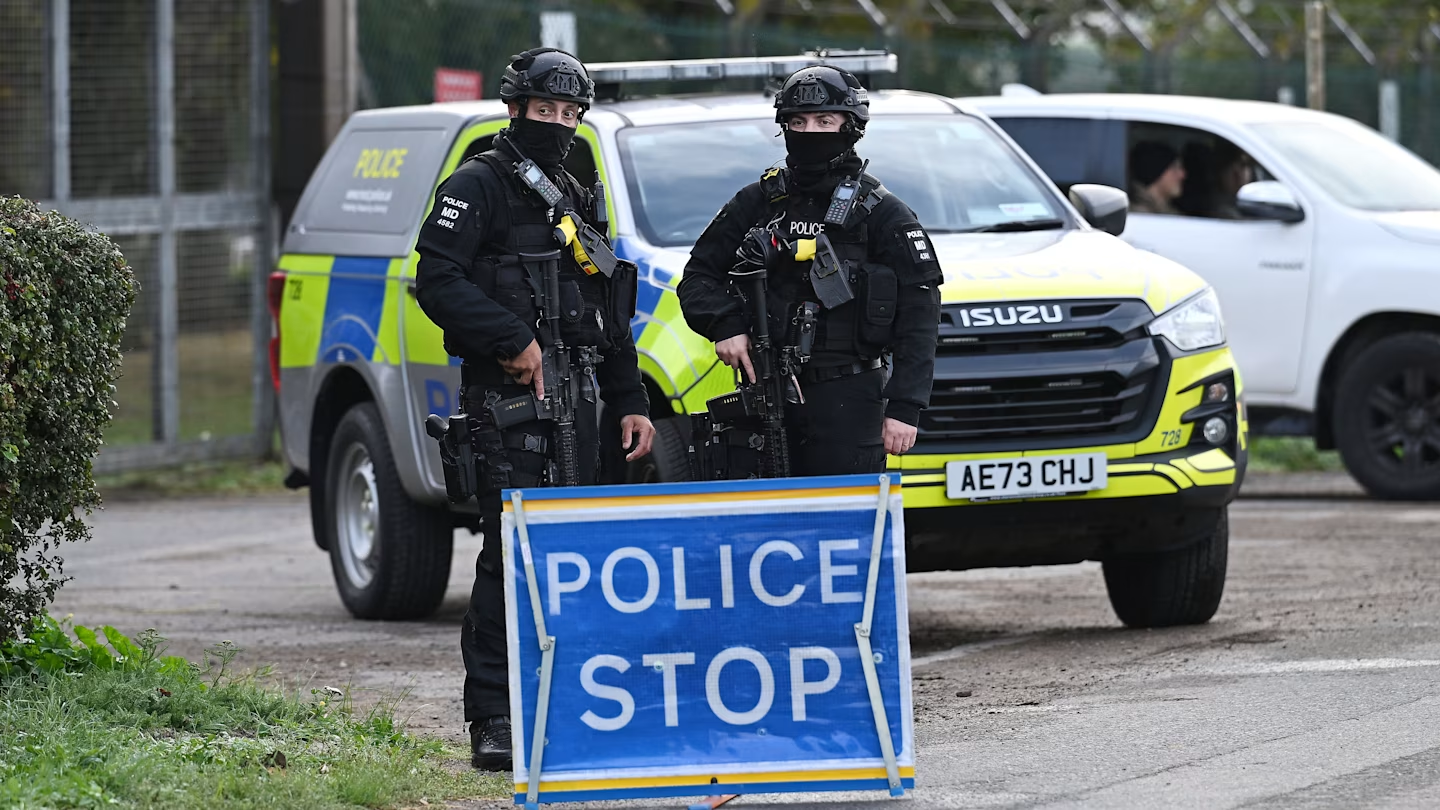
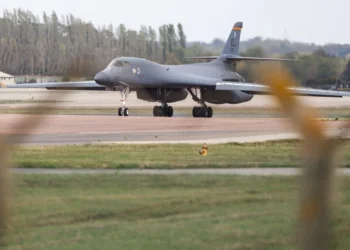
The allegations provide a new dimension to the investigation into the September incident near the Royal Air Force base. RAF Fairford is an important military facility in Gloucestershire and has played a role in operations involving the United States and Britain. The incident occurred in a nearby Cotswold village and prompted concerns about possible foreign-directed sabotage.
British political leaders had already expressed suspicions that Iran-linked actors were responsible. In mid-October, Prime Minister Andy Burnham told MPs that the Islamic Revolutionary Guard Corps, or IRGC, was almost certainly behind the incident. Home Secretary Shabana Mahmood also said the government’s assessment was that the activity was highly likely to have been coordinated by a known individual based in Iran and almost certainly directed by the IRGC.
The updated American indictment now names al-Hassani as a suspected organiser, although the allegations will require examination through the relevant legal processes. The British courts will ultimately determine the facts surrounding the RAF Fairford case and the responsibility of anyone charged in connection with it.
Two British men from London were charged by UK police approximately two weeks after the incident. They are accused of assisting Iranian intelligence in breach of the National Security Act 2023. The defendants have not yet entered pleas and remain entitled to the presumption of innocence unless and until their guilt is established in court.
A hearing at Westminster Magistrates’ Court last month provided further information about the alleged operation. Prosecutors told the court that the men travelling in vans had been directed towards Fairford by a handler known as Ali. The US indictment’s identification of that individual as Mohammed Ali al-Hassani has therefore attracted particular attention.
The document also connects al-Hassani and another alleged associate, Mohsen Mohajeri, to an earlier series of attacks linked to Hayi. Prosecutors allege that the two men worked with al-Saadi during a campaign in March and April targeting Jewish community locations in London.
A video obtained by US investigators reportedly shows Mohajeri and al-Hassani discussing London while examining a map of the capital on a laptop. During the conversation on 6 April, Mohajeri allegedly told al-Hassani that they needed to concentrate on the city. Prosecutors say several attacks subsequently took place in the capital.
One of the most serious allegations concerns an incident at premises associated with the educational charity Jewish Futures in Hendon, north London, on 17 April. According to the indictment, all three men were involved in directing an individual who allegedly carried out the attack. A man reportedly placed a plastic bag containing bottles of liquid outside the building before fleeing.
US prosecutors say video evidence recovered during the investigation shows a FaceTime call connecting the alleged organisers with the person at the location. The image from the call was reportedly displayed against the Hayi logo on a large screen. During the conversation, al-Hassani allegedly instructed the individual to use a lighter and throw one of the containers.
The alleged attack was relatively basic in its execution, but investigators believe it formed part of a wider campaign intended to intimidate Jewish communities. A series of arson incidents in London during March and April reportedly targeted synagogues and other sites connected to Jewish life. Such attacks can have consequences far beyond the physical damage to buildings, creating anxiety among residents and raising concerns about the safety of religious and community institutions.
Roger Macmillan, a former head of security at Iran International, an independent London-based television channel whose staff have faced threats and harassment from Tehran, has argued that the purpose of terrorism is not necessarily limited to causing large numbers of casualties. He said the objective can also be to spread fear and undermine a community’s sense of security.
That assessment reflects a wider concern among security experts that relatively small-scale attacks can serve broader political or psychological objectives. Arson, threats and targeted intimidation may be intended to create uncertainty, force communities to change their behaviour and demonstrate that individuals or organisations can be reached even in countries far from the alleged sponsors.
The investigation also raises questions about the continued activities of suspected organisers after al-Saadi’s arrest. While he was being held in New York, prosecutors allege that his associates remained capable of communicating and organising operations. Al-Hassani is accused of returning to the centre of the investigation in August, when he allegedly began organising preparations for the plot connected to RAF Fairford.
The US indictment does not establish guilt, and the allegations must be tested in court. Nevertheless, it suggests that investigators believe the network was not dependent on a single individual and that several alleged participants maintained the capacity to coordinate activities across international borders.
The case has broader implications for Britain’s national security. Although the UK’s direct involvement in US-led military action against Iran was reportedly limited to allowing American forces to use British airbases, the country has increasingly become part of the wider political and security tensions surrounding the conflict.
Military facilities, Jewish community organisations and other potential targets may face risks from individuals operating through networks that cross national boundaries. British authorities must therefore consider not only the physical protection of sensitive sites but also the identification of suspected organisers, financial links, communications and individuals who may be recruited to carry out attacks.
The latest disclosures are likely to increase pressure on security agencies to investigate possible foreign-directed activity and strengthen cooperation with international partners. At the same time, officials will need to distinguish carefully between proven criminal conduct, intelligence assessments and allegations that remain before the courts.

The RAF Fairford investigation is still developing, and the British legal process will be central to establishing what happened and who was responsible. The American indictment has provided investigators and the public with a clearer picture of the alleged network, but important questions remain about its structure, its international connections and the extent of any direction from Iran.
For Britain, the case highlights the possibility that international conflicts can create domestic security consequences far beyond the battlefield. As investigations continue on both sides of the Atlantic, authorities face the challenge of preventing further attacks while ensuring that allegations are examined through evidence and due legal process.
Related News:
 Second world war veterans honoured as King leads Remembrance Sunday
 Cartel crackdown raises fears of fresh violence
 US ‘Narco Boat’ Strikes Draw Global Outcry
 Murder Probe Continues After Arrest Release
 Israeli Strike in Southern Lebanon Kills Seven
 Ukraine Villagers Demand Answers After Deadly Arms Depot Strike
 Daughter Finds Bones in Parents’ Burned-Out Car
 Masked Protesters Bring Dover Port Traffic to Standstill
 UN expert urges UK to rethink Israel policy
 Europe’s democracies face a growing far-right threat
 Miliband Rejects Chief Rabbi’s West Bank Warning
 Patriot Platform Raises Concern Across Britain
 Royal Crown Branded Enslaved Africans in Britain’s Slave Trade
 Israel Accused of Undermining Palestinian Life
 Lib Dems Prepare for Election Amid Reform Challenge
 King Refers Jamaica Slavery Petition to Privy Council
 UK Plans New Centre to Counter Information Warfare
 UK Pauses Chagos Deal Amid US Opposition
 Elif Eralp Emerges as Berlin’s Next Political Force
 Three Die in Channel Crossing Attempt Near France
 Drumcree Talks Falter as Legal Challenge Deepens
 UK-France Returns Deal Faces Expiry as Talks Stall
 Green Party faces dispute over Zionism motion
 Hundreds of UK prisoners released early amid overcrowding
 Drumcree Talks End Without Agreement Ahead of Appeal
 Latin America women fear rollback of rights
 Former German Intelligence Chief Arrested Over Espionage
 Report Urges UK to Rethink Overseas Military Spending
 Royal Navy Sailor Charged With Alleged Spying
 Luton Residents Reject Claims of ‘No-Go Zones’
 Israel Promotes Film Challenging Controversial Gaza Documentary
 UK Gaza Refugee Route Criticised Over False Hope Claims
 UK Greens Face Crisis Over Zionism and Extremism Row
 Church of England Reparations Fund Faces Growing Backlash
 England and Wales Begin Second Wave of Early Prison Releases
 Farage Rejects Claims Reform Would Let Troops Shoot Migrants
 UK Urges Interpol to Reject Argentina’s Falklands Arrest Requests
 Jenrick Defends Farage Amid Fresh Reform Racism Claims
 France to Deploy 70,000 Police Amid Unrest Fears
 Serbia’s Student Victory Sparks a ‘Smell of Freedom’
 Trump’s Midterm Campaign Faces Racism and Political Backlash
 King Charles Faces Caribbean Slavery Apology Demands
 King Charles Faces Calls for Slavery Reparations Talks
 UAE Nominee Faces Backlash Over Sudan War Role
 Henry Nowak Family Rejects Political Use of His Death
 Exiled Journalists Defy Putin’s Growing Media Crackdown
 Seven Arrested After Bonfire Night Violence in Scotland
 Paraguay President Impeached and Arrested After Banking Crisis
 US Pushes for Final Russia-Ukraine Peace Deal
 Orbán’s Brother Detained in Smuggling Probe
 Ukraine Captures First Indonesian Fighter in Russian Army
 Zelenskyy Sees Peace Opportunity as US Envoys Meet Putin
 French Taxi Driver Cleared in David Lammy Theft Case After Fare Dispute
 Greene Pushes Epstein Files Amid Trump Fallout
 Gordon Brown urges court for crimes against children
 Relationship with Trump may be beyond repair, Starmer warned
 Ben Roberts-Smith Denies War Crime Allegations in First Statement
 UK Stands Firm on Falklands Amid US Rift
 Barrister Criticises Trial After Suicide Case Verdict
 Farage and Reform UK Reshape British Politics
 New Footage Revives Peter Falconio Mystery
 Bayeux Tapestry Revives Franco-British Ties
 Mahmood Warns Far Right Over Asylum Protests
 US Networks Suspend Trump White House Pool Coverage
 Democrat Says ICE Restricted Detention Camp Oversight
 Republican Senator Questions Trump Ad Spending
 London Facial Recognition Trial Ends With False Alert
 Badenoch Raises Prospect of 2027 UK Election
 French School Protests Escalate as 400 Schools Close
 US bombers leave RAF Fairford after terror threat
 Gosport Protesters Clash With Police Over Migrant Rescue
 Palace Rejects Funding Andrew’s Police Legal Challenge
 Trump Says He Deserves Nobel Peace Prize
 British Military School Abuse Victims Denied Justice
 India’s Voter Roll Crisis Sparks Nationwide Protests
 UK Bill Faces Warning Over Fayed Trafficking Victims
 Xi Jinping Tightens China’s Anti-Corruption Campaign
 Alan Jones Trial Paused for Melbourne Cup Viewing
 Early-Release Prisoners Face Rising Risk of Homelessness
 Iran Death Row Boxer Wins Prestigious Human Rights Award