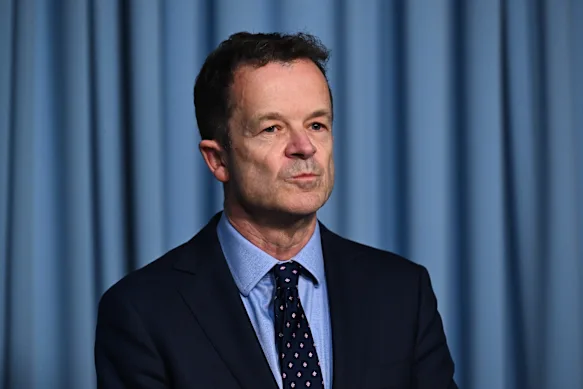
The New South Wales Liberal Party is facing growing uncertainty ahead of the March state election after former opposition leader Mark Speakman announced he would not seek re-election, becoming the eighth Liberal member of parliament to leave the contest. His departure has intensified questions about the party’s internal stability, electoral prospects and political direction, while current opposition leader Kellie Sloane has expressed confidence that the wave of retirements is probably over.
Speakman announced his decision in a late-night speech on Thursday, the final sitting day of the New South Wales Legislative Assembly before the state election. He confirmed that he would not contest his seat of Cronulla in Sydney’s south, which he has represented since 2011. His departure means that eight of the 24 sitting Liberal MPs will not seek another term, representing roughly one-third of the party’s current lower-house membership.

The other departing members are Jordan Lane, Mark Coure, Tanya Davies, Ray Williams, James Griffin, Alister Henskens and Mark Taylor. Their decisions have created a significant challenge for the opposition as it attempts to rebuild its parliamentary presence and prepare candidates for a closely watched election campaign.
Speaking to reporters on Friday, Sloane rejected suggestions that the departures reflected declining confidence in the Liberal Party’s ability to win the election. She described the outgoing members as a mixture of experienced politicians and representatives who had served for varying periods, arguing that their departures would create opportunities for new candidates and fresh ideas.
“We have people who have been in government before. We have people who have been in for a medium amount of time, and we’re going to have people with fresh ideas,” she said.
Sloane made the comments in the same room where, exactly a year earlier, Speakman had announced that he was stepping down as Liberal leader and handing the position to her. She said she had attempted to persuade him to remain in parliament but acknowledged that many of the departing members had already served for more than a decade. Lane, however, is a first-term MP, demonstrating that the reasons behind the decisions may differ.
The opposition leader also pointed to the substantial turnover that occurred before the 2023 state election, when several Liberal MPs retired. That election resulted in the Coalition losing government and surrendering nine seats. Despite the current departures, Sloane insisted that the party was not necessarily facing a repeat of that experience.
Asked whether she could guarantee that no further Liberal MPs would announce their retirement before the March election, she said she hoped the departures had ended. She added that she was “pretty sure” the process was complete, although she stopped short of offering an absolute guarantee.
The developments come at a difficult time for the NSW Coalition, which is facing pressure from both major political rivals and the growing influence of One Nation. Recent Resolve polling published by the Sydney Morning Herald suggests that the Coalition’s primary vote has fallen from 28 per cent around the time of last year’s leadership change to 23 per cent.
Labor’s primary vote has also declined, moving from 37 per cent to 30 per cent over the same period. One Nation, which Resolve began measuring separately in March, has meanwhile climbed to 26 per cent, placing it in a strong position in the increasingly competitive political landscape.
The figures highlight a changing political environment in New South Wales, where dissatisfaction with established parties appears to be creating opportunities for smaller political movements. For the Liberals, the challenge is not simply to replace departing parliamentarians but also to establish a clear political identity that can attract voters who may be considering alternatives.
Speakman addressed that challenge directly in his farewell speech, warning that the Liberal Party must resist the temptation to imitate either Labor or One Nation. He argued that the party faced an existential threat following its poor performance at the 2025 federal election and what he described as an emerging political wave benefiting One Nation.
The former leader said the Liberals should not become “Labor lite” or “One Nation lite”. Instead, he called on the party to remain committed to the principles of what he described as “Menzian Liberalism”, referring to the political tradition associated with former Australian prime minister Robert Menzies.
His remarks appeared to reflect concerns within the party about the direction of its political strategy, particularly as One Nation attracts attention from voters who may previously have supported conservative candidates. Speakman’s warning suggested that attempting to compete with the party by adopting similar positions could weaken the Liberals’ established identity rather than strengthen their electoral appeal.
He also challenged rhetoric surrounding national identity and cultural diversity. Referring to Pauline Hanson’s concept of a “monoculture”, Speakman argued that Australia’s multicultural character was one of the country’s greatest strengths.
He described Australia as one of the most successful multicultural societies in the world and rejected the suggestion that people who did not support a single cultural identity were somehow against the country. Diversity, he argued, should be recognised as a national strength and something that political leaders should seek to develop rather than undermine.
The comments were significant because they came from a senior Liberal figure at a time when the party is debating how to respond to One Nation’s growing support. They also highlighted a divide between those who believe the Liberals should move closer to the positions of populist conservative movements and those who want the party to maintain a more moderate political approach.
Speakman has had a lengthy career in public service and legal affairs. A barrister by profession, he served as New South Wales environment minister from 2015 to 2017 before becoming attorney general in 2017. He remained in the role until the Perrottet government lost office in the 2023 election.
As attorney general, he oversaw several significant legal reforms. His record included legislation making New South Wales the first Australian jurisdiction to criminalise coercive control, alongside the introduction of affirmative consent tests in criminal sexual assault trials. He also worked on reforms concerning criminal and civil cases involving child sexual abuse.
Following Dominic Perrottet’s resignation as Liberal leader, Speakman was selected to lead the party and the parliamentary opposition. He remained in the position until November 2025, when he stepped aside in favour of Sloane.
Reflecting on his leadership, Speakman acknowledged that the role is widely regarded as one of the most difficult positions in politics. Although his leadership ultimately came to an end, he said he had spent much of his time heading an opposition that was competitive with, and at times ahead of, the government in opinion polls.
His departure also comes amid political movement between the major parties. On Thursday, New South Wales Premier Chris Minns announced that Tanya Raffoul, a former Liberal councillor and parliamentary staffer, would contest the Liberal-held seat of Epping as a Labor candidate.
The announcement added another complication for the Liberals, particularly because Sloane said Raffoul had been discussing possible roles within the Liberal Party only two months earlier. The opposition leader accused her of pursuing personal ambition and criticised her decision to change political sides, while arguing that the move was ultimately a decision made by Minns.
The Labor premier’s party has sought to present Raffoul’s candidacy as part of a broader political realignment. NSW Treasurer Daniel Mookhey rejected the suggestion that One Nation was forcing Labor to become more like the Liberals, describing Raffoul’s political journey as one that reflected wider changes among people associated with the Liberal Party.
For Sloane, the immediate task is to convince voters that the opposition remains capable of forming government despite the loss of experienced parliamentarians and the pressure created by One Nation’s rising support. She has argued that the Coalition needs to win only six Labor-held seats to secure a minority government, suggesting that the election remains within reach.

However, the combination of declining polling support, parliamentary retirements and uncertainty over the party’s relationship with One Nation presents a difficult political test. The Liberals must also select candidates, establish a consistent message and reassure supporters that the party can offer a credible alternative to the current Labor government.
Speakman’s departure therefore represents more than the retirement of a long-serving MP. His final speech has placed the party’s ideological future at the centre of the election debate, raising questions about whether the Liberals can maintain their traditional political identity while responding to a changing electorate.
With the March election approaching, Sloane faces the challenge of turning the departures into an opportunity for renewal without allowing them to become a symbol of internal weakness. Her confidence that the exodus is over may offer some reassurance, but the party’s ability to recover support and define its political direction will ultimately be tested by voters.
Related News:
 One Nation Pledges $2,000 Baby Subsidy in Victoria
 Helen Haines Loses Both Legs After Alleged Attack
 Greens Face Leadership Test as Jordon Steele-John Misconduct Claims Leave Party in Limbo
 Hanson Takes Racial Discrimination Case to High Court
 Trump’s Revenge Drive Deepens GOP Divide
 Le Pen’s Popularity Holds Despite Conviction
 King Refers Jamaica Slavery Petition to Privy Council
 French Student Protests Escalate Into Violent Clashes
 Burnham Opens Door to Possible UK Return to EU
 Drumcree Talks Falter as Legal Challenge Deepens
 UK-France Returns Deal Faces Expiry as Talks Stall
 French School Protests Escalate as 400 Schools Close
 Latin America women fear rollback of rights
 NSW Police Bid Delays Inquiry Into Sydney Protest
 Trader Wins Unfair Dismissal Case After Overseas Work
 Navi Pillay Wins Nobel Peace Prize for Justice
 Three Convicted in Mexico Surfing Trip Murders
 Controversial Vaccine Trial Approved in Guinea-Bissau
 Trump Attacks Norway After Nobel Peace Prize Snub
 Delhi Braces for Youth Protests Over Voter Roll Dispute
 Delhi Detains Protest Leaders as Youth Rally Escalates
 Ten US Midterm Races That Could Defy Expectations
 Ohio Airports Become Key Hubs for ICE Deportation Flights
 Farage Rejects Claims Reform Would Let Troops Shoot Migrants
 Camera Discovery Triggers Navy Ship Investigation
 Brazil Cuts Working Week to 40 Hours in Lula Election Boost
 Gadi Eisenkot: Israel’s Anti-Netanyahu Challenger
 Talarico Faces Tough Voter Test in Texas Senate Race
 Cormann Warns Australia Against Populist Migration Caps
 Macron Condemns Violence as France Faces 2,400 Arrests
 Alberta Referendum Exposes Deep Divisions Over Independence
 Marseille Activist Defies France’s Powerful Drug Gangs
 Obama Warns Against Threat to Ilhan Omar’s Citizenship
 Suu Kyi Appears in Rare Photos After Royal Gift
 Helen Haines Loses Leg in Alleged Targeted Attack
 Zelenskyy Accuses US of Delaying Ukraine Missile Supplies
 Alberta Voters Reject Push for Canadian Independence
 Fifth Foreign Firm Withdraws From Jerusalem Cable Car Plan
 Milan Braces for Unrest as Debate Intensifies Over Lost Generation
 Taylor Faces Backlash Over Response to Haines Attack
 US Midterms Could Reshape Trump’s Second Term
 Serbia’s Student Victory Sparks a ‘Smell of Freedom’
 Trump’s Midterm Campaign Faces Racism and Political Backlash
 McKenzie Warns MP Safety Fears Could Weaken Democracy
 Albanese Vows Swift Action on MP Safety Threats
 Campbell Urges Australia to Defend Democratic Politics
 Albania Introduces $6,000 Fines for Violent Protests
 King Charles Faces Reparations Protests at Antigua Summit
 Bedouin Women Drive Historic Arab Election Gains
 Alan Jones Trial Paused for Melbourne Cup Viewing
 Judge Blocks Trump’s $100m Washington Arch Project
 English Mayors Warn Police Merger Could Weaken Local Policing
 EU Citizens Sue Home Office Over UK Residency Rights
 Stephen Miller’s Rise Puts Hardline Views at Centre of Power
 Victorian Labor Faces Election Crisis as Poll Slumps to 18%
 One Nation Candidate Apologises for Offensive Posts
 Rayner Approves Controversial Oxfordshire Asylum Centre
 Helen Haines Leaves Hospital After Double Amputation
 NSW Delays Tougher Rules on Property Underquoting
 Australia’s Election Funding Changes Face Fresh Backlash
 Twin Baby’s Death Raises Questions Over Home Birth Risks
 Farage and Reform UK Reshape British Politics
 Democrat Says ICE Restricted Detention Camp Oversight
 Republican Senator Questions Trump Ad Spending
 Madrid Tent Camp Grows as Spain Housing Crisis Deepens
 Badenoch Raises Prospect of 2027 UK Election
 Gosport Protesters Clash With Police Over Migrant Rescue
 South Africa Withdraws Directive on Asylum Applications
 Trump Names Katie Zachariah as Next White House Press Secretary
 Elizabeth Struhs Inquest Examines Child Safety Failures
 India’s Voter Roll Crisis Sparks Nationwide Protests
 UK Visa Refusal Threatens Baby’s Family Christmas
 Lula Supporters Make Final Push Ahead of Brazil Runoff
 UK Land Registry Plan Faces Opposition From Landowners
 Riot Police Deployed as Poland Court Row Escalates
 Hegseth Faces Growing Pressure After GOP Election Defeat
 Early-Release Prisoners Face Rising Risk of Homelessness
 Labor Minister Defends Chalmers Amid Budget Tensions
 Zelenskyy Sees Peace Opportunity as US Envoys Meet Putin
 Labor Faces Five Major Battles Before Year-End