Published: 23 October 2026. The English Chronicle Desk. The English Chronicle Online
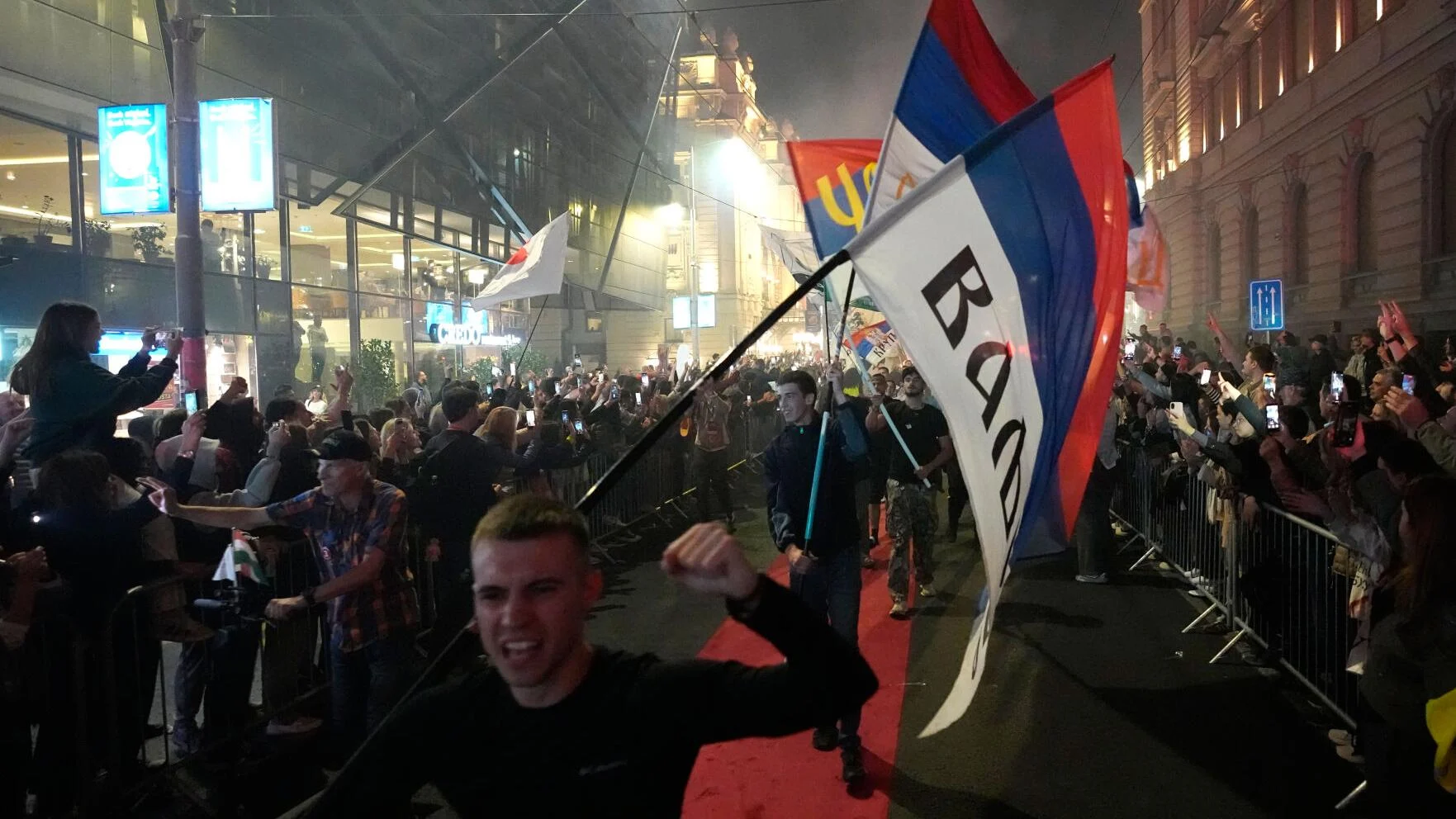
In an extraordinary display of popular mobilization that has transformed the political landscape of the Balkan nation, approximately 150,000 supporters filled the streets of central Belgrade on Thursday in a massive final demonstration organized by Serbia’s student-led opposition movement. The surge of public turnout marks a decisive moment ahead of Sunday’s pivotal parliamentary elections, where the youth-driven political coalition known as the Student List is attempting to dismantle more than fourteen years of entrenched dominance by President Aleksandar Vucic and his ruling right-wing populist Serbian Progressive Party.
The sweeping demonstration transformed Belgrade’s iconic Slavija Square into a sea of banners, flags, and ringing whistles as tens of thousands of citizens streamed in from across the capital and surrounding municipalities. The rally serves as the grand culmination of nearly two years of continuous civil unrest triggered by a tragic infrastructure failure in late 2024, when the concrete canopy of the newly renovated Novi Sad railway station unexpectedly collapsed, taking sixteen lives. The catastrophe, which the public widely attributed to institutional corruption, systemic negligence, and opaque state procurement practices, ignited the largest wave of popular demonstrations seen in Serbia since the historic overthrow of Slobodan Milosevic in 2000.

What originally began as a student-led campaign demanding full public transparency and a thorough criminal investigation into the railway collapse rapidly expanded into a nation-wide reform movement calling for a complete overhaul of the state’s governance. Operating as a leaderless collective, the student movement systematically built a political strategy that eventually forced the government’s hand. Facing unyielding social pressure, persistent university blockades, and weekly street marches, Vucic announced snap parliamentary elections last month, setting up what political analysts view as his most formidable electoral test since his party secured power in 2012.
The Student List movement has put forward a full slate of 250 candidates to contest all seats in the national parliament. In a sharp departure from traditional political parties, the slate is overwhelmingly composed of university professors, researchers, young professionals, civic leaders, and political outsiders who pledge to restore democratic norms, eliminate widespread corruption, and establish true judicial independence. During the Belgrade gathering, candidate Jugoslav Gasic, a prominent university professor, addressed the roaring crowd from the main stage, declaring that the movement represents an irreversible end to years of institutional humiliation and corporate cronyism, promising that youth-led civic integrity will triumph at the ballot box.
In stark contrast to the lively atmosphere at Slavija Square, Vucic held his final campaign rally inside a Belgrade sports hall, presenting himself as the sole defender of national stability and economic sovereign strength. Having resigned from the presidency to contest the prime ministership, the veteran leader delivered an impassioned speech warning his supporters against what he described as foreign-funded destabilization attempts aimed at dismantling the Serbian state. Vucic called on his electoral base to mobilize en masse to deliver a decisive victory over the student movement, framing the contest as a critical choice between national security and state-sponsored chaos.
The lead-up to the election has been accompanied by heightened political tensions and severe warnings from independent observers. Civil society groups and local watchdog organizations issued formal statements warning that the preconditions for free, fair, and transparent elections are severely lacking. Reports of systemic voter intimidation, aggressive smear campaigns across state-aligned media outlets, arrests of student activists, and the improper deployment of public resources to favor the ruling party have multiplied in the closing weeks of the campaign. Just days before the vote, state prosecutors in Belgrade confirmed the detention of six individuals accused of planning violent acts for election day, an announcement that opposition figures described as a heavy-handed tactic to intimidate voters and discourage turnout.
Despite the escalating pressure, the student-led rallies have maintained a remarkably peaceful character, characterized by creative protest methods, street art, and non-violent civic engagement. Tens of thousands of older citizens, family groups, and working professionals have joined ranks alongside the university population, expressing renewed optimism for the country’s democratic trajectory. Many attendees noted that for the first time in over a decade, the opposition presents a credible, unified alternative capable of challenging the ruling party’s iron grip on state institutions.

The sweeping demonstration converged on Belgrade’s central Slavija Square, turning the iconic intersection and surrounding avenues into an immense sea of banners, ringing whistles, and chanting crowds. The atmosphere was charged with optimism as young voters, families, university faculty, and elderly residents stood shoulder to shoulder. The rally represented the grand culmination of nearly two years of continuous, nationwide civil activism that began following a profound national tragedy in late 2024. On November 1, 2024, the concrete outdoor canopy of the newly renovated Novi Sad railway station violently collapsed, killing 16 people. The disaster was widely attributed by the public to systemic government corruption, botched construction modifications, and opaque public procurement practices, sparking the largest wave of street protests seen in Serbia since the historic overthrow of Slobodan Milosevic in 2000.
Because reliable, independent pre-election polling remains virtually nonexistent in Serbia, political experts remain divided on the potential outcome of Sunday’s ballot. However, international observers widely agree that the rise of a Gen-Z protest movement capable of translating widespread public anger into a structured electoral challenge marks a major geopolitical development in Southeastern Europe. As the final rallies conclude and quiet sets in ahead of polling day, voters across the country prepare to cast their ballots in a high-stakes election that could reshape Serbia’s democratic future.
Related News:
 Hungary election: Orbán faces biggest test amid scandal
 Former ICC prosecutor condemns US sanctions
 Irish Gangland Figure Fails in Dublin Election Bid
 Saudi Pact Raises Risk of Pakistan Entering War
 Japan PM Backs International Criminal Court
 French Student Protests Escalate Into Violent Clashes
 French School Protests Escalate as 400 Schools Close
 Germany Pledges €1bn Military Aid to Ukraine
 Lithuania Offers to Fund Permanent US Military Base
 France Suspends Stun Grenades After Student Injury
 Tanker Attacked Near Qatar as Hormuz Tensions Escalate
 EU Divisions Deepen Over Israel Policy
 Delhi Braces for Youth Protests Over Voter Roll Dispute
 Delhi Detains Protest Leaders as Youth Rally Escalates
 India’s Voter Roll Crisis Sparks Nationwide Protests
 Ukrainian Soldier Faces Trial Over Nord Stream Blast
 Gadi Eisenkot: Israel’s Anti-Netanyahu Challenger
 Macron Condemns Violence as France Faces 2,400 Arrests
 Suu Kyi Appears in Rare Photos After Royal Gift
 Zelenskyy Accuses US of Delaying Ukraine Missile Supplies
 Fifth Foreign Firm Withdraws From Jerusalem Cable Car Plan
 US Justice Department Files Lawsuit Against California Over Partisan Voting Maps
 Trump Deploys DHS to Charlotte in Major Arrest Operation
 Thousands Protest ICE Operations in Nationwide US Day of Action
 Italian Town Buys Mussolini Villa to Keep Away Fascist Fans
 Report Says Pezzullo Acted ‘Recklessly’ in Dealings
 Suspected Plot Targets Pipeline Before Hungary Vote
 Southeast Asia Turns to Russia Amid Energy Crisis
 Judge halts deportation of Yemeni refugees in US
 US Awaits Iran Reply on New Ceasefire Proposal
 Hormuz Talks Near Critical Stage
 Discontent grows around Putin amid war strain
 Le Pen to Run for President Despite Embezzlement Conviction
 Le Pen’s Popularity Holds Despite Conviction
 Houthis Strike Saudi Arabia as Middle East Tensions Rise
 Russian Missiles Intensify Pressure on Kyiv
 Ukraine Villagers Demand Answers After Deadly Arms Depot Strike
 Bayeux Tapestry Revives Franco-British Ties
 UK plans tougher Israel stance with settlement trade ban
 Europe’s democracies face a growing far-right threat
 Sweden Election Hangs on Far-Right Breakthrough
 Saudi Arabia Shuts Oil Pipeline After Drone Attack
 Israel Accused of Undermining Palestinian Life
 US Networks Suspend Trump White House Pool Coverage
 Greece Pushes for Parthenon Marbles Reunification
 Xi urges Trump to avoid US-China military conflict
 Republican Senator Questions Trump Ad Spending
 Madrid Tent Camp Grows as Spain Housing Crisis Deepens
 Burnham Opens Door to Possible UK Return to EU
 Drumcree Talks Falter as Legal Challenge Deepens
 New Maps Reveal Gaza’s Vast Destruction
 Bosnia’s Young People Look Beyond Election Hope
 Former German Intelligence Chief Arrested Over Espionage
 France Schools Protests Draw 250,000 as Police Clash
 Okinawa US Troops Face Curfew After Murder Case
 Israel Marks Three Years Since October 7 Attack
 South Korea Probes Fuel Shipments to Russia
 UK Mission in East Jerusalem to Remain Open
 Trump Says He Deserves Nobel Peace Prize
 Sri Lanka Ex-First Lady Arrested Over Donation Probe
 Houthi Missile Claim Sparks Riyadh Airport Disruption
 Israel Promotes Film Challenging Controversial Gaza Documentary
 Gaza War Deepens India’s Strategic Ties With Israel
 Turkey Rules Out Troops in Saudi Arabia’s Houthi Conflict
 Trump Rules Out Iran Attack Before US Elections
 Delhi Tightens Security Ahead of Election Protest
 Trump’s Russian Diesel Deal Sparks Ukraine Fury
 French Students Protest Poor Conditions in Paris Suburbs
 Glucksmann Urges French Left to Fight Far Right
 Brazil Court Scandal Threatens Lula as Bolsonaros Rise
 Greta Thunberg Backs French Students in School Protests
 Iranian Woman Faces Death Sentence Over Social Media Post
 Trump Rallies GOP as Senate Democrats Boost Key Races
 Serbia Leader Linked to Controversial Trump Tower Plan
 Albania’s Rama Defies Calls to Quit Amid Student Protests
 UK Could Rejoin EU Through a Switzerland Plus Deal
 Milan Luxury Stores Shut as Italy Plans Troop Deployment
 Zelenskyy Says US Failed to Warn Kyiv of Russian Strikes
 Japan’s Takaichi Faces a Crucial Second Year in Power
 Omar Claims US Raid on Residence Was Meant to Intimidate