Published: 07 November 2026. The English Chronicle Desk. The English Chronicle Online.
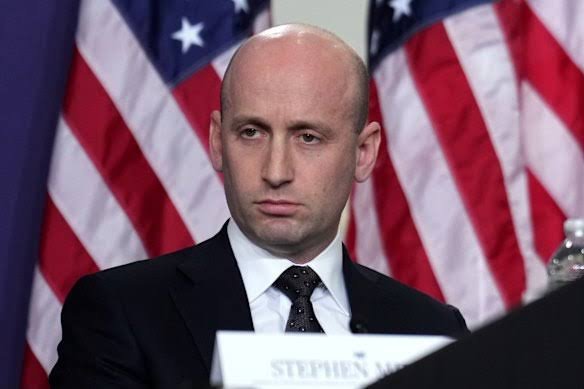
US President Donald Trump has appointed Stephen Miller, one of his closest and most controversial political advisers and the principal architect of his administration’s hardline immigration policies, as the next White House chief of staff. The announcement marks a significant change in the president’s inner circle and signals the possibility of a more confrontational approach towards political opponents following the Republican Party’s disappointing performance in the US midterm elections.
Trump confirmed the appointment on Friday, announcing that Miller would replace Susie Wiles, who is stepping down after serving as his chief of staff. Wiles made history as the first woman to hold the influential position and played a central role in managing Trump’s political operations during his return to the White House in January 2025.
The leadership change comes at a particularly sensitive moment for the administration. Republicans have suffered a major electoral setback, losing control of Congress and facing the prospect of intensified investigations and congressional oversight under Democratic leadership. Against this political backdrop, Miller’s promotion has attracted considerable attention in Washington, with Democrats interpreting the decision as evidence that Trump intends to strengthen his administration’s confrontational political strategy rather than pursue cooperation with the incoming congressional leadership.

In announcing the appointment through a social media statement, Trump described the 41-year-old Miller as one of his most trusted advisers and expressed confidence in his ability to manage the White House. The president praised his political understanding, management skills and long-standing loyalty, saying that Miller had been with him from the beginning of his political journey.
Speaking to reporters outside the White House on Friday, Trump said he wanted to make a change and believed Wiles had performed well in her position. However, he indicated that Miller was the right person to lead the administration into its next phase. The president described his new chief of staff as an effective political operator and capable manager who understood his priorities and governing approach.
Miller is expected to begin his new responsibilities on Monday. His appointment is particularly significant because he has already exercised substantial influence over the administration’s policy direction. As deputy chief of staff, he has been closely involved in developing and implementing some of the government’s most controversial immigration initiatives.
Wiles reportedly submitted her resignation on Thursday evening. In a public statement, she described her service to Trump as the honour of a lifetime and expressed pride in the administration’s achievements. She highlighted its efforts to strengthen border security, reduce taxes, support economic growth and advance the president’s America First agenda.
Although leaving her position, Wiles indicated that her commitment to Trump and his political mission would remain unchanged. Her departure nevertheless marks the end of an important chapter in the administration, particularly because she was widely regarded as one of the most influential figures in Trump’s political organisation.
Wiles had developed a reputation for maintaining discipline within an administration frequently characterised by internal disagreements and unpredictable decision-making. She managed Trump’s successful 2024 presidential campaign and was credited with improving coordination among his advisers while limiting damaging leaks from within the White House. During Trump’s first presidency, the White House went through four chiefs of staff in four years, making Wiles’s relatively long tenure particularly notable.
Despite generally avoiding public attention, Wiles occasionally attracted headlines for her unusually candid assessments of the president and his administration. Last year, interviews published by Vanity Fair drew considerable attention after she described Trump as having an “alcoholic’s personality”. Her comments offered an unusual glimpse into the private working environment of the president and the challenges faced by those responsible for managing his administration.
Her departure also follows a difficult personal period. Wiles publicly disclosed in March that she had been diagnosed with breast cancer and subsequently underwent months of treatment. Several months later, she indicated that there was no longer evidence of the disease. Her decision to leave the chief of staff position has therefore attracted attention beyond the immediate political implications.
Miller, meanwhile, brings a markedly different political personality to the role. He has been one of Trump’s most outspoken defenders and a central figure in the administration’s conservative policy movement. His political relationship with Trump dates back to the 2016 presidential campaign, when he worked as a speechwriter and helped shape the candidate’s political messaging.
Before joining Trump’s campaign, Miller worked as an adviser to former Alabama senator Jeff Sessions, who later became the first attorney general of Trump’s initial presidency. Miller subsequently emerged as one of the most influential voices on immigration and national identity within the administration.
During Trump’s first term, Miller played a leading role in developing policies that included separating migrant families at the US-Mexico border and imposing travel restrictions on several Muslim-majority countries. Those measures generated widespread protests, legal challenges and criticism from civil rights organisations and Democratic lawmakers.
His influence has continued during Trump’s second presidency. He has strongly supported stricter immigration enforcement, expanded border restrictions and efforts to end birthright citizenship. His political approach has made him one of the most polarising officials in Washington, attracting support from immigration hardliners while drawing fierce criticism from opponents who accuse him of promoting discriminatory and extreme policies.
The appointment immediately triggered strong reactions from Democratic leaders. House Democratic leader Hakeem Jeffries criticised Miller, describing him as a dangerous extremist and arguing that his involvement in government represented a threat to American democratic values. Jeffries suggested that Miller should be removed from the administration rather than promoted to one of its most powerful positions.
Senate Democratic leader Chuck Schumer also condemned the decision. He argued that Trump’s appointment demonstrated that the president had failed to understand the message delivered by voters during the midterm elections. Schumer described Miller as the architect of some of the administration’s most inhumane policies and warned that Democratic lawmakers would oppose his initiatives.
Other Democratic politicians expressed similar concerns, suggesting that the appointment could intensify political divisions between the White House and Congress. Vermont congresswoman Becca Balint argued that voters had rejected the administration’s controversial policies and questioned why Trump had responded by promoting one of the officials most closely associated with them.
Political observers have also interpreted the appointment as an indication of the president’s intentions for the remainder of his term. Chris Whipple, author of The Gatekeepers: How the White House Chiefs of Staff Define Every Presidency, told CNN that Miller’s selection could be viewed as an aggressive political statement. He suggested that the appointment reflected Trump’s willingness to pursue confrontation rather than compromise as relations with Congress become increasingly difficult.
Veteran Democratic strategist David Axelrod similarly expressed concern, arguing that the decision would disappoint those expecting Trump to moderate his approach following the Republican electoral defeat. Anthony Scaramucci, who briefly served as White House communications director during Trump’s first presidency, also questioned the political wisdom of elevating Miller at a time when the Republican Party was facing mounting challenges.
Miller’s own response suggested that he intends to remain firmly committed to Trump’s political agenda. Following the announcement, he described his appointment as an extraordinary honour and declared that his mission would be to support the president and defend the United States. His statement reinforced expectations that the administration would continue pursuing its existing priorities with considerable determination.
The timing of the appointment is particularly important because Democrats are preparing to assume greater influence over congressional proceedings. With Republicans losing control of Congress, the administration could face investigations into immigration enforcement, executive decisions and other controversial government policies. The new chief of staff will therefore be expected to coordinate the White House’s response to growing political pressure while maintaining support among Trump’s political allies.
Miller’s promotion also raises questions about the future balance of influence within the Republican Party. His hardline political approach could strengthen conservative factions but may further complicate efforts to attract moderate voters and rebuild public confidence following the midterm setback.

For Trump, the decision represents more than a routine personnel change. It places one of his most loyal and ideologically committed advisers at the centre of White House operations during a politically challenging period. While Wiles was widely associated with organisational discipline and campaign management, Miller is known for his aggressive policy positions and uncompromising political messaging.
Whether his appointment helps the president regain political momentum or deepens divisions in Washington remains uncertain. What is clear, however, is that Trump’s decision has sent a strong message about the direction he intends to pursue. Rather than signalling a major change in political strategy after the midterm elections, the elevation of Stephen Miller suggests that the administration is preparing for another period of intense political confrontation.
Related News:
 Trump Escalates Minnesota Immigration Surge Amid Rising Tensions
 Greenland Faces Pivotal Summit Over Arctic Power Struggle
 Thousands Protest ICE Operations in Nationwide US Day of Action
 Epstein Files Reveal Trump Officials’ Emails with Financier
 Thousands Protest ICE in New York Against Trump Deportation Campaign
 Clinton Testimony Erupts in Fiery Exchange
 Trump Faces Crisis as Iran Reopens Hormuz Tensions
 Charles Faces Trump Test in High-Stakes US Visit
 UK Stands Firm on Falklands Amid US Rift
 US states redraw maps after voting rights ruling
 Trump orders US troop pullout from Germany
 Judge halts deportation of Yemeni refugees in US
 Trump approval plunges amid Iran war fears
 Ohio’s Battle for Trust: Democrats Vying to Flip the Buckeye State
 Trump Threatens UN Budget Cuts as US Pushes ‘Trade Over Aid’ Agenda
 Trump warns Iran as Middle East tensions surge again
 US ‘Narco Boat’ Strikes Draw Global Outcry
 Ohio Primaries Set Stage for Crucial Midterms
 Afghan Families Left in Limbo Face Risk of Deportation
 Tensions Emerge in Netanyahu-Trump Alliance
 US Awaits Iran Reply on New Ceasefire Proposal
 Hormuz Talks Near Critical Stage
 Former ICC prosecutor condemns US sanctions
 Gunman Killed After White House Security Shootout
 House Curbs Trump’s War Powers in Rare Rebellion
 Houthis Strike Saudi Arabia as Middle East Tensions Rise
 Is America Ready for an AOC Presidential Run?
 Trump Calls Strait of Hormuz ‘American Territory’
 Trump Hardens Canada Trade Stance as Talks Stall
 Trump Calls Iran War ‘Small Potatoes’ Despite US Deaths
 Middle powers seek new alliances amid Trump era
 US Networks Suspend Trump White House Pool Coverage
 Trump Eyes Major Belarus Fertiliser Deal Amid Canada Trade Dispute
 Xi urges Trump to avoid US-China military conflict
 Lula accuses Trump of seeking control over Brazil
 Republican Senator Questions Trump Ad Spending
 Brazil Election Draws Religion Into Final Campaign
 Trump Immigration Policy Faces New Legal Tests
 Lula Warns of Bolsonaro Family Return as Brazil Votes
 Families Await USS Abraham Lincoln Homecoming
 Latin America women fear rollback of rights
 Flávio Bolsonaro takes shock lead in Brazil election
 Quebec separatists return to power without majority
 Canadian Veterans Condemn Trump Allies’ Military Remarks
 Argentina Protesters Resist Milei’s Land Sale Drive
 Vance Demands Iran Cut Nuclear Enrichment
 Trump Says He Deserves Nobel Peace Prize
 USS Lincoln Ends Record 265-Day Deployment
 Bolsonaro Gains Key Endorsement Ahead of Brazil Runoff
 Trump Rules Out Iran Attack Before US Elections
 Trump’s Russian Diesel Deal Sparks Ukraine Fury
 Trump Names Katie Zachariah as Next White House Press Secretary
 Brazil Court Scandal Threatens Lula as Bolsonaros Rise
 Millions Face Tougher Medicaid Rules From January
 Ohio Airports Become Key Hubs for ICE Deportation Flights
 Judge Blocks Trump White House Media Ban
 Ukraine Combat Units Face Sudden Starlink Restrictions
 Trump Rallies GOP as Senate Democrats Boost Key Races
 Talarico Faces Tough Voter Test in Texas Senate Race
 Trump’s Ambassador Picks Face Growing Controversy
 Serbia Leader Linked to Controversial Trump Tower Plan
 Trump Slams Ukraine Strikes as Russia Ceasefire Collapses
 Trump Halts New Russia Sanctions Amid Ukraine Rift
 Trump Fears Shock Democratic Senate Win in Kansas
 Omar Claims US Raid on Residence Was Meant to Intimidate
 Lula Supporters Make Final Push Ahead of Brazil Runoff
 Rubio Urges Cubans to Seize Moment for Change
 Flávio Bolsonaro Reportedly Leaves Brazil After Election Defeat
 Fed Expected to Hold Rates Steady Ahead of US Midterms
 Trump’s Global Policies Put Republicans at Risk
 Global Crises Test Diplomacy as Trump’s Policies Face Scrutiny
 G20 Photo Cancelled as Russia Deepens Western Rift
 Haley Stevens Backs Republican Rival in Michigan Senate Race
 James Talarico Makes History with Texas Senate Victory
 Hegseth Faces Growing Pressure After GOP Election Defeat
 Trump-Backed Republicans Suffer Major Midterm Defeats
 Paraguay President Quits After Major Bank Collapse
 Zelenskyy Seeks Urgent Help as Russia Hits Ukraine’s Power Grid
 Democrats Expand House Majority in Major Midterm Victory
 Judge Blocks Trump’s $100m Washington Arch Project