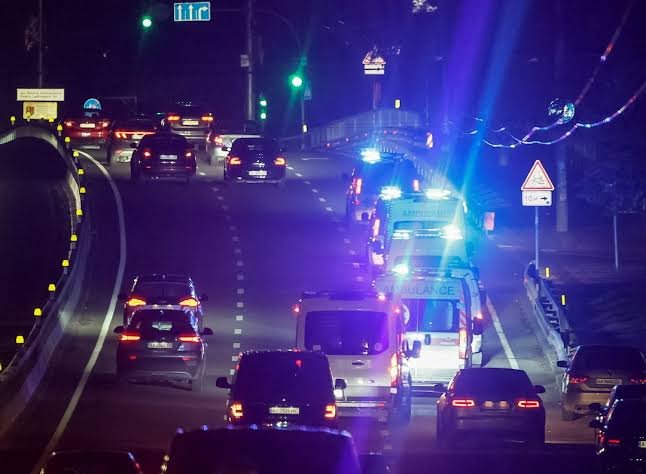
Ukraine’s capital, Kyiv, is facing one of its most serious energy crises since Russia launched its full-scale invasion, with repeated attacks on critical infrastructure leaving hundreds of thousands of residents struggling with prolonged electricity and water shortages. As winter approaches and temperatures are expected to fall further, growing public frustration is placing additional pressure on the city’s mayor, Vitali Klitschko, who is facing accusations of failing to prepare the capital adequately for another difficult winter.
The situation has exposed both the devastating consequences of Russia’s attacks on Ukraine’s energy infrastructure and the growing political divisions within the country’s leadership. While residents are struggling to maintain basic living conditions, disagreements between Kyiv’s municipal administration and President Volodymyr Zelenskyy’s central government have intensified over responsibility for the crisis.

Some neighbourhoods in Kyiv are reportedly receiving electricity for only around four hours a day. In particularly affected areas, residents have experienced power cuts lasting as long as 37 consecutive hours. The disruptions have affected households, businesses and essential services, creating uncertainty about how people will cope when freezing winter conditions place even greater demands on the remaining energy infrastructure.
The crisis has also raised concerns about heating, water supplies and the wider functioning of urban services. In a city where millions of people depend on electricity to maintain everyday activities, prolonged outages threaten not only economic activity but also public health and personal safety.
Maksym Bakhmatov, the outspoken head of Kyiv’s Desnianskyi district, has directly criticised both Russian President Vladimir Putin and the city’s mayor over the situation. His district, located on the eastern side of the Dnipro River, is home to approximately 600,000 people.
Speaking from his office, Bakhmatov identified Russia’s attacks as the primary cause of the crisis but argued that inadequate municipal management had made the situation considerably worse.
He said the city leadership had failed to establish sufficient alternative electricity generation facilities and had not taken the necessary steps to reduce Kyiv’s dependence on centralised energy infrastructure.
According to Bakhmatov, district administrations lack the financial resources to undertake major infrastructure projects independently. He believes that preparations for decentralised electricity generation and alternative energy supplies should have begun several years ago.
His criticism reflects wider concerns among local officials that Kyiv remains dangerously dependent on large energy facilities and interconnected networks that can be targeted during Russian military operations.
The recent attacks have demonstrated the vulnerability of this infrastructure. On 8 November, Russian strikes against civilian energy facilities contributed to widespread blackouts across Kyiv. The situation deteriorated further this week when Russian ballistic missiles struck two important bridges crossing the Dnipro River, raising concerns about the possibility of disrupting connections between the eastern and western parts of the capital.
The attacks form part of a broader Russian campaign targeting infrastructure that supports everyday civilian life. Ukraine has previously reported that Russian military operations have increasingly focused on power plants, substations and other facilities essential for maintaining electricity, heating and water supplies.
The strategic consequences could extend beyond temporary power shortages. If major infrastructure becomes sufficiently damaged, cities could face difficulties maintaining sanitation systems, distributing essential supplies and providing basic services. Such conditions could eventually force residents to leave affected urban areas.
Concerns about Kyiv’s winter preparedness have therefore become increasingly urgent. Critics argue that the municipal administration had sufficient warning that Russia might intensify attacks on the energy system and should have invested more heavily in alternative power generation, emergency facilities and contingency arrangements.
Public dissatisfaction has also become visible through protests. Around 500 people gathered along the central Khreshchatyk street in Kyiv last month, demanding accountability from Klitschko over alleged shortcomings in winter preparations, energy security and the availability of bomb shelters.
Some demonstrators displayed signs criticising the mayor’s leadership, including one that read, “Kyiv is in blackout – Klitschko will get knocked out.” The wording referred to his previous career as a world-renowned heavyweight boxing champion.
Although public demonstrations during wartime are relatively unusual in Ukraine, the gathering illustrated the extent of frustration among residents who fear that the capital may not be adequately prepared for the months ahead.
The political pressure has not been limited to municipal officials and protesters. President Zelenskyy has also publicly criticised Klitschko, arguing that the capital is experiencing particularly serious difficulties because of inadequate preparations at the city level.
In a statement last week, Zelenskyy said residents and businesses in Kyiv were facing prolonged electricity and water interruptions and described the situation as the most difficult among major Ukrainian cities.
He attributed the crisis partly to Russia’s attacks but also accused the municipal administration of failing to implement necessary preparations for the heating season.
The president’s remarks represented a direct challenge to the mayor’s leadership at a particularly sensitive moment for Ukraine. With the country facing continued military pressure, disagreements between national and municipal authorities risk creating additional uncertainty over the coordination of emergency responses.
Klitschko strongly rejected the criticism, questioning how the Kyiv administration could independently prevent Russian military operations against Ukraine’s energy infrastructure.
He argued that the central government was using the crisis to undermine his political position rather than focusing on the responsibilities of national authorities. He also accused the government of manipulating public perceptions of the situation in Kyiv.
According to Klitschko, the central government’s efforts to weaken his position could ultimately damage the city’s interests at a time when cooperation between different levels of government is essential.
The dispute reflects a long-running political rivalry between Zelenskyy and Klitschko. Political analyst Volodymyr Fesenko described their relationship as deeply personal, with tensions dating back to the period before Zelenskyy became president in 2019.
Before entering politics, Zelenskyy was a comedian who frequently satirised prominent Ukrainian public figures, including Klitschko. Their relationship remained strained after Zelenskyy’s election, and the two have reportedly not met personally since he assumed the presidency.
Fesenko acknowledged that Kyiv appeared less prepared than some other Ukrainian cities, particularly Kharkiv, where authorities had made greater efforts to develop alternative energy arrangements and emergency infrastructure.
He pointed to shortcomings in the construction of bomb shelters and the implementation of previously announced municipal projects. However, he also emphasised that the central government remained responsible for defending major infrastructure, including important bridges and large energy facilities.
The analyst warned that removing Klitschko’s authority over sections of the city’s infrastructure could become another source of political tension. Although such possibilities had reportedly been considered previously, it remained unclear whether the presidential administration intended to pursue them during the current crisis.
He said there was a political risk to the mayor’s position but questioned whether Zelenskyy would want to create further instability when Ukraine was already dealing with serious military and economic challenges.
The difficulties facing Kyiv are also being compared with conditions in Kharkiv, a major city located approximately 30 kilometres from the Russian border. Despite facing a particularly severe military threat, Kharkiv has been working towards reducing its dependence on centralised energy networks.
Mayor Ihor Terekhov said his city faced enormous difficulties, including a critical shortage of funding for heating and energy preparations. He described the financial challenge as catastrophic but explained that local authorities were attempting to develop a more decentralised system.
The strategy involves creating what officials describe as energy islands. These are smaller, independent electricity generation facilities capable of supplying essential services when the wider national grid experiences disruptions.
The proposed arrangements include fuel-powered generators, modular heating boilers and alternative systems designed to keep important municipal facilities operational during emergencies.
Such infrastructure could help hospitals, public services and other essential facilities continue functioning even when major electricity networks are damaged. However, establishing these systems requires substantial investment, technical expertise and considerable time.
Terekhov acknowledged that the process was both expensive and complicated, particularly as cities must continue responding to immediate wartime needs while preparing for future attacks.
The experience of Kharkiv has intensified questions about why Kyiv has struggled to establish comparable arrangements on a sufficiently large scale. Bakhmatov argues that the capital should have invested in alternative energy facilities much earlier, particularly given the repeated attacks on Ukrainian infrastructure throughout the war.
In Desnianskyi, the challenges are becoming increasingly personal. Bakhmatov’s office was dark during his interview, illustrating the impact of the energy shortages on ordinary municipal operations. He also expressed concern about the lack of a workable evacuation strategy for the district’s approximately 600,000 residents.
The district’s population is comparable to that of a major Ukrainian city, making the absence of comprehensive emergency arrangements particularly worrying. If electricity, heating and water supplies deteriorate further, local authorities could face significant difficulties supporting residents through the winter.
Bakhmatov said the district urgently needed generators, food supplies, electricity stations and other essential assistance. His appeal reflected the immediate humanitarian dimension of a crisis increasingly dominated by political disagreements.
Even among protesters demanding Klitschko’s resignation, there was concern that public demonstrations should not be interpreted as helping Russia weaken Ukraine’s political stability. One demonstrator, identified as Maryana, said Ukrainians had learned that meaningful changes often occurred only when a crisis became unavoidable.
Her comments reflected the anger of residents who believe that authorities frequently respond to problems only after their consequences become severe.

For Kyiv’s population, however, the immediate priority is not the political rivalry between the president and the mayor. Families need reliable heating, electricity, drinking water and access to essential services as temperatures decline.
Russia’s continued attacks have made these challenges more difficult, while disagreements within Ukraine’s leadership have complicated the search for an effective response. The coming winter will test the resilience of the country’s energy infrastructure, the coordination between national and local authorities and the ability of communities to survive prolonged disruptions.
Ultimately, Kyiv’s crisis demonstrates how Russia’s attacks on civilian infrastructure can create consequences extending far beyond physical damage. They place enormous pressure on local governments, intensify political disputes and threaten the everyday lives of ordinary citizens. Whether the capital can strengthen its emergency energy arrangements before the harshest winter conditions arrive will be a crucial test for Ukraine’s leadership.
Related News:
 Denmark Seeks EU-Wide Ban on Fast-Growing Turbo Chickens
 Norway Doubles Down on Oil and Gas for Europe Energy Security
 Germany Pledges €1bn Military Aid to Ukraine
 Spain Sets Snap Election as Housing Crisis Deepens
 Pacific Climate Summit Draws Limited Global Leaders
 Tanker Attacked Near Qatar as Hormuz Tensions Escalate
 Turkey Rules Out Troops in Saudi Arabia’s Houthi Conflict
 France Faces Debt Crisis as Protests and Markets Clash
 Trump Slams Ukraine Strikes as Russia Ceasefire Collapses
 Milan Luxury Stores Shut as Italy Plans Troop Deployment
 Zelenskyy Accuses US of Delaying Ukraine Missile Supplies
 Milan Braces for Unrest as Debate Intensifies Over Lost Generation
 Netanyahu Faces Defining Election Test as Israel Divides
 Ukraine Peace Talks Set to Resume in November
 US Strikes Iran Island as Vance Signals Hope for Peace
 Australia Reviews UK Visa Rules Amid Worker Influx
 South Korea Plans Expanded Naval Operations Near Hormuz
 Qatar Pushes Iran Deal to Reopen Strait of Hormuz
 New Zealand’s Opportunity Party Challenges Populist Politics
 Southeast Asia Turns to Russia Amid Energy Crisis
 Ukraine Urges UK to Seize Russian Oil Tankers
 Capitalism ‘Suicidal’, Warns Petro at Climate Summit
 US Awaits Iran Reply on New Ceasefire Proposal
 Hormuz Talks Near Critical Stage
 Pope Meets Families in Italy Toxic Waste Zone
 Millions Gather for Khamenei’s Six-Day State Funeral
 Houthis Strike Saudi Arabia as Middle East Tensions Rise
 Israeli Strike in Southern Lebanon Kills Seven
 Burnham unveils £65m drought aid for farmers
 Russian Missiles Intensify Pressure on Kyiv
 Nepal Tunnel Rescue Offers Hope Amid Flood Devastation
 Saudi Arabia Shuts Oil Pipeline After Drone Attack
 Greece Pushes for Parthenon Marbles Reunification
 Xi urges Trump to avoid US-China military conflict
 Nepal PM calls deadly flood a global climate warning
 Saudi intercepts Houthi missiles as oil fears grow
 Madrid Tent Camp Grows as Spain Housing Crisis Deepens
 French Student Protests Escalate Into Violent Clashes
 Burnham Opens Door to Possible UK Return to EU
 New Maps Reveal Gaza’s Vast Destruction
 French School Protests Escalate as 400 Schools Close
 Bosnia’s Young People Look Beyond Election Hope
 Israel Marks Three Years Since October 7 Attack
 South Korea Probes Fuel Shipments to Russia
 Houthi Missile Claim Sparks Riyadh Airport Disruption
 Israel Promotes Film Challenging Controversial Gaza Documentary
 Gaza War Deepens India’s Strategic Ties With Israel
 Trump Rules Out Iran Attack Before US Elections
 EU Divisions Deepen Over Israel Policy
 Trump’s Russian Diesel Deal Sparks Ukraine Fury
 Hanson Attacks Taylor as Australian Conservatives Clash
 Australia Rejects Russian Fuel as Trump Strikes Deal
 Delhi Detains Protest Leaders as Youth Rally Escalates
 French Students Protest Poor Conditions in Paris Suburbs
 Greta Thunberg Backs French Students in School Protests
 Millions Face Tougher Medicaid Rules From January
 Gadi Eisenkot: Israel’s Anti-Netanyahu Challenger
 Macron Condemns Violence as France Faces 2,400 Arrests
 Zelenskyy Says US Failed to Warn Kyiv of Russian Strikes
 Japan’s Takaichi Faces a Crucial Second Year in Power
 UN Warns World Must Cut Emissions by 18% by 2030
 Melting Dolomites Glaciers Reveal 250 WWI Explosives
 UK Land Registry Plan Faces Opposition From Landowners
 Gulf States Push Multi-Part Deal to Avert US-Iran War
 Novaya Gazeta to Close After Russian Government Pressure
 Global Crises Test Diplomacy as Trump’s Policies Face Scrutiny
 Bedouin Women Drive Historic Arab Election Gains
 German Politician Hubert Aiwanger Found Dead in Berlin
 Zelenskyy Seeks Urgent Help as Russia Hits Ukraine’s Power Grid
 Paris Climate Agreement Faces a Critical Test After 10 Years
 Labor Minister Defends Chalmers Amid Budget Tensions
 Burnham’s Christmas Homelessness Pledge Faces Uncertainty
 US Treasury Chief Moves to Military Base Over Iran Threat
 Zelenskyy Sees Peace Opportunity as US Envoys Meet Putin
 Iran Death Row Boxer Wins Prestigious Human Rights Award
 Ilse Aigner Set to Make German History as First Female President
 Eisenkot Accuses Netanyahu of Racist Anti-Arab Campaign
 Trump, Xi and Putin Face Fears of a New Yalta
 Canada May Turn to Chinese Automakers if US Talks Fail
 Ukraine Missile Strike Cripples Key Crimea Bridge