Published: 08 October 2026. The English Chronicle Desk. The English Chronicle Online.
High school protests across France continued on Thursday despite Prime Minister Sébastien Lecornu promising to produce a plan to address the country’s education problems by the end of the month, as students demanded faster and more concrete action from the government.
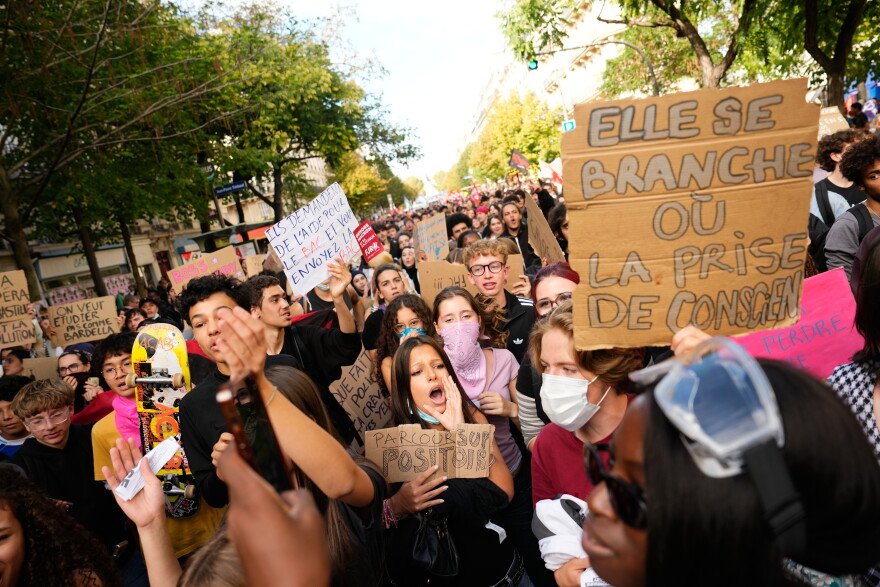
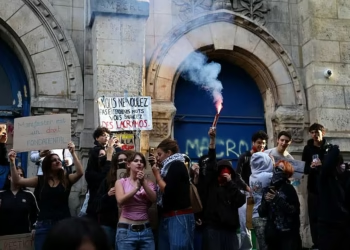
Nearly 400 educational establishments were reported to be affected by disruptions as students gathered in cities including Paris, Nantes, Bordeaux and other parts of the country. Demonstrators have made clear that the government’s promise has not been enough to persuade them to end their mobilisation, with many insisting that they want immediate measures rather than another timetable for future reforms.
The demonstrations have become an increasingly visible expression of frustration among young people over conditions in the French education system. Students say they want the government to respond directly to their concerns and have rejected what they view as a delayed response from political leaders.

Lecornu sought to acknowledge the growing anger in a televised address on Wednesday evening. He said France could not remain indifferent to the concerns being raised by students and recognised that their frustration had genuine causes. However, he stopped short of announcing major immediate measures, instead promising that the government would present a plan before the end of October.
That approach has failed to calm the demonstrations. Students have argued that the government should engage with their demands sooner and demonstrate through concrete action that it is prepared to address the problems facing schools.
“We want real action, and until we get it, we’ll keep mobilising,” a student named Marilou in Fontainebleau told AFP, reflecting the determination among some protesters to continue their campaign.
The government is now attempting to open a more direct dialogue with student representatives. Education Minister Édouard Geffray has invited representatives from the three leading high school student associations to talks at the education ministry later on Thursday.
The meeting could provide an opportunity for both sides to reduce tensions, but expectations remain uncertain. The demonstrations have already spread across numerous locations, and the strength of public support suggests that the dispute is no longer confined to students and schools.
A recent opinion poll indicated that a majority of the French public broadly supports the students’ demands. Around 55% of those surveyed also backed the demonstrations themselves, although the country remains divided over whether the protests should continue.
The public response is important for the government because prolonged demonstrations could add another layer of political pressure at a time when France is already dealing with significant economic and social challenges. Lecornu’s administration is facing questions over education, public finances, fuel costs and wider economic conditions, while the latest protests have brought young people into the centre of national debate.
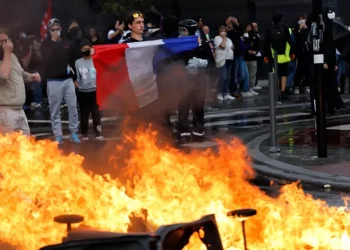
Scenes from Paris on Thursday illustrated the increasingly tense atmosphere surrounding the mobilisation. Students blocked roads outside schools, built barricades and confronted riot police deployed to monitor the demonstrations. Tear gas was also reported during one blockade action near a Paris high school.
The protests have not been restricted to the capital. Students and young people have taken part in demonstrations in cities such as Nantes and Bordeaux, while similar actions have appeared elsewhere. The geographical spread of the protests indicates that dissatisfaction is not limited to one particular school or region.
The movement has also begun to resonate beyond France. Student protests in Belgium, particularly in Liège and Brussels, have raised concerns over the possibility of violence and disorder. In Liège, local reports indicated that more than 200 people had been arrested in connection with student protests during October.
Authorities in Liège have responded by imposing restrictions on public gatherings, including a ban on gatherings involving more than three people until 16 October. The measures reflect growing concern among officials about clashes and damage associated with some demonstrations.
Belgian Foreign Minister Bernard Quintin has accused hard-left activists of infiltrating protests in Liège and contributing to property damage. His allegations have been rejected by Julien Doeche of the Liège Antifascist Front, who described Quintin’s claims as unfounded.
The dispute over the character of the Belgian protests mirrors a broader question surrounding demonstrations across Europe: whether authorities should focus primarily on the demands being raised by young protesters or on incidents of disorder occurring alongside them.
In France, the government appears keen to maintain a distinction between legitimate student concerns and any acts of violence or disruption. The planned talks with student associations could therefore become an important test of whether the authorities can establish a channel for negotiation before the protests become more entrenched.
The demonstrations come against a backdrop of wider social and economic uncertainty in France. Concerns over public spending, living costs and the quality of public services have contributed to a broader atmosphere of frustration. Education has emerged as one of the areas where those concerns are particularly visible because students and teachers experience the pressures of the system directly.
For many young people, the issue extends beyond individual school conditions. Questions about classroom capacity, educational resources, staffing and the future of the public education system are tied to wider concerns about opportunities and social mobility.
The government therefore faces a delicate balancing act. Lecornu must demonstrate that the administration is listening without appearing to surrender control of the policy agenda. At the same time, waiting until the end of the month to unveil a comprehensive plan risks leaving protesters dissatisfied for several more weeks.
The education minister’s meeting with student representatives may offer a first opportunity to narrow that gap. If students believe their concerns are being taken seriously, the talks could help reduce the pressure on schools and streets. If the discussions fail to produce meaningful commitments, however, the mobilisation could continue to grow.
The protests are also occurring as other parts of Europe face their own social tensions. The situation in Belgium demonstrates how quickly youth-led demonstrations can cross borders when concerns about education, spending and government reforms become connected.
Elsewhere in Europe, the day was marked by other developments that highlighted the continent’s broader political and security challenges. In eastern Ukraine, at least 30 people were reported killed in a Russian strike near a public transport stop in Kramatorsk, with at least 18 others injured. Regional authorities subsequently suspended public transport operations in the area, warning that buses and other public services could become attractive targets.
The attack added to an already difficult European security environment, while political leaders continued to deal with domestic disputes and economic pressures.
In Poland, meanwhile, another school knife attack was reported, leaving one person dead and two injured. A 15-year-old boy was apprehended at the scene. The incident followed another school stabbing the previous day in which nine people were injured, prompting Polish police to announce increased checks around schools.
The contrasting developments across Europe underline the range of pressures facing governments and communities. In France and Belgium, young people are taking to the streets over education and public policy, while elsewhere authorities are confronting serious questions about school safety and security.
For France, however, the immediate challenge remains the student protests. The government’s promise of a plan by the end of October has provided a political deadline, but it has not provided an immediate solution.
The coming days will reveal whether dialogue can replace confrontation. The talks between Education Minister Édouard Geffray and student representatives could determine whether the protests begin to lose momentum or become a broader movement demanding fundamental changes to the education system.

For the students continuing to demonstrate, the message remains straightforward: promises alone are not enough. They want visible action, meaningful engagement and evidence that their concerns are being addressed now rather than postponed until a future political plan.
As demonstrations continue across France, the government’s response will be closely watched not only by students and teachers but also by a public increasingly concerned about the direction of the country’s education system. Whether Lecornu can turn his promise into a credible programme of reform may determine whether the current wave of protests fades or becomes a defining political challenge of the autumn.
Related News:
 French Student Protests Escalate Into Violent Clashes
 French School Protests Escalate as 400 Schools Close
 Canadian astronaut French words ease language row
 France Faces Record Presidential Crowded Race Amid Far-Right Surge
 Elif Eralp Emerges as Berlin’s Next Political Force
 Madrid Tent Camp Grows as Spain Housing Crisis Deepens
 Bosnia’s Young People Look Beyond Election Hope
 Spain Sets Snap Election as Housing Crisis Deepens
 France Schools Protests Draw 250,000 as Police Clash
 France Suspends Stun Grenades After Student Injury
 UK University Suspends Human Rights Research Following Pressure from China
 UK University Faces Counter-Terror Probe Over China Pressure
China-critical UK academics face ‘extremely heavy’ pressure from Beijing
UK University Faces Counter-Terror Probe Over China Pressure
China-critical UK academics face ‘extremely heavy’ pressure from Beijing
 EU weighs response amid Greenland tariff crisis with Trump
 EU Says US Ties Have Suffered ‘Big Blow’ After Greenland Crisis
 Italian Town Buys Mussolini Villa to Keep Away Fascist Fans
 Hungary election: Orbán faces biggest test amid scandal
 NHS Safety Fears as Nurses Cover Doctor Gaps
 Athens Mayor Moves to Tackle Overtourism Crisis
 RAF Typhoons scrambled amid Russian drone threat near Nato
 Global order shifts amid Trump-era turmoil
 Ceasefire Standoff Deepens in Ukraine War
 Norway Doubles Down on Oil and Gas for Europe Energy Security
 Putin Declares Russia Victory at Scaled Victory Day Parade
 Hybrid village stores fight rural decline
 Trump’s Revenge Drive Deepens GOP Divide
 Pope Meets Families in Italy Toxic Waste Zone
 Zelenskyy warns over Oreshnik threat as Kyiv hit
 Former ICC prosecutor condemns US sanctions
 Irish Gangland Figure Fails in Dublin Election Bid
 Farage and Reform UK Reshape British Politics
 Starmer Leadership Under Pressure After Setbacks
 Deadly Russian Air Raids Strike Across Ukraine
 UK Nations Brace for Potential Breakup Amid Reform Surge
 Le Pen to Run for President Despite Embezzlement Conviction
 Le Pen’s Popularity Holds Despite Conviction
 Dreyfus Statue Finally Gets Permanent Paris Home
 England and Norway Fans Turn Miami Into World Cup Carnival
 Is America Ready for an AOC Presidential Run?
 Five Years of Taliban Rule Leave Afghanistan in Crisis
 Russian Missiles Intensify Pressure on Kyiv
 Ghent Professors Questioned Cofnas Appointment
 Exeter Approves Saudi Military Training Partnership
 Ukraine Villagers Demand Answers After Deadly Arms Depot Strike
 Green Leader Targets Starmer’s Former Seat
 Bayeux Tapestry Revives Franco-British Ties
 Masked Protesters Bring Dover Port Traffic to Standstill
 Susan Sarandon Says Palestine Stand Costs Roles
 AfD election surge leaves Magdeburg residents deeply uneasy
 British widow says deportation from Sweden feels like a death sentence
 Europe’s democracies face a growing far-right threat
 Sweden Election Hangs on Far-Right Breakthrough
 Germany’s Far Right Surge Puts Merz Under Pressure
 Lib Dems Prepare for Election Amid Reform Challenge
 Macron and Carney deepen France-Canada ties
 King Refers Jamaica Slavery Petition to Privy Council
 Greece Pushes for Parthenon Marbles Reunification
 Russia Targets Ukraine’s Digital Economy With Strikes
 National Rally makes historic gains in French Senate
 Three Die in Channel Crossing Attempt Near France
 Burnham Opens Door to Possible UK Return to EU
 Drumcree Talks Falter as Legal Challenge Deepens
 UK-France Returns Deal Faces Expiry as Talks Stall
 Green Party faces dispute over Zionism motion
 Senators warn US childcare policies could raise costs
 Polanski Says Leadership Not Tied to By-election Result
 Families Await USS Abraham Lincoln Homecoming
 Germany Pledges €1bn Military Aid to Ukraine
 Latin America women fear rollback of rights
 Pacific Climate Summit Draws Limited Global Leaders
 Ukraine claims strikes have crippled Russia’s oil refining
 Lithuania Offers to Fund Permanent US Military Base
 Former German Intelligence Chief Arrested Over Espionage
 France Braces for Major Student Protest Mobilisation
 WHO Says Russia Plague Epidemic Risk Remains Low
 EU-China Talks Target Surge in Hybrid Car Imports
 Tanker Ablaze After Drone Strike Near Sochi
 Holborn and St Pancras Vote Tests Labour and Greens
 France Urges UK to Consider Returning to EU
 USS Lincoln Ends Record 265-Day Deployment