Published: 24 October 2026. The English Chronicle Desk. The English Chronicle Online
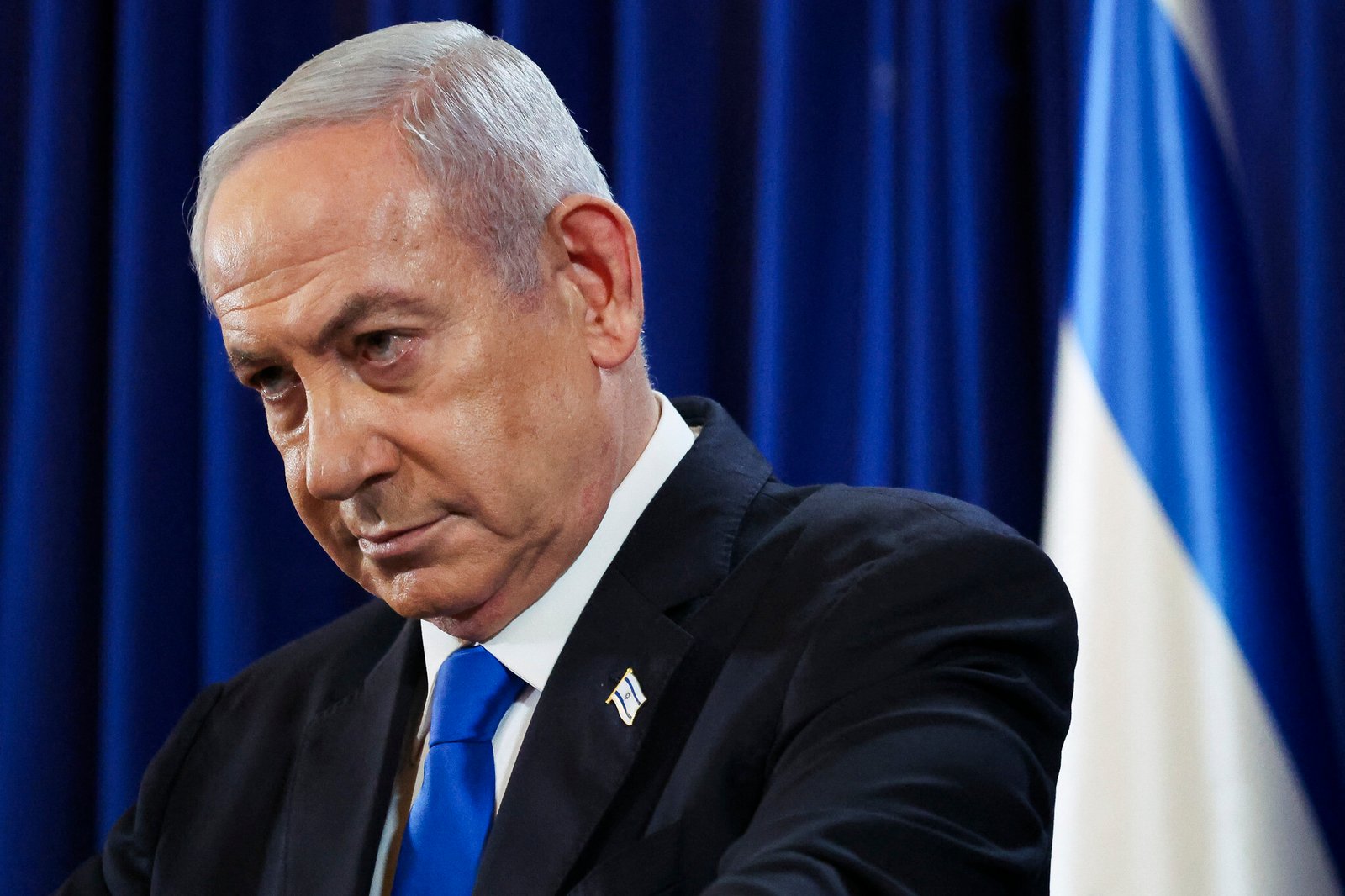
Benjamin Netanyahu has spent three decades shaping Israeli politics, surviving political crises, wars, scandals, elections and repeated challenges from opponents who once appeared capable of ending his long career. As Israel heads towards another fiercely contested general election, however, the political contest has once again become less about competing visions of the country and more about one central question: whether Benjamin Netanyahu can remain prime minister.
At a campaign rally in Modi’in, the absence of Netanyahu was almost as striking as the presence of Gadi Eisenkot, the former Israel Defense Forces chief of staff who has emerged as one of the leading challengers to the veteran prime minister. Supporters gathered to hear Eisenkot speak, but much of the political conversation still revolved around the man they want to replace.
Eisenkot represents almost everything Netanyahu’s opponents believe Israeli politics needs after years of increasingly bitter division. His political image is built around military experience, responsibility, directness and personal integrity rather than theatrical speeches or aggressive campaigning. His Yashar party, whose name suggests honesty and straightforwardness, has deliberately positioned itself as the opposite of what many critics describe as Netanyahu’s highly sophisticated political machine.

At the rally, supporters repeatedly described Eisenkot as someone who would focus on governing rather than political performance. For voters exhausted by years of political confrontation, that distinction has become an important part of his appeal.
Yet Eisenkot faces a formidable challenge. Netanyahu’s influence extends far beyond his own Likud party. Israeli politics has increasingly become organised around two broad camps: those who support Netanyahu and those who want him gone. Even politicians who are ideologically close to the nationalist right can find themselves in the anti-Netanyahu camp because of personal and political disputes with the prime minister.
Former prime minister Naftali Bennett and Avigdor Lieberman, for example, have both spent years in Netanyahu’s political orbit before breaking with him. Their opposition to Netanyahu illustrates how deeply the prime minister has shaped political identities across the Israeli spectrum.
On the far right, meanwhile, Netanyahu remains the central figure despite the growing influence of figures such as Itamar Ben-Gvir. Supporters of the Jewish Power party argue that Netanyahu needs stronger pressure from the right to pursue tougher policies on settlements, Palestinian prisoners, security and the future of the occupied territories.
The metaphor offered by one far-right supporter captures the relationship: Netanyahu is portrayed as a vehicle that can drift left unless politicians further to the right pull it back. In that political vision, Netanyahu remains indispensable even when he is considered insufficiently hardline.
This ability to occupy the centre of political debate is one of Netanyahu’s greatest strengths. His campaign has increasingly framed the election as a choice between the political right and what he presents as the threat of Palestinian influence. Campaign messaging has sought to place his opponents alongside Arab Israeli political parties, despite the fact that several of those opponents themselves oppose the creation of a Palestinian state.
The strategy has placed Netanyahu’s rivals in a difficult position. The anti-Netanyahu bloc may have significant electoral support, but if it fails to secure a parliamentary majority, it could be forced to consider cooperation with Arab parties. Such a possibility has become one of the central themes of the campaign, giving Netanyahu an opportunity to portray his opponents as dependent on political forces that many of his supporters view with deep suspicion.
The polarisation has also been amplified by sections of Israel’s media landscape. The increasingly aggressive political rhetoric has occasionally crossed into personal and ethnic attacks. A particularly controversial episode involved a senior pro-Netanyahu media personality using a racial slur against Eisenkot, who is of Moroccan Jewish heritage.
The incident generated criticism, but Eisenkot himself avoided turning it into the centrepiece of his campaign. Supporters saw that restraint as evidence of his determination to maintain political standards. Critics, however, questioned whether such restraint could succeed against an opponent as experienced and aggressive as Netanyahu.
That tension goes to the heart of the election. Netanyahu has repeatedly demonstrated an ability to turn political crises into opportunities for survival. His supporters remain deeply loyal, while his opponents often struggle to unite around a single alternative.
The question becomes particularly striking when the record of Netanyahu’s years in power is considered.
The Hamas attacks of 7 October 2023 remain one of the most traumatic events in modern Israeli history. Hundreds of civilians were killed and others were taken hostage during the assault on southern Israel. For many Israelis, the central political question is why the country’s security system failed so dramatically and whether the political leadership should bear responsibility.
Netanyahu has faced sustained criticism over the warnings that preceded the attack and over the government’s handling of the crisis. Some Israelis believe that the prime minister should accept direct political responsibility for the failure to prevent the assault.
The subsequent war in Gaza has created another layer of controversy. Netanyahu promised that Israel would destroy Hamas and eliminate the threat posed by the organisation. Yet the conflict produced enormous destruction and a humanitarian catastrophe in Gaza while failing to deliver a simple or uncontested conclusion to the conflict.
The war also placed Israel under unprecedented international scrutiny. Relations with allies became increasingly strained, while criticism over the scale of destruction and civilian suffering intensified across much of the world.
For Netanyahu’s critics, these developments represent a fundamental failure of leadership. For his supporters, however, the war remains evidence that Israel faces an existential security challenge and requires a leader with experience rather than experimentation.
The political crisis has been compounded by domestic controversies. Before the 7 October attack, Netanyahu’s government’s efforts to reshape the judiciary triggered some of the largest demonstrations in Israel’s history. Opponents warned that the proposed changes would weaken checks and balances and concentrate excessive power in the hands of the government.
The controversy divided Israeli society and deepened an already severe political confrontation. Netanyahu’s legal troubles have also remained a persistent issue, with his corruption trial continuing to shadow his political career.
More recently, allegations surrounding the so-called Qatargate affair have further damaged the reputation of members of his political circle. Netanyahu has rejected wrongdoing, while the broader controversy has provided additional ammunition to opponents who argue that Israel needs a political reset.
Yet none of these issues has destroyed Netanyahu’s political base.
That resilience is partly explained by the strength of his political narrative. Netanyahu’s supporters continue to believe that many of the country’s problems are the result of failures by security officials, political opponents, the judiciary and other institutions rather than the prime minister himself.
His political communication has been particularly effective at maintaining that interpretation. Supporters accept his argument that he was not adequately informed about the scale of the Hamas threat before 7 October and that responsibility should be shared by military and intelligence leaders.
The result is a political constituency that appears remarkably resistant to criticism. Netanyahu has survived scandals that might have ended the careers of other leaders, largely because his supporters view him as uniquely capable of protecting Israel in an increasingly dangerous region.
But there are signs that the opposition is gaining momentum.
Across Israel and among Israelis living abroad, some voters are preparing to return home specifically to participate in the election. Many liberal and secular Israelis who have become increasingly alarmed by the country’s political direction see voting as an obligation rather than simply a political preference.
That determination has also appeared in public commemorations of former prime minister Yitzhak Rabin, who was assassinated in 1995 after becoming a symbol of Israel’s peace movement. The political world Rabin represented has largely disappeared from the centre of Israeli politics, but his memory continues to influence those who believe Israel must eventually find a political solution to its conflict with the Palestinians.
Yair Golan, a former general and leader of the Democrats, has expressed confidence that the opposition can prevail. Rather than describing the election as a hopeless struggle against Netanyahu’s political machine, he has compared it to a military operation in which the objective is victory.
Golan also believes that opposition parties could eventually begin a broader regional process aimed at creating long-term security. Although he avoids explicitly using the phrase “peace process”, his vision suggests that some elements of Israel’s political opposition are again willing to consider a strategic approach beyond perpetual conflict.
For many Israelis, however, the word peace has become politically complicated. The 2005 withdrawal from Gaza has been used by Netanyahu and his allies as evidence of the dangers of territorial concessions, particularly after the events of 7 October.
Nevertheless, memories of an alternative political future have not disappeared completely. A recent gathering of young Israelis singing “Shir LaShalom”, the famous Israeli peace song associated with Rabin’s final political campaign, offered a reminder that another generation still carries memories of a different national conversation.
The election therefore represents more than a contest between Netanyahu and Eisenkot. It is a referendum, in many respects, on the political culture Netanyahu has helped create over three decades.
The polls suggest a close contest, with the anti-Netanyahu camp potentially performing strongly but struggling to translate that support into a parliamentary majority. Under Israel’s electoral system, even a small number of seats could determine which political bloc is able to form a government.
That uncertainty is precisely where Netanyahu’s greatest political strength could again become decisive.
He has spent years mastering coalition politics, exploiting divisions among opponents and presenting himself as the indispensable figure on the right. If the election produces a fragmented Knesset, his ability to negotiate, persuade and divide could prove just as important as his popularity among voters.
The question is whether that political magic can survive the accumulated weight of the past three years.
Israel remains deeply divided. The trauma of 7 October, the Gaza war, the judicial crisis, corruption allegations and years of political confrontation have left many citizens exhausted. Some want security above all else. Others believe that Netanyahu’s leadership has itself become an obstacle to national renewal.

Eisenkot’s challenge is therefore not simply to defeat Netanyahu at the ballot box. He must convince voters that Israel can have a different political culture without sacrificing security.
Netanyahu, meanwhile, must accomplish what he has done repeatedly throughout his career: persuade enough Israelis that despite every controversy, crisis and failure, he remains the safest political choice.
The coming election may determine whether the Netanyahu era enters another chapter or begins its final decline. For his supporters, he remains the experienced leader Israel needs. For his opponents, three decades are enough.
And in a country where political loyalties have become so closely tied to one man, the final result may ultimately answer a question that has dominated Israeli politics for years: can anyone finally move Israel beyond the age of Bibi?
Related News:
 Houthis Strike Saudi Arabia as Middle East Tensions Rise
 Saudi Pact Raises Risk of Pakistan Entering War
 New Maps Reveal Gaza’s Vast Destruction
 Israel Marks Three Years Since October 7 Attack
 Tanker Attacked Near Qatar as Hormuz Tensions Escalate
 Israel Promotes Film Challenging Controversial Gaza Documentary
 Turkey Rules Out Troops in Saudi Arabia’s Houthi Conflict
 Trump Rules Out Iran Attack Before US Elections
 Riyadh Airport Hit Again as Yemen Conflict Escalates
 Zelenskyy Accuses US of Delaying Ukraine Missile Supplies
 UK Prepares Aircraft Carrier for Middle East Crisis
 Middle East Crisis Escalates as Oil Routes Shake Markets
 Millions Gather for Khamenei’s Six-Day State Funeral
 Taliban global ties grow as rights fears mount
 Israeli Strike in Southern Lebanon Kills Seven
 Five Years of Taliban Rule Leave Afghanistan in Crisis
 Trump Calls Strait of Hormuz ‘American Territory’
 Trump Faces Iran War Crisis Before Midterm Vote
 Susan Sarandon Says Palestine Stand Costs Roles
 North Korea Expands Uranium Facility at Yongbyon
 Saudi Arabia Shuts Oil Pipeline After Drone Attack
 Nearly 50,000 Flee as Houthis Advance in Yemen
 South Korea Rules Out Military Role in Iran War
 Netanyahu faces protests and pressure at UN
 Saudi intercepts Houthi missiles as oil fears grow
 Iran Awaits Trump Response on Seven-Day Hormuz Plan
 Trump Asked Xi About Buying US Weapons
 South Korea-Ukraine Row Erupts Over North Korean POWs
 US Sends Third Carrier to Middle East
 Yemen government launches offensive against Houthis
 Germany Pledges €1bn Military Aid to Ukraine
 Pacific Climate Summit Draws Limited Global Leaders
 Israeli Settlers Assault Palestinian Photographer
 Three Years On, October 7 Survivors Face Lasting Trauma
 Yemen Conflict Escalates as Houthis Expand Their Front
 Vance Demands Iran Cut Nuclear Enrichment
 India’s Youth Movement Alleges Mass Detentions Before Protest
 Gaza War Deepens India’s Strategic Ties With Israel
 Delhi Braces for Youth Protests Over Voter Roll Dispute
 Delhi Detains Protest Leaders as Youth Rally Escalates
 PTI Announces Swabi Rally Ahead of Long March Plans
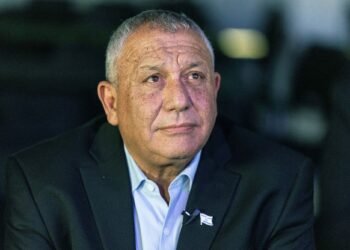 Gadi Eisenkot: Israel’s Anti-Netanyahu Challenger
 Trump Slams Ukraine Strikes as Russia Ceasefire Collapses
 Suu Kyi Appears in Rare Photos After Royal Gift
 Zelenskyy Says US Failed to Warn Kyiv of Russian Strikes
 Fifth Foreign Firm Withdraws From Jerusalem Cable Car Plan
 Milan Braces for Unrest as Debate Intensifies Over Lost Generation
 Iran Defiance Grows Amid US-Israel War Pressure
 Injured Mojtaba Khamenei Elevated as Iran Leader
 China Fireworks Factory Blast Kills 21 in Hunan
 Trump Announces 3-Day Russia–Ukraine Ceasefire Deal
 US Awaits Iran Reply on New Ceasefire Proposal
 Discontent grows around Putin amid war strain
 Farage and Reform UK Reshape British Politics
 Starmer Leadership Under Pressure After Setbacks
 Le Pen’s Popularity Holds Despite Conviction
 Former Diplomats Urge UK and France to Act on Palestine
 Trump Calls Iran War ‘Small Potatoes’ Despite US Deaths
 Israel Accused of Undermining Palestinian Life
 Lib Dems Prepare for Election Amid Reform Challenge
 Japan PM Backs International Criminal Court
 Xi urges Trump to avoid US-China military conflict
 Madrid Tent Camp Grows as Spain Housing Crisis Deepens
 South Korea demands apology over DMZ mine blast
 Burnham Opens Door to Possible UK Return to EU
 Pilot and Passengers Help Save Flydubai Flight
 French School Protests Escalate as 400 Schools Close
 Families Await USS Abraham Lincoln Homecoming
 Iran Nobel Laureate Reveals Prison Torture and Fears
 Canadian Veterans Condemn Trump Allies’ Military Remarks
 South Korea Probes Fuel Shipments to Russia
 Japan’s Princess Aiko Fuels Debate Over Royal Succession
 Houthi Missile Claim Sparks Riyadh Airport Disruption
 Trump’s Russian Diesel Deal Sparks Ukraine Fury
 Trump Names Katie Zachariah as Next White House Press Secretary
 French Students Protest Poor Conditions in Paris Suburbs
 Greta Thunberg Backs French Students in School Protests
 India’s Voter Roll Crisis Sparks Nationwide Protests
 Greens Face Leadership Test as Jordon Steele-John Misconduct Claims Leave Party in Limbo
 Lula Supporters Make Final Push Ahead of Brazil Runoff