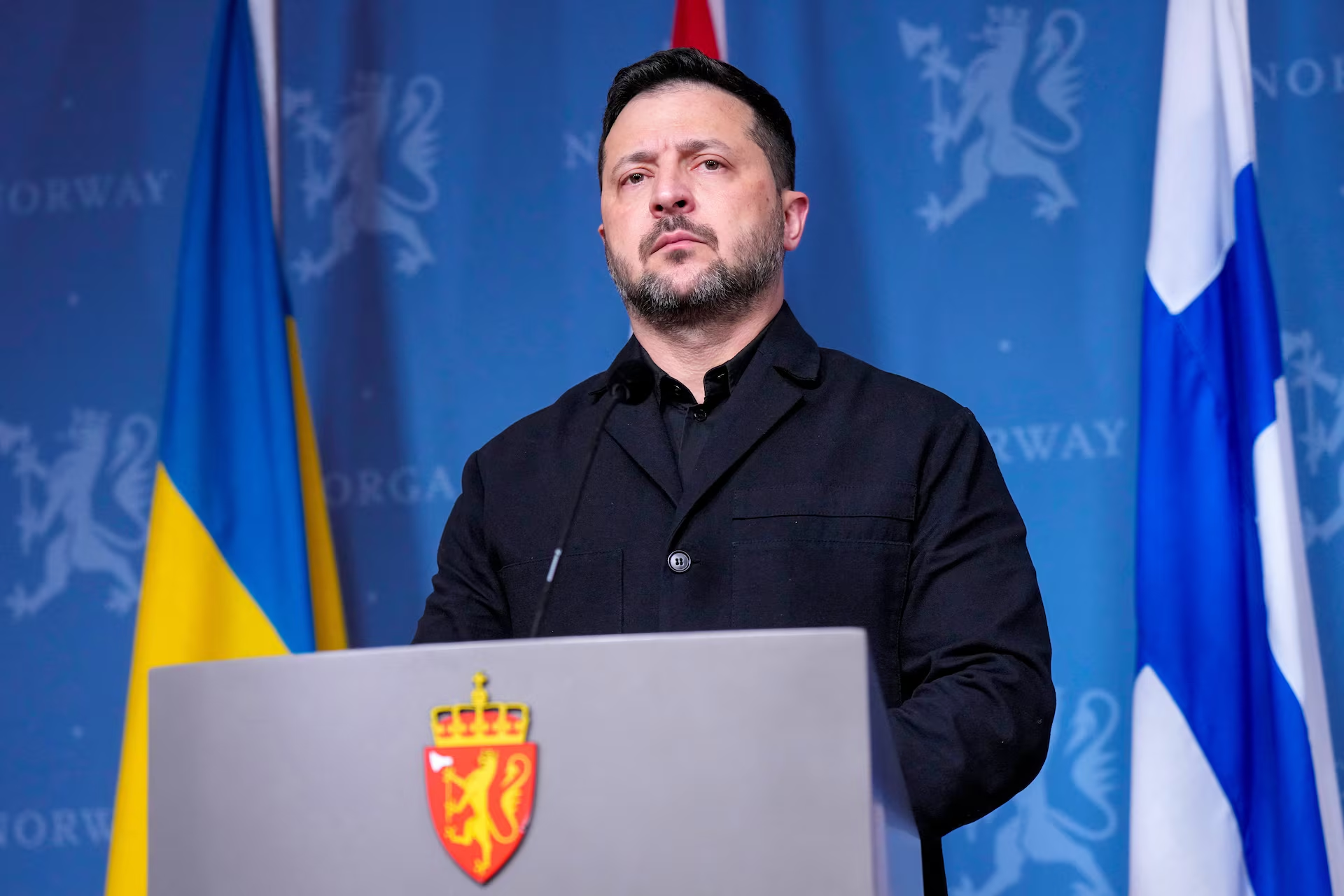
Ukraine’s president, Volodymyr Zelenskyy, has announced that trilateral peace talks involving Ukraine, the United States and Russia are expected to resume in November, raising hopes of renewed diplomatic efforts to end the war while highlighting the deep disagreements that continue to obstruct a settlement. The proposed meeting would bring the three sides back to negotiations after diplomatic efforts stalled, although major questions over territory, military security and Ukraine’s future relationship with Western alliances remain unresolved.
Zelenskyy said Ukraine was prepared to participate in discussions, but stressed that the nature of the negotiations would determine which issues could be addressed and at what level. Speaking in an interview on Sunday, he said territorial questions would require direct discussions between national leaders, while other matters could be handled by technical negotiating groups. The comments suggest Kyiv is willing to return to a diplomatic process but does not intend to abandon its central security demands simply to secure an agreement.
The Ukrainian president also renewed his call for a direct meeting with Russian President Vladimir Putin. Zelenskyy believes Putin is the only figure in Russia with sufficient authority to make the major political decisions necessary to bring the conflict to an end. A meeting between the two leaders, however, would face substantial obstacles, including their opposing positions on territory, Ukraine’s sovereignty and the conditions under which hostilities could stop.

One of the clearest limits Zelenskyy has placed on the proposed negotiations concerns Ukraine’s armed forces and its future military status. He said Kyiv would not discuss restrictions on the size or capabilities of its military, nor accept neutrality imposed as a condition of a postwar settlement. These positions reflect Ukraine’s concern that any agreement must provide lasting protection against another Russian invasion rather than simply suspend fighting temporarily.
Ukraine has long pursued membership of the North Atlantic Treaty Organization, viewing the alliance as a potential source of collective security. However, the prospect of Ukrainian membership has faced resistance among some NATO members and remains one of the most sensitive issues in the wider conflict. Russia has repeatedly opposed Ukraine’s movement towards Western military structures, while Kyiv argues that it must retain the freedom to determine its own international relationships.
The disagreement illustrates the challenge facing the November talks. Even if negotiators can agree on a framework for reducing hostilities, determining the future security arrangements for Ukraine could prove considerably more difficult. Kyiv wants guarantees strong enough to deter renewed aggression, while Moscow has sought changes to Ukraine’s strategic position. Without an acceptable compromise, negotiations could struggle to move beyond preliminary discussions.
Alongside the diplomatic developments, Zelenskyy said important US warnings about imminent Russian ballistic missile attacks had been fully restored. Such warnings are critical to Ukraine’s air-defence system because they can provide advance notice of incoming threats and allow military personnel to prepare protective measures. Ballistic missiles can travel at high speeds, leaving defenders with limited time to assess an attack and respond.
Zelenskyy told Ukrainian television that the Starshield satellite internet service had been operating at speeds of up to 420 kilometres per hour since early Saturday. His remarks followed a meeting in Oslo with Steve Witkoff, a US special envoy. The satellite service had reportedly faced restrictions earlier in October amid diplomatic pressure on Kyiv from Washington.
The restoration of these capabilities could be significant for Ukraine’s ability to coordinate its defence and respond to missile threats. Reliable communications and timely warnings are particularly important as Russian forces continue to use drones, missiles and guided bombs against Ukrainian cities and infrastructure. However, the episode also highlights the extent to which Ukraine’s wartime capabilities depend on technological support and decisions made by its international partners.
Washington has also been seeking to persuade Kyiv to suspend attacks on Russian oil refineries, arguing that such strikes contribute to higher energy prices. Ukrainian attacks on energy facilities have become part of a wider effort to impose economic and logistical costs on Russia’s war effort. At the same time, the targeting of energy infrastructure has consequences beyond the battlefield, particularly when disruptions affect fuel supplies and international markets.
Zelenskyy has maintained that Ukraine would stop these attacks only under certain conditions. He has linked a suspension to Russia ending its attacks on Ukrainian electricity infrastructure, or to the United States enabling Ukraine to use Starshield over Russian territory to identify ballistic missile launch sites. He has also cited the provision of Patriot air-defence missiles as another possible condition.
The positions expose a significant difference in priorities between Kyiv and Washington. The United States has an interest in limiting escalation and managing the economic consequences of the conflict, while Ukraine argues that pressure on Russian military and industrial capabilities is necessary to defend its population. Any attempt to secure a mutual halt to attacks on energy facilities would therefore require agreement on monitoring, enforcement and the treatment of violations by either side.
Zelenskyy also warned that the scale of Russian aerial attacks remained extremely high. In an online statement on Sunday, he said Russia had launched approximately 1,600 guided bombs, 48 missiles of various types, including ballistic missiles, and almost 2,300 attack drones against Ukraine during the preceding week. He urged Western allies to accelerate deliveries of interceptors and other air-defence equipment.
The figures underline the pressure facing Ukraine’s air-defence network. Interceptors are needed to destroy incoming missiles and drones before they reach residential areas, energy facilities or other important infrastructure. Sustained attacks can force defenders to make difficult decisions about how to distribute limited ammunition across a large territory. Delays in supplies can increase the risks to civilians and place additional strain on emergency services.
The reported attacks also demonstrate why Ukraine continues to treat security arrangements as central to any peace agreement. Even while diplomatic contacts are being prepared, the fighting continues to threaten communities and essential services. For residents living under repeated air alerts, the prospect of negotiations may offer hope, but the immediate priority remains protection from ongoing strikes.
Maritime traffic in the Black Sea also remained a concern. Russia’s defence ministry said on Sunday that Russian drones had struck a cargo vessel travelling towards the Ukrainian port of Chornomorsk during an overnight attack and another cargo vessel heading towards Odesa later in the day. Russian officials alleged that the vessels were being used to supply the Ukrainian military. Those claims had not been independently confirmed.
The Russian defence ministry also reported strikes on a logistics centre, a distribution centre and a logistics terminal in Kharkiv overnight. The reports formed part of Moscow’s account of its military operations, but independent verification was not available for all the claims. Attacks involving commercial shipping are particularly sensitive because the Black Sea remains an important route for trade and the movement of goods, while the conflict has increased risks for vessels operating near Ukrainian ports.
In Russia, authorities in the border city of Belgorod reported casualties following Ukrainian drone attacks. Local officials said an overnight strike killed three people and injured 13 others, while a separate drone attack later in the day killed another person. Regional governor Alexander Shuvayev said the overnight attack damaged 30 apartment buildings. The reports highlight how the war continues to cause casualties and damage on both sides of the border, although the details of individual incidents require independent confirmation.
Political developments in Bulgaria could also influence the wider European debate over support for Ukraine. The country’s presidential election on Sunday did not produce a conclusive result, leaving the next head of state to be determined in a runoff. Andrey Gyurov, representing the pro-Western reformist opposition, is expected to face incumbent leftist president Iliana Yotova.
The candidates have taken different positions on the war. Yotova opposes military assistance to Ukraine and favours dialogue with Russia, while Gyurov has expressed firm support for Kyiv. Their contest therefore carries significance beyond Bulgaria’s domestic politics, reflecting a broader European disagreement over whether military assistance, diplomatic engagement or a combination of approaches offers the best route towards ending the conflict.

The election also took place against a backdrop of security concerns following reported drone attacks on ships in the Black Sea. As the war continues, countries across Europe face difficult decisions over military spending, maritime security, energy costs and the long-term consequences of instability in the region.
The planned November meeting between Ukraine, the United States and Russia may provide an opportunity to test whether the parties can narrow their differences. Yet Zelenskyy’s refusal to negotiate away Ukraine’s military capacity or accept imposed neutrality indicates that Kyiv intends to preserve its fundamental security objectives. Disputes over territory, air defence, energy infrastructure and the future of Ukraine’s international partnerships remain formidable obstacles.
For diplomacy to make meaningful progress, the participants will need to move beyond announcements and establish clear terms for negotiations. Any durable agreement would also need to address the protection of civilians, the security of critical infrastructure and the mechanisms required to prevent renewed fighting. Until those questions are resolved, the prospect of renewed talks offers a possible opening rather than a guarantee of peace.
Related News:
 Germany Pledges €1bn Military Aid to Ukraine
 Israeli Strike in Southern Lebanon Kills Seven
 Israel Promotes Film Challenging Controversial Gaza Documentary
 Ceasefire Standoff Deepens in Ukraine War
 Putin Declares Russia Victory at Scaled Victory Day Parade
 Millions Gather for Khamenei’s Six-Day State Funeral
 Houthis Strike Saudi Arabia as Middle East Tensions Rise
 Taliban global ties grow as rights fears mount
 Five Years of Taliban Rule Leave Afghanistan in Crisis
 Russian Missiles Intensify Pressure on Kyiv
 Ukraine Villagers Demand Answers After Deadly Arms Depot Strike
 Europe’s democracies face a growing far-right threat
 North Korea Expands Uranium Facility at Yongbyon
 Saudi Pact Raises Risk of Pakistan Entering War
 Elif Eralp Emerges as Berlin’s Next Political Force
 Russia Targets Ukraine’s Digital Economy With Strikes
 Trump Asked Xi About Buying US Weapons
 South Korea-Ukraine Row Erupts Over North Korean POWs
 New Maps Reveal Gaza’s Vast Destruction
 Ukraine’s New FP-7 Missile Makes Combat Debut
 Russian Strikes Disrupt Kyiv Bridge Traffic
 Ukraine claims strikes have crippled Russia’s oil refining
 Former German Intelligence Chief Arrested Over Espionage
 Tanker Ablaze After Drone Strike Near Sochi
 Israel Marks Three Years Since October 7 Attack
 Tanker Attacked Near Qatar as Hormuz Tensions Escalate
 India’s Youth Movement Alleges Mass Detentions Before Protest
 Gaza War Deepens India’s Strategic Ties With Israel
 Trump Rules Out Iran Attack Before US Elections
 EU Divisions Deepen Over Israel Policy
 Delhi Braces for Youth Protests Over Voter Roll Dispute
 PTI Announces Swabi Rally Ahead of Long March Plans
 French Students Protest Poor Conditions in Paris Suburbs
 Riyadh Airport Hit Again as Yemen Conflict Escalates
 Greta Thunberg Backs French Students in School Protests
 India’s Voter Roll Crisis Sparks Nationwide Protests
 Ukrainian Soldier Faces Trial Over Nord Stream Blast
 Gadi Eisenkot: Israel’s Anti-Netanyahu Challenger
 Trump Slams Ukraine Strikes as Russia Ceasefire Collapses
 Zelenskyy Accuses US of Delaying Ukraine Missile Supplies
 Massive Student-Led Movement Marches in Belgrade Ahead of Serbian Vote
 Milan Braces for Unrest as Debate Intensifies Over Lost Generation
 Netanyahu Faces Defining Election Test as Israel Divides
 Xi Jinping Tightens China’s Anti-Corruption Campaign
 Italian Town Buys Mussolini Villa to Keep Away Fascist Fans
 Hungary election: Orbán faces biggest test amid scandal
 US ‘Narco Boat’ Strikes Draw Global Outcry
 Trump Announces 3-Day Russia–Ukraine Ceasefire Deal
 US Awaits Iran Reply on New Ceasefire Proposal
 Maldives Cave Diving Tragedy Raises Safety Alarm
 Discontent grows around Putin amid war strain
 Le Pen to Run for President Despite Embezzlement Conviction
 Bayeux Tapestry Revives Franco-British Ties
 Trump Calls Iran War ‘Small Potatoes’ Despite US Deaths
 Sweden Election Hangs on Far-Right Breakthrough
 Israel Accused of Undermining Palestinian Life
 Lib Dems Prepare for Election Amid Reform Challenge
 US Networks Suspend Trump White House Pool Coverage
 Japan PM Backs International Criminal Court
 Xi urges Trump to avoid US-China military conflict
 Lula accuses Trump of seeking control over Brazil
 Republican Senator Questions Trump Ad Spending
 Madrid Tent Camp Grows as Spain Housing Crisis Deepens
 South Korea demands apology over DMZ mine blast
 US Sends Third Carrier to Middle East
 French School Protests Escalate as 400 Schools Close
 Yemen government launches offensive against Houthis
 US bombers leave RAF Fairford after terror threat
 Canadian Veterans Condemn Trump Allies’ Military Remarks
 France Schools Protests Draw 250,000 as Police Clash
 Israeli Settlers Assault Palestinian Photographer
 South Korea Probes Fuel Shipments to Russia
 Trump Says He Deserves Nobel Peace Prize
 Sri Lanka Ex-First Lady Arrested Over Donation Probe
 Houthi Missile Claim Sparks Riyadh Airport Disruption
 Delhi Tightens Security Ahead of Election Protest
 Trump’s Russian Diesel Deal Sparks Ukraine Fury
 Brazil Court Scandal Threatens Lula as Bolsonaros Rise
 Zelenskyy Says US Failed to Warn Kyiv of Russian Strikes
 Spain Deepfake Ad Sparks Election Outrage