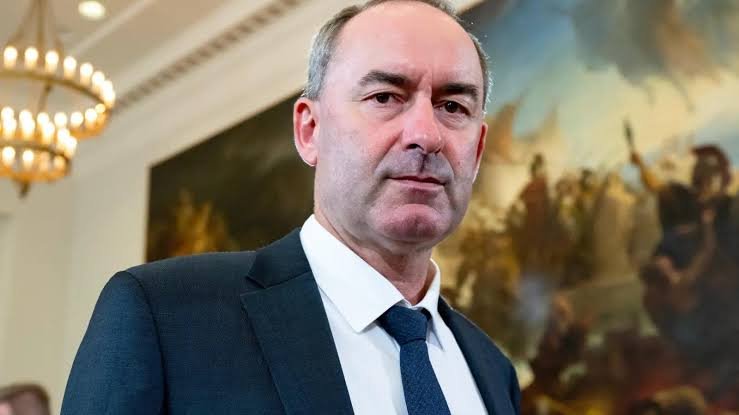
Prominent German politician Hubert Aiwanger, the deputy leader of the southern German state of Bavaria and head of the populist Free Voters party, has been found dead in a hotel room in Berlin at the age of 55. His unexpected death has sent shockwaves through Germany’s political establishment, prompting expressions of grief from political leaders and an investigation by police and prosecutors to establish the exact circumstances surrounding the incident.
Authorities confirmed that Aiwanger’s body was discovered in his hotel room in the Berlin-Mitte district on Wednesday. Police said they had opened an investigation alongside prosecutors to determine the specific cause of death and establish the circumstances surrounding his final hours. Officials have not yet disclosed a definitive explanation for his death, and no further details have been released about the events leading up to the discovery.
In an official statement, police and prosecutors said the investigation was intended to establish the precise cause of death and determine whether any third party could have been involved. Authorities stressed the importance of examining all relevant circumstances before reaching conclusions. The investigation is therefore expected to establish whether the death resulted from natural causes, an accident or another circumstance.

Aiwanger had travelled to Berlin to attend the opening of an office for his political party. However, he reportedly failed to appear at the scheduled event after feeling unwell. German newspaper Bild reported that his absence raised concerns before police eventually discovered his body inside the hotel. The circumstances surrounding his illness and the period before his death have not been fully established.
The news prompted an immediate reaction from Bavaria’s political leadership. State Premier Markus Söder described Aiwanger’s death as an absolute tragedy, expressing deep shock and extending his thoughts to the politician’s family and children. His statement reflected the emotional impact of the sudden loss on the regional government, where Aiwanger had served as an important political partner.
Söder’s Christian Social Union (CSU) leads Bavaria’s regional government, with Aiwanger’s Free Voters party serving as its junior coalition partner. Their political cooperation has played an important role in shaping the state’s administration and policy direction. Aiwanger’s position as deputy leader of Bavaria made him one of the most recognisable figures in the state’s political landscape.
Aiwanger had led the Bavarian branch of the Free Voters since 2006. During his long leadership, he helped transform the party from a regional political movement into a significant force in Bavarian state politics. One of his most important achievements came in 2018, when the party entered the Bavarian state government for the first time, becoming a coalition partner of the CSU.
The development marked a significant turning point for the Free Voters, which had traditionally maintained a strong presence in local and municipal politics. Under Aiwanger’s leadership, the party expanded its regional influence and established itself as an important alternative for voters dissatisfied with established political organisations.
Although the party achieved considerable success in Bavaria, it never secured enough support to enter Germany’s federal parliament. Nevertheless, its participation in the Bavarian government gave it substantial regional influence and provided Aiwanger with an important platform to shape economic and political discussions.
Alongside his party leadership and position as deputy state premier, Aiwanger served as Bavaria’s economy minister. His responsibilities placed him at the centre of important policy discussions involving business development, investment, employment and the state’s economic competitiveness. Bavaria is one of Germany’s most economically significant regions, with major industrial, manufacturing and technology sectors contributing to the country’s wider economy.
His death therefore creates uncertainty not only for the Free Voters but also for the regional government. The party will need to consider its leadership arrangements and future political direction, while the coalition administration must address the implications of losing one of its most senior members. Any changes to ministerial responsibilities and party leadership will depend on the decisions taken by the relevant political institutions.
Aiwanger’s political career was not without controversy. In 2023, he became the subject of a major national political dispute after reports emerged concerning an antisemitic pamphlet allegedly written during his school years. The document reportedly contained deeply offensive references to the Holocaust and the Auschwitz concentration camp, describing it in language that provoked widespread condemnation.
The controversy attracted significant attention across Germany because of the country’s historical responsibility for the Holocaust and its continuing commitment to combating antisemitism. Political leaders, commentators and civil society organisations raised questions about Aiwanger’s past conduct and whether the allegations were compatible with his responsibilities as a senior government official.
Aiwanger denied writing the pamphlet, although he acknowledged that he had possessed one or a few copies of the document in his school bag during his school years. He apologised over the controversy but refused to resign from his political positions.
The dispute generated intense public debate about political accountability, historical awareness and the standards expected of elected representatives in Germany. Despite the criticism, Aiwanger remained in office and continued leading the Free Voters and participating in Bavaria’s coalition government.
His continued political position demonstrated the resilience of his support within the regional political establishment, although the controversy remained an important part of public discussions about his career.
Beyond politics, Aiwanger maintained a family life with his partner and two children, according to German media reports. His sudden death has therefore left his family facing an unexpected personal loss while political colleagues and supporters attempt to understand the circumstances surrounding the tragedy.
The investigation in Berlin is expected to play a central role in clarifying what happened. Police and prosecutors have not suggested that a crime has taken place, but their decision to examine the possibility of third-party involvement reflects the need to establish the facts before closing the case. Authorities have not announced a final cause of death.
The death of a senior regional politician in a hotel in the German capital has also attracted considerable national attention because of Aiwanger’s prominent position in Bavaria’s government. His political influence extended beyond party leadership, making him an important participant in discussions about regional economic policy and the future of conservative and populist politics in southern Germany.
For the Free Voters, his passing represents the loss of a leader who had guided the organisation for two decades and helped it achieve an unprecedented position within Bavaria’s government. Finding a successor capable of maintaining the party’s political influence and preserving its coalition relationships could become a major challenge.

For the Bavarian administration, the immediate priority will be to manage the political and administrative consequences while respecting the privacy of Aiwanger’s family. The coalition partners will also have to consider how his responsibilities will be distributed and whether his departure will lead to changes in the government’s political balance.
As Germany awaits further information from investigators, questions remain about the circumstances of Aiwanger’s final hours. His unexpected death has brought an abrupt end to a long and controversial political career that significantly influenced the development of the Free Voters in Bavaria. While tributes from political colleagues have highlighted his contribution to regional politics, the investigation will determine the facts surrounding his death and provide clarity to his family, supporters and the wider public.
Related News:
 France Faces Record Presidential Crowded Race Amid Far-Right Surge
 Elif Eralp Emerges as Berlin’s Next Political Force
 Madrid Tent Camp Grows as Spain Housing Crisis Deepens
 French Student Protests Escalate Into Violent Clashes
 French School Protests Escalate as 400 Schools Close
 Bosnia’s Young People Look Beyond Election Hope
 Spain Sets Snap Election as Housing Crisis Deepens
 French Student Protests Grow Despite Government Pledge
 France Promises 3,000 Teachers as Student Protests Grow
 France Faces Debt Crisis as Protests and Markets Clash
 French Students Protest Poor Conditions in Paris Suburbs
 Greta Thunberg Backs French Students in School Protests
 Trump Slams Ukraine Strikes as Russia Ceasefire Collapses
 Macron Condemns Violence as France Faces 2,400 Arrests
 Milan Luxury Stores Shut as Italy Plans Troop Deployment
 Milan Braces for Unrest as Debate Intensifies Over Lost Generation
 France to Deploy 70,000 Police Amid Unrest Fears
 Serbia’s Student Victory Sparks a ‘Smell of Freedom’
 Spain Mourns 68 Dead After High-Speed Train Crash
 Albania Introduces $6,000 Fines for Violent Protests
 Novaya Gazeta to Close After Russian Government Pressure
 Denmark Seeks EU-Wide Ban on Fast-Growing Turbo Chickens
 Italian Town Buys Mussolini Villa to Keep Away Fascist Fans
 Hungary election: Orbán faces biggest test amid scandal
 Pope Meets Families in Italy Toxic Waste Zone
 Farage and Reform UK Reshape British Politics
 Starmer Leadership Under Pressure After Setbacks
 UK Nations Brace for Potential Breakup Amid Reform Surge
 Le Pen to Run for President Despite Embezzlement Conviction
 Le Pen’s Popularity Holds Despite Conviction
 England and Norway Fans Turn Miami Into World Cup Carnival
 Russian Missiles Intensify Pressure on Kyiv
 Ukraine Villagers Demand Answers After Deadly Arms Depot Strike
 Bayeux Tapestry Revives Franco-British Ties
 Europe’s democracies face a growing far-right threat
 Sweden Election Hangs on Far-Right Breakthrough
 Lib Dems Prepare for Election Amid Reform Challenge
 King Refers Jamaica Slavery Petition to Privy Council
 Greece Pushes for Parthenon Marbles Reunification
 Burnham Opens Door to Possible UK Return to EU
 Drumcree Talks Falter as Legal Challenge Deepens
 UK-France Returns Deal Faces Expiry as Talks Stall
 Green Party faces dispute over Zionism motion
 Families Await USS Abraham Lincoln Homecoming
 Germany Pledges €1bn Military Aid to Ukraine
 Former German Intelligence Chief Arrested Over Espionage
 France Schools Protests Draw 250,000 as Police Clash
 WHO Says Russia Plague Epidemic Risk Remains Low
 USS Lincoln Ends Record 265-Day Deployment
 Labour Wins Key London By-election as Greens Fall Short
 India’s Youth Movement Alleges Mass Detentions Before Protest
 Gaza War Deepens India’s Strategic Ties With Israel
 Turkey Rules Out Troops in Saudi Arabia’s Houthi Conflict
 EU Divisions Deepen Over Israel Policy
 Delhi Detains Protest Leaders as Youth Rally Escalates
 Trump Names Katie Zachariah as Next White House Press Secretary
 UK Greens Face Crisis Over Zionism and Extremism Row
 Glucksmann Urges French Left to Fight Far Right
 Millions Face Tougher Medicaid Rules From January
 Ohio Airports Become Key Hubs for ICE Deportation Flights
 Ukrainian Soldier Faces Trial Over Nord Stream Blast
 Gadi Eisenkot: Israel’s Anti-Netanyahu Challenger
 Talarico Faces Tough Voter Test in Texas Senate Race
 Albania’s Rama Defies Calls to Quit Amid Student Protests
 French Police Face Scrutiny Over Injured Teenagers
 Zelenskyy Says US Failed to Warn Kyiv of Russian Strikes
 Greens Face Leadership Test as Jordon Steele-John Misconduct Claims Leave Party in Limbo
 Lula Supporters Make Final Push Ahead of Brazil Runoff
 Fire Engulfs Hitler’s Eagle’s Nest Retreat
 Spain Deepfake Ad Sparks Election Outrage
 Rubio Urges Cubans to Seize Moment for Change
 Ukraine Peace Talks Set to Resume in November
 Melting Dolomites Glaciers Reveal 250 WWI Explosives
 Riot Police Deployed as Poland Court Row Escalates
 King Charles Faces Reparations Protests at Antigua Summit
 Bedouin Women Drive Historic Arab Election Gains
 Australia Reviews UK Visa Rules Amid Worker Influx
 Canada Joins Boycott of Russian Ice Hockey Teams
 ANC Faces Voter Backlash in South African Elections
 Exiled Journalists Defy Putin’s Growing Media Crackdown