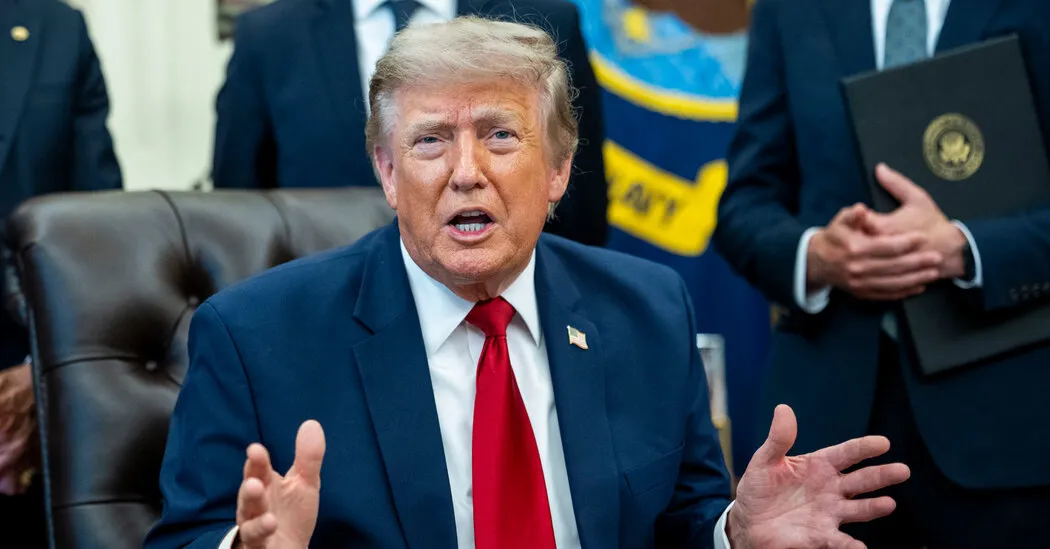
Brazil and China have strongly criticised the latest tariff proposals announced by US President Donald Trump, raising fresh concerns about growing tensions in international trade and the future of global economic relations. Brazil has described Washington’s proposed measures as unacceptable, while Beijing has accused the United States of using trade restrictions as a tool for political manipulation. The latest developments have also drawn objections from the European Union, India, Japan, Singapore and several other major trading partners, highlighting the growing international opposition to Washington’s latest trade policy.
The Trump administration has proposed new tariffs targeting 14 major trading partners, including China, Brazil, the European Union and several Asian economies. The proposed measures are intended to address what Washington describes as unfair trade practices, excessive industrial production and policies that disadvantage American manufacturers. However, the affected countries argue that the measures could undermine existing trade agreements, increase economic uncertainty and create further obstacles to international commerce.

Brazil was among the strongest critics of the announcement. In a statement issued on Wednesday, the Brazilian government made clear that it would not surrender to pressure from Washington over the proposed tariffs. It described the unilateral decision as unacceptable, particularly because the two countries were already engaged in bilateral trade negotiations.
The Brazilian government stressed that its position remained firm and that it would continue pursuing negotiations with the United States. However, it also warned that retaliatory measures remained a possibility if Washington proceeded with what it considers an unjustified and illegal imposition of additional duties on Brazilian products.
Brazil expressed particular concern about proposed higher import taxes on raw and refined sugar, as well as a new 10 per cent tariff on aircraft. The aircraft measure could have significant consequences for Embraer, Brazil’s largest aircraft manufacturer and one of the world’s major producers of commercial and regional aircraft.
The company plays an important role in Brazil’s industrial economy and international export sector. Additional import duties could make its aircraft more expensive for American customers, potentially affecting competitiveness, commercial partnerships and future sales. The proposed sugar tariffs could also create difficulties for Brazilian producers and exporters, particularly those dependent on access to the large American consumer market.
The latest announcement came after trade negotiations between Washington and Brasília encountered difficulties. The Trump administration has maintained that the proposed tariff rates would remain consistent with trade arrangements reached with numerous countries during the previous year. Nevertheless, Brazil’s response suggests that significant disagreements remain over the interpretation and implementation of those agreements.
The United States is pursuing the new measures under legislation that allows the president to impose trade restrictions on countries found to engage in unreasonable or discriminatory practices affecting American commerce. US Trade Representative Jamieson Greer defended the administration’s approach, arguing that several trading partners had adopted market-distorting policies that gave their industries an unfair advantage while weakening America’s manufacturing base.
According to the administration, the proposed tariff rates would be capped at levels lower than those initially considered under the new investigation process. The final rates would also take into account trade agreements that have already been concluded or remain under negotiation.
Washington plans to collect feedback from affected industries and other interested parties before making a final decision. A public hearing is scheduled for 25 January, indicating that the new duties are unlikely to take effect before February or March. The consultation process could provide governments and businesses with an opportunity to challenge the preliminary findings and present evidence against the proposed measures.
China is expected to face one of the most significant consequences of the announcement. Washington has indicated that Chinese imports could face a maximum capped tariff rate of 20 per cent. In certain cases, this could be added to existing import duties, potentially bringing the combined tariff burden to as much as 45 per cent.
The development is particularly important because the world’s two largest economies have spent considerable time attempting to stabilise their strained trade relationship. Washington and Beijing reached a temporary trade understanding last year, but the arrangement is scheduled to expire on 10 January 2027. The latest American proposals could complicate efforts to extend that agreement and maintain economic stability between the two countries.
China’s embassy in Washington rejected the allegations surrounding its industrial production capacity. A spokesperson argued that the issue of industrial overcapacity did not genuinely exist in the manner described by American officials and should not be used as justification for political manipulation.
Although Beijing did not immediately announce retaliatory measures, it urged both governments to respect their existing commitments and work towards implementing agreements reached between President Trump and Chinese President Xi Jinping.
China’s Foreign Ministry also reiterated its opposition to the proposed restrictions. Spokesperson Guo Jiakun called on Washington to resolve trade disagreements through dialogue rather than escalating economic confrontation. He warned that neither a tariff war nor a broader trade war would serve the interests of the countries involved.
Greer, meanwhile, indicated that the United States was considering a broad exemption covering approximately $30 billion worth of Chinese goods as part of its existing trade understanding with Beijing. He suggested that Washington had already discussed its proposals with trading partners and believed much of the framework had been established.
However, the proposed measures have also attracted criticism from American economic analysts. Some experts argue that the restrictions are not strong enough to force meaningful changes in China’s industrial and trade policies. Derek Scissors, a senior fellow at the American Enterprise Institute, argued that China represented an exceptionally large source of excess industrial production globally. He suggested that the proposed measures would do little to influence Beijing’s economic behaviour because they would barely increase existing tariff levels.
The European Union has also expressed dissatisfaction with Washington’s latest announcement. European Commission spokesperson Olof Gill said the bloc rejected the underlying justification for the new tariffs and expected the United States to honour the trade agreement reached last year.
The European Union acknowledged concerns about excessive global industrial production, particularly where government intervention contributes to market distortions. However, it argued that such challenges should be addressed through cooperation rather than unilateral trade restrictions. Brussels also expressed regret that Washington had not pursued a coordinated approach to the issue.
In Asia, Vietnam said it was working with American authorities to complete its trade agreement as quickly as possible. The country’s trade ministry indicated that it was preparing responses to preliminary findings and challenging what it described as inaccurate submissions and allegations made by interested parties.
India also rejected Washington’s assessment of its industrial production capacity. The Indian government denied having structural excess capacity across any sector and reiterated its commitment to reaching an early trade agreement with the United States. Greer previously indicated that tariffs on Indian imports could be capped at 17 per cent if both countries successfully concluded a deal.
Taiwan, another economy affected by the proposed measures, expressed confidence that it would retain its existing 15 per cent tariff rate. Taipei and Washington reached trade agreements in January and February this year, securing preferential treatment for semiconductors and other technology products. These products account for more than 70 per cent of Taiwan’s exports to the American market, making the existing arrangements particularly important for its economy.
Japan also voiced concern about the proposed restrictions. Tokyo’s chief government spokesperson, Minoru Kihara, described the announcement of measures targeting Japan as regrettable. Singapore’s government expressed deep disappointment and rejected suggestions that it protected its domestic market or provided unfair subsidies to its manufacturing industries.
Other affected trading partners include Bangladesh, Cambodia, Indonesia, Malaysia, South Korea, Switzerland and Thailand. The inclusion of Bangladesh is particularly significant because the United States remains an important export destination for several Bangladeshi industries, including the ready-made garment sector. Any changes in American tariff arrangements could influence export competitiveness, business confidence and future trade negotiations.
For developing economies, the consequences of additional trade restrictions could extend beyond direct export costs. Higher tariffs may influence investment decisions, supply-chain arrangements, manufacturing strategies and employment opportunities. Countries heavily dependent on international markets could face additional uncertainty as businesses assess the potential impact of changing trade conditions.
The political implications of Trump’s latest tariff initiative are also becoming increasingly important following the recent American midterm elections. Although Democrats achieved significant electoral gains, the administration may still find support for certain trade restrictions, particularly those targeting China. Furthermore, presidential veto powers could make it difficult for Congress to reverse the administration’s tariff decisions.
Democratic Senator Ron Wyden of Oregon, who is expected to take over the Senate Finance Committee next year, has promised to challenge what he described as Trump’s tariff chaos. He argued that the administration was attempting to reconstruct its controversial global tariff system through another unilateral initiative.
Wyden acknowledged that excessive industrial production in international markets was a serious concern but maintained that increasing import costs through unilateral restrictions was not an appropriate solution. He pledged to use the available legislative and political mechanisms to oppose the administration’s approach.
The growing criticism from major trading partners demonstrates the difficulty of implementing a trade policy that affects multiple economies simultaneously. While Washington maintains that additional tariffs are necessary to protect American manufacturing and address unfair competition, affected countries fear that the measures could weaken international cooperation and disrupt established commercial relationships.

With consultations still ahead and final decisions expected in the coming months, governments and businesses are closely monitoring developments. The outcome could influence global supply chains, international investment and the future direction of trade relations among some of the world’s largest economies.
For Brazil, China and other affected countries, the immediate challenge will be to protect their economic interests while avoiding an escalation that could damage international trade. Whether negotiations can resolve the disagreements or the dispute develops into another major confrontation will depend largely on Washington’s willingness to balance its domestic economic priorities with the interests of its global trading partners.
Related News:
 Trump approval plunges amid Iran war fears
 Trump Threatens UN Budget Cuts as US Pushes ‘Trade Over Aid’ Agenda
 US Awaits Iran Reply on New Ceasefire Proposal
 Hormuz Talks Near Critical Stage
 Trump announces major US oil deal with Venezuela
 Trump Hardens Canada Trade Stance as Talks Stall
 Trump Calls Iran War ‘Small Potatoes’ Despite US Deaths
 Trump Pledges $5,000 if Republicans Win Midterms
 Macron and Carney deepen France-Canada ties
 Trump Eyes Major Belarus Fertiliser Deal Amid Canada Trade Dispute
 Xi urges Trump to avoid US-China military conflict
 Lula accuses Trump of seeking control over Brazil
 Trump Ads Trigger Fight Over Taxpayer Money
 Tanker Attacked Near Qatar as Hormuz Tensions Escalate
 Trump’s Russian Diesel Deal Sparks Ukraine Fury
 Brazil Court Scandal Threatens Lula as Bolsonaros Rise
 Millions Face Tougher Medicaid Rules From January
 Trump Targets Arizona and Montana Amid GOP Election Worries
 Brazil Cuts Working Week to 40 Hours in Lula Election Boost
 Trump Rallies GOP as Senate Democrats Boost Key Races
 Serbia Leader Linked to Controversial Trump Tower Plan
 Trump Halts New Russia Sanctions Amid Ukraine Rift
Trump Falsely Questions Ossoff’s Election Legitimacy
 Trump Fears Shock Democratic Senate Win in Kansas
 Meta Faces Election Bias Claims Ahead of Brazil Runoff
 Fed Expected to Hold Rates Steady Ahead of US Midterms
 Trump’s Global Policies Put Republicans at Risk
 Global Crises Test Diplomacy as Trump’s Policies Face Scrutiny
 G20 Photo Cancelled as Russia Deepens Western Rift
 Haley Stevens Backs Republican Rival in Michigan Senate Race
 US Midterms Put Trump’s Presidency to the Test
 US Strikes Iran Island as Vance Signals Hope for Peace
 Democrats Seize Senate Control in Major Trump Setback
 Democrats Retake US House in Major Trump Backlash
 James Talarico Makes History with Texas Senate Victory
 Paraguay President Quits After Major Bank Collapse
 Zelenskyy Seeks Urgent Help as Russia Hits Ukraine’s Power Grid
 Democrats Expand House Majority in Major Midterm Victory
 Paraguay President Impeached and Arrested After Banking Crisis
 Qatar Pushes Iran Deal to Reopen Strait of Hormuz
 Trump’s Midterm Defeat Puts Maga’s Future in Doubt
 Pope Leo Rebukes Milei Over Argentina’s Austerity Policies
 US Treasury Chief Moves to Military Base Over Iran Threat
 Nvidia Scandal Fuels US-China Security Crisis
 Mary Peltola’s Alaska Win Gives Democrats 56 Senate Seats
 Musk Distances Himself From MAGA After Costly GOP Bet
 Trump, Nvidia and the Fight Against Tech Oligarchs
 Canada Passes Carney’s First Budget in Tight Parliamentary Vote
 Trump Fed bid heads to Supreme Court
 Thousands Protest ICE Operations in Nationwide US Day of Action
 UK Stands Firm on Falklands Amid US Rift
 Oil Prices Surge Above $120 Amid Iran Blockade Fears
 Trump orders US troop pullout from Germany
 US ‘Narco Boat’ Strikes Draw Global Outcry
 Kevin Warsh sworn in as Fed chair amid economic backlash
 Ukraine Creates Long-Range Strike Command
 Houthis Strike Saudi Arabia as Middle East Tensions Rise
 Swedish Mining Push Puts Sami Land Rights Under Pressure
 UK plans tougher Israel stance with settlement trade ban
 US Networks Suspend Trump White House Pool Coverage
 Trump gives Xi red-carpet welcome as trade truce extends
 Republican Senator Questions Trump Ad Spending
 Burnham Opens Door to Possible UK Return to EU
 Lula Warns of Bolsonaro Family Return as Brazil Votes
 Quebec separatists return to power without majority
 South Korea Probes Fuel Shipments to Russia
 Trump Says He Deserves Nobel Peace Prize
 Houthi Missile Claim Sparks Riyadh Airport Disruption
 Trump Rules Out Iran Attack Before US Elections
 Trump Names Katie Zachariah as Next White House Press Secretary
 Lula Supporters Make Final Push Ahead of Brazil Runoff
 Flávio Bolsonaro Reportedly Leaves Brazil After Election Defeat
 Australia Raises Interest Rates to 18-Year High
 Hegseth Faces Growing Pressure After GOP Election Defeat
 Trump-Backed Republicans Suffer Major Midterm Defeats
 Labor Minister Defends Chalmers Amid Budget Tensions
 Pentagon Claims Victory as Hegseth Impeachment Bid Stalls
 Canada May Turn to Chinese Automakers if US Talks Fail
 Trump Defends Lutnick Amid Nvidia Chip Export Controversy
 Colombia President Joins Supermarket Hostage Crisis