Colombia has been plunged into a tense security crisis after armed men seized at least 20 people inside a supermarket in Cartagena, one of the country’s most popular tourist destinations. The situation escalated into an hours-long standoff between heavily armed security personnel and the suspected robbers, prompting President Abelardo de la Espriella to travel to the coastal city and personally take charge of the operation.
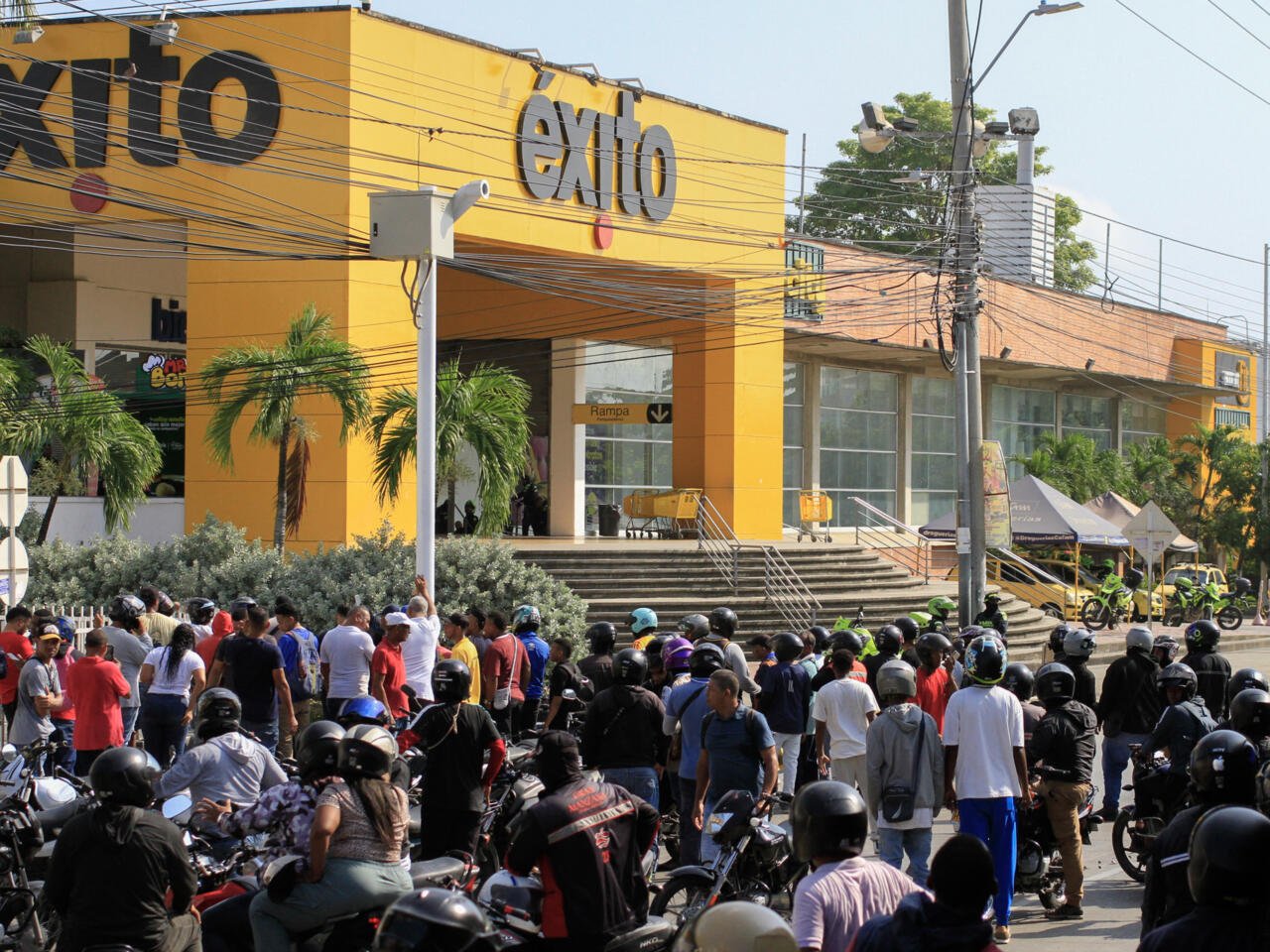
The incident, which began early on Tuesday morning, triggered a major security response involving police officers, naval personnel and special forces. Authorities surrounded the supermarket as efforts continued to secure the release of the remaining hostages. The presence of the president at the scene highlighted the seriousness of the situation and the government’s determination to bring the confrontation to an end without further casualties.

According to reports, approximately 30 people were initially taken hostage when armed men entered an Éxito supermarket in the La Castellana neighbourhood at around 8.30am local time. The group reportedly intended to rob an armoured cash-in-transit vehicle that was expected to collect the previous day’s takings from the store.
However, the suspected criminals’ plans were disrupted after supermarket employees noticed suspicious movements through the security camera system. The workers reportedly alerted the national police, who quickly arrived and surrounded the premises. The intervention prevented the armed men from carrying out their intended robbery and turned the incident into a hostage crisis.
As the standoff continued throughout Tuesday, authorities managed to secure the release of 10 hostages by nightfall. Five of those released were elderly women, according to statements attributed to President de la Espriella. Despite the progress, at least 20 people were still believed to be inside the supermarket when the president arrived in Cartagena.
There had been no confirmed reports of injuries among the hostages or security personnel at the time of the latest reports. The absence of reported casualties offered some reassurance to families waiting anxiously for information about their relatives, although the continuing presence of armed suspects inside the building meant that the situation remained highly dangerous.
President de la Espriella’s arrival attracted considerable attention as security forces continued preparing for the next stage of the operation. His motorcade reached Cartagena on Tuesday night, according to reports by Agence France-Presse. The president was expected to take control of an extensive security operation involving dozens of officers, the navy and specialist military units.
The crisis has been particularly distressing for the families of those believed to be trapped inside the supermarket. Jacob Perez, whose son reportedly works at the store, described his anxiety while speaking to journalists. He said his son had not left his workplace and was no longer answering his telephone. Perez feared that the armed men had taken his son’s phone away, leaving the family unable to establish whether he was safe.
Customers were also believed to be among those held hostage, meaning the people trapped inside included both supermarket employees and members of the public who had been going about their ordinary activities when the incident began.
The release of the elderly women provided a measure of hope, but families remained uncertain about when the remaining hostages would be allowed to leave. The authorities faced the difficult task of balancing the need to end the confrontation quickly with the responsibility to protect the lives of innocent people inside the building.
Videos circulating on social media showed dozens of people rushing out of the supermarket during the unfolding incident. Meanwhile, local media reports showed police snipers positioned on nearby buildings, suggesting that security forces were preparing for the possibility of an armed confrontation. The surrounding area was placed under tight security as officers attempted to maintain control and prevent further risks to civilians.
Cartagena’s location has added another dimension to the crisis. The supermarket is situated approximately six miles from the city’s historic centre, an internationally recognised tourist attraction famous for its colonial architecture, Caribbean coastline and centuries-old fortress walls. Hundreds of thousands of visitors travel to Cartagena every year, making the incident a major concern not only for local residents but also for the country’s tourism industry.
Before travelling to Cartagena, President de la Espriella described the hostage-taking as an apparent robbery attempt rather than an operation connected to the larger armed organisations responsible for Colombia’s longstanding security problems. He suggested that the suspects were ordinary criminals whose plans had gone wrong.
The president’s comments came against the backdrop of renewed violence involving criminal organisations and armed groups across different parts of Colombia. The country has struggled for decades with conflicts involving guerrilla movements, drug-trafficking networks, paramilitary groups and dissident factions that rejected peace agreements.
De la Espriella, a right-wing political leader known for his tough public stance on crime, has frequently promoted an uncompromising approach towards criminal organisations. His political image has been associated with strong security measures and an emphasis on restoring state authority in areas affected by violence. He has also attracted attention for his public appearances with a firearm and his support for aggressive action against suspected criminals.
Having been in office for just over three months, the president now faces an early test of his administration’s security policies. The Cartagena hostage crisis has developed at a particularly difficult moment, as the government is dealing with a series of violent incidents that have raised concerns about the ability of armed groups to threaten public safety.
Earlier on Monday night, a car bomb exploded outside the headquarters of the Meta departmental government in Villavicencio, a city located approximately 684 miles inland from Cartagena. The attack killed a security guard and injured more than 20 people, according to the reported figures.
President de la Espriella attributed the bombing to a dissident faction of the Revolutionary Armed Forces of Colombia, commonly known as FARC. The organisation signed a historic peace agreement with the Colombian government in 2016, but several dissident groups rejected the agreement and continued their armed activities.
Speaking at a press conference in Villavicencio before heading to Cartagena, the president accused criminal and armed organisations of attempting to intimidate the government through violence. He argued that the attacks were intended to weaken the state’s resolve and force the administration to reconsider its security strategy.
The president also referred to the possibility of renewed pressure for negotiations, criticising what he described as another attempt to push the government towards an ineffective peace process. His remarks came on the tenth anniversary of the signing of the landmark 2016 peace agreement between the Colombian government and FARC.
The agreement was widely recognised internationally for significantly reducing violence and creating opportunities for former combatants to return to civilian life. However, it did not bring Colombia’s decades-long armed conflict to a definitive conclusion. Implementation challenges, continuing security problems and the emergence of dissident factions have complicated efforts to establish lasting peace.
Previous administrations faced difficulties implementing several provisions of the agreement, while armed groups that refused to participate in the process continued operating in different regions. The persistence of these organisations has demonstrated the difficulty of ending Colombia’s complex internal conflict through a single political settlement.
Another troubling incident occurred in the early hours of Monday in Cúcuta, where gunmen believed to belong to the National Liberation Army, or ELN, reportedly used drones to drop explosives near a local police command. The ELN is an armed organisation that never signed a peace agreement with the government.
The explosives instead struck residential properties, injuring three civilians, including an 18-month-old baby. The incident highlighted the growing danger posed by the use of drones in attacks involving armed groups, particularly when residential neighbourhoods and ordinary people become unintended targets.
Although criminal and armed organisations in Colombia have increasingly used drones to carry out attacks, the incident was reportedly the first time such an attack had targeted a departmental capital. The development has raised fresh questions about the security challenges facing urban areas and the capacity of authorities to protect civilians from emerging forms of violence.

The simultaneous security challenges in Cartagena, Villavicencio and Cúcuta have placed additional pressure on the government. While the supermarket hostage crisis appears to have originated from an attempted robbery, the wider pattern of violence has intensified concerns about public security across the country.
For the families of the people still believed to be inside the supermarket, however, the immediate priority remains the safe return of their loved ones. The presence of the president and the deployment of specialised security units have raised expectations that the operation will reach a peaceful conclusion.
Authorities must now ensure that the remaining hostages are released safely and that the armed suspects are brought under control without exposing innocent people to unnecessary danger. The outcome of the operation could become an important early test of the administration’s ability to respond to major security emergencies while protecting civilian lives.
Related News:
 Trump Receives Machado’s Nobel Medal in White House Meeting
 Thousands Protest ICE Operations in Nationwide US Day of Action
 Epstein Files Reveal Trump Officials’ Emails with Financier
 Thousands Protest ICE in New York Against Trump Deportation Campaign
 Trump orders US troop pullout from Germany
 US ‘Narco Boat’ Strikes Draw Global Outcry
 Indiana Republicans Defy Trump in Key Vote Test
 Tensions Emerge in Netanyahu-Trump Alliance
 US judge dismisses Kilmar Abrego Garcia indictment
 Former ICC prosecutor condemns US sanctions
 Gunman Killed After White House Security Shootout
 Houthis Strike Saudi Arabia as Middle East Tensions Rise
 Trump Calls Strait of Hormuz ‘American Territory’
 Trump Faces Iran War Crisis Before Midterm Vote
 Trump announces major US oil deal with Venezuela
 Trump Hardens Canada Trade Stance as Talks Stall
 UN expert urges UK to rethink Israel policy
 Netanyahu faces protests and pressure at UN
 Latin America women fear rollback of rights
 Japan PM condemns alleged killing by US Marine
 Argentina Protesters Resist Milei’s Land Sale Drive
 Serbia Leader Linked to Controversial Trump Tower Plan
 Trump Slams Ukraine Strikes as Russia Ceasefire Collapses
 Trump Administration Threatens California Election Officials
 Omar Claims US Raid on Residence Was Meant to Intimidate
 Trump’s Midterm Campaign Faces Racism and Political Backlash
 Flávio Bolsonaro Reportedly Leaves Brazil After Election Defeat
 US Strikes Iran Island as Vance Signals Hope for Peace
 Paraguay President Impeached and Arrested After Banking Crisis
 Trump Admits Deportation Policy Was Too Tough
 Greene Pushes Epstein Files Amid Trump Fallout
 Venezuela Threatens Nobel Winner Machado with Fugitive Status
 Two National Guard Soldiers Critically Injured Near White House
 American Mother Extradited From UK to U.S. on Murder Charges
 Iran unrest slows under brutal crackdown and global tensions
 Trump Signals Hope for New Iran Talks as Ceasefire Fades
 UK Stands Firm on Falklands Amid US Rift
 Investigation Into Anti-Trump Motives After Gala Shooting
 Oil Prices Surge Above $120 Amid Iran Blockade Fears
 Trump approval plunges amid Iran war fears
 Ohio’s Battle for Trust: Democrats Vying to Flip the Buckeye State
 US Awaits Iran Reply on New Ceasefire Proposal
 Fear and Betrayal: The Chilling Case of Kouri Richins
 Discontent grows around Putin amid war strain
 DeSantis’s ‘Alligator Alcatraz’ Faces Final Shutdown
 Trump’s Mount Rushmore Speech: A Divisive Anniversary
 Ukraine Creates Long-Range Strike Command
 Former Diplomats Urge UK and France to Act on Palestine
 Ukraine Villagers Demand Answers After Deadly Arms Depot Strike
 Trump Calls Iran War ‘Small Potatoes’ Despite US Deaths
 US Networks Suspend Trump White House Pool Coverage
 Democrat Says ICE Restricted Detention Camp Oversight
 Xi urges Trump to avoid US-China military conflict
 Republican Senator Questions Trump Ad Spending
 Pilot and Passengers Help Save Flydubai Flight
 French School Protests Escalate as 400 Schools Close
 Lula Warns of Bolsonaro Family Return as Brazil Votes
 Families Await USS Abraham Lincoln Homecoming
 Quebec separatists return to power without majority
 Canadian Veterans Condemn Trump Allies’ Military Remarks
 Israeli Settlers Assault Palestinian Photographer
 Okinawa US Troops Face Curfew After Murder Case
 UK Mission in East Jerusalem to Remain Open
 Trump Says He Deserves Nobel Peace Prize
 Trump Rules Out Iran Attack Before US Elections
 Trump’s Russian Diesel Deal Sparks Ukraine Fury
 Trump Names Katie Zachariah as Next White House Press Secretary
 Brazil Court Scandal Threatens Lula as Bolsonaros Rise
 Zelenskyy Says US Failed to Warn Kyiv of Russian Strikes
 Lula Supporters Make Final Push Ahead of Brazil Runoff
 Trump’s Global Policies Put Republicans at Risk
 James Talarico Makes History with Texas Senate Victory
 Canada Joins Boycott of Russian Ice Hockey Teams
 Hegseth Faces Growing Pressure After GOP Election Defeat
 Trump-Backed Republicans Suffer Major Midterm Defeats
 Paraguay President Quits After Major Bank Collapse
 US Treasury Chief Moves to Military Base Over Iran Threat
 Pentagon Claims Victory as Hegseth Impeachment Bid Stalls
 Iran Death Row Boxer Wins Prestigious Human Rights Award
 Trump, Nvidia and the Fight Against Tech Oligarchs