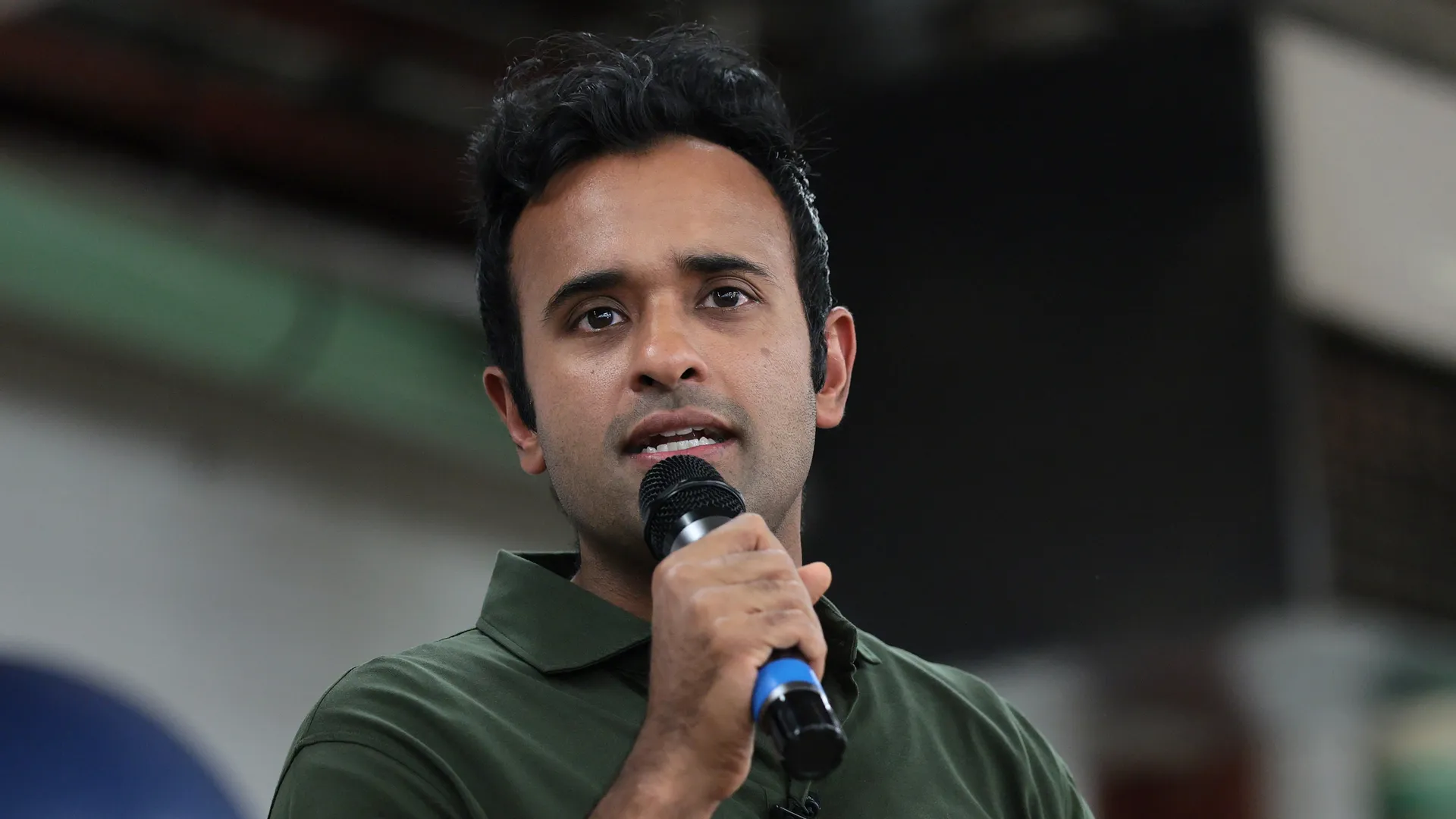
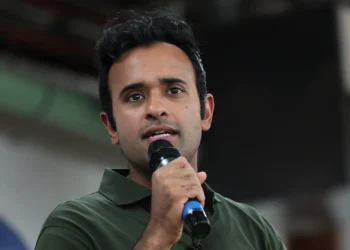
Republican gubernatorial nominee Vivek Ramaswamy has confirmed that his campaign has stopped broadcasting a controversial political advertisement targeting his Democratic opponent, Amy Acton, following widespread criticism from both sides of the political divide. The advertisement, which featured Acton’s estranged mother discussing her daughter’s troubled childhood, triggered public outrage over allegations that the Republican campaign had exploited the sensitive history of childhood sexual abuse for political advantage.
The decision to discontinue the advertisement marks a significant development in the increasingly contentious Ohio gubernatorial election. The controversy had attracted national attention, particularly after President Donald Trump publicly defended the campaign’s advertising strategy despite mounting criticism over the circumstances surrounding the allegations. The dispute has also raised broader questions about the ethical boundaries of political advertising, the use of personal trauma in election campaigns and the responsibility of candidates when discussing sensitive family histories.
Ramaswamy confirmed the decision on Thursday while speaking to reporters in Vandalia, Ohio. Asked whether his campaign had stopped airing the advertisement, he said it had completed its planned run and that the campaign had introduced four other advertisements. His comments indicated that the controversial commercial was no longer part of the campaign’s current broadcasting strategy.

However, Ramaswamy did not offer a direct apology for the advertisement or acknowledge that its content had crossed an ethical boundary. Instead, he attempted to shift attention towards policy discussions, arguing that the final stage of the election campaign should focus on issues affecting Ohio residents rather than arguments surrounding short political commercials.
He also criticised Acton for not agreeing to debate him, suggesting that voters should have an opportunity to compare their respective positions on important public policy questions. Nevertheless, the controversy surrounding the advertisement continued to dominate political discussions, placing additional pressure on his campaign to defend its approach.
The advertisement featured Donna Arthur, Acton’s estranged mother, whose family history became the centre of the political dispute. Court records from 1978 indicate that Arthur lost custody of her daughter after her second husband, Cledith Arthur, was charged with raping the young girl when she was between 10 and 12 years old.
The circumstances surrounding the case have made the advertisement particularly controversial. According to historical records, Acton and her brother experienced serious difficulties during their childhood. The allegations against their stepfather were a significant part of the family history, raising questions about the credibility and reliability of statements made by their mother.
The controversy intensified after Donna Arthur publicly criticised her daughter in an interview with the anti-abortion organisation Operation Rescue in 2020. At the time, Acton was leading Ohio’s response to the Covid-19 pandemic. During the interview, Arthur discussed her daughter’s childhood and claimed that she had been aware of allegations against Cledith Arthur before marrying him.
The Ramaswamy campaign subsequently used material from the interview in its political advertising. Last week, the Republican campaign announced plans to spend approximately $4 million broadcasting the advertisement, despite criticism from Democratic politicians and some Republicans.
The original commercial was approximately 60 seconds long. However, the campaign later edited it into a shorter 30-second version, removing a particularly disputed allegation made by Acton’s mother concerning whether her daughter had falsely described living in a tent with Arthur during childhood.
The editing decision did little to reduce the controversy. Court documents from the period indicated that Cledith Arthur had, in fact, been living in a tent around the time of his arrest on rape charges. The historical records therefore became an important element in discussions about the accuracy of the statements used in the advertisement.
Criticism also emerged from individuals concerned about the circumstances surrounding Donna Arthur’s participation in the campaign. Reporting by American media organisations suggested that she had experienced mental health difficulties and had faced significant personal challenges in later life. Reports also described an incident in which she was found living in her car with dozens of cats.
These circumstances reportedly troubled some individuals involved in producing the advertisement for Ramaswamy’s campaign. Questions emerged about whether the campaign had adequately considered the personal vulnerabilities of the woman whose statements were being used to attack a political opponent.
The controversy became even more politically sensitive after Donald Trump repeatedly defended the advertisement. At a rally alongside Ramaswamy on Wednesday, the president continued supporting the Republican candidate’s position without acknowledging why the allegations of childhood sexual abuse involving Acton were relevant to assessing the credibility of her mother’s statements.
Trump’s intervention brought additional national attention to the dispute. His support demonstrated the political significance of the Ohio gubernatorial contest and highlighted the close relationship between Ramaswamy’s campaign and the broader Republican political establishment.
However, the decision to discontinue the advertisement has provided Acton’s campaign with an opportunity to challenge Ramaswamy’s political strategy. Rather than allowing the controversy to fade, the Democratic campaign released a new advertisement on Thursday directly criticising his decision to use Acton’s childhood experiences as a political weapon.
The new commercial questioned how far Ramaswamy would go to secure the governorship and accused him of exploiting the sexual abuse of a child for electoral advantage. It also criticised the millions of dollars reportedly allocated to broadcasting the controversial advertisement.
The Democratic campaign argued that the Republican candidate had attempted to damage Acton’s credibility by bringing deeply personal and traumatic experiences into an election campaign. The advertisement sought to present the controversy as an example of political desperation rather than a legitimate discussion about public policy.
Acton also addressed the issue personally during an event with supporters on Thursday. Speaking publicly about her childhood, she acknowledged that her family had experienced significant abuse and neglect. She explained that she and her brother had frequent involvement with children’s services and had endured circumstances that included living in a tent during winter.
Her remarks offered a personal account of the difficulties that had shaped her early life. Rather than allowing the controversy to remain focused on statements made by her estranged mother, Acton attempted to explain the experiences from her own perspective.
She accused Ramaswamy of deliberately exploiting her childhood trauma in an effort to rescue a struggling political campaign. According to Acton, the advertisement was designed to distract voters from the issues that should determine the election and undermine her credibility through deeply personal attacks.
She also expressed confidence that the strategy would not succeed, telling supporters that bringing her childhood experiences into the campaign would not prevent her from continuing her political efforts.
The dispute has highlighted the increasingly aggressive nature of political advertising in the United States, where candidates frequently use television commercials, digital platforms and social media campaigns to influence public opinion. While attack advertisements have long been a feature of American elections, the use of childhood sexual abuse allegations and private family disputes has raised particularly serious ethical questions.
Political advertising is intended to help voters understand the differences between candidates, examine their records and assess their positions on issues such as employment, taxation, healthcare, education and public safety. However, when campaigns rely heavily on personal trauma and sensitive family histories, the discussion can move away from policy and towards the exploitation of individual suffering.
The Ohio gubernatorial race has therefore become more than a contest between Republican and Democratic candidates. It has also developed into a wider debate about the limits of political campaigning and the responsibility of public figures when using private experiences to influence voters.
For Ramaswamy, discontinuing the advertisement may help reduce the immediate controversy, but the decision does not necessarily end questions about the campaign’s judgement or the reasons behind its original advertising strategy. The reported $4 million broadcasting commitment and the repeated public defence of the commercial have ensured that the issue remains politically significant.

For Acton, the controversy has created an opportunity to speak directly about her childhood and challenge the way her personal history has been presented to voters. Her public remarks have also brought attention to the wider issue of childhood abuse and the long-term consequences that survivors can face.
As the Ohio election approaches its final stage, both campaigns are likely to face continued scrutiny over their messaging, policy positions and political conduct. Whether the controversy ultimately influences voter attitudes remains uncertain, but the episode has already become a prominent example of how personal experiences can become central to modern American political battles.
The decision to withdraw the advertisement may shift the campaign’s immediate focus, but the underlying questions about political responsibility, personal dignity and the ethical use of sensitive information are unlikely to disappear before voters make their choice.
Related News:
 Immigration Judges Fear Pressure in Trump Era
 Is America Ready for an AOC Presidential Run?
 Democrat Says ICE Restricted Detention Camp Oversight
 Senators warn US childcare policies could raise costs
 Latin America women fear rollback of rights
 ICE Agent Shoots Man in New York as Child Escapes Harm
 Bolsonaro Gains Key Endorsement Ahead of Brazil Runoff
 Trump Attacks Norway After Nobel Peace Prize Snub
 Trump Names Katie Zacharia as Next White House Spokesperson
 Millions Face Tougher Medicaid Rules From January
 Ohio Airports Become Key Hubs for ICE Deportation Flights
 Trump’s Midterm Campaign Faces Racism and Political Backlash
 Obama Mocks Trump at Georgia Rally for Democrats
 Melania Trump Epstein remarks spark survivor backlash
 US Court Weighs Fate of TPS for Migrants
 US states redraw maps after voting rights ruling
 US ‘Narco Boat’ Strikes Draw Global Outcry
 Florida Surgeon ‘Devastated’ Over Fatal Surgery Error
 Trump’s Mount Rushmore Speech: A Divisive Anniversary
 Trump Orders Signs Criticising Smithsonian Museum
 RAF Barnham Protests Fuel Tensions in Norfolk Town
 Trump Calls Iran War ‘Small Potatoes’ Despite US Deaths
 New Mexico Takes Facebook to Trial Over Data Scandal
 Patriot Platform Raises Concern Across Britain
 Man Arrested in Mississippi Woman’s Death
 Trump’s Washington Projects Face Architectural Criticism
 Texas Charges Seven Noncitizens in Voting Crackdown
 Omar Proposes Bill to Redirect ICE Funding
 Lib Dems Prepare for Election Amid Reform Challenge
 US Deportation Deals Send Migrants to Unfamiliar Countries
 US Networks Suspend Trump White House Pool Coverage
 Trump and Mamdani Hold Cordial Gracie Mansion Meeting
 Elif Eralp Emerges as Berlin’s Next Political Force
 Lula accuses Trump of seeking control over Brazil
 Republican Senator Questions Trump Ad Spending
 Free Speech Emerges as Key UK Election Issue
 Cornell Fraternity Assault Investigation Reopened
 Drumcree Talks Falter as Legal Challenge Deepens
 UK-France Returns Deal Faces Expiry as Talks Stall
 Green Party faces dispute over Zionism motion
 Drumcree Talks End Without Agreement Ahead of Appeal
 Badenoch Raises Prospect of 2027 UK Election
 New Prosecutor Takes Over Cornell Assault Case
 Musk’s DOGE Sparks Turmoil Inside US Government
 Families Await USS Abraham Lincoln Homecoming
 Pritzker’s National Profile Grows Ahead of 2028
 US bombers leave RAF Fairford after terror threat
 Botstein Quits Bard Amid Epstein Investigation Calls
 Luton Residents Reject Claims of ‘No-Go Zones’
 Trump Says He Deserves Nobel Peace Prize
 USS Lincoln Ends Record 265-Day Deployment
 India’s Youth Movement Alleges Mass Detentions Before Protest
 US Senate Debates Turn Bitter as Midterms Near
 Gaza War Deepens India’s Strategic Ties With Israel
 Hurricane Isaias Puts FEMA Under New Pressure
 US Execution Livestream Plan Sparks Global Outrage
 Controversial Vaccine Trial Approved in Guinea-Bissau
 UK Gaza Refugee Route Criticised Over False Hope Claims
 Trump Names Katie Zachariah as Next White House Press Secretary
 French Students Protest Poor Conditions in Paris Suburbs
 UK Greens Face Crisis Over Zionism and Extremism Row
 Brazil Court Scandal Threatens Lula as Bolsonaros Rise
 Greta Thunberg Backs French Students in School Protests
 England and Wales Begin Second Wave of Early Prison Releases
 Judge Blocks Trump White House Media Ban
 Camera Discovery Triggers Navy Ship Investigation
 Brazil Cuts Working Week to 40 Hours in Lula Election Boost
 Gadi Eisenkot: Israel’s Anti-Netanyahu Challenger
 Talarico Faces Tough Voter Test in Texas Senate Race
 Serbia Leader Linked to Controversial Trump Tower Plan
 Trump Slams Ukraine Strikes as Russia Ceasefire Collapses
 Jenrick Defends Farage Amid Fresh Reform Racism Claims
 Lula Supporters Make Final Push Ahead of Brazil Runoff
 Rubio Urges Cubans to Seize Moment for Change
 Ramaswamy Under Fire Over Controversial Ohio Ad
 Vance Steps Up Midterm Role Amid 2028 Questions
 Taylor Faces Backlash Over Response to Haines Attack
 US Midterms Could Reshape Trump’s Second Term
 Serbia’s Student Victory Sparks a ‘Smell of Freedom’
 Spain Mourns 68 Dead After High-Speed Train Crash