Published: 12 October 2026. The English Chronicle Desk. The English Chronicle Online
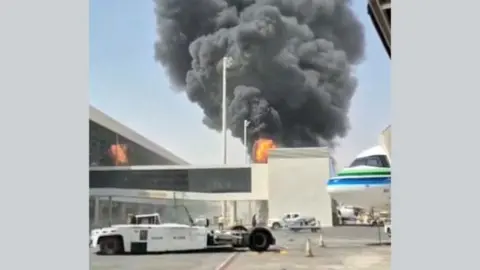
A fresh projectile strike at Riyadh’s King Khalid International Airport has intensified fears that the escalating conflict between Saudi Arabia and Yemen’s Houthi rebels could draw additional countries into a widening Middle Eastern war. Saudi authorities said the latest incident killed one person and injured 11 others, while a fire broke out at a passenger terminal and air defences intercepted a cruise missile near the airport.
The incident came just one day after a deadly attack on the airport reportedly killed 13 people and injured more than 300, marking a major escalation in the confrontation between Saudi Arabia and the Iran-backed Houthi movement. The successive strikes have raised serious concerns about civilian safety, regional aviation security, international travel and the potential consequences for an already volatile global economy.
Saudi civil aviation authorities said the unidentified projectile struck Terminal 4 at King Khalid International Airport on Sunday. Emergency services responded as reports emerged of damage and disruption at the facility. The airport has faced repeated attacks over the past week, placing additional pressure on Saudi Arabia’s air defence systems and raising questions about the protection of critical transport infrastructure.

The Saudi authorities also confirmed that King Fahd International Airport in Dammam, in the kingdom’s eastern region, had been targeted. Officials said assessments of the damage and checks on the safety of airport facilities were continuing in coordination with the relevant authorities. The incidents indicate that the threat is no longer confined to a single location, increasing concerns about the security of Saudi Arabia’s wider aviation network.
Following the earlier deadly attack, Saudi authorities extended the closure of Riyadh’s airport and announced that schools would move to online learning until Thursday. These measures reflected the seriousness of the security situation as officials sought to limit public exposure to further violence and assess the risks facing essential services.
Videos circulated on social media appeared to show travellers moving through debris near the airport while sirens sounded. The attacks have disrupted ordinary journeys and created uncertainty for passengers, airline employees and families travelling through one of the region’s important aviation hubs. The latest incident has also prompted renewed warnings about travel to Saudi Arabia.
The British embassy in the kingdom advised against all but essential travel to Jeddah and Dammam and urged people to avoid almost all airports. The guidance underscored the growing international concern surrounding the security situation, particularly as repeated attacks threaten to affect commercial aviation and the movement of people across the Gulf.
The human cost of the previous strike has added to the alarm. Those reported killed included Saudi citizens and foreign nationals from Bangladesh, Palestine, the United States, Egypt, Jordan, Syria and Sudan. The deaths highlighted the international character of the tragedy, with people from several countries caught up in an attack on a civilian transport facility.
Among the victims was Azza Ramzy, a 28-year-old Egyptian flight attendant working for the Saudi airline Flynas, according to Egyptian state-run television. Her death brought a particularly painful dimension to the incident for colleagues and relatives connected to the aviation industry.
Another victim was identified as Buthaina Ahmad Oweida, a Syrian woman and widowed mother of four who had lived in Saudi Arabia for five years. A relative told the Associated Press that she had left Syria during the country’s civil war and was living in Mecca. She had reportedly travelled to Riyadh to visit her sister and was returning when she was killed.
The accounts of the victims illustrate how escalating military confrontations can transform routine travel into a life-threatening experience. Beyond the immediate casualties, the attacks have left families grieving and raised fears among expatriate communities whose members depend on airports for work, family visits and international travel.
The Houthi movement has claimed responsibility for several attacks on the airport, including the previous day’s deadly strike. The group issued warnings to airlines, aviation workers and passengers, saying Saudi airports and airspace had become potential targets for further operations. It warned that the situation could deteriorate further if Saudi military action in Yemen continued.
The Houthis also claimed that Saudi airstrikes hit Sana’a, Yemen’s rebel-controlled capital, on Sunday. The group’s health ministry said a child was killed and six other people were injured when a home was struck. These claims underscore the danger of reciprocal attacks, although details of individual incidents and casualty figures remain subject to verification.
Saudi Arabia’s military response has already included airstrikes against Houthi positions in Yemen. The Houthi government’s health ministry said coalition strikes over the preceding six weeks had killed 91 people and wounded 168, with women and children accounting for 60 per cent of the wounded, according to its figures. Such claims could not independently establish the full civilian toll but illustrate the competing narratives surrounding the conflict.
The confrontation has also revived the prospect of more direct American involvement. US President Donald Trump said he was considering whether Washington should join the Saudi military campaign against the Houthis. Following the earlier airport attack, Trump indicated that he would discuss the situation with Saudi Crown Prince Mohammed bin Salman.
The United States has already supported Saudi Arabia through intelligence cooperation and targeting assistance, with approximately 200 American military advisers reportedly stationed in the kingdom to assist with the campaign. However, Washington had not directly participated in fighting the Houthis before the latest escalation described in the reports.
Any decision to expand US military involvement could have consequences beyond Yemen. The Houthis have previously threatened maritime traffic, and deeper American participation could encourage renewed attacks against commercial vessels passing through the Bab al-Mandab strait. The strategic waterway connects the Red Sea with the Gulf of Aden and serves as a vital route for international shipping.
Disruption around the strait could increase transport costs, delay deliveries and place further pressure on global supply chains. The route is particularly important to trade moving between Europe and Asia. Any sustained threat to shipping could therefore affect businesses and consumers far beyond the Middle East, especially at a time when energy prices and international transport costs are already under pressure.
The latest violence is unfolding against the background of the wider US-Iran conflict, which has contributed to instability across the region since March. Fighting and heightened tensions have also affected Lebanon and Iraq, raising fears that additional military confrontations could become interconnected.
Saudi Arabia’s position is especially complicated because it has been drawn back into a conflict that previously experienced a period of relative calm. The kingdom led an international coalition against the Houthis in 2015 after the group seized Sana’a and toppled Yemen’s internationally recognised government. A United Nations-brokered ceasefire in 2022 subsequently helped freeze major frontlines, although it did not resolve the underlying political and security disputes.
The latest deterioration followed a Houthi campaign launched in early September to seize territory along Yemen’s Red Sea coast. The operation came after months of growing tensions with Yemen’s government and its Saudi backers. Saudi-supported government forces have since attempted to reverse recent Houthi gains, but the rebels have retained positions in strategically important areas.
One concern is the group’s continued influence near the Bab al-Mandab strait, including areas such as Perim Island. Control and access around these locations carry considerable strategic importance because they affect maritime security and the movement of commercial vessels through the Red Sea.
International condemnation of the airport attack has grown. United Nations Secretary-General António Guterres and European Commission President Ursula von der Leyen were among those expressing concern. Von der Leyen warned that attacks by Iran-aligned groups were increasing regional instability and threatening important international transport and energy infrastructure.
Diplomatic statements have been accompanied by moves towards closer military cooperation. Saudi Arabia, Pakistan and Turkey announced that they would accelerate implementation of their mutual defence arrangements, including the faster deployment of military forces in the kingdom. The United Kingdom also said it would provide defensive military assistance to Riyadh, including aerial refuelling support for aircraft involved in intercepting Houthi missiles.
Saudi Arabia has sought additional assistance from France, Egypt, the United Kingdom and Pakistan as concerns grow over supplies of interceptor missiles. Repeated attacks can place significant pressure on air defence resources, particularly when relatively expensive defensive systems are required to counter successive waves of incoming threats.
The potential expansion of the conflict also presents a political challenge for Washington. Trump faces the November midterm elections amid public frustration over the continuing confrontation with Iran and concerns about rising prices at home. A deeper military commitment to Yemen could increase pressure on the administration to demonstrate that its strategy can protect American interests without drawing the country into another prolonged regional conflict.

For Saudi Arabia, the immediate priorities are protecting civilians, restoring confidence in air travel and preventing further attacks on essential infrastructure. For Yemen, the renewed fighting threatens to undermine years of efforts to reduce hostilities and could worsen an already severe humanitarian situation.
The attacks on Riyadh’s airports have therefore become more than a question of aviation security. They represent a potentially significant turning point in a conflict involving regional rivalries, international military commitments and vital global shipping routes. Whether diplomatic engagement can prevent further escalation remains uncertain, but the consequences of a wider confrontation could reach far beyond Saudi Arabia and Yemen, affecting international trade, energy markets and civilian lives across the region.
Related News:
 Houthis Strike Saudi Arabia as Middle East Tensions Rise
 Saudi Pact Raises Risk of Pakistan Entering War
 New Maps Reveal Gaza’s Vast Destruction
 Israel Marks Three Years Since October 7 Attack
 Tanker Attacked Near Qatar as Hormuz Tensions Escalate
 Israel Promotes Film Challenging Controversial Gaza Documentary
 Trump Rules Out Iran Attack Before US Elections
 UK Prepares Aircraft Carrier for Middle East Crisis
 Middle East Crisis Escalates as Oil Routes Shake Markets
 Millions Gather for Khamenei’s Six-Day State Funeral
 Taliban global ties grow as rights fears mount
 Israeli Strike in Southern Lebanon Kills Seven
 Trump Calls Strait of Hormuz ‘American Territory’
 Trump Faces Iran War Crisis Before Midterm Vote
 North Korea Expands Uranium Facility at Yongbyon
 Saudi Arabia Shuts Oil Pipeline After Drone Attack
 Nearly 50,000 Flee as Houthis Advance in Yemen
 South Korea Rules Out Military Role in Iran War
 Netanyahu faces protests and pressure at UN
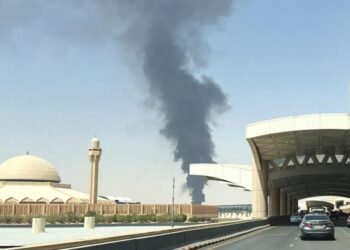 Saudi intercepts Houthi missiles as oil fears grow
 Iran Awaits Trump Response on Seven-Day Hormuz Plan
 Trump Asked Xi About Buying US Weapons
 South Korea-Ukraine Row Erupts Over North Korean POWs
 US Sends Third Carrier to Middle East
 Yemen government launches offensive against Houthis
 Germany Pledges €1bn Military Aid to Ukraine
 Israeli Settlers Assault Palestinian Photographer
 Three Years On, October 7 Survivors Face Lasting Trauma
 Yemen Conflict Escalates as Houthis Expand Their Front
 Vance Demands Iran Cut Nuclear Enrichment
 Turkey Rules Out Troops in Saudi Arabia’s Houthi Conflict
 Middle East Flights Halted After Iran Strikes
 Thousands Protest Iran Strikes Outside US Embassy London
 US Bombers Arrive at RAF Base Amid Rising Iran Tensions
 Mojtaba Khamenei Chosen as Iran’s New Supreme Leader
 Tehran Oil Depot Strikes Darken City With Toxic Smoke
 Mojtaba Khamenei Supporters Rally as Iranians Fear Repression
 Iran Defiance Grows Amid US-Israel War Pressure
 Hormuz Crisis Sparks Global Oil Market Fears
 Iranian Exile Factions Seek US Backing for Iran’s Future
 Injured Mojtaba Khamenei Elevated as Iran Leader
 Trump Iran War Stance Hardens as Conflict Widens
 Iran Crisis Tests Trump’s Global Leadership
 Southeast Asia Turns to Russia Amid Energy Crisis
 Activists allege abuse after Gaza flotilla seizure
 Australia pushes Pacific security pact amid China tension
 Trump Announces 3-Day Russia–Ukraine Ceasefire Deal
 Tensions Emerge in Netanyahu-Trump Alliance
 US Awaits Iran Reply on New Ceasefire Proposal
 Hormuz Talks Near Critical Stage
 Discontent grows around Putin amid war strain
 Former ICC prosecutor condemns US sanctions
 Trump Claims Iran Peace Deal Near Completion
 Venezuela Quake Death Toll Surpasses 4,000
 Russian Missiles Intensify Pressure on Kyiv
 Former Diplomats Urge UK and France to Act on Palestine
 Trump Calls Iran War ‘Small Potatoes’ Despite US Deaths
 UN expert urges UK to rethink Israel policy
 Israel Accused of Undermining Palestinian Life
 Middle powers seek new alliances amid Trump era
 Japan PM Backs International Criminal Court
 Iran Rejects Claims of Shift in US Talks
 Xi urges Trump to avoid US-China military conflict
 Russia Targets Ukraine’s Digital Economy With Strikes
 South Korea demands apology over DMZ mine blast
 Pilot and Passengers Help Save Flydubai Flight
 North Korea Fires Missile Amid DMZ Tensions
 Ukraine claims strikes have crippled Russia’s oil refining
 South Korean fuel reaches Russia despite sanctions
 Iran Nobel Laureate Reveals Prison Torture and Fears
 Trump Comments on Iran Strike Draw US Backlash
 Canadian Veterans Condemn Trump Allies’ Military Remarks
 Tanker Ablaze After Drone Strike Near Sochi
 South Korea Probes Fuel Shipments to Russia
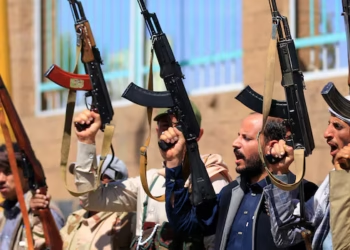 Houthi Missile Claim Sparks Riyadh Airport Disruption
 India’s Youth Movement Alleges Mass Detentions Before Protest
 Gaza War Deepens India’s Strategic Ties With Israel
 EU Divisions Deepen Over Israel Policy
 Trump’s Russian Diesel Deal Sparks Ukraine Fury
 Delhi Detains Protest Leaders as Youth Rally Escalates