Published: 20 October 2026. The English Chronicle Desk. The English Chronicle Online
Myanmar’s detained former leader Aung San Suu Kyi has appeared in rare photographs after receiving gardening books and other items from Britain’s King Charles III, prompting renewed international attention to her prolonged detention and the military government’s efforts to rebuild diplomatic relations. While the royal gifts have been welcomed by her son, critics have warned that the carefully controlled release of the images could be an attempt by Myanmar’s military leadership to create an impression of normality and improve its international standing.
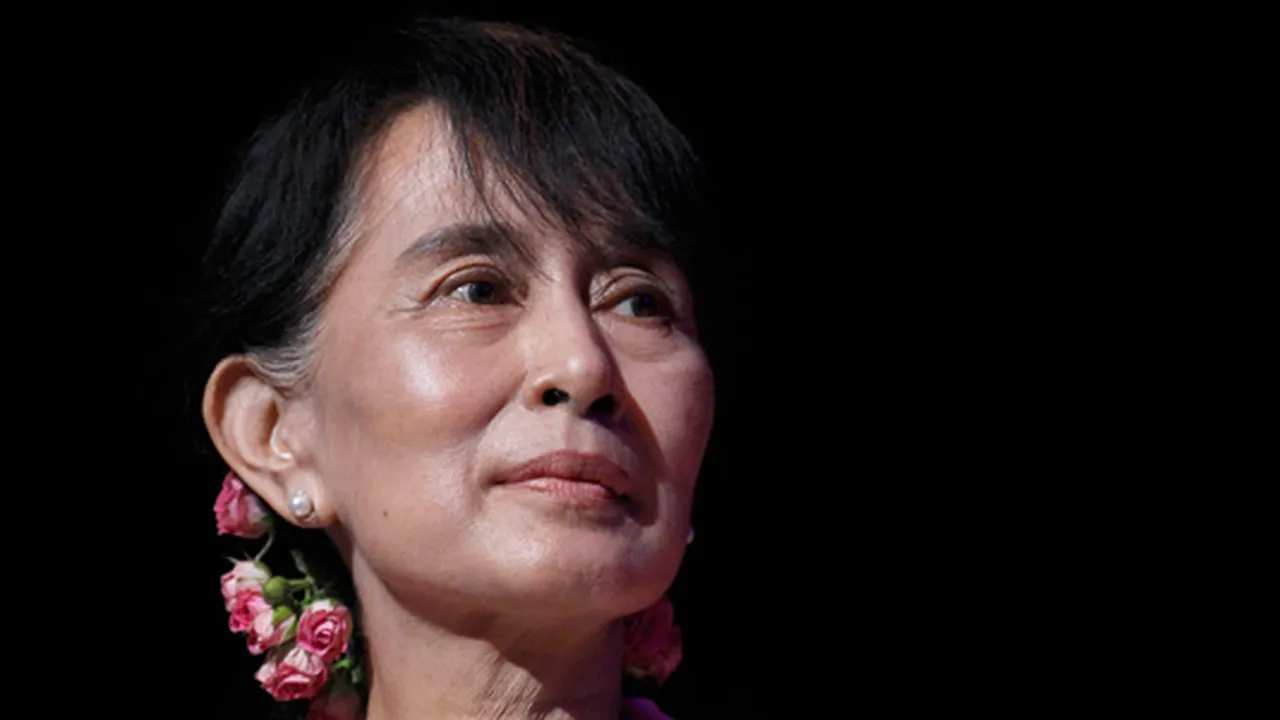
The photographs, released alongside information about the delivery of the gifts, showed the 81-year-old Nobel Peace Prize laureate smiling in a wood-panelled room, with a paper calendar visible on the wall behind her. The images offered a rare glimpse of a political figure whose whereabouts, health and living conditions have remained difficult to establish since the military seized power in 2021.
According to a spokesperson for Myanmar’s presidency, officials from the home ministry delivered two gardening books focusing on soil, together with a sealed envelope and a sealed diplomatic pouch, on behalf of King Charles. The British monarch is known for his longstanding interest in gardening and environmental issues.

Although the contents of the envelope and diplomatic pouch were not disclosed, the delivery attracted attention because of Suu Kyi’s continued detention and the extraordinary political circumstances surrounding her imprisonment. The photographs provided a limited view of her condition but did not independently establish the full extent of her health, living arrangements or access to family members.
Suu Kyi has spent decades at the centre of Myanmar’s struggle over democracy and military rule. The daughter of independence hero General Aung San, who was assassinated before she was born, she became one of the country’s most prominent advocates for democratic government and spent substantial periods under house arrest during earlier confrontations with the armed forces.
Her international profile grew as she led pro-democracy opposition movements against successive military governments. In 1991, she received the Nobel Peace Prize in recognition of her non-violent campaign for democratic change. Her political journey subsequently brought her from years of confinement to electoral victory, before another military takeover ended her administration.
Suu Kyi’s National League for Democracy won Myanmar’s 2015 general election, allowing her to assume the position of state counsellor and become the country’s de facto civilian leader. However, the military retained considerable constitutional and political power during her time in office.
In February 2021, the armed forces overthrew the elected government, detained Suu Kyi and other political leaders, and triggered a national crisis that has since developed into a devastating civil war. Resistance movements, ethnic armed organisations and military forces have continued fighting across large parts of the country, with civilians bearing much of the humanitarian burden.
Independent conflict monitoring organisation ACLED has estimated that more than 100,000 people have been killed in the conflict since the coup. The continuing violence, displacement and deterioration of public security have made Myanmar one of the region’s most serious political and humanitarian crises.
Since her detention, information about Suu Kyi has remained limited. Her supporters and family members have repeatedly expressed concern about the lack of transparency surrounding her circumstances. A visit by the International Committee of the Red Cross in August offered a rare opportunity for contact with the detained former leader, but significant questions about her condition and treatment have persisted.
The latest photographs therefore carry political significance beyond the delivery of a personal gift. Their release provides a glimpse of Suu Kyi while leaving unresolved broader concerns about her freedom, legal status and fundamental rights.
Her son, Kim Aris, who lives in London, welcomed the gifts from King Charles but warned against allowing the military authorities to use the gesture for political purposes. He said that the release of selected images should not create a misleading impression that conditions in Myanmar had returned to normal.
“We must not allow the military regime to use such selective disclosures to create an illusion of normality or gain international legitimacy,” Aris said in a statement. He added that his mother’s fundamental human rights continued to be violated.
His response reflected the dilemma facing international figures and governments seeking to maintain humanitarian contact with detained political leaders without appearing to endorse the authorities responsible for their confinement. Royal correspondence and personal gifts can carry symbolic importance, but their political interpretation becomes particularly sensitive when the recipient is a high-profile prisoner.
The controversy also comes as Myanmar’s military leadership seeks to rebuild diplomatic relationships after years of international criticism and regional isolation. Min Aung Hlaing, the former commander-in-chief who led the 2021 coup, was installed as civilian president in April following elections widely condemned by critics as lacking credibility and failing to provide a genuine democratic choice.
His administration has sought to present the political transition as an opportunity for renewed engagement with neighbouring countries and international partners. However, continued fighting, restrictions on political opposition and allegations of serious human rights abuses have complicated those efforts.
Min Aung Hlaing remains subject to United States sanctions over human rights abuses, including the military’s campaign against Rohingya Muslims in 2016 and 2017. Washington has described the atrocities against the Rohingya as genocide. The mass killings and forced displacement of the minority population remain among the most consequential issues affecting Myanmar’s international reputation.
Myanmar has consistently denied accusations of genocide. Suu Kyi herself faced intense international criticism when she defended the country before the International Court of Justice in 2019 against allegations relating to the treatment of the Rohingya. Her appearance before the court disappointed many former supporters who had regarded her as a global symbol of human rights and democratic resistance.
The contrast between her earlier international standing and the present circumstances illustrates the complexity of Myanmar’s political history. Although she opposed military rule for much of her career, her government’s response to the Rohingya crisis damaged her reputation among human rights advocates. Her subsequent imprisonment after the coup has nevertheless renewed concerns about the military’s treatment of political opponents and its continuing control over the country.
Min Aung Hlaing has also pursued closer relations with Southeast Asian neighbours after the Association of Southeast Asian Nations excluded him from its summits in 2021 over the military authorities’ failure to implement a regional peace agreement. The bloc’s diplomatic approach has sought to encourage dialogue and reduce violence, but progress has remained limited.
The military leader has recently visited several regional countries, including Laos, Thailand, Vietnam and Cambodia. During a trip to Malaysia in October, he received an official welcome and an honour guard, signalling renewed efforts to establish working relationships with neighbouring governments.
Human rights advocate Phil Robertson, director of the Asia Human Rights and Labour Advocates group, interpreted the release of Suu Kyi’s photographs as part of a wider effort to secure international acceptance. He argued that regional governments had grown frustrated with the lack of progress in Myanmar and were increasingly interested in moving beyond the crisis.
Robertson suggested that displaying Suu Kyi receiving gifts could help the military authorities present a more favourable image while providing regional governments with a symbolic basis for renewed engagement. In his assessment, the controlled appearance of the detained leader formed part of a broader attempt to make diplomatic rapprochement appear more acceptable.
The military government has also sought to improve relations with the administration of US President Donald Trump. In a September interview, Min Aung Hlaing expressed interest in cooperation with Washington. Weeks later, Reuters reported that US and Myanmar officials had held discussions in Naypyidaw and Tokyo, including talks about shutting down scam centres targeting Americans.
Those discussions could potentially expand into other areas of cooperation, including the exploitation of Myanmar’s mineral resources. The US State Department has said it is reviewing the range of tools Washington has historically used to advance its core interests in the country. Meanwhile, China has emerged as Myanmar’s principal international partner, strengthening its influence amid the country’s diplomatic difficulties.
These developments underline the strategic considerations surrounding Myanmar’s future. Governments may see opportunities for cooperation on security, organised crime, trade and natural resources, but engagement also raises questions about accountability, political freedoms and the consequences of legitimising military rule.
For Suu Kyi’s supporters, the latest photographs offer a rare indication that she remains accessible to carefully managed forms of contact, but they do not resolve the central concerns surrounding her detention. Her son’s warning highlights the risk that limited disclosures could be used to divert attention from the broader political and humanitarian crisis.

The delivery of King Charles’s gifts has consequently become more than a personal gesture. It has drawn attention to the intersection of diplomacy, human rights and Myanmar’s continuing struggle over political authority. Whether the images lead to greater transparency about Suu Kyi’s circumstances or primarily serve the military government’s diplomatic objectives remains uncertain.
As Myanmar seeks to rebuild relations with regional and international partners, the treatment of its detained former leader will remain an important measure of its willingness to address concerns about political freedoms and human rights. For now, the rare photographs provide a brief glimpse of Suu Kyi, while the questions surrounding her freedom, the legitimacy of the military-led government and the country’s path towards lasting peace remain unresolved.
Related News:
 Delhi Braces for Youth Protests Over Voter Roll Dispute
 Delhi Detains Protest Leaders as Youth Rally Escalates
 India’s Youth Movement Alleges Mass Detentions Before Protest
 PTI Announces Swabi Rally Ahead of Long March Plans
 Delhi Closes Metro Stations Ahead of Election Protest
 Pakistan Suspends PTI Government Amid Political Crisis
 India’s Voter Roll Crisis Sparks Nationwide Protests
 Gadi Eisenkot: Israel’s Anti-Netanyahu Challenger
 Trump’s Revenge Drive Deepens GOP Divide
 Le Pen’s Popularity Holds Despite Conviction
 Five Years of Taliban Rule Leave Afghanistan in Crisis
 Nepal Flood Survivors Face Unimaginable Loss
 Nepal Tunnel Rescue Offers Hope Amid Flood Devastation
 Saudi Pact Raises Risk of Pakistan Entering War
 Japan PM Backs International Criminal Court
 King Refers Jamaica Slavery Petition to Privy Council
 Nepal PM calls deadly flood a global climate warning
 Trump Asked Xi About Buying US Weapons
 South Korea-Ukraine Row Erupts Over North Korean POWs
 French Student Protests Escalate Into Violent Clashes
 Israel-bound Plane Lands in Saudi Arabia After Cockpit Fight
 Burnham Opens Door to Possible UK Return to EU
 Drumcree Talks Falter as Legal Challenge Deepens
 UK-France Returns Deal Faces Expiry as Talks Stall
 Pilot Recalls Fight to Save Flydubai Passengers
 French School Protests Escalate as 400 Schools Close
 Latin America women fear rollback of rights
 Pacific Climate Summit Draws Limited Global Leaders
 Delhi Freezes Promotion of Police Officer After Allegations
 Tanker Attacked Near Qatar as Hormuz Tensions Escalate
 Sri Lanka Ex-First Lady Arrested Over Donation Probe
 Japan’s Princess Aiko Fuels Debate Over Royal Succession
 Gaza War Deepens India’s Strategic Ties With Israel
 Turkey Rules Out Troops in Saudi Arabia’s Houthi Conflict
 Pakistan Lawyers Back PTI Long March and Demands
 Delhi Tightens Security Ahead of Election Protest
 Navi Pillay Wins Nobel Peace Prize for Justice
 Controversial Vaccine Trial Approved in Guinea-Bissau
 Trump Attacks Norway After Nobel Peace Prize Snub
 Ten US Midterm Races That Could Defy Expectations
 Ohio Airports Become Key Hubs for ICE Deportation Flights
 Farage Rejects Claims Reform Would Let Troops Shoot Migrants
 Brazil Cuts Working Week to 40 Hours in Lula Election Boost
 Talarico Faces Tough Voter Test in Texas Senate Race
 One Nation Pledges $2,000 Baby Subsidy in Victoria
 Macron Condemns Violence as France Faces 2,400 Arrests
 Alberta Referendum Exposes Deep Divisions Over Independence
 Marseille Activist Defies France’s Powerful Drug Gangs
 Obama Warns Against Threat to Ilhan Omar’s Citizenship
 Trump Deploys DHS to Charlotte in Major Arrest Operation
 Thousands Protest ICE Operations in Nationwide US Day of Action
 Report Says Pezzullo Acted ‘Recklessly’ in Dealings
 Suspected Plot Targets Pipeline Before Hungary Vote
 Discontent grows around Putin amid war strain
 Farage and Reform UK Reshape British Politics
 Houthis Strike Saudi Arabia as Middle East Tensions Rise
 Turkey LGBTQ Crackdown Expands With New Arrests
 Mahmood Warns Far Right Over Asylum Protests
 US Networks Suspend Trump White House Pool Coverage
 Democrat Says ICE Restricted Detention Camp Oversight
 Xi urges Trump to avoid US-China military conflict
 Republican Senator Questions Trump Ad Spending
 Free Speech Emerges as Key UK Election Issue
 Madrid Tent Camp Grows as Spain Housing Crisis Deepens
 Badenoch Raises Prospect of 2027 UK Election
 Gosport Protesters Clash With Police Over Migrant Rescue
 Palace Rejects Funding Andrew’s Police Legal Challenge
 Okinawa US Troops Face Curfew After Murder Case
 Israel Marks Three Years Since October 7 Attack
 South Korea Probes Fuel Shipments to Russia
 Trump Says He Deserves Nobel Peace Prize
 Houthi Missile Claim Sparks Riyadh Airport Disruption
 South Africa Withdraws Directive on Asylum Applications
 Trump Rules Out Iran Attack Before US Elections
 Trump’s Russian Diesel Deal Sparks Ukraine Fury
 Trump Names Katie Zachariah as Next White House Press Secretary
 Brazil Court Scandal Threatens Lula as Bolsonaros Rise
 Iranian Woman Faces Death Sentence Over Social Media Post
 Pakistan School Roof Collapse Kills 27 Students
 UK Visa Refusal Threatens Baby’s Family Christmas