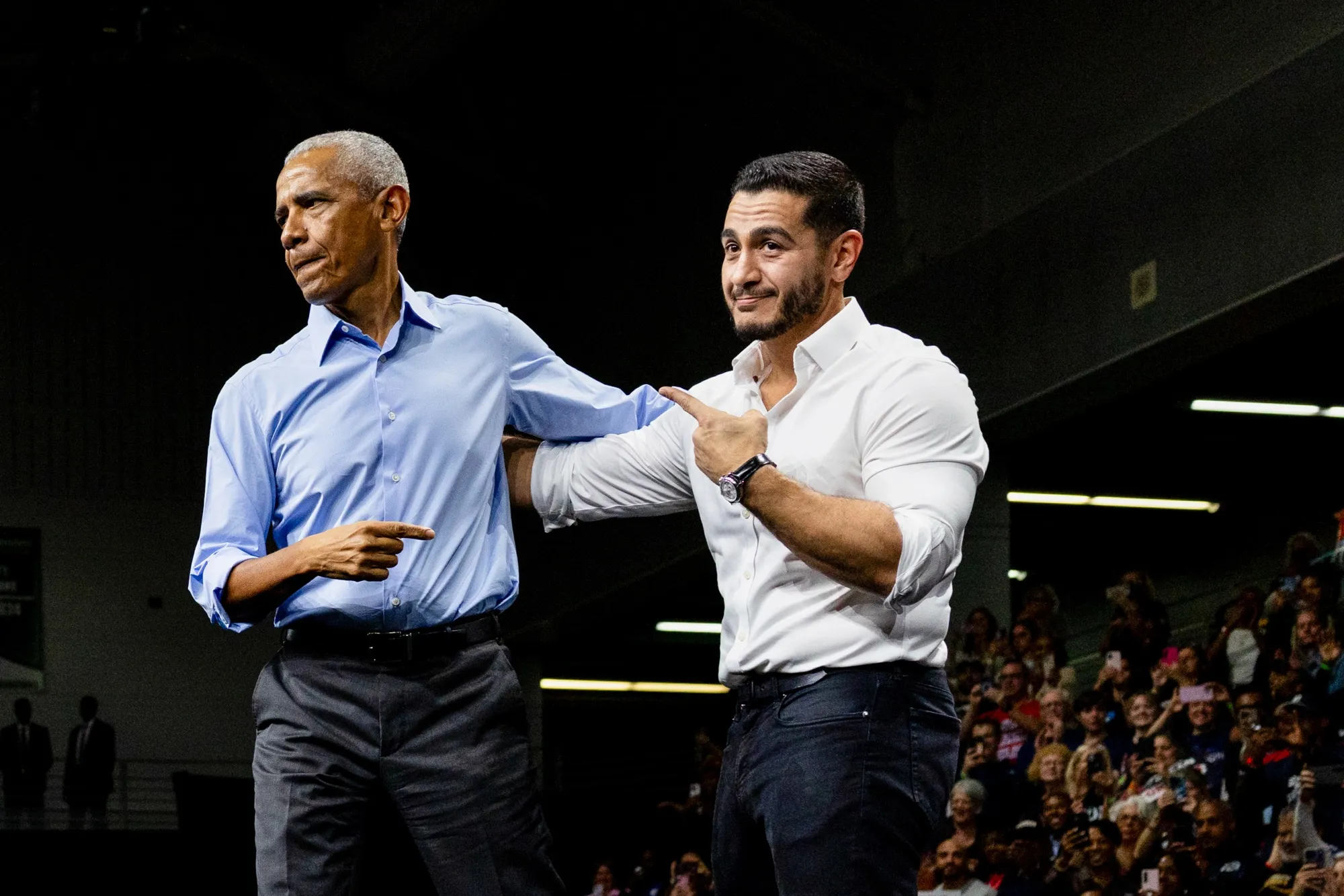
US President Donald Trump has sparked fresh political controversy after launching a series of personal and racially charged attacks against Democratic Senate candidate Abdul El-Sayed during a campaign rally in Iowa. Trump repeatedly described the Michigan progressive as a “jihadist” and used inflammatory language targeting his Muslim identity, intensifying an already heated political battle ahead of the November midterm elections.
The remarks came at a particularly sensitive moment in the Michigan Senate race, where El-Sayed is competing against Republican candidate Mike Rogers in a closely contested election that could have significant consequences for control of the US Senate. With voters preparing to cast their ballots, the president’s intervention has added another layer of national attention to a campaign already marked by divisions within the Democratic Party.
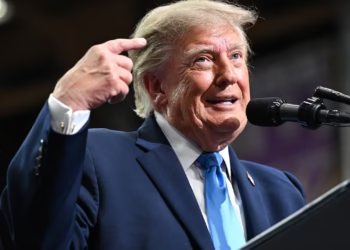
Speaking to supporters at Sunday’s rally, Trump directly attacked El-Sayed, who is a practising Muslim, portraying him as a threat to American security and national interests. The president repeatedly used the term “jihadist” while urging voters to reject the Democratic candidate.

In one particularly controversial remark, Trump suggested that Congress would need to install a special metal detector for El-Sayed if he were elected. The statement was widely characterised as an attempt to associate the candidate’s Muslim identity with terrorism and security threats without presenting evidence to support such implications.
Trump also urged voters not to support El-Sayed, describing him as a dangerous political figure. His comments went beyond conventional criticism of an opponent’s policies and focused heavily on religious identity, raising concerns about the use of anti-Muslim rhetoric in American electoral politics.
The controversy is particularly significant because Michigan has a substantial Muslim and Arab American population. The state has become an important political battleground, where voters’ views on domestic economic conditions, immigration, foreign policy and the conflict in Gaza could influence the final outcome.
The Michigan Senate contest has attracted considerable attention from national political leaders because the result could help determine which party controls the upper chamber of Congress following Tuesday’s midterm elections. A narrow victory by either candidate could have consequences for legislative priorities, presidential appointments and the broader balance of political power in Washington.
Trump’s remarks also came amid a growing dispute between El-Sayed and former Democratic primary rival Haley Stevens. Stevens, who lost to El-Sayed in the party’s August Senate primary, had refused to actively campaign alongside him despite efforts by senior Democrats to establish unity after the primary contest.
The disagreement became particularly intense over an advertisement produced by an outside political organisation. The advertisement suggested a connection between rising living costs in the United States and American military support for Israel’s war in Gaza.
Stevens, a strong supporter of Israel, demanded that El-Sayed publicly condemn the advertisement before appearing alongside him at a planned campaign event. El-Sayed rejected the demand, arguing that the issue had already been debated during the primary campaign and that reopening the disagreement would unnecessarily undermine party unity.
The dispute eventually resulted in Stevens being disinvited from a campaign appearance scheduled for Sunday. Instead of joining El-Sayed, she announced her support for Republican candidate Mike Rogers, creating an extraordinary political development just days before the election.
Her endorsement generated immediate criticism from Democratic leaders, who accused her of weakening the party’s position at a crucial moment. Senate Democratic leader Chuck Schumer was among those who strongly condemned her decision and reaffirmed his support for El-Sayed.
The situation also attracted attention because Stevens had previously been critical of several policies associated with Trump and his political movement. Her decision to support Rogers, a Republican candidate aligned with the president’s political agenda, therefore represented a significant departure from the position expected by many Democrats.
Trump welcomed Stevens’s decision and praised her for turning against El-Sayed. During the Iowa rally, he described her endorsement as an extraordinary development and openly encouraged her to join the Republican Party.
The president suggested that Stevens could eventually become a Republican, expressing enthusiasm about the possibility of welcoming her into the GOP. His comments highlighted the political value Republicans believe they could gain from divisions among their Democratic opponents.
Trump also praised Rogers, using an unusual comparison to describe the Republican candidate as a symbol of traditional American values. He repeatedly referred to Rogers as “apple pie”, presenting him as the kind of political figure the country needed.
The president contrasted this image with his criticism of El-Sayed and other progressive political movements. In the same remarks, he referred to communists, jihadists and the Muslim Brotherhood, presenting them as political forces that he believed should be rejected by American voters.
The language used during the rally further intensified criticism of Trump’s approach to the Michigan election. Rather than focusing exclusively on Rogers’s campaign promises or legislative priorities, the president devoted considerable attention to attacking the religious background and identity of his opponent.
El-Sayed has built his campaign around economic issues, social equality and criticism of policies that he believes disadvantage working families. His supporters argue that the election should be decided on the basis of candidates’ policy positions rather than religious identity or inflammatory political accusations.
The controversy also reflects broader tensions within the Democratic Party over its approach to Israel and the war in Gaza. Progressive politicians have increasingly questioned American military assistance to Israel and demanded greater attention to the humanitarian consequences of the conflict.
However, other Democrats, including Stevens, have maintained strong support for Israel and objected to political messages that they believe unfairly blame American assistance for domestic economic problems.
These disagreements have created challenges for Democratic leaders seeking to maintain a united electoral coalition. The party must balance different political positions while attempting to prevent internal disputes from weakening its candidates in closely contested states.
The Michigan contest has therefore become a test of how effectively Democrats can manage ideological differences during a national election. Stevens’s endorsement of Rogers has provided Republicans with an opportunity to highlight divisions among their opponents, while El-Sayed has received support from prominent progressive figures.
Trump’s intervention has also demonstrated how closely the Michigan race is connected to the wider national political struggle. By encouraging supporters to view the election as a referendum on his own leadership, the president has attempted to make the Senate contest part of his broader political campaign.
During the rally, Trump acknowledged that he had spent much of the weekend travelling between political events rather than watching football. He told supporters to imagine that he himself was on the ballot, adding that he was effectively part of the election.
The comment reflected the importance Trump has placed on the midterm elections and his determination to influence contests across the country. Republican success could strengthen his administration’s ability to advance its legislative agenda, while Democratic victories could increase congressional resistance to presidential policies.
For El-Sayed, the immediate challenge is to maintain voter support while responding to increasingly aggressive political attacks. The candidate must also persuade Democratic voters who supported Stevens during the primary to unite behind him in the general election.
The president’s remarks could further intensify discussions about religious discrimination, political polarisation and the treatment of Muslim Americans in public life. Critics argue that associating a political opponent’s religious identity with terrorism undermines democratic debate and risks encouraging prejudice against wider communities.

As election day approaches, Michigan remains one of the most closely watched political battlegrounds in the United States. The outcome will depend on voter participation, the strength of each candidate’s political coalition and the ability of both campaigns to persuade undecided voters.
Trump’s controversial intervention has ensured that the Senate contest will remain at the centre of national political discussion. Whether his attacks and endorsement of Rogers will influence the final result remains uncertain, but the episode has exposed the increasingly personal and divisive nature of American electoral politics.
Ultimately, the Michigan election represents more than a contest between two Senate candidates. It has become a broader confrontation over political identity, religious tolerance, economic priorities and the future direction of the Democratic and Republican parties.
Related News:
 US states redraw maps after voting rights ruling
 US ‘Narco Boat’ Strikes Draw Global Outcry
 Is America Ready for an AOC Presidential Run?
 Trump Calls Iran War ‘Small Potatoes’ Despite US Deaths
 Experts Warn of Growing US Terrorism Risks 25 Years After 9/11
 Trump Media Ban Triggers First Amendment Clash
 US Networks Suspend Trump White House Pool Coverage
 Lula accuses Trump of seeking control over Brazil
 Republican Senator Questions Trump Ad Spending
 AI Deepfakes Put New Pressure on Election Trust
 Trump Ads Trigger Fight Over Taxpayer Money
 Latin America women fear rollback of rights
 Trump Says He Deserves Nobel Peace Prize
 Bolsonaro Gains Key Endorsement Ahead of Brazil Runoff
 Trump Attacks Norway After Nobel Peace Prize Snub
 Trump Names Katie Zacharia as Next White House Spokesperson
 Brazil Court Scandal Threatens Lula as Bolsonaros Rise
 Millions Face Tougher Medicaid Rules From January
 Ohio Airports Become Key Hubs for ICE Deportation Flights
 Judge Blocks Trump White House Media Ban
 Serbia Leader Linked to Controversial Trump Tower Plan
 Trump’s Midterm Campaign Faces Racism and Political Backlash
 Obama Mocks Trump at Georgia Rally for Democrats
 Trump’s Global Policies Put Republicans at Risk
 Thousands Protest ICE Operations in Nationwide US Day of Action
 Epstein Files Reveal Trump Officials’ Emails with Financier
 UK Stands Firm on Falklands Amid US Rift
 Trump orders US troop pullout from Germany
 Judge halts deportation of Yemeni refugees in US
 Trump approval plunges amid Iran war fears
 Ohio’s Battle for Trust: Democrats Vying to Flip the Buckeye State
 Afghan Families Left in Limbo Face Risk of Deportation
 Tensions Emerge in Netanyahu-Trump Alliance
 US Awaits Iran Reply on New Ceasefire Proposal
 Immigration Judges Fear Pressure in Trump Era
 House Curbs Trump’s War Powers in Rare Rebellion
 Houthis Strike Saudi Arabia as Middle East Tensions Rise
 Ukraine Villagers Demand Answers After Deadly Arms Depot Strike
 Trump Hardens Canada Trade Stance as Talks Stall
 Europe’s democracies face a growing far-right threat
 New Mexico Takes Facebook to Trial Over Data Scandal
 Israel Accused of Undermining Palestinian Life
 Lib Dems Prepare for Election Amid Reform Challenge
 Democrat Says ICE Restricted Detention Camp Oversight
 UK Plans New Centre to Counter Information Warfare
 Xi urges Trump to avoid US-China military conflict
 Economic growth and political strain reshape Benin
 Green Party faces dispute over Zionism motion
 Brazil Election Draws Religion Into Final Campaign
 Lula Warns of Bolsonaro Family Return as Brazil Votes
 Families Await USS Abraham Lincoln Homecoming
 US bombers leave RAF Fairford after terror threat
 Quebec separatists return to power without majority
 Canadian Veterans Condemn Trump Allies’ Military Remarks
 Argentina Protesters Resist Milei’s Land Sale Drive
 Vance Demands Iran Cut Nuclear Enrichment
 USS Lincoln Ends Record 265-Day Deployment
 Israel Promotes Film Challenging Controversial Gaza Documentary
 Gaza War Deepens India’s Strategic Ties With Israel
 Trump Rules Out Iran Attack Before US Elections
 Trump’s Russian Diesel Deal Sparks Ukraine Fury
 Trump Names Katie Zachariah as Next White House Press Secretary
 French Students Protest Poor Conditions in Paris Suburbs
 Greta Thunberg Backs French Students in School Protests
 India’s Voter Roll Crisis Sparks Nationwide Protests
 Ukrainian Soldier Faces Trial Over Nord Stream Blast
 Gadi Eisenkot: Israel’s Anti-Netanyahu Challenger
 Trump Rallies GOP as Senate Democrats Boost Key Races
 Omar Claims US Raid on Residence Was Meant to Intimidate
 Lula Supporters Make Final Push Ahead of Brazil Runoff
 Rubio Urges Cubans to Seize Moment for Change
 Xi Jinping Tightens China’s Anti-Corruption Campaign
 Ukraine Peace Talks Set to Resume in November
 Flávio Bolsonaro Reportedly Leaves Brazil After Election Defeat
 Fed Expected to Hold Rates Steady Ahead of US Midterms
 Trump Again Demands Peltola Prosecution as Alaska Race Escalates
 Novaya Gazeta to Close After Russian Government Pressure
 Global Crises Test Diplomacy as Trump’s Policies Face Scrutiny
 Bedouin Women Drive Historic Arab Election Gains
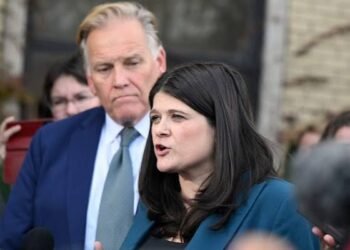 Haley Stevens Backs Republican Rival in Michigan Senate Race