Tuesday, November 10, 2026
  • About Us
  • Advertise
  • Privacy & Policy
  • Team
  • Contact
The English Chronicle
Advertisement
  • Home
  • Business & Economy
  • Politics
  • Entertainment
  • Sports
  • Science & Technology
  • UK News
  • World News
  • Health
No Result
View All Result
  • Home
  • Business & Economy
  • Politics
  • Entertainment
  • Sports
  • Science & Technology
  • UK News
  • World News
  • Health
No Result
View All Result
The English Chronicle
No Result
View All Result

US Pushes for Final Russia-Ukraine Peace Deal

8 minutes ago
in Asia Pacific, Investigative Stories, Latest, Politics, UK News, US News, War and Conflict, World News
US Pushes for Final Russia-Ukraine Peace Deal
0
SHARES
2
VIEWS
Share on FacebookShare on Twitter
Published: 10 November 2026. The English Chronicle Desk. The English Chronicle Online.

The United States has begun a fresh diplomatic effort to secure what it describes as a definitive end to the Russia-Ukraine war, as senior officials from Washington, Moscow and Kyiv prepare for crucial trilateral discussions in Abu Dhabi. The negotiations, which began on Tuesday, November 10, represent the first substantive peace talks between Russia and Ukraine since February and could mark an important moment in international efforts to end the conflict.

The Trump administration is seeking to move beyond temporary ceasefire arrangements and establish a broader framework intended to prevent another war between the two countries. A central element of the American proposal involves creating a new long-term security architecture between Russia and Europe, potentially reshaping military relations across the continent and influencing the future of European security.

The diplomatic initiative comes at a complicated moment for President Donald Trump. The discussions are taking place following joint US-Israeli military strikes against Iran and midterm elections that have weakened Trump’s domestic political position. Despite these challenges, Washington appears determined to demonstrate progress on one of the most significant foreign policy issues facing the administration.

American officials have indicated that the proposed security framework could include stronger communication channels between Russia and Western countries, military transparency arrangements, mechanisms for managing international crises and reciprocal measures designed to reduce the possibility of further escalation.

However, the initiative has raised considerable concern among European governments, which fear that negotiations could lead to concessions that undermine the continent’s existing security arrangements and weaken the protection of countries bordering Russia.

One of the most sensitive issues is Moscow’s longstanding opposition to NATO’s expansion and military presence in eastern Europe. Russian President Vladimir Putin has repeatedly criticised the alliance’s eastward enlargement, arguing that it threatens Russia’s security interests. Moscow has previously demanded restrictions on NATO’s military activities and sought a fundamental revision of the European security order.

European officials are particularly concerned that the Trump administration could give serious consideration to some of these demands in an effort to secure a rapid agreement. Such concessions could potentially leave eastern European countries more exposed to Russian political and military pressure.

A senior US administration official acknowledged that European participation would be essential to any lasting settlement. Washington has indicated that it wants European governments involved in discussions about the future relationship between Russia and the continent rather than allowing the negotiations to remain exclusively between the United States, Russia and Ukraine.

The American proposal could also include reviving the NATO-Russia Council, which was suspended following Russia’s full-scale invasion of Ukraine in February 2022. The council previously provided a platform for dialogue between the military alliance and Moscow on security matters, although relations deteriorated significantly as tensions increased.

Another possibility under consideration is the gradual removal of certain economic sanctions imposed on Russia. Western countries introduced extensive restrictions following the invasion, targeting Russian financial institutions, energy exports, individuals and strategic industries. Any decision to ease those measures would likely become a major point of disagreement among European governments.

Perhaps the most significant aspect of the discussions concerns potential American security guarantees for Ukraine. US officials have suggested that Washington has discussed arrangements that could resemble NATO’s Article 5 collective defence principle, under which an attack against one alliance member is treated as an attack against all members.

An American administration official described the proposed guarantees as potentially offering Ukraine protection broadly comparable to NATO membership, even if the country does not formally join the alliance.

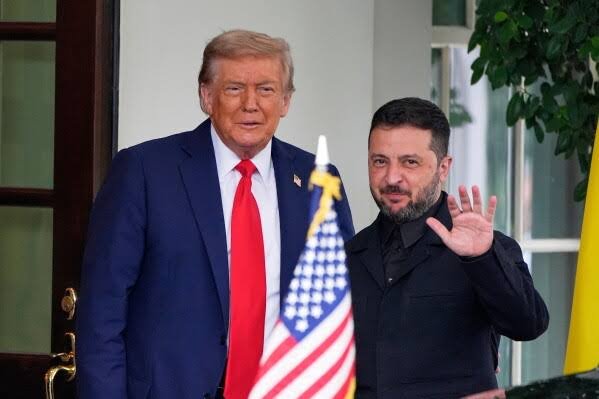
The official emphasised that a US security commitment would represent a major development for Kyiv, particularly in terms of financial assistance, military resources and long-term defence support. However, the final decision would depend on discussions between Trump and Ukrainian President Volodymyr Zelenskyy.

The proposal could become one of the most important bargaining points in the negotiations. Ukraine has consistently sought reliable international security guarantees to prevent another Russian invasion if a ceasefire or peace agreement is reached.

Nevertheless, questions remain over how such guarantees would operate in practice. NATO’s Article 5 does not automatically require every member to respond with identical military action following an attack. Furthermore, modern conflicts increasingly involve cyberattacks, sabotage, disinformation and other forms of hybrid warfare, making it difficult to determine what circumstances would trigger a military response.

Critics argue that any security arrangement offered to Ukraine must clearly define the responsibilities of participating countries. Without specific commitments and credible enforcement mechanisms, a guarantee could prove insufficient to deter future Russian aggression.

Jared Kushner, Trump’s son-in-law and one of the leading American negotiators, outlined some of the broader principles behind the proposed European security framework on Monday. He said Washington wanted stronger consultation between countries, dependable crisis communication systems, greater military transparency and reciprocal measures to reduce the risk of escalation.

He also stressed that the arrangements should respect the sovereignty and independent decision-making powers of individual nations.

European representatives from Germany, France, the United Kingdom and Italy, alongside officials from the European Union, are expected to engage with American negotiators in Abu Dhabi. Their participation reflects Europe’s determination to remain involved in decisions that could directly affect its future security.

However, European governments have not yet received sufficient details to determine precisely what Washington intends to propose. A European security official from one of the participating countries indicated that governments were preparing for the possibility that the United States could ask them to accept substantial concessions to Russia.

European Union foreign policy chief Kaja Kallas expressed reservations about the American approach during a meeting of G7 foreign ministers on Monday. She argued that Europe already had an established security framework based on international agreements and obligations, including commitments to respect national sovereignty and territorial integrity.

According to Kallas, the central problem was not the absence of an international security system but Russia’s repeated failure to respect the agreements and principles underpinning it.

Her comments reflect a wider European concern that a new arrangement should not reward military aggression or weaken the international rules protecting smaller countries from stronger neighbours.

Territorial concessions are another major obstacle to a potential agreement. Trump has previously suggested that Ukraine may be expected to surrender some territory as part of a final settlement. He has also indicated that the country’s borders could look somewhat different after the war.

Such suggestions are particularly sensitive for Kyiv, which has repeatedly rejected demands to recognise Russian control over occupied Ukrainian territories. Any agreement involving territorial changes would create difficult political and constitutional questions for the Ukrainian leadership.

The possibility of a broader agreement involving European countries has also emerged following Trump’s recent meeting with Kremlin adviser Kirill Dmitriev. The US president described his ambition as reaching a major agreement that could involve the entire European continent.

However, critics fear that Washington and Moscow could attempt to negotiate a settlement without adequately considering the positions of European governments or Ukraine itself. Such an approach could undermine confidence in the negotiations and create divisions among Western allies.

The concerns are partly rooted in Russia’s December 2021 security proposals, which demanded restrictions on NATO expansion and a significant reduction in the alliance’s military presence in eastern Europe. Moscow sought guarantees that Ukraine and other countries would not join NATO, alongside restrictions on military deployments and missile positioning.

NATO rejected those demands, viewing them as incompatible with the sovereignty and security choices of independent countries. Russia launched its full-scale invasion of Ukraine less than two months later, dramatically changing Europe’s security environment.

Against this historical background, European governments are likely to approach the Abu Dhabi negotiations cautiously. They want an agreement that prevents further conflict without creating conditions that could encourage future territorial aggression.

US Secretary of State Marco Rubio indicated on Monday that progress had been made in discussions about the proposed security architecture. However, he acknowledged that negotiators would first need to overcome the immediate challenges of the war before establishing a broader long-term framework.

The American administration believes that the existing security arrangements have failed to prevent the conflict and that a different approach is necessary to achieve a lasting settlement. Officials argue that the objective should be to create a system capable of preventing renewed hostilities rather than simply pausing the current fighting.

Despite the diplomatic activity, significant differences remain between Moscow, Kyiv, Washington and European capitals. The future of occupied territories, Ukraine’s security guarantees, NATO’s role, economic sanctions and Russia’s military ambitions are all likely to influence the negotiations.

For millions of Ukrainians affected by years of fighting, the prospect of renewed diplomatic engagement offers a measure of hope. However, any agreement will need to address the security concerns of all participating countries while protecting Ukraine’s independence and territorial integrity.

The Abu Dhabi discussions could therefore become a defining test of Trump’s diplomatic strategy and the future of relations between Russia and the West. Whether the negotiations produce meaningful progress or expose further divisions will depend on the willingness of the parties to compromise on some of the most difficult questions surrounding Europe’s security.

For now, Washington is presenting the initiative as an opportunity to achieve a final end to the war. Yet a lasting peace will require more than an agreement between political leaders. It will depend on credible security commitments, respect for international obligations and guarantees that prevent the conflict from returning in the years ahead.

Related News:
UK Prepares Aircraft Carrier for Middle East CrisisUK Prepares Aircraft Carrier for Middle East Crisis Houthis Strike Saudi Arabia as Middle East Tensions RiseHouthis Strike Saudi Arabia as Middle East Tensions Rise Israeli Strike in Southern Lebanon Kills SevenIsraeli Strike in Southern Lebanon Kills Seven Middle powers seek new alliances amid Trump eraMiddle powers seek new alliances amid Trump era Trump Asked Xi About Buying US WeaponsTrump Asked Xi About Buying US Weapons US bombers leave RAF Fairford after terror threatUS bombers leave RAF Fairford after terror threat Germany Pledges €1bn Military Aid to UkraineGermany Pledges €1bn Military Aid to Ukraine Tanker Attacked Near Qatar as Hormuz Tensions EscalateTanker Attacked Near Qatar as Hormuz Tensions Escalate Israel Promotes Film Challenging Controversial Gaza DocumentaryIsrael Promotes Film Challenging Controversial Gaza Documentary Trump Rules Out Iran Attack Before US ElectionsTrump Rules Out Iran Attack Before US Elections Ukraine Peace Talks Set to Resume in NovemberUkraine Peace Talks Set to Resume in November US Strikes Iran Island as Vance Signals Hope for PeaceUS Strikes Iran Island as Vance Signals Hope for Peace Qatar Pushes Iran Deal to Reopen Strait of HormuzQatar Pushes Iran Deal to Reopen Strait of Hormuz Thousands Protest Iran Strikes Outside US Embassy LondonThousands Protest Iran Strikes Outside US Embassy London US Bombers Arrive at RAF Base Amid Rising Iran Tensions Published: 08 March 2026. The English Chronicle Desk. The English Chronicle Online. Four United States strategic bombers have arrived at a Royal Air Force base in Britain as tensions with Iran escalate across the Middle East. The deployment signals growing military coordination between Washington and London during a rapidly developing regional conflict. British defence officials confirmed the aircraft will conduct defensive missions aimed at preventing Iranian missile attacks across the region. The move follows warnings from American leaders that military strikes against Iranian targets may intensify significantly in the coming days. The aircraft involved in the deployment are B-1 Lancer bombers, large supersonic aircraft designed for long-range strike missions. Each bomber measures approximately forty-five metres in length and can carry up to twenty-four cruise missiles. Their arrival at RAF Fairford in Gloucestershire occurred over two days during the weekend. One aircraft landed on Friday evening while three additional bombers arrived on Saturday morning. British officials confirmed that the deployment followed approval from Prime Minister Keir Starmer earlier this week. According to the Ministry of Defence, the aircraft will carry out what officials describe as specific defensive operations. These missions are intended to prevent Iran from launching missiles toward allied countries across the Middle East. Defence officials emphasised that the operations focus on protection rather than expanded offensive campaigns. However, the arrival of such powerful aircraft demonstrates the seriousness of the current security situation. Military planners expect the bombers to remain ready for action as tensions continue rising throughout the region. The deployment also reflects growing warnings from Washington about an escalation of military activity. American defence leaders recently announced that operations against Iranian targets could increase rapidly. Officials in the United States said additional aircraft, fighter squadrons, and defensive capabilities would soon be deployed. These preparations suggest that military pressure on Iran may intensify within a short period. The arrival of bombers in Britain forms part of that broader strategic preparation. Britain’s Chief of the Defence Staff, Admiral Sir Richard Knighton, confirmed that operational missions may begin soon. Speaking about the situation, Knighton said the United States could launch missions from RAF Fairford within days. Military personnel at the base have already begun preparing logistical support and operational planning. Aircraft crews are expected to coordinate closely with American and British defence authorities. Such preparations highlight the strategic role Britain plays within wider allied security operations. The decision to permit American operations from British bases followed intense discussions inside the British government. Prime Minister Starmer authorised defensive military action from RAF Fairford and the Diego Garcia base. Diego Garcia lies in the Indian Ocean and remains one of the most strategically important military facilities. Both locations provide critical support for long-range aircraft operating across the Middle East. Their use allows allied forces to respond quickly to developing threats within the region. On Saturday afternoon, the Ministry of Defence released a formal update outlining the current military activity. The statement confirmed that American forces had already begun limited operations using British facilities. Officials stressed that the missions focus on preventing Iranian missile launches threatening regional security. According to defence leaders, these operations are designed to protect British personnel and allied civilians living nearby. The statement emphasised that Britain remains committed to safeguarding its national security interests abroad. In addition to the bomber deployment, Britain has dispatched further military resources toward the Middle East. Defence officials confirmed that a Merlin helicopter is travelling toward the region to assist operations. The aircraft is widely known for its anti-submarine capabilities and advanced surveillance technology. Military planners say it will help monitor potential maritime threats and gather intelligence. Such surveillance missions play an important role in maintaining early warning systems during regional conflicts. The arrival of the bombers occurred shortly after comments from United States Defence Secretary Pete Hegseth. Earlier in the week, Hegseth warned that American military strikes could soon increase dramatically. He said the Pentagon was preparing more fighter squadrons, stronger defensive capabilities, and additional bomber missions. His remarks reflected Washington’s determination to respond strongly to Iranian military actions. Analysts believe the expanding deployments aim to deter further escalation from Tehran. Meanwhile, the political atmosphere surrounding the conflict remains tense both internationally and within Britain itself. On Friday, United States President Donald Trump demanded Iran’s unconditional surrender. His statement followed reports that Israeli warplanes carried out bombing raids against targets in Tehran and Beirut. At the same time, Iran reportedly launched a new wave of retaliatory missile strikes toward Israel and several Gulf states. These developments have intensified fears of a broader regional confrontation. Prime Minister Starmer has faced political pressure regarding his cautious approach to the conflict. Earlier in the crisis he blocked proposals allowing immediate offensive strikes from British territory. Instead, he approved only defensive operations intended to prevent missile launches. The decision aimed to balance security cooperation with caution about deeper military involvement. Nevertheless, the policy has sparked criticism from both domestic opponents and international observers. Donald Trump publicly criticised Starmer’s hesitation earlier this week during comments shared online. The American president compared the British leader unfavourably with wartime prime minister Winston Churchill. Trump suggested that Britain had delayed offering meaningful support during the conflict’s early stages. Despite that criticism, British officials insist the alliance between both nations remains strong. Defence cooperation continues through intelligence sharing, logistics support, and joint military planning. Reports have also emerged about discussions held during a confidential meeting of the National Security Council. According to several media outlets, some cabinet ministers initially questioned the decision to allow American operations. Figures including Yvette Cooper, Shabana Mahmood, Ed Miliband, and Rachel Reeves were reportedly cautious about the proposal. These concerns reflected wider political anxiety about becoming involved in another Middle Eastern conflict. Government sources later insisted that all ministers ultimately supported the agreed national position. Starmer rejected claims that divisions existed inside his cabinet over the policy decision. He said every minister involved in the National Security Council backed the final strategy. According to the prime minister, careful consideration of all options was necessary before making such a significant choice. He also emphasised that Britain’s primary goal remains protecting its citizens and allies. The government continues monitoring developments closely as the crisis evolves. London’s mayor, Sadiq Khan, also commented publicly on the growing tensions in the Middle East. Khan supported the prime minister’s decision to resist pressure for immediate offensive action. He warned that military interventions lacking international consensus could produce dangerous consequences. According to Khan, lasting peace requires diplomatic strategy rather than unilateral military escalation. His remarks reflected the cautious tone adopted by several political leaders within Britain. Diplomatic activity has also continued alongside the military preparations. Prime Minister Starmer recently held a conversation with Saudi Arabia’s Crown Prince Mohammed bin Salman. During that discussion, Starmer emphasised Britain’s willingness to support regional allies if necessary. The United Kingdom also remains committed to protecting British citizens living in the Gulf region. Such diplomatic contacts aim to reassure partners while avoiding further escalation. Recent developments have also highlighted concerns about regional security vulnerabilities. Earlier this week a drone evaded detection and struck RAF Akrotiri in Cyprus. The incident raised questions about air defence capabilities protecting key military installations. Some Gulf governments criticised Britain for failing to respond more rapidly to regional threats. These criticisms added further pressure on the British government during an already tense diplomatic period. Military planners are also preparing to deploy additional naval forces toward the eastern Mediterranean. The air defence destroyer HMS Dragon is expected to sail within the coming week. Defence officials say preparations require time because the ship may remain deployed for several months. Equipping the vessel for extended operations ensures greater operational readiness once it reaches the region. Allied countries including France and Greece have already dispatched military resources to defend Cyprus. Political debate within Britain has intensified as opposition parties challenge the government’s approach. Conservative leader Kemi Badenoch criticised Starmer during her party’s spring conference in Harrogate. She argued the government appeared hesitant during a moment of international crisis. Badenoch claimed Britain is already involved in the conflict whether ministers acknowledge that reality or not. Her remarks reflected growing pressure on the government from opposition politicians. Badenoch also suggested that the prime minister seemed reluctant to support allies decisively. She argued that hesitation could weaken Britain’s influence in global security partnerships. The Conservative leader insisted that strong leadership requires clear decisions during international crises. Her comments sparked heated debate among political commentators and defence analysts. Government ministers strongly rejected the accusations during subsequent interviews. Defence Secretary John Healey criticised Badenoch’s earlier remarks about British military readiness. She had suggested that British aircraft had been waiting without taking necessary action. Healey described the comment as disrespectful toward members of the armed forces. According to the defence secretary, British personnel work continuously to protect national and allied security interests. He urged political leaders to recognise the professionalism of military service members. Former Conservative foreign policy figures have defended Badenoch’s criticism of the government. Andrew Mitchell argued she raised legitimate concerns about slow decision-making during crises. He said the debate highlights broader questions about Britain’s role in global security. These political disagreements demonstrate how the Middle East conflict continues influencing domestic debate. Analysts believe such discussions will intensify if the conflict expands further. Meanwhile, efforts continue to assist British citizens affected by the growing regional instability. A second government-chartered evacuation flight arrived at Gatwick Airport on Saturday evening. The aircraft carried Britons who had been stranded in Oman as tensions escalated. Officials say evacuation operations will continue while conditions remain uncertain. Authorities remain focused on ensuring the safety of citizens living across the wider Gulf region. Those returning on the latest flight joined thousands of Britons who already left the region. Approximately six thousand five hundred people have returned from the United Arab Emirates since fighting intensified. The government continues monitoring travel conditions and advising citizens about potential risks. Diplomatic missions across the region remain prepared to assist additional evacuations if necessary. Such efforts underline the growing international impact of the conflict. As the crisis continues unfolding, military deployments and diplomatic discussions remain closely connected. The arrival of American bombers in Britain illustrates the strategic cooperation between both nations. At the same time, political debates reveal the complexity of balancing alliance commitments with caution. For now, defence leaders continue preparing for possible escalation while urging restraint. The coming days may prove critical for determining whether tensions rise further or begin to ease.US Bombers Arrive at RAF Base Amid Rising Iran Tensions Charles Faces Trump Test in High-Stakes US VisitCharles Faces Trump Test in High-Stakes US Visit UK Stands Firm on Falklands Amid US RiftUK Stands Firm on Falklands Amid US Rift US states redraw maps after voting rights rulingUS states redraw maps after voting rights ruling US ‘Narco Boat’ Strikes Draw Global OutcryUS ‘Narco Boat’ Strikes Draw Global Outcry Ceasefire Standoff Deepens in Ukraine WarCeasefire Standoff Deepens in Ukraine War US Awaits Iran Reply on New Ceasefire ProposalUS Awaits Iran Reply on New Ceasefire Proposal Hormuz Talks Near Critical StageHormuz Talks Near Critical Stage Millions Gather for Khamenei’s Six-Day State FuneralMillions Gather for Khamenei’s Six-Day State Funeral Is America Ready for an AOC Presidential Run?Is America Ready for an AOC Presidential Run? Trump Calls Strait of Hormuz ‘American Territory’Trump Calls Strait of Hormuz ‘American Territory’ Trump Calls Iran War ‘Small Potatoes’ Despite US DeathsTrump Calls Iran War ‘Small Potatoes’ Despite US Deaths UN expert urges UK to rethink Israel policyUN expert urges UK to rethink Israel policy Europe’s democracies face a growing far-right threatEurope’s democracies face a growing far-right threat Saudi Pact Raises Risk of Pakistan Entering WarSaudi Pact Raises Risk of Pakistan Entering War Lib Dems Prepare for Election Amid Reform ChallengeLib Dems Prepare for Election Amid Reform Challenge US Networks Suspend Trump White House Pool CoverageUS Networks Suspend Trump White House Pool Coverage UK Plans New Centre to Counter Information WarfareUK Plans New Centre to Counter Information Warfare UK Pauses Chagos Deal Amid US OppositionUK Pauses Chagos Deal Amid US Opposition Elif Eralp Emerges as Berlin’s Next Political ForceElif Eralp Emerges as Berlin’s Next Political Force Xi urges Trump to avoid US-China military conflictXi urges Trump to avoid US-China military conflict Lula accuses Trump of seeking control over BrazilLula accuses Trump of seeking control over Brazil Republican Senator Questions Trump Ad SpendingRepublican Senator Questions Trump Ad Spending South Korea-Ukraine Row Erupts Over North Korean POWsSouth Korea-Ukraine Row Erupts Over North Korean POWs AI Deepfakes Put New Pressure on Election TrustAI Deepfakes Put New Pressure on Election Trust Drumcree Talks Falter as Legal Challenge DeepensDrumcree Talks Falter as Legal Challenge Deepens UK-France Returns Deal Faces Expiry as Talks StallUK-France Returns Deal Faces Expiry as Talks Stall New Maps Reveal Gaza’s Vast DestructionNew Maps Reveal Gaza’s Vast Destruction Green Party faces dispute over Zionism motionGreen Party faces dispute over Zionism motion US Sends Third Carrier to Middle EastUS Sends Third Carrier to Middle East Latin America women fear rollback of rightsLatin America women fear rollback of rights Canadian Veterans Condemn Trump Allies’ Military RemarksCanadian Veterans Condemn Trump Allies’ Military Remarks Vance Demands Iran Cut Nuclear EnrichmentVance Demands Iran Cut Nuclear Enrichment Israel Marks Three Years Since October 7 AttackIsrael Marks Three Years Since October 7 Attack Trump Says He Deserves Nobel Peace PrizeTrump Says He Deserves Nobel Peace Prize India’s Youth Movement Alleges Mass Detentions Before ProtestIndia’s Youth Movement Alleges Mass Detentions Before Protest Gaza War Deepens India’s Strategic Ties With IsraelGaza War Deepens India’s Strategic Ties With Israel Bolsonaro Gains Key Endorsement Ahead of Brazil RunoffBolsonaro Gains Key Endorsement Ahead of Brazil Runoff Trump’s Russian Diesel Deal Sparks Ukraine FuryTrump’s Russian Diesel Deal Sparks Ukraine Fury UK Gaza Refugee Route Criticised Over False Hope ClaimsUK Gaza Refugee Route Criticised Over False Hope Claims UK Greens Face Crisis Over Zionism and Extremism RowUK Greens Face Crisis Over Zionism and Extremism Row Riyadh Airport Hit Again as Yemen Conflict EscalatesRiyadh Airport Hit Again as Yemen Conflict Escalates Brazil Court Scandal Threatens Lula as Bolsonaros RiseBrazil Court Scandal Threatens Lula as Bolsonaros Rise Millions Face Tougher Medicaid Rules From JanuaryMillions Face Tougher Medicaid Rules From January Ohio Airports Become Key Hubs for ICE Deportation FlightsOhio Airports Become Key Hubs for ICE Deportation Flights Farage Rejects Claims Reform Would Let Troops Shoot MigrantsFarage Rejects Claims Reform Would Let Troops Shoot Migrants India’s Voter Roll Crisis Sparks Nationwide ProtestsIndia’s Voter Roll Crisis Sparks Nationwide Protests Judge Blocks Trump White House Media BanJudge Blocks Trump White House Media Ban Gadi Eisenkot: Israel’s Anti-Netanyahu ChallengerGadi Eisenkot: Israel’s Anti-Netanyahu Challenger Serbia Leader Linked to Controversial Trump Tower PlanSerbia Leader Linked to Controversial Trump Tower Plan Trump Slams Ukraine Strikes as Russia Ceasefire CollapsesTrump Slams Ukraine Strikes as Russia Ceasefire Collapses Zelenskyy Accuses US of Delaying Ukraine Missile SuppliesZelenskyy Accuses US of Delaying Ukraine Missile Supplies Netanyahu Faces Defining Election Test as Israel DividesNetanyahu Faces Defining Election Test as Israel Divides Xi Jinping Tightens China’s Anti-Corruption CampaignXi Jinping Tightens China’s Anti-Corruption Campaign Trump’s Midterm Campaign Faces Racism and Political BacklashTrump’s Midterm Campaign Faces Racism and Political Backlash Obama Mocks Trump at Georgia Rally for DemocratsObama Mocks Trump at Georgia Rally for Democrats China Expels Record 33 Officials in Xi Jinping PurgeChina Expels Record 33 Officials in Xi Jinping Purge Trump’s Global Policies Put Republicans at RiskTrump’s Global Policies Put Republicans at Risk Global Crises Test Diplomacy as Trump’s Policies Face ScrutinyGlobal Crises Test Diplomacy as Trump’s Policies Face Scrutiny Bedouin Women Drive Historic Arab Election GainsBedouin Women Drive Historic Arab Election Gains G20 Photo Cancelled as Russia Deepens Western RiftG20 Photo Cancelled as Russia Deepens Western Rift Trump Attacks Abdul El-Sayed in Controversial Iowa RallyTrump Attacks Abdul El-Sayed in Controversial Iowa Rally Australia Reviews UK Visa Rules Amid Worker InfluxAustralia Reviews UK Visa Rules Amid Worker Influx Exiled Journalists Defy Putin’s Growing Media CrackdownExiled Journalists Defy Putin’s Growing Media Crackdown South Korea Plans Expanded Naval Operations Near HormuzSouth Korea Plans Expanded Naval Operations Near Hormuz Paraguay President Impeached and Arrested After Banking CrisisParaguay President Impeached and Arrested After Banking Crisis



































STAY CONNECTED

  • 6k Fans
  • 450 Followers
  • 600 Subscribers

MOST POPULAR

Britain Seeks Emergency Power as Wind Generation Falls

Britain Seeks Emergency Power as Wind Generation Falls

22 hours ago
Burnham’s Christmas Homelessness Pledge Faces Uncertainty

Burnham’s Christmas Homelessness Pledge Faces Uncertainty

23 hours ago
Starbucks to Create 7,500 UK Jobs in Major Expansion

Starbucks to Create 7,500 UK Jobs in Major Expansion

23 hours ago
TUC Chief Urges Major Investment to Tackle UK Youth Jobs Crisis

TUC Chief Urges Major Investment to Tackle UK Youth Jobs Crisis

22 hours ago
English Mayors Warn Police Merger Could Weaken Local Policing

English Mayors Warn Police Merger Could Weaken Local Policing

2 days ago
Aardman Cuts Losses but Fails to Return to Profit

Aardman Cuts Losses but Fails to Return to Profit

October 15, 2026
Load More

About Us

The English Chronicle

The English Chronicle is your trusted source for accurate, timely, and unbiased news. Based in the heart of the digital age, our mission is to deliver well-researched journalism that informs, engages, and empowers readers across the globe.

Address:-
UK Address: Harbour House, Cold Harbour Lane, Rainham, London Borough of Havering, United Kingdom. RM13 9YB

Browse by Category

  • Africa
  • Agriculture
  • Ai and Innovation
  • Animal Rights
  • Animals
  • Arts And Culture
  • Asia Pacific
  • Australia News
  • Books & Literature
  • Business & Economy
  • Canada News
  • Child Health
  • Child Safety
  • Climate Change
  • Companies
  • Cricket
  • Crime
  • Defence And Military
  • Economics
  • Education
  • Energy
  • Entertainment
  • Environment
  • Europe
  • Fashion
  • FIFA
  • Finance
  • Food
  • Football
  • Health
  • History
  • Human Rights
  • Infrastructure
  • innovation
  • International
  • Investigative Stories
  • Ireland
  • Latest
  • Law
  • Life & Society
  • Maritime
  • Market
  • Media
  • Medical Innovation
  • Middle East
  • Music
  • National Security
  • Natural Disaster
  • Opinion
  • Politics
  • Post
  • Premier League
  • Public Safety
  • Real Estate and Property
  • Religion
  • Retail
  • Retail
  • Royal Family
  • Science & Technology
  • Scotland and Highlands
  • South Asia
  • Space
  • Sports
  • Tech News
  • Tennis
  • Tourism and Economy
  • Transport
  • Travel
  • TV & Film
  • UEFA
  • UK News
  • US News
  • Violence
  • War and Conflict
  • Weather
  • Wild Life
  • World News
California Voters Reject One-Time Billionaire Tax

California Voters Reject One-Time Billionaire Tax

November 10, 2026
US Pushes for Final Russia-Ukraine Peace Deal

US Pushes for Final Russia-Ukraine Peace Deal

7 minutes ago
Nvidia and Jensen Huang Face Shareholder Lawsuit

Nvidia and Jensen Huang Face Shareholder Lawsuit

14 minutes ago
Britain Seeks Emergency Power as Wind Generation Falls

Britain Seeks Emergency Power as Wind Generation Falls

22 hours ago
  • About Us
  • Advertise
  • Privacy & Policy
  • Team
  • Contact

© 2025 The English Chronicle.

No Result
View All Result
  • Home
  • Business & Economy
  • Politics
  • Entertainment
  • Sports
  • Science & Technology

© 2025 The English Chronicle.