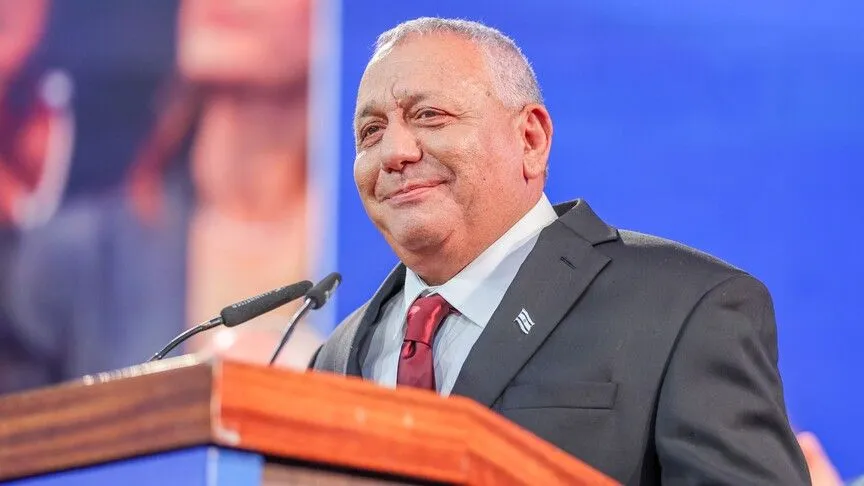
A growing political confrontation in Israel has intensified after prime ministerial hopeful Gadi Eisenkot accused outgoing Prime Minister Benjamin Netanyahu of encouraging a racist campaign against the country’s Arab minority. Eisenkot’s criticism has drawn attention to the increasingly divisive debate over the political participation, civil rights and representation of Arab citizens in Israel, particularly as negotiations to form a new government enter a crucial stage.
The former military chief’s statement represents a notable intervention by a prominent Jewish political leader in defence of Arab Israelis, who account for more than 20 per cent of the country’s population. His comments came after Netanyahu and his political allies repeatedly questioned the legitimacy of Arab-majority parties and attempted to associate their representatives with Hamas, the Palestinian armed group that launched the unprecedented attack against Israel on 7 October 2023.
The dispute has developed against the backdrop of a closely contested election and complicated coalition negotiations. Two Arab-majority political groups, Ra’am and the Joint List, secured a combined 19 seats in last month’s election, winning nearly one-sixth of the 120-member Knesset, Israel’s parliament. Their parliamentary strength has made them potentially influential in determining which political bloc can secure sufficient support to form the next government.

Eisenkot, who has been tasked with forming a government, appears to recognise that the support of Arab representatives could become important to his political ambitions. However, his public defence of the community also raises broader questions about the treatment of minority citizens and the extent to which political disagreements can be used to undermine the legitimacy of an entire population.
In a statement published on social media platform X on Friday, Eisenkot described Arab citizens as an integral part of Israel’s national story. He accused Netanyahu and those around him of promoting what he called a racist and aggressive campaign designed to delegitimise the country’s Arab political representatives for political purposes.
Eisenkot argued that collectively marginalising and vilifying Arab citizens represented a serious violation of the principles of civic responsibility. He acknowledged that disagreements with Arab political leaders were legitimate but insisted that criticism of individual politicians should not become an excuse for attacking an entire community.
His statement was particularly significant because public discussion of Arab political participation has become increasingly polarised in Israel. Arab citizens, many of whom are descendants of Palestinians who remained within the territory that became Israel in 1948, form a substantial part of the country’s population. They participate in elections, serve in public institutions and contribute to different areas of national life, although questions surrounding equality, discrimination and political representation remain deeply contested.
The latest controversy follows repeated disagreements between Netanyahu and the leadership of Arab political parties over their positions on Hamas. Netanyahu and his supporters have criticised Arab lawmakers for refusing to use the designation of a terrorist organisation when discussing Hamas. These disagreements have become a recurring feature of political arguments since the group’s 7 October 2023 attack on Israel, which triggered a devastating regional conflict and had profound consequences for Israeli and Palestinian communities.
However, leaders of the Arab parties have condemned the attack. Arab Israelis were also among those killed during the assault, highlighting the fact that the violence affected people from different communities within Israel. The political dispute over the language used by Arab representatives has therefore become a wider argument about political accountability, national identity and the rights of minority lawmakers to participate in democratic institutions.
Netanyahu has also repeatedly raised allegations of electoral fraud involving Arab-majority parties. However, electoral authorities have rejected those claims, adding another dimension to the confrontation over the legitimacy of Arab political representation.
During a recent speech, Netanyahu questioned whether the two Arab political lists genuinely recognised Israel as a Jewish state. He also suggested that their political objectives involved establishing either an Islamic state or a nationalist Palestinian state. These assertions became controversial because Ra’am leader Mansour Abbas has previously recognised Israel as a Jewish state, contradicting the suggestion that all representatives of the party reject that principle.
The disagreement intensified during a parliamentary ceremony involving the swearing-in of lawmakers. National Security Minister Itamar Ben Gvir heckled Yousef Jabareen, the leader of the Joint List, during his oath of allegiance, accusing him of having pledged allegiance to Hamas. The incident reflected the hostile atmosphere surrounding the participation of Arab representatives in Israel’s political institutions.
Eisenkot responded by drawing a distinction between legitimate political criticism and collective hostility towards a minority community. He maintained that it was entirely acceptable to disagree with Arab political representatives or strongly oppose their positions. However, he argued that portraying an entire community as illegitimate or associating its members collectively with an armed organisation was unacceptable.
The intervention has also placed Eisenkot’s coalition-building efforts under greater scrutiny. Israeli President Isaac Herzog tasked him with forming a new government on Sunday after consultations with political parties. A majority of the parties participating in those discussions, including the two Arab-majority lists, recommended Eisenkot for the responsibility.
The support of Ra’am and the Joint List could provide important parliamentary backing as he attempts to assemble a coalition capable of governing. Nevertheless, the involvement of Arab political parties has exposed divisions among potential partners, particularly within the right-wing political camp.
One of Eisenkot’s right-wing allies, Avigdor Lieberman, has warned that he would withdraw his support for the coalition if Arab Israelis were included in the government. His position creates a significant political obstacle because Eisenkot must balance the parliamentary support available from Arab representatives against the demands of other potential coalition partners.
The disagreement illustrates the complicated nature of Israeli coalition politics, where governments often depend on negotiations among parties with sharply different ideological positions. With no single political group necessarily able to govern independently, smaller parties and parliamentary alliances can acquire considerable influence over the formation and stability of a government.
For Arab political representatives, the negotiations carry significance beyond the immediate question of which leader becomes prime minister. Their participation could influence discussions about minority rights, public services, discrimination, national security and the relationship between Israel’s Jewish majority and Arab citizens.
The political situation also raises questions about whether Arab parties will be treated as legitimate partners in parliamentary decision-making or remain excluded from important coalition arrangements because of their ethnic and political identity. Eisenkot’s remarks have brought this issue into sharper focus at a moment when the country’s leadership is being determined through negotiations involving parties with competing visions of national identity.
Under the parliamentary timetable, Eisenkot has 28 days to form a government. If he cannot secure sufficient support within that period, he may request an additional 14 days. Should he remain unsuccessful, the mandate could be transferred to another member of parliament, with Netanyahu considered the most likely alternative candidate.
The coming weeks will therefore be decisive for both Eisenkot’s political future and the direction of Israel’s next government. His ability to reconcile the demands of right-wing allies with the parliamentary support offered by Arab parties could determine whether his coalition-building effort succeeds.

Beyond the immediate political contest, the controversy has highlighted the importance of protecting democratic participation and ensuring that political disagreements do not become a basis for collective discrimination. Arab citizens represent a significant part of Israeli society, and their elected representatives hold parliamentary mandates obtained through the country’s electoral process.
Eisenkot’s criticism has consequently become more than a disagreement between two prominent political figures. It has opened a wider debate about minority representation, political inclusion and the responsibilities of national leaders in a deeply divided society. Whether his position translates into meaningful political cooperation remains uncertain, but the outcome of the coalition negotiations could have lasting implications for the relationship between Israel’s Jewish majority and Arab minority.
Related News:
 Five Years of Taliban Rule Leave Afghanistan in Crisis
 Israel Promotes Film Challenging Controversial Gaza Documentary
 India’s Youth Movement Alleges Mass Detentions Before Protest
 Gaza War Deepens India’s Strategic Ties With Israel
 Turkey Rules Out Troops in Saudi Arabia’s Houthi Conflict
 Delhi Braces for Youth Protests Over Voter Roll Dispute
 PTI Announces Swabi Rally Ahead of Long March Plans
 Gadi Eisenkot: Israel’s Anti-Netanyahu Challenger
 Netanyahu Faces Defining Election Test as Israel Divides
 Bedouin Women Drive Historic Arab Election Gains
 Knesset Speaker Race Could Decide Netanyahu’s Future
 Iran Death Row Boxer Wins Prestigious Human Rights Award
 Iran Crisis Tests Trump’s Global Leadership
 Houthis Strike Saudi Arabia as Middle East Tensions Rise
 Israeli Strike in Southern Lebanon Kills Seven
 Is America Ready for an AOC Presidential Run?
 Nepal Flood Survivors Face Unimaginable Loss
 Trump Calls Iran War ‘Small Potatoes’ Despite US Deaths
 Nepal Tunnel Rescue Offers Hope Amid Flood Devastation
 Susan Sarandon Says Palestine Stand Costs Roles
 Saudi Arabia Shuts Oil Pipeline After Drone Attack
 Nearly 50,000 Flee as Houthis Advance in Yemen
 Israel Accused of Undermining Palestinian Life
 Yemen War Displaces 125,000 as Fighting Intensifies
 Gaza Strike Kills Child and Paramedic
 South Korea Rules Out Military Role in Iran War
 Saudi Pact Raises Risk of Pakistan Entering War
 Lib Dems Prepare for Election Amid Reform Challenge
 Elif Eralp Emerges as Berlin’s Next Political Force
 Nepal PM calls deadly flood a global climate warning
 Saudi intercepts Houthi missiles as oil fears grow
 Drumcree Talks Falter as Legal Challenge Deepens
 UK-France Returns Deal Faces Expiry as Talks Stall
 New Maps Reveal Gaza’s Vast Destruction
 Green Party faces dispute over Zionism motion
 Germany Pledges €1bn Military Aid to Ukraine
 Latin America women fear rollback of rights
 Pacific Climate Summit Draws Limited Global Leaders
 Israel Marks Three Years Since October 7 Attack
 Tanker Attacked Near Qatar as Hormuz Tensions Escalate
 Bolsonaro Gains Key Endorsement Ahead of Brazil Runoff
 Trump Rules Out Iran Attack Before US Elections
 Controversial Vaccine Trial Approved in Guinea-Bissau
 Trump Attacks Norway After Nobel Peace Prize Snub
 Delhi Detains Protest Leaders as Youth Rally Escalates
 UK Gaza Refugee Route Criticised Over False Hope Claims
 French Students Protest Poor Conditions in Paris Suburbs
 UK Greens Face Crisis Over Zionism and Extremism Row
 Riyadh Airport Hit Again as Yemen Conflict Escalates
 Greta Thunberg Backs French Students in School Protests
 Millions Face Tougher Medicaid Rules From January
 Ohio Airports Become Key Hubs for ICE Deportation Flights
 Farage Rejects Claims Reform Would Let Troops Shoot Migrants
 India’s Voter Roll Crisis Sparks Nationwide Protests
 Suu Kyi Appears in Rare Photos After Royal Gift
 Zelenskyy Accuses US of Delaying Ukraine Missile Supplies
 Zelenskyy Says US Failed to Warn Kyiv of Russian Strikes
 Fifth Foreign Firm Withdraws From Jerusalem Cable Car Plan
 Xi Jinping Tightens China’s Anti-Corruption Campaign
 Ukraine Peace Talks Set to Resume in November
 Taylor Faces Backlash Over Response to Haines Attack
 Serbia’s Student Victory Sparks a ‘Smell of Freedom’
 Trump’s Midterm Campaign Faces Racism and Political Backlash
 McKenzie Warns MP Safety Fears Could Weaken Democracy
 King Charles Faces Calls for Slavery Reparations Talks
 Spain Mourns 68 Dead After High-Speed Train Crash
 Obama Mocks Trump at Georgia Rally for Democrats
 China Expels Record 33 Officials in Xi Jinping Purge
 UAE Nominee Faces Backlash Over Sudan War Role
 Novaya Gazeta to Close After Russian Government Pressure
 Arab Coalition Sees Historic Chance to Oust Netanyahu
 US Strikes Iran Island as Vance Signals Hope for Peace
 Australia Reviews UK Visa Rules Amid Worker Influx
 ANC Faces Voter Backlash in South African Elections
 Exiled Journalists Defy Putin’s Growing Media Crackdown
 Qatar Pushes Iran Deal to Reopen Strait of Hormuz
 Stephen Miller’s Rise Puts Hardline Views at Centre of Power
 US Pushes for Final Russia-Ukraine Peace Deal
 Ukraine Captures First Indonesian Fighter in Russian Army
 One Nation Candidate Apologises for Offensive Posts