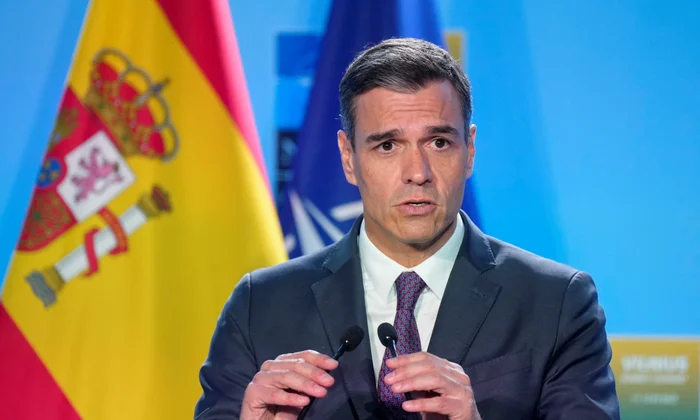
Spain is preparing for a politically consequential general election on 29 November that could end eight years of socialist-led government and potentially bring the far-right Vox party into national power for the first time since the country’s return to democracy following the death of General Francisco Franco. The snap election, called amid political deadlock, a deepening housing crisis and growing public dissatisfaction, is expected to reshape Spain’s political landscape and influence the country’s future direction on immigration, economic policy and social rights.
The election will be the sixth general election in Spain in just 11 years, highlighting the political instability and divisions that have characterised the country over the past decade. Prime Minister Pedro Sánchez and his Spanish Socialist Workers’ party (PSOE) are seeking another four-year term, but opinion polls suggest that the conservative People’s Party (PP) could emerge as the largest political force. If the projections prove accurate, the PP may need support from Vox to secure enough parliamentary seats to form a government.

Such an arrangement would represent a historic political development. Although Vox has already participated in regional governments alongside the PP, its entry into Spain’s national government would mark the far right’s return to executive power for the first time in the country’s post-dictatorship democratic era.
The election was called by Sánchez on 5 October after the PP, Vox and the right-wing Catalan pro-independence party Junts voted against emergency measures introduced by the government to address Spain’s worsening housing crisis. The proposed measures were intended to respond to rising rents and growing difficulties faced by ordinary households in finding affordable accommodation.
Housing has become one of the most significant political and economic challenges in Spain. Rising property prices, increasing rental costs and limited availability of affordable homes have created widespread frustration, particularly among young people, lower-income families and residents of major cities.
The crisis has also triggered large demonstrations and public campaigns demanding stronger government intervention. One particularly controversial case involved Maricarmen Abascal, an 87-year-old woman who was evicted from her Madrid home after an investment fund that had purchased the apartment demanded a 230 per cent increase in rent. Her circumstances became a powerful example of the difficulties facing vulnerable tenants in an increasingly expensive housing market.
Public anger intensified further last Wednesday when more than three million people reportedly participated in a general strike organised in response to soaring housing costs. The demonstrations highlighted the extent to which accommodation has become a national political issue rather than simply an economic concern affecting individual households.
Sánchez is hoping to turn this public frustration into electoral support. His government argues that its housing proposals could have provided meaningful assistance to struggling families and that opposition parties prevented the measures from progressing. By making housing affordability central to his campaign, the prime minister hopes to mobilise progressive voters and convince undecided citizens that another socialist-led government is necessary.
However, the decision to call an early election carries considerable political risks. Sánchez’s minority coalition government, which includes the smaller left-wing Sumar alliance, has struggled to pass legislation through parliament. The administration has also failed to approve a national budget since 2023, reflecting the difficulties of governing without a stable parliamentary majority.
The Catalan party Junts, which provided conditional support when Sánchez formed his government three years ago, has repeatedly used its parliamentary influence to demand political concessions. Its decision to withdraw support for the emergency housing measures further weakened the government’s ability to maintain legislative momentum.
Beyond parliamentary difficulties, Sánchez has faced criticism over several other controversies. His administration has been challenged over its handling of migration pressures in Ceuta, Spain’s North African territory, following an extraordinary border incident in which approximately 80,000 people crossed into the territory from neighbouring Morocco within 48 hours.
The government has also been affected by corruption allegations involving individuals connected to Sánchez’s political circle and family. These controversies have provided opposition parties with opportunities to question his leadership and portray his administration as politically compromised.
Against this difficult background, Sánchez appears to have calculated that an election campaign focused on housing, social protection and the country’s economic achievements offers a better opportunity than allowing parliamentary deadlock and political criticism to continue.
Nevertheless, his campaign has encountered another major challenge following a deadly high-speed railway accident on 28 October. The crash killed 69 people and raised serious questions about the safety, maintenance and management of Spain’s railway infrastructure.
The tragedy occurred only nine months after another railway disaster on the same line claimed 46 lives. The two accidents within a relatively short period have intensified public scrutiny of the country’s transport system, which has traditionally been regarded as one of Europe’s most developed high-speed rail networks.
Transport Minister Óscar Puente eventually resigned following mounting pressure over the latest disaster. Explaining his decision, he said neither the country nor he could bear the consequences of 100 deaths in less than a year.
The opposition has used the railway tragedy to challenge the government’s competence. PP leader Alberto Núñez Feijóo has accused Sánchez’s administration of failing to ensure public safety, while Vox has criticised what it describes as government incompetence, corruption, political favouritism and insufficient investment in infrastructure maintenance.
The latest polling projections indicate that the PP could secure approximately 130 seats in the 350-member Congress of Deputies. The PSOE is projected to win around 110 seats, while Vox could obtain approximately 63.
A party or coalition needs at least 176 seats to achieve an absolute majority in the Spanish parliament. Consequently, even if the PP finishes first, it would remain considerably short of the number required to govern independently.
This makes Vox an increasingly important political force. A parliamentary agreement between the two parties could provide the conservative bloc with sufficient support to establish a government, although the precise arrangements would depend on negotiations following the election.
The relationship between the PP and Vox has changed significantly over recent years. Six years ago, the PP strongly criticised Vox’s political approach, accusing it of promoting fear, anger, resentment and revenge. However, the conservative party has gradually adopted a more accommodating attitude towards its far-right rival, particularly on immigration and national identity.
The two parties already govern together in four Spanish regions, providing a precedent for cooperation at the national level.
Meanwhile, the smaller left-wing parties are attempting to maintain their political influence. Several groups previously associated with the socialist government have joined the Broad Front, led by former Barcelona mayor Ada Colau. However, Podemos has refused to become part of the alliance.
Together, the Broad Front and Podemos are expected to win approximately 13 parliamentary seats. Their projected performance is unlikely to provide enough support for Sánchez and the PSOE to secure another governing majority.
The political debate has increasingly centred on the policies Vox would pursue if it entered the national government. Party leader Santiago Abascal has promoted an agenda based on national priority, deregulation, tax reductions and the return of people who, according to the party, should not be living in Spain.
One of Vox’s central proposals is to give Spanish nationals priority when accessing subsidised housing, social rental accommodation, grants and public benefits. The party argues that public resources should primarily serve Spanish citizens and that immigration policies must be significantly tightened.
The PP has expressed support for certain aspects of national priority in regional administrations where it governs alongside Vox. However, Feijóo has insisted that any agreement must remain within the boundaries of Spanish constitutional law and European treaties.
He has argued that national priority should be based on a person’s established connections with Spain rather than simply their nationality, while emphasising that no policy can be implemented outside the country’s legal framework.
Immigration remains another controversial issue. In July 2025, Vox proposed deporting as many as eight million people of foreign origin, including children of immigrants, arguing that some had difficulty adapting to Spanish customs and traditions. The proposal generated considerable criticism and intensified concerns among migrant communities and human rights advocates.
The party subsequently stepped back from its broader deportation proposal and presented a narrower interpretation of its remigration policy. It has since argued that the approach should target people who enter Spain illegally, commit crimes or move to the country primarily to receive welfare benefits.
Abascal has defended the party’s position, arguing that its policies are motivated by a desire to prioritise Spanish citizens rather than hostility towards foreigners.
For Sánchez, the election represents an opportunity to present Spain as an alternative to the growing influence of far-right politics across Europe. He has warned voters that a conservative government dependent on Vox could reverse social and political achievements made during recent years.
He has framed the election as a choice between maintaining a progressive political direction based on openness, social justice and environmental responsibility or moving towards a political programme that could weaken existing social protections.
For the PP and Vox, however, the election is an opportunity to end what they describe as years of ineffective and self-serving socialist leadership. Feijóo has promised to restore political standards and public confidence if his party wins.
As voting day approaches, Spain faces a significant political decision that extends beyond the competition between individual parties. The result could determine the future of housing policy, immigration controls, public services, economic priorities and the country’s relationship with the wider European political landscape.

Although current polling suggests that the PP is well positioned to finish first, the final outcome remains uncertain. The possibility of a coalition or parliamentary agreement with Vox has made the election particularly important for Spain’s democratic and political future.
If the conservative parties secure sufficient support, Spain could experience a historic shift in national government. If Sánchez manages to overcome the challenges facing his administration, the country could instead continue under socialist leadership. Either outcome will have significant implications for millions of Spaniards as they confront rising living costs, housing insecurity and growing political divisions.
Related News:
 Elif Eralp Emerges as Berlin’s Next Political Force
 French Students Protest Poor Conditions in Paris Suburbs
 Greta Thunberg Backs French Students in School Protests
 Serbia’s Student Victory Sparks a ‘Smell of Freedom’
 Spain Mourns 68 Dead After High-Speed Train Crash
 Novaya Gazeta to Close After Russian Government Pressure
 France Faces Record Presidential Crowded Race Amid Far-Right Surge
 Is America Ready for an AOC Presidential Run?
 Five Years of Taliban Rule Leave Afghanistan in Crisis
 Ukraine Villagers Demand Answers After Deadly Arms Depot Strike
 Europe’s democracies face a growing far-right threat
 Lib Dems Prepare for Election Amid Reform Challenge
 Madrid Tent Camp Grows as Spain Housing Crisis Deepens
 French Student Protests Escalate Into Violent Clashes
 Drumcree Talks Falter as Legal Challenge Deepens
 UK-France Returns Deal Faces Expiry as Talks Stall
 Green Party faces dispute over Zionism motion
 French School Protests Escalate as 400 Schools Close
 Bosnia’s Young People Look Beyond Election Hope
 Germany Pledges €1bn Military Aid to Ukraine
 Latin America women fear rollback of rights
 Spain Sets Snap Election as Housing Crisis Deepens
 Former German Intelligence Chief Arrested Over Espionage
 French Student Protests Grow Despite Government Pledge
 France Promises 3,000 Teachers as Student Protests Grow
 India’s Youth Movement Alleges Mass Detentions Before Protest
 Gaza War Deepens India’s Strategic Ties With Israel
 Bolsonaro Gains Key Endorsement Ahead of Brazil Runoff
 Controversial Vaccine Trial Approved in Guinea-Bissau
 France Faces Debt Crisis as Protests and Markets Clash
 Trump Attacks Norway After Nobel Peace Prize Snub
 Delhi Braces for Youth Protests Over Voter Roll Dispute
 Trump Names Katie Zacharia as Next White House Spokesperson
 UK Gaza Refugee Route Criticised Over False Hope Claims
 PTI Announces Swabi Rally Ahead of Long March Plans
 UK Greens Face Crisis Over Zionism and Extremism Row
 Millions Face Tougher Medicaid Rules From January
 Ohio Airports Become Key Hubs for ICE Deportation Flights
 Farage Rejects Claims Reform Would Let Troops Shoot Migrants
 Ukrainian Soldier Faces Trial Over Nord Stream Blast
 Gadi Eisenkot: Israel’s Anti-Netanyahu Challenger
 French Police Face Scrutiny Over Injured Teenagers
 Trump Slams Ukraine Strikes as Russia Ceasefire Collapses
 Macron Condemns Violence as France Faces 2,400 Arrests
 Milan Luxury Stores Shut as Italy Plans Troop Deployment
 Milan Braces for Unrest as Debate Intensifies Over Lost Generation
 France to Deploy 70,000 Police Amid Unrest Fears
 Ukraine Peace Talks Set to Resume in November
 Taylor Faces Backlash Over Response to Haines Attack
 Trump’s Midterm Campaign Faces Racism and Political Backlash
 McKenzie Warns MP Safety Fears Could Weaken Democracy
 King Charles Faces Calls for Slavery Reparations Talks
 Obama Mocks Trump at Georgia Rally for Democrats
 Albania Introduces $6,000 Fines for Violent Protests
 Bedouin Women Drive Historic Arab Election Gains
 Hungary to Reveal Names of Communist-Era Informants
 Denmark Seeks EU-Wide Ban on Fast-Growing Turbo Chickens
 ANC Faces Voter Backlash in South African Elections
 Exiled Journalists Defy Putin’s Growing Media Crackdown
 German Politician Hubert Aiwanger Found Dead in Berlin
 France Braces for Nationwide Strike and Mass Protests
 Kraków Shooting Suspect Dies After Killing Six
 Stephen Miller’s Rise Puts Hardline Views at Centre of Power
 Orbán’s Brother Detained in Smuggling Probe
 One Nation Candidate Apologises for Offensive Posts
 Zelenskyy Sees Peace Opportunity as US Envoys Meet Putin
 Ilse Aigner Set to Make German History as First Female President
 Eisenkot Accuses Netanyahu of Racist Anti-Arab Campaign
 CEU Eyes Budapest Return as Hungary Enters New Era
 England and Norway Fans Turn Miami Into World Cup Carnival
 Bayeux Tapestry Revives Franco-British Ties
 Democrat Says ICE Restricted Detention Camp Oversight
 Republican Senator Questions Trump Ad Spending
 Badenoch Raises Prospect of 2027 UK Election
 France Schools Protests Draw 250,000 as Police Clash
 Trump Names Katie Zachariah as Next White House Press Secretary
 India’s Voter Roll Crisis Sparks Nationwide Protests
 Lula Supporters Make Final Push Ahead of Brazil Runoff
 Xi Jinping Tightens China’s Anti-Corruption Campaign
 Riot Police Deployed as Poland Court Row Escalates