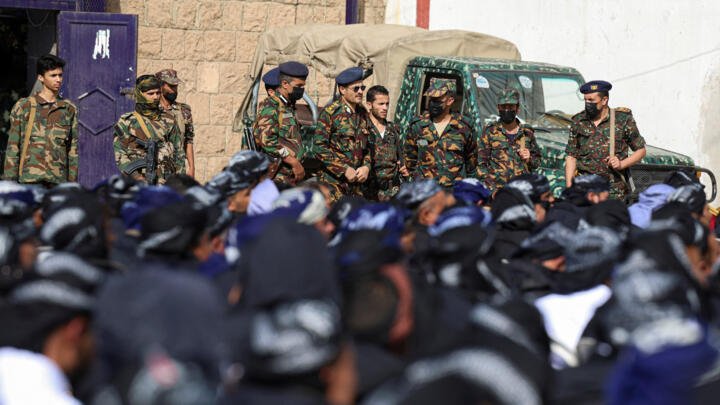
Fear and uncertainty are spreading across southern Yemen as Houthi fighters continue advancing towards Aden, the country’s temporary capital and one of the last major strongholds of the internationally recognised, Saudi-backed government. Residents who once considered the port city a relatively safe refuge from years of civil war are now preparing emergency escape plans, fearing that another major military offensive could force them to abandon their homes.
The growing threat has raised concerns among civilians, humanitarian organisations and international observers about the possibility of a major shift in Yemen’s prolonged conflict. Houthi forces have been gathering in areas north and east of Aden, gradually increasing pressure on government-controlled territory. Although the group has not officially announced plans to capture the city, its recent military movements have created fears that Aden could soon face a siege or a direct assault.

For people who have already experienced displacement, the prospect of fleeing again is particularly painful. Hussein, a Yemeni schoolteacher who spoke under a pseudonym for security reasons, left his home in Sana’a six years ago after the Houthis established control over the area. He travelled south to Aden, hoping to rebuild his life in a place where the government’s military presence offered greater protection.
At the time, Aden appeared relatively secure because of the considerable distance separating it from Houthi-controlled territory and the defensive positions maintained by government forces. The city had become the temporary seat of the Saudi-backed administration in 2015, following the escalation of the conflict.
However, the military situation has changed dramatically in recent months. In September, Houthi forces launched a series of advances that pushed government troops and allied militias out of several positions. The sudden collapse of those defences raised questions about the government’s ability to protect its remaining territories.
Hussein now fears that the same situation could eventually unfold in Aden. He believes he may have no choice but to escape again, possibly travelling to Marib or Hadhramaut if Houthi fighters move closer to the city.
His concerns are not limited to physical security. Hussein previously belonged to the Islah party, an Islamist political organisation opposed to the Houthi movement and aligned with Saudi Arabia. He fears that his political background could expose him to persecution if the Houthis establish control over Aden.
“The Houthis don’t believe in freedom, they just want to hear one voice, the one they like,” he said, describing his concerns about the movement’s political and ideological approach.
Hussein’s experience reflects the wider anxiety among residents who have spent years moving between different parts of Yemen in search of safety. Many fear that another change in territorial control could expose them to violence, political retaliation and further economic hardship.
The Houthis are reportedly maintaining significant military positions around 50 miles, or approximately 80 kilometres, north of Aden. Their movements towards areas including Kirish and al-Bayda have attracted particular attention because control of these locations could threaten important transport connections leading into the city.
Mohammed al-Basha, founder of the United States-based risk advisory organisation Basha Report, warned that Houthi military deployments in al-Bayda could threaten Aden’s eastern road connections through Abyan, as well as supply routes from Saudi Arabia.
He suggested that the movement could be assessing the strength of Aden’s defensive positions before deciding its next course of action. If government forces prove unable to maintain their positions, the Houthis could attempt to capture the city. Alternatively, if the defences remain intact, the group could consider surrounding Aden and restricting access to essential supplies.
Such a development would have serious consequences for the Yemeni government. Aden has served as the administration’s temporary capital since 2015 and remains an important political, military and economic centre for the government and its international partners.
A Houthi takeover would represent a major setback for the Saudi-led coalition, which has spent years supporting the Yemeni government and conducting military operations against the movement. It would also significantly strengthen the Houthis’ position in the country’s 12-year-long civil war and potentially expand Iran’s influence in Yemen.
Iran has provided political and military support to the Houthi movement over the years, making its advances an important concern for regional powers. A major shift in control over southern Yemen could therefore have consequences beyond the country’s borders, particularly for security around the Red Sea, international shipping routes and the wider Middle East.
In response to the growing threat, the Yemeni government has reportedly redeployed significant numbers of fighters from other parts of the country to strengthen the defence of Aden and surrounding areas. Last week, officials announced that troops were being moved from positions along the south-western coast towards the port city.
Saudi Arabia has also intensified its military campaign against Houthi positions. Since September, the Saudi-led campaign has reportedly carried out hundreds of airstrikes across Yemen. According to figures from the independent Yemen Data Project, the strikes have killed or injured 822 civilians, including 181 children.
Houthi authorities, meanwhile, have alleged that Saudi Arabia has conducted approximately 5,500 air and missile attacks since July. These figures reflect the competing accounts presented by the parties involved in the conflict, while the continued military operations have placed additional pressure on civilians already struggling with years of violence.
The consequences are increasingly visible around Aden itself. Residents have reported explosions occurring closer to the city, while displaced families from surrounding areas have begun arriving in greater numbers. The relative security that Aden previously offered is gradually disappearing as the possibility of renewed fighting becomes more immediate.
Rami, a 53-year-old resident who also spoke under a pseudonym, said his family had begun monitoring developments almost continuously. Since the previous week, he had been checking the news every hour and asking his daughter to follow updates whenever he became occupied with other responsibilities.
His anxiety is rooted in personal experience. During the four-month battle for Aden in 2015, Rami was caught between Houthi fighters and government forces as the two sides fought for control of the city. The memories of that period have returned as military activity intensifies around the region.
He is now preparing for the possibility of another displacement, believing that remaining in the city until fighting reaches residential neighbourhoods could put his family in serious danger.
Humanitarian organisations are also making contingency arrangements. Several international non-governmental organisations operating in southern Yemen are reportedly preparing for possible evacuations, staff reductions or the suspension of operations if the Houthis establish control over Aden.
One aid worker employed by an international NGO said management had informed staff that termination notices would be issued during the week. The organisation would continue its operations and renew contracts if the Houthis did not reach Aden, but its activities could end if the city fell under their control.
The situation has already affected humanitarian organisations in other parts of the country. Several NGOs have reportedly been forced to close operations in Taiz following major Houthi advances.
Not every humanitarian organisation would necessarily leave Aden following a change in territorial control. However, some organisations face serious operational difficulties in Houthi-controlled areas because of concerns about the safety of their employees and restrictions affecting humanitarian activities. The United States Treasury’s designation of the Houthis as a foreign terrorist organisation in 2025 has also created additional complications for certain international organisations.
Any disruption to humanitarian operations could deepen an already catastrophic situation. Yemen has experienced one of the world’s most severe humanitarian emergencies after years of armed conflict, economic instability and the collapse of essential public services.
Approximately 18.7 million people in the country are facing acute food insecurity, leaving millions dependent on humanitarian assistance to meet their basic needs. Continued fighting has damaged infrastructure, disrupted transport networks, increased the cost of essential goods and made access to healthcare and food increasingly difficult.
The latest escalation has also contributed to another wave of displacement. More than 350,000 people have reportedly been displaced since August, adding to the millions who have already been forced to leave their homes during the prolonged conflict.
For low-income families, the consequences are particularly severe. Ahmed, a restaurant worker in his 50s, said he depended on daily wages to provide for his family of six. When work was unavailable, he struggled to obtain enough food for everyone.
He explained that he had no interest in political disputes or military confrontations and simply wanted to earn enough money to meet his family’s basic needs. His situation reflects the reality faced by millions of Yemenis whose lives have been disrupted by a conflict in which ordinary civilians have little influence over the decisions of armed groups.
The potential loss of Aden’s relative stability could make conditions even worse for displaced people, particularly women, children, elderly residents and families without sufficient financial resources to travel to safer areas.
Rami said he was not interested in stocking up on food because he did not intend to remain in Aden waiting for fighting to reach the city. His family was prepared to leave at short notice because he feared that staying could eventually trap them inside their homes.
For many residents, the uncertainty is becoming almost as difficult as the fighting itself. Families must decide whether to leave before the situation deteriorates or remain in the hope that government forces can prevent another Houthi advance.

The coming weeks could prove decisive for Aden and the wider conflict. Although the Houthis have not formally declared an intention to capture the city, their military movements have placed considerable pressure on government positions and created a growing sense of insecurity.
A successful defence of Aden could preserve an important government stronghold and prevent another major displacement crisis. However, a siege or takeover would represent a significant turning point in Yemen’s civil war, potentially reshaping the country’s political balance and deepening an already devastating humanitarian emergency.
For Hussein, Rami and thousands of other residents, the immediate concern is much more personal. They are not calculating territorial gains or political advantages. They are thinking about their children, their homes and how to escape if the fighting reaches their neighbourhoods. After years of displacement and uncertainty, many Yemenis once again face the painful possibility of leaving everything behind simply to survive.
Related News:
 Israeli Strike in Southern Lebanon Kills Seven
 Israel Promotes Film Challenging Controversial Gaza Documentary
 UAE Nominee Faces Backlash Over Sudan War Role
 Activists allege abuse after Gaza flotilla seizure
 Trump Announces 3-Day Russia–Ukraine Ceasefire Deal
 Taliban global ties grow as rights fears mount
 Five Years of Taliban Rule Leave Afghanistan in Crisis
 Ukraine Villagers Demand Answers After Deadly Arms Depot Strike
 UN expert urges UK to rethink Israel policy
 Israel Accused of Undermining Palestinian Life
 Saudi Pact Raises Risk of Pakistan Entering War
 UK Pauses Chagos Deal Amid US Opposition
 Economic growth and political strain reshape Benin
 New Maps Reveal Gaza’s Vast Destruction
 Germany Pledges €1bn Military Aid to Ukraine
 Latin America women fear rollback of rights
 Israeli Settlers Assault Palestinian Photographer
 EU Divisions Deepen Over Israel Policy
 Navi Pillay Wins Nobel Peace Prize for Justice
 Controversial Vaccine Trial Approved in Guinea-Bissau
 Russia Strikes Kyiv After Agreeing to Resume Peace Talks
 Ukraine Peace Talks Set to Resume in November
 ANC Faces Voter Backlash in South African Elections
 US Pushes for Final Russia-Ukraine Peace Deal
 Zelenskyy Sees Peace Opportunity as US Envoys Meet Putin
 Drone Warfare Fuels a Deadly Civilian Crisis in Sudan
 Malaysia to Deport Thousands to Genocide-Hit Myanmar
 Judge halts deportation of Yemeni refugees in US
 US ‘Narco Boat’ Strikes Draw Global Outcry
 Afghan Families Left in Limbo Face Risk of Deportation
 Immigration Judges Fear Pressure in Trump Era
 New Footage Revives Peter Falconio Mystery
 Ukraine Creates Long-Range Strike Command
 Houthis Strike Saudi Arabia as Middle East Tensions Rise
 Trump Calls Iran War ‘Small Potatoes’ Despite US Deaths
 Europe’s democracies face a growing far-right threat
 Sweden Election Hangs on Far-Right Breakthrough
 Royal Crown Branded Enslaved Africans in Britain’s Slave Trade
 Lib Dems Prepare for Election Amid Reform Challenge
 US Networks Suspend Trump White House Pool Coverage
 Japan PM Backs International Criminal Court
 UK Plans New Centre to Counter Information Warfare
 Lula accuses Trump of seeking control over Brazil
 Republican Senator Questions Trump Ad Spending
 Green Party faces dispute over Zionism motion
 Yemen government launches offensive against Houthis
 US bombers leave RAF Fairford after terror threat
 Iran Nobel Laureate Reveals Prison Torture and Fears
 Kenya Confirms First Ebola Case as Patient Dies
 Canadian Veterans Condemn Trump Allies’ Military Remarks
 Israel Marks Three Years Since October 7 Attack
 Trump Says He Deserves Nobel Peace Prize
 Gaza War Deepens India’s Strategic Ties With Israel
 Trump Rules Out Iran Attack Before US Elections
 French Students Protest Poor Conditions in Paris Suburbs
 Brazil Court Scandal Threatens Lula as Bolsonaros Rise
 Greta Thunberg Backs French Students in School Protests
 Millions Face Tougher Medicaid Rules From January
 India’s Voter Roll Crisis Sparks Nationwide Protests
 Ukrainian Soldier Faces Trial Over Nord Stream Blast
 Senegal LGBTQ+ Crackdown Drives People Into Hiding
 Gadi Eisenkot: Israel’s Anti-Netanyahu Challenger
 Serbia Leader Linked to Controversial Trump Tower Plan
 Zelenskyy Says US Failed to Warn Kyiv of Russian Strikes
 Xi Jinping Tightens China’s Anti-Corruption Campaign
 Palestinian Parties Gain Power in Israel’s Election
 Gulf States Push Multi-Part Deal to Avert US-Iran War
 Trump’s Global Policies Put Republicans at Risk
 Novaya Gazeta to Close After Russian Government Pressure
 King Charles Faces Reparations Protests at Antigua Summit
 Knesset Speaker Race Could Decide Netanyahu’s Future
 US Treasury Chief Moves to Military Base Over Iran Threat
 One Nation Candidate Apologises for Offensive Posts
 Iran Death Row Boxer Wins Prestigious Human Rights Award
 Eisenkot Accuses Netanyahu of Racist Anti-Arab Campaign
 CEU Eyes Budapest Return as Hungary Enters New Era
Zelenskyy Warns Starshield Curbs Weaken Ukraine Defences
 Australia’s Election Funding Changes Face Fresh Backlash
 India Blocks Cockroach Movement Leader From UK Flight
 China Probes Shanghai Chief in Xi Jinping’s Latest Purge