Published: 08 October 2026. The English Chronicle Desk. The English Chronicle Online
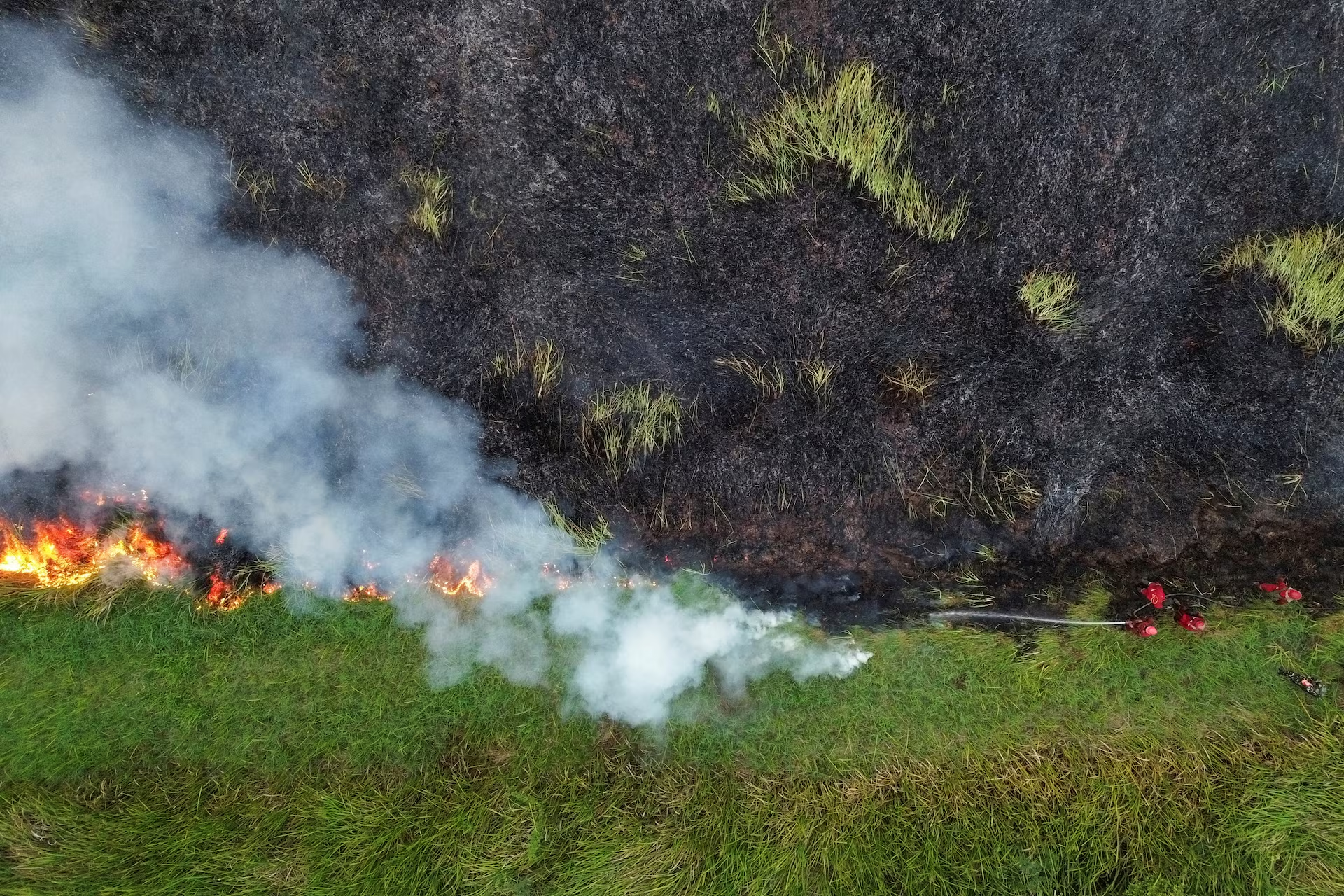
Indonesia’s government is facing a major legal challenge over its handling of wildfires that have spread toxic smoke across parts of South-east Asia, with Indigenous and civil society groups accusing authorities of gross negligence and demanding stronger action to prevent the annual crisis from worsening.
A class action lawsuit filed in Indonesia’s West Kalimantan province has named President Prabowo Subianto, the provincial governor and several other government officials among its defendants. The plaintiffs are seeking comprehensive measures to recover from the current crisis and improve the government’s response to recurring fires, including compensation and healthcare support for residents affected by the pollution.
The case has emerged as the latest confrontation over Indonesia’s long-running struggle with forest and land fires. Each year, large areas of vegetation and peatland can be burned to clear land, with fires sometimes deliberately started as a relatively inexpensive method of preparing land for agriculture and plantation development.

This year’s crisis has been particularly severe because unusually dry conditions have allowed fires to spread rapidly and made them more difficult to control. The intense El Niño weather pattern has contributed to a period of exceptionally dry conditions across parts of the region, increasing the risk of fires and allowing smoke to travel across national borders.
The resulting haze has affected communities in Indonesia and neighbouring countries including Malaysia, Brunei and Singapore, with pollution levels creating concerns about respiratory health, education and everyday life.
The lawsuit was filed last month in West Kalimantan, on the Indonesian portion of the island of Borneo. Four plaintiffs are involved in the case, including representatives of an Indigenous organisation and a local Catholic youth group.
The plaintiffs argue that government authorities failed to take adequate preventive action despite warnings that conditions were becoming dangerous. They say the state should have acted earlier to prevent fires from developing into a wider environmental and public-health emergency.
The opening court session was held in Pontianak, the provincial capital, on Wednesday. However, none of the government officials named as defendants attended the hearing. The absence led the judges to postpone proceedings until 21 October.
The plaintiffs’ lawyer, Glorio Sanen, expressed disappointment over the absence but also acknowledged the possibility that deteriorating haze conditions may have affected travel to Pontianak.
Sanen described the lawsuit as an important attempt to address the recurring wildfire problem and force authorities to take stronger action. The legal challenge is not simply focused on the fires already burning but also on the government’s responsibility to prevent similar disasters in the future.
For Indigenous communities living in affected areas, the issue is closely connected to land management, environmental protection and the ability of authorities to enforce existing regulations.
Yakobus Kumis, a plaintiff representing a Dayak Indigenous community, criticised the government’s failure to send representatives to the hearing. He argued that the absence sent a troubling message to communities affected by the fires and suggested that authorities had not taken the legal and environmental consequences seriously enough.
Kumis also accused the government of ignoring warning signs before the fires intensified. He called for the haze crisis to be officially recognised as a national disaster, arguing that the scale of the environmental and health consequences justified a stronger national response.
The Indonesian government has previously promised to crack down on illegal land clearing and prevent the uncontrolled use of fire to prepare land. Authorities have also deployed military personnel to assist firefighters and respond to the expanding blazes.
Indonesia is the world’s largest producer of palm oil, and the industry has long been closely linked to debates surrounding land clearance and environmental protection. While palm oil is an important part of Indonesia’s economy and supports millions of livelihoods, plantation expansion has also been associated with deforestation, peatland degradation and land-use conflicts.
Environmental campaigners have repeatedly argued that stronger enforcement is required to prevent companies and individuals from using fire to clear land. They say the environmental costs of uncontrolled burning extend far beyond the immediate areas where fires are started.
The consequences can be particularly severe when fires burn through peatlands. Peat can store large quantities of carbon, and when it dries out and catches fire, it can burn for extended periods and release substantial amounts of smoke and greenhouse gases.
The current haze has also become a regional diplomatic problem. Smoke from Indonesian fires has travelled across borders, affecting air quality in neighbouring countries and generating renewed frustration among governments and communities that have little control over the source of the pollution.
Malaysia has been among the countries most affected. Authorities in Johor, a state located near Singapore, announced that schools were expected to close on Thursday and Friday because of deteriorating air quality.
The impact on children has become one of the most visible consequences of the haze. School closures can disrupt education and place additional pressure on families, while prolonged exposure to polluted air can be particularly concerning for children, older people and individuals with existing respiratory vulnerabilities.
Health concerns have also grown as residents report respiratory problems during periods of severe pollution. The plaintiffs in the Indonesian lawsuit are seeking measures that would include support for healthcare costs, arguing that communities should not be left to bear the financial consequences of an environmental crisis they believe could have been better prevented.
The haze crisis has also exposed the wider connection between climate conditions and land-management practices. El Niño does not create every wildfire directly, but prolonged periods of dryness can turn vulnerable landscapes into highly combustible areas. When such conditions coincide with land-clearing activities, the risk of widespread fires can increase sharply.
Scientists and environmental groups have warned that climate change could make extreme heat and drought conditions more frequent or severe in some regions, potentially increasing the difficulty of controlling fires and reducing the time available for authorities to respond.
The Indonesian government therefore faces pressure on several fronts. It must deal with the immediate fires and smoke while also addressing the underlying causes of repeated land burning. Effective enforcement, improved land management, stronger monitoring and cooperation with local communities are likely to remain central to efforts to reduce future outbreaks.
The legal case in West Kalimantan could become an important test of how Indonesian courts view the government’s responsibility for environmental disasters. The plaintiffs are seeking not only immediate recovery measures but also stronger protection against future crises.
The lawsuit is not Indonesia’s first legal challenge over wildfire and haze management. A similar case filed last year in South Sumatra was dismissed, illustrating the difficulties environmental groups and affected communities can face when attempting to hold government authorities legally responsible for large-scale pollution.
The latest case nevertheless arrives at a moment when public concern is particularly high. The scale of the haze, the cross-border consequences and the health and educational disruptions have increased pressure on authorities to demonstrate that they have an effective strategy for controlling fires.
The absence of government representatives at the first hearing has already become a source of frustration for the plaintiffs. Whether officials attend the next hearing on 21 October could become an early indication of how seriously the authorities intend to engage with the case.
For communities living in West Kalimantan and other fire-prone areas, however, the issue extends beyond the courtroom. The annual arrival of smoke has become a recurring threat to health, livelihoods and normal life. Residents want assurances that government promises to control fires will translate into meaningful action on the ground.
The haze affecting South-east Asia is also a reminder that environmental disasters rarely respect national borders. Fires may begin in one province, but their consequences can spread across countries, affecting millions of people who have no influence over how land is managed at the source.

As Indonesia confronts another severe fire season, the lawsuit has placed renewed attention on the government’s responsibilities. The plaintiffs argue that stronger action could have prevented the crisis from reaching its current scale, while authorities face the difficult task of balancing economic interests, environmental protection and the immediate needs of communities suffering from dangerous air pollution.
The court proceedings in Pontianak will now continue later this month. Their outcome could influence not only the compensation and rehabilitation sought by the plaintiffs but also the wider debate over who should bear responsibility when recurring wildfires turn into a regional public-health and environmental emergency.
Related News:
 Nepal Flood Survivors Face Unimaginable Loss
 Nepal Tunnel Rescue Offers Hope Amid Flood Devastation
 Nepal PM calls deadly flood a global climate warning
 Chornobyl Still at Risk 40 Years After Disaster
 Florida Surgeon ‘Devastated’ Over Fatal Surgery Error
 Barrister Criticises Trial After Suicide Case Verdict
 Maldives Cave Diving Tragedy Raises Safety Alarm
 Pope Meets Families in Italy Toxic Waste Zone
 UK Schools Struggle as Classrooms Top 40C
 London Tube Heat Reaches Dangerous Levels
 Five Years of Taliban Rule Leave Afghanistan in Crisis
 Nepal-Tibet Flood Death Toll Rises as 2,478 Remain Missing
 Typhoon Saudel Triggers Mass Evacuations in China
 Fiji Declares National HIV Emergency as Cases Surge
 Nature Access Gaps Expose Inequality Across England
 Yemen War Displaces 125,000 as Fighting Intensifies
 NHS Breast Care Review Finds Serious Patient Harm
 China’s MeToo Movement Finds New Ways to Survive
 GP List Policy Risks Cutting Off Vulnerable Patients
 Fayed Survivors Demand Inquiry Into Medical Regulator
 Banned Health Coach Faces UK Events Criticism
 Experts Warn UK Food Security Is at Risk
 Pacific Climate Summit Draws Limited Global Leaders
 Delhi Freezes Promotion of Police Officer After Allegations
 WHO Seeks Russia Answers Over Suspected Plague Death
 NHS Safety Fears as Nurses Cover Doctor Gaps
 Two Children Die in Wolverhampton House Fire Tragedy
 Older Than Dinosaurs: Secrets of Mayfly Dance Revealed
 China Fireworks Factory Blast Kills 21 in Hunan
 Immigration Judges Fear Pressure in Trump Era
 Tractor Breakdown Tests Lincolnshire Farmers
 Thailand Tightens Visa Rules to Curb Tourist Misbehavior
 UK Heatwaves Ignite Crisis of Sleep and Public Safety
 Venezuela Quake Death Toll Surpasses 4,000
 Olympus Awaits Unesco Heritage Recognition
 Three-Quarters of England’s Riverbanks Still Off Limits
 Powerful 7.7-Magnitude Earthquake Hits Eastern Indonesia
 Westminster Council Threatens Charing Cross Soup Kitchen
 BBC Warned About Missing Clothes of Murder Victim
 Weight-Loss Drugs Offer Food Savings Mainly to High Earners
 Israeli Strike in Southern Lebanon Kills Seven
 Burnham unveils £65m drought aid for farmers
 Gen Z turns to BirdTok for a gentler digital escape
 Australia Races to Find Tourists Missing in Nepal
 Nepal Flood Death Toll Tops 300 as Second Flood Feared
 RAF Barnham Protests Fuel Tensions in Norfolk Town
 British Museum Faces Questions Over Peter Thiel’s Private Bayeux Viewing
 Internal Exclusions Surge in England’s Schools
 UK Subsidence Claims Surge After Record-Breaking Summer
 Councils spend £125m on illegal children’s care
 Man Arrested in Mississippi Woman’s Death
 Australia’s Indigenous Population Was Far Larger Before Colonisation

 2025 Among World’s Driest Years for Rivers
 Disabled Travellers Seek Fairer UK Care Rules
 Lib Dems Prepare for Election Amid Reform Challenge
 Patrick Clancy speaks publicly about children’s deaths
 Headteachers Warn New Ofsted System Is Harming Wellbeing
 UK Funds Gene Editing to Protect Threatened Wildlife
 Democrat Says ICE Restricted Detention Camp Oversight
 Tropics May Wait Longest for Net-Zero Climate Benefits
 Chinese Hybrid Car Surge Raises EU Auto Industry Concerns
 Greece Pushes for Parthenon Marbles Reunification
 Ukraine and Russia Escalate Long-Range Drone War
 Free Speech Emerges as Key UK Election Issue
 Cornell Fraternity Assault Investigation Reopened
 London Facial Recognition Trial Ends With False Alert
 UK University Strikes Spread as Financial Pressure Grows
 Drumcree Talks Falter as Legal Challenge Deepens
 UK-France Returns Deal Faces Expiry as Talks Stall
 Green Party faces dispute over Zionism motion
 Europe’s Record Heat Summer Signals Climate Risks
 Berlin App Helps Residents Protect City Trees
 Pilot Recalls Fight to Save Flydubai Passengers
 Badenoch Raises Prospect of 2027 UK Election
 New Prosecutor Takes Over Cornell Assault Case
 Germany Pledges €1bn Military Aid to Ukraine
 Cancer rises faster among younger adults, study finds
 WHO Says Russia Plague Epidemic Risk Remains Low
 Ghesquière imagines a warmer future for Louis Vuitton