Published: 09 October 2026. The English Chronicle Desk. The English Chronicle Online
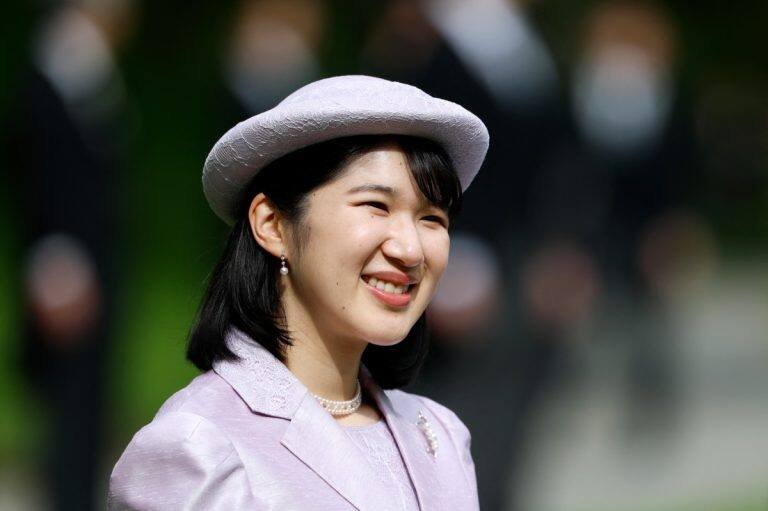
Princess Aiko has become one of Japan’s most admired public figures, attracting widespread attention for her composure, dignity and growing confidence during official engagements. Yet despite her popularity and status as the only child of Emperor Naruhito and Empress Masako, the 24-year-old princess remains excluded from inheriting the Chrysanthemum Throne under Japan’s male-only succession law. As the imperial family grows smaller and the number of eligible male heirs dwindles, public pressure is increasing for the country to reconsider a tradition that many believe no longer reflects modern Japanese society.
The debate is not simply about the future of one popular royal. It raises fundamental questions about gender equality, national identity, constitutional tradition and the survival of Japan’s ancient imperial institution. A national poll conducted by the Mainichi Shimbun newspaper in April found that 72% of respondents supported the idea of a woman becoming emperor, while only 10% opposed it. The figures suggest that support for reform extends well beyond a narrow political constituency, placing the government under growing pressure to explain why public opinion and official policy remain so far apart.

Aiko’s popularity has developed gradually as she has moved from a relatively shy childhood into adulthood. Japanese media frequently highlight her measured public manner and her ability to connect with ordinary citizens during official visits. Magazine covers featuring the princess attract attention, while her clothing choices have inspired interest among fans. At public engagements, crowds gather in difficult weather conditions to catch a glimpse of her, reflecting the emotional connection many Japanese people feel towards the younger generation of the imperial family.
For supporters of reform, Aiko represents an opportunity to preserve the monarchy by allowing it to adapt to changing social expectations. They argue that her upbringing, public responsibilities and experience of representing the imperial family make her a credible future monarch. More broadly, they question why the country’s most popular royal should be permanently excluded from the succession solely because she is a woman.
Japan’s imperial succession rules are rooted in a long history of male-line inheritance. The Imperial House Law, enacted in 1947, restricts succession to male descendants in the male line of the imperial family. Its origins are associated with legislation introduced during the Meiji era in the late 19th century. Although Japan has previously had female monarchs, the modern rules do not permit a woman to inherit the throne.
The consequences of the restriction have become increasingly difficult to ignore. Around three decades ago, Japan’s imperial family had approximately 30 members. Today, the number has fallen to just 16, with only five men among them. The decline mirrors some of the wider demographic pressures facing Japan, where low birth rates and an ageing population have raised concerns about the sustainability of established institutions.
The current succession line is particularly narrow. It consists of Emperor Naruhito’s younger brother, Crown Prince Akishino; Akishino’s son, Prince Hisahito; and the emperor’s 90-year-old uncle, Prince Hitachi. Hisahito, a university student who was born in 2006, is the only young male heir in the immediate line. His birth, after a lengthy period without a male child in the imperial family, interrupted an earlier debate about changing the succession rules.
If Hisahito does not eventually have a son, the male line could face a serious succession problem within a generation. Supporters of reform say this uncertainty demonstrates the risks of maintaining a system that excludes women, particularly when the number of eligible male heirs is so limited. They argue that permitting female succession would broaden the pool of potential monarchs and reduce dependence on a small number of individuals.
Japan’s conservative government, however, has moved in the opposite direction. Prime Minister Sanae Takaichi and her political allies have supported measures designed to preserve male-line succession. Recent amendments provide for women who marry commoners to retain their imperial status and seek to restore male-line descendants from 11 branches of the imperial family that lost their official status after the Second World War.
The proposed approach is intended to increase the number of people available to support the imperial institution without changing the fundamental rules governing who can become emperor. Under the arrangements described in the succession debate, a distant male relative could potentially enter the imperial family under specified conditions. If he later had a son, that child could help maintain the male line.
Supporters of this strategy consider it a way to protect historical continuity while addressing the shortage of male heirs. Critics, however, question whether restoring distant branches will provide a lasting solution. They argue that relying on male relatives and future male children leaves the monarchy exposed to the same demographic uncertainty that has created the present crisis.
The dispute has become especially contentious because public opinion appears to favour a different direction. The April poll showing 72% support for a woman emperor suggests that a substantial majority of respondents are open to change. While public support does not automatically determine constitutional or legal arrangements, it makes the government’s refusal to consider female succession a more prominent political issue.
International pressure has added another dimension. In 2024, the United Nations Committee on the Elimination of Discrimination against Women urged Japan to reconsider its male-only succession rules. Japanese officials rejected the intervention, describing it as regrettable and inappropriate and maintaining that the imperial succession is a matter of fundamental national identity.
The government’s position reflects the importance conservatives attach to the historical continuity of the imperial line. Takaichi has argued that the maintenance of the male line across 126 generations is central to the emperor’s authority and legitimacy. She has also maintained that the recent changes are intended to address the immediate shortage of eligible imperial family members rather than resolve the broader question of whether women should be allowed to become monarchs.
That position has drawn criticism from those who believe historical precedent should not prevent necessary reform. Makoto Okawa, a Chuo University expert on imperial lineage and succession, has argued that the latest amendments clearly point towards preserving male-line inheritance. He has also identified a growing public unease about excluding a potential successor simply because she is female.
For Aiko’s supporters, the princess embodies a more contemporary understanding of the imperial role. Jin, who manages an Instagram account devoted to her, has argued that the government is overlooking widespread public support for reform. She considers Aiko’s character, dignity and relationship with the public evidence that she could serve effectively as a national symbol.
Japan’s history also complicates the argument that female monarchy would be entirely unprecedented. The country has had eight female monarchs, although they generally served in periods when the imperial line required continuity before a male heir could succeed. The most recent was Empress Go-Sakuramachi, who ruled from 1762 to 1770. Those historical examples do not establish a modern legal right to female succession, but they demonstrate that women have previously occupied the throne.
Members of the imperial family themselves are constitutionally and conventionally expected to avoid political commentary. Nevertheless, recent remarks by Emperor Naruhito and Crown Prince Akishino have attracted attention because they appear to acknowledge the importance of public understanding and social change.
In June, Naruhito said he hoped parliamentary discussions about securing the number of imperial family members would gain the understanding of the public. Akishino went further, suggesting that society must continue progressing and that the imperial family has a duty to respond to society’s needs. He also said he did not believe there were differences between women and men in this context.
Neither statement amounted to an explicit demand to change the succession law. However, their emphasis on social expectations has encouraged observers to consider whether the imperial family recognises the difficulties created by the current arrangements.
The debate also carries political implications for Takaichi, Japan’s first female prime minister. Her position highlights a striking contrast: a woman occupies the country’s highest elected political office, while the law governing the hereditary monarchy continues to exclude women from the throne. Supporters of reform see that contrast as evidence of an unresolved tension between Japan’s modern public life and its traditional imperial framework.
Ultimately, the question facing Japan is whether preserving the monarchy requires maintaining its existing succession rules or adapting them to changing circumstances. Supporters of male-line inheritance argue that continuity is essential to the institution’s legitimacy. Reform advocates counter that a monarchy unable to respond to demographic realities and public expectations could face greater uncertainty in the future.

Princess Aiko’s popularity has brought that question into sharper focus. Her future remains determined by law rather than public affection, and the current political direction offers little indication of an immediate change. Yet the combination of a shrinking imperial family, a narrow succession line and strong public support for female succession makes the issue increasingly difficult to postpone.
Japan must now consider whether its centuries-old institution can remain secure while excluding a popular and capable potential successor. For many citizens, allowing Aiko—or another qualified female member of the imperial family—to inherit the throne would not mean abandoning Japanese tradition. It would mean reconsidering how that tradition can survive in a society that increasingly expects equal opportunities for women and men.
Related News:
 Five Years of Taliban Rule Leave Afghanistan in Crisis
 Yemen War Displaces 125,000 as Fighting Intensifies
 Pacific Climate Summit Draws Limited Global Leaders
 Nine Killed in Karachi Consulate Protest
 Anti-Regime Iranians Turn Anger Toward Trump
 Moldova River Crisis Exposes War’s Hidden Cost
 Harry and Meghan’s Australia Visit Sparks Debate
 Canadian astronaut French words ease language row
 Charles Faces Trump Test in High-Stakes US Visit
 Southeast Asia Turns to Russia Amid Energy Crisis
 Escobar’s Hippos May Be Moved to India Zoo
 China Fireworks Factory Blast Kills 21 in Hunan
 Australia pushes Pacific security pact amid China tension
 France Faces Record Presidential Crowded Race Amid Far-Right Surge
 US Awaits Iran Reply on New Ceasefire Proposal
 One Nation Stuns Australia With Historic Farrer Win
 Hormuz Talks Near Critical Stage
 Discontent grows around Putin amid war strain
 Farage and Reform UK Reshape British Politics
 Starmer Leadership Under Pressure After Setbacks
 Millions Gather for Khamenei’s Six-Day State Funeral
 Le Pen’s Popularity Holds Despite Conviction
 Dreyfus Statue Finally Gets Permanent Paris Home
 Venezuela Quake Death Toll Surpasses 4,000
 Houthis Strike Saudi Arabia as Middle East Tensions Rise
 Israeli Strike in Southern Lebanon Kills Seven
 Is America Ready for an AOC Presidential Run?
 Ghent Professors Questioned Cofnas Appointment
 Australia Races to Find Tourists Missing in Nepal
 Nepal Flood Death Toll Tops 300 as Second Flood Feared
 Is Swearing Worse When Indian Women Do It?
 Nepal Flood Survivors Face Unimaginable Loss
 Green Leader Targets Starmer’s Former Seat
 Nepal Tunnel Rescue Offers Hope Amid Flood Devastation
 Masked Protesters Bring Dover Port Traffic to Standstill
 Susan Sarandon Says Palestine Stand Costs Roles
 Pavlohrad Strike Kills Five, Injures 67
 Saudi Arabia Shuts Oil Pipeline After Drone Attack
 Nearly 50,000 Flee as Houthis Advance in Yemen
 Slave-Trade Wealth Embedded in Britain’s Financial System
 Amnesty Finds Coordinated Abuses in Iran Protest Crackdown
 Turkey LGBTQ Crackdown Expands With New Arrests
 Iran School Strike Raises War Crimes Questions, UN Says
 South Korea Rules Out Military Role in Iran War
 Saudi Pact Raises Risk of Pakistan Entering War
 Lib Dems Prepare for Election Amid Reform Challenge
 Middle powers seek new alliances amid Trump era
 Japan PM Backs International Criminal Court
 King Refers Jamaica Slavery Petition to Privy Council
 Iran Rejects Claims of Shift in US Talks
 Greece Pushes for Parthenon Marbles Reunification
 Elif Eralp Emerges as Berlin’s Next Political Force
 Xi urges Trump to avoid US-China military conflict
 Nepal PM calls deadly flood a global climate warning
 Saudi intercepts Houthi missiles as oil fears grow
 Three Die in Channel Crossing Attempt Near France
 Madrid Tent Camp Grows as Spain Housing Crisis Deepens
 South Korea-Ukraine Row Erupts Over North Korean POWs
 French Student Protests Escalate Into Violent Clashes
 Israel-bound Plane Lands in Saudi Arabia After Cockpit Fight
 Burnham Opens Door to Possible UK Return to EU
 Drumcree Talks Falter as Legal Challenge Deepens
 UK-France Returns Deal Faces Expiry as Talks Stall
 New Maps Reveal Gaza’s Vast Destruction
 Green Party faces dispute over Zionism motion
 Pilot Recalls Fight to Save Flydubai Passengers
 French School Protests Escalate as 400 Schools Close
 North Korea Fires Missile Amid DMZ Tensions
 Families Await USS Abraham Lincoln Homecoming
 Bosnia’s Young People Look Beyond Election Hope
 Germany Pledges €1bn Military Aid to Ukraine
 Latin America women fear rollback of rights
 Spain Sets Snap Election as Housing Crisis Deepens
 South Korean fuel reaches Russia despite sanctions
 Japan PM condemns alleged killing by US Marine
 Israel Marks Three Years Since October 7 Attack
 Tanker Attacked Near Qatar as Hormuz Tensions Escalate
 South Korea Probes Fuel Shipments to Russia
 USS Lincoln Ends Record 265-Day Deployment
 French Student Protests Grow Despite Government Pledge